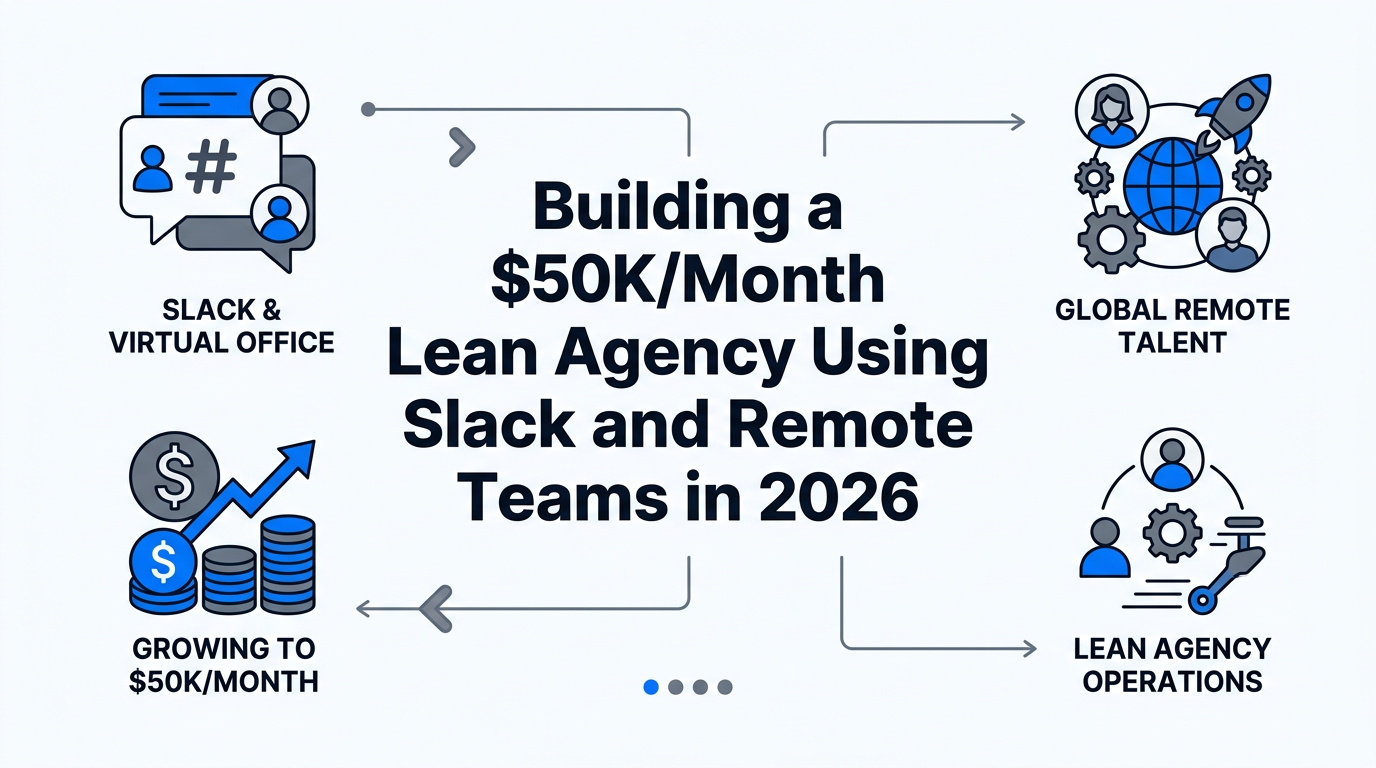
By the year 2026, the traditional agency model of expensive city-center offices and bloated middle management has officially become a relic of the past. Today, the most efficient growth vehicles are lean, highly specialized services that leverage global talent and automation to drive massive revenue. Take the case of Scott, a founder who transformed a $40k/year struggling freelance career into a $50,000 per month productized service in just twelve months. This shift wasn't just about working harder; it was about scaling a one person business through extreme specialization and a minimalist tech stack that prioritizes profit over prestige.
The current landscape favors the "Skinny Agency"—a model where a single founder manages high-level strategy and sales while a distributed team of international contractors handles fulfillment. By focusing on a specific niche, such as short-form video for B2B SaaS companies, founders can maintain a 65% gross profit margin while operating entirely through Slack and remote project management tools.
"Scaling isn't about adding more employees; it's about adding more systems that don't require your presence to function."The Productized Service Shift: Moving Beyond Hourly Billing
Learn how shifting to a productized service model creates scalability and predictable revenue.
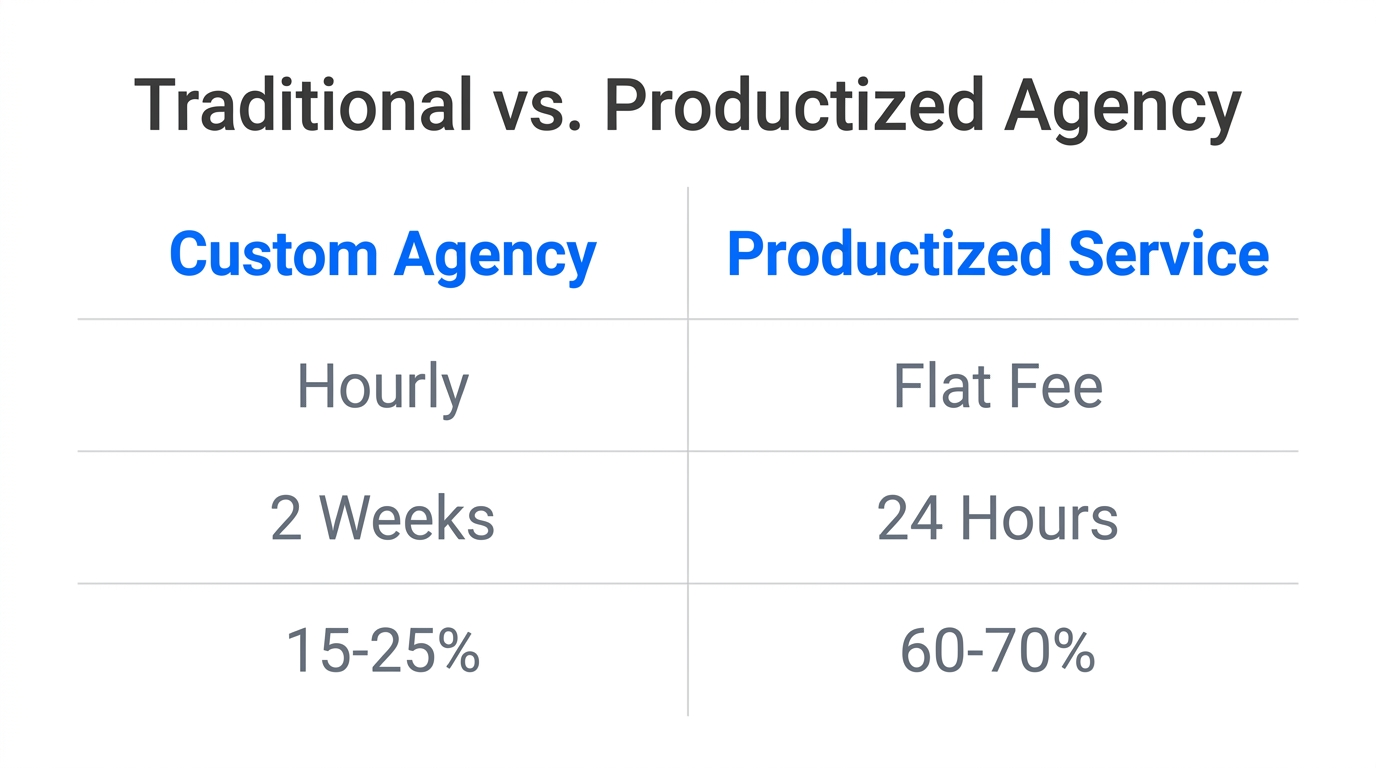
The first step in remote agency operations is abandoning the hourly billing trap. When you sell hours, your income is capped by your physical exhaustion. When you sell a productized service, you are selling a specific outcome for a fixed price. Scott’s agency doesn't just "edit videos"; they sell a high-impact package for venture-backed companies that includes specific deliverables like 60-second scroll-stoppers and retargeting ad setups.
By standardizing the offering, the agency can charge for expertise rather than time. In this model, high-ticket packages ranging from $3,000 to $12,000 become the norm. This allows the business to scale without a proportional increase in complexity. You can manage these transactions easily using platforms like Stripe, which integrates directly with your billing workflow to keep overhead low.
| Feature | Traditional Freelancing | Productized Agency (2026) |
|---|---|---|
| Pricing Model | Hourly / Per Project | Fixed Packages / Recurring |
| Fulfillment | Founder-led execution | Contractor-led systems |
| Scalability | Linear (Limited by time) | Exponential (System-driven) |
| Margins | 30-40% after time cost | 60-70% Gross Margin |
The Lean Tech Stack: Managing Everything in Slack
In 2026, you don't need a complex ERP system to run a half-million-dollar business. A lean business model relies on a few core tools that talk to each other. Scott manages his entire operation—communication, feedback, and delivery—through Slack. This reduces the friction of hopping between multiple project management platforms and keeps the team aligned in real-time.
The rest of the tech stack is equally minimalist. Cold outreach is handled through automated sending tools like Instantly or Lemlist, while lead discovery happens via LinkedIn Sales Navigator. For agencies looking to find the right creators or influencers to partner with for their B2B campaigns, platforms like Stormy AI provide an AI-powered search engine to find and outreach to creators at scale, further automating the top-of-funnel discovery process.
Hiring International Talent: Fractional vs. Full-Time
One of the biggest mistakes founders make is hiring full-time employees too early. In the 2026 agency landscape, managing contractors via Slack is the gold standard for flexibility. Scott’s team consists of four international contractors hired through platforms like Deel who are motivated by growth and remote freedom. These team members often earn more than they would locally, creating a win-win scenario where the agency gets elite talent without the high domestic overhead.
Finding these gems requires a shift in recruitment. Instead of traditional job boards, leverage organic social media and content creation. When you build an audience on platforms like X (formerly Twitter), potential hires see your vision and reach out to you directly. This ensures they are already bought into your culture before the first interview. This remote-first approach allows for a "flexible PTO" model, where the team takes time off as needed, provided the systems continue to deliver for the clients.
"The best hires don't want a job; they want a mission they can contribute to from anywhere in the world."The 150-Call Rule: Mastering Sales Before Delegating
Discover the grit behind the growth by reviewing the 150 sales calls taken.You cannot delegate what you do not understand. Many founders try to hire a "fractional closer" the moment they hit $10k/month, only to see their conversion rates plummet. The 150-call rule states that you should personally take at least 150 sales calls to define your script, handle every possible objection, and understand your ideal customer profile (ICP) perfectly.
Once the sales process is a repeatable science, you can record your calls, build a playbook in Notion, and hand it off to a fractional salesperson. Scott followed this exact path, moving from a disorganized sales process to one that consistently converts cold leads into $3,000+ retainers. In 2026, these leads often come from a mix of cold email outreach (with a typical 4% reply rate) and organic content that builds trust before the call even starts.
The Playbook: Maintaining Business Momentum While Working Remotely
Strategies for maintaining consistent business momentum and effective remote team management workflows.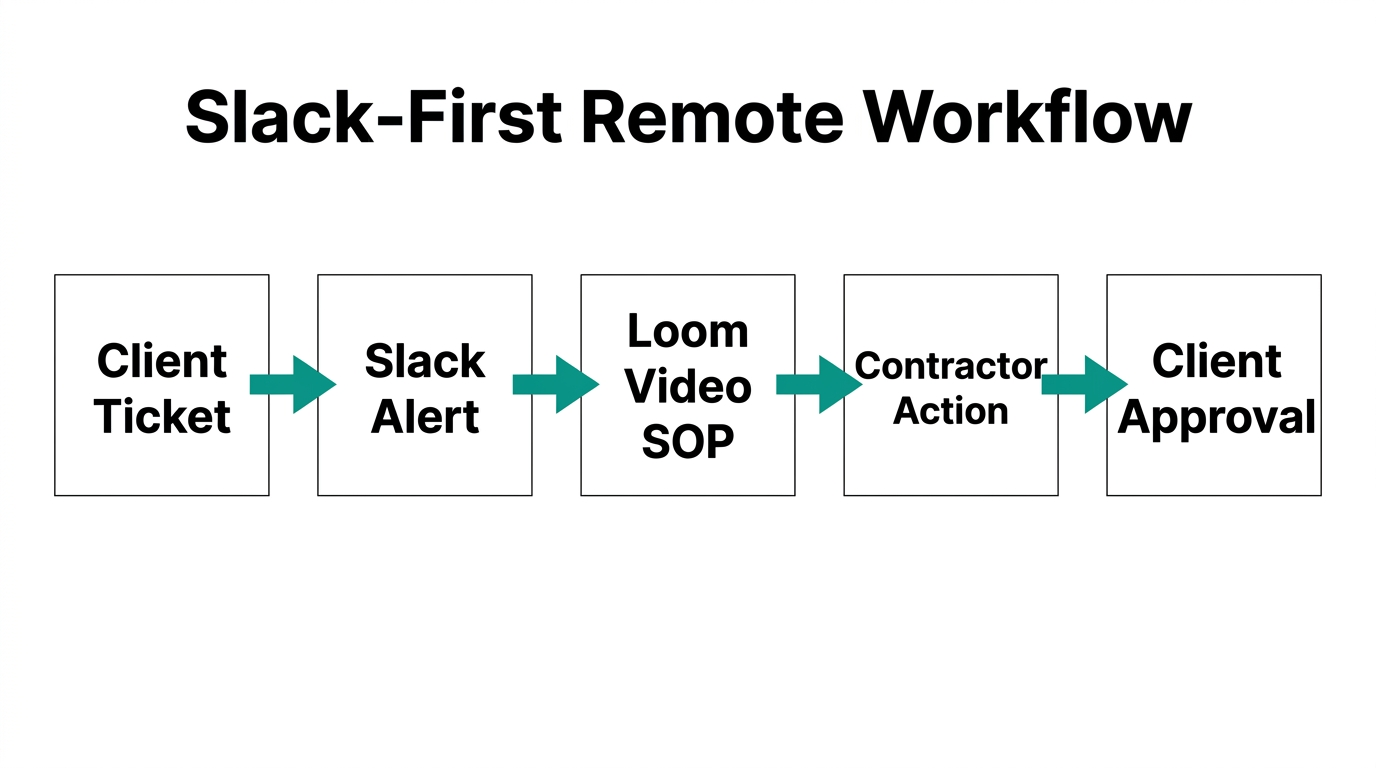
Running a lean agency doesn't mean working 100 hours a week, but it does require visual rhythm and consistent momentum. To scale past the founder-led stage, follow this daily operational playbook:
- Morning Deep Work (8:00 AM - 11:00 AM): Focus on content creation and high-level strategy. This is when you write the threads or record the videos that fuel your top-of-funnel.
- Project Management (11:00 AM - 2:00 PM): Dive into Slack. Review contractor deliverables, provide feedback, and handle client communications.
- Sales Oversight (2:00 PM - 4:00 PM): Review calls taken by your closer, check the health of your CRM, and ensure the cold email sequences are firing correctly.
- Continuous Learning: Spend 1 hour daily researching niche trends on YouTube or in specialized coaching groups to stay ahead of the competition.
Maintaining a 65% Gross Profit Margin
Practical insights into scaling business margins while maintaining a lean, efficient team structure.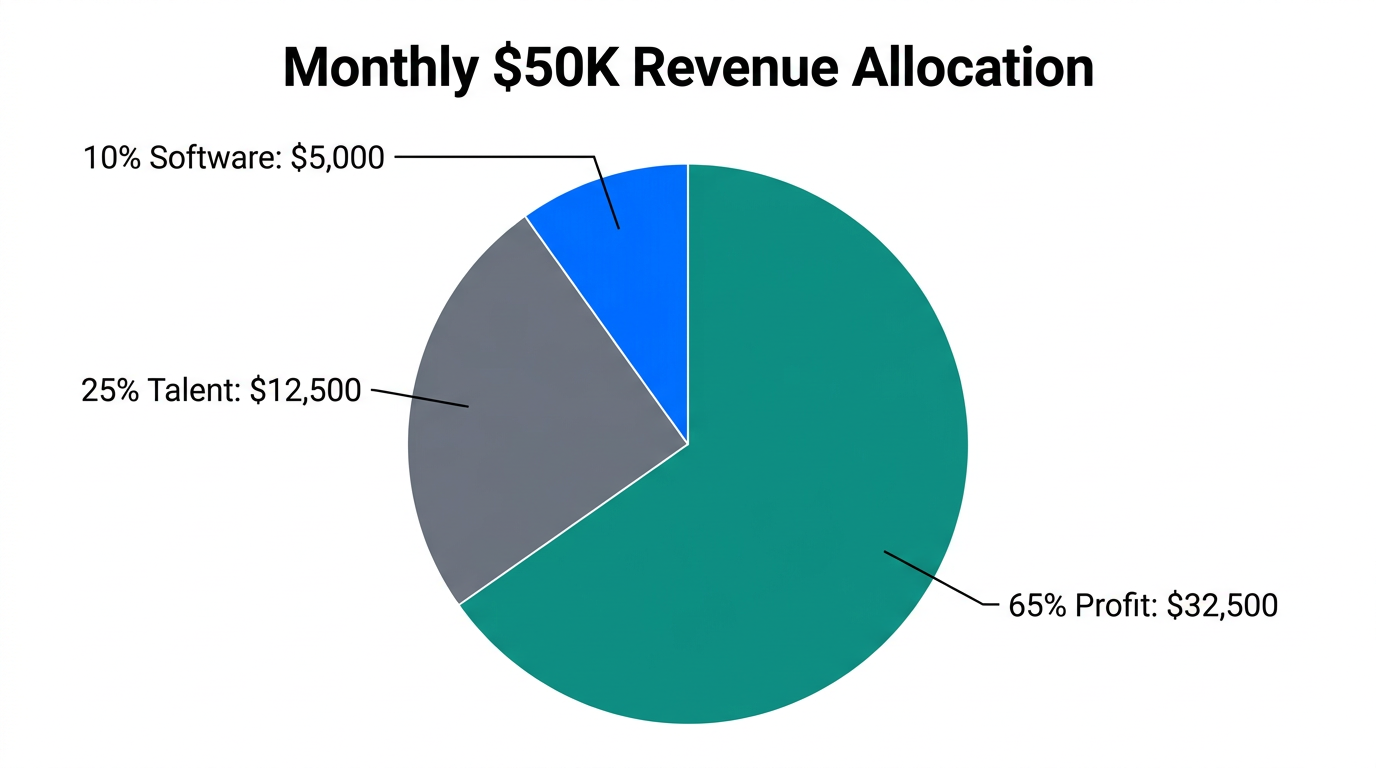
Profit is the only metric that matters in a lean agency. By niching down—for example, moving from "general video" to "short videos for funded B2B SaaS companies"—you can increase your prices tenfold. Scott's first video sold for $500; today, his average order value is $3,000, with packages reaching up to $12,000.
High margins are maintained by:
- Using fractional roles instead of expensive full-time salaries.
- Automating the reporting and billing process with Stripe.
- Focusing on funded companies (Seed and Series A) identified via Crunchbase who have the budget to pay for premium outcomes.
- Standardizing deliverables so contractors can fulfill them with 95% autonomy.
By the time your agency hits the $50k/month mark, your role should shift from "The Creator" to "The Editor." You are no longer making the videos; you are editing the system that makes the videos. This is the essence of scaling a one person business in the modern era.
"Niching down isn't about limiting your options; it's about increasing your authority and your price point simultaneously."Conclusion: The Future of Lean Agency Growth
Building a $600,000/year business in 2026 is less about your ability to multitask and more about your ability to systematize. By focusing on a productized service, leveraging international talent through Slack, and mastering your sales process through the 150-call rule, you can achieve a level of freedom that was impossible a decade ago. Stop selling your time and start building a machine. For those ready to accelerate their discovery and outreach, tools like Stormy AI are here to handle the heavy lifting of creator management, letting you focus on the 65% profit margins that make this lean model so lucrative.