In the high-stakes world of SaaS, the narrative of "burn capital to grow" is finally dead. As we navigate 2026, the most successful founders are no longer those with the deepest venture pockets, but those with the leanest, most efficient engines. Take the example of Andre Heckle Jr., who scaled List Kit to $1 million in ARR in just 87 days. Today, that engine has matured into a $2.4 million annual revenue powerhouse, maintaining high profitability while supporting a team of 40+. The secret isn't a magical algorithm; it’s a masterclass in global team scaling, complementary co-founder roles, and a relentless focus on input-driven growth.
The 4-Pillar Co-founder Model: The Secret to Rapid Execution
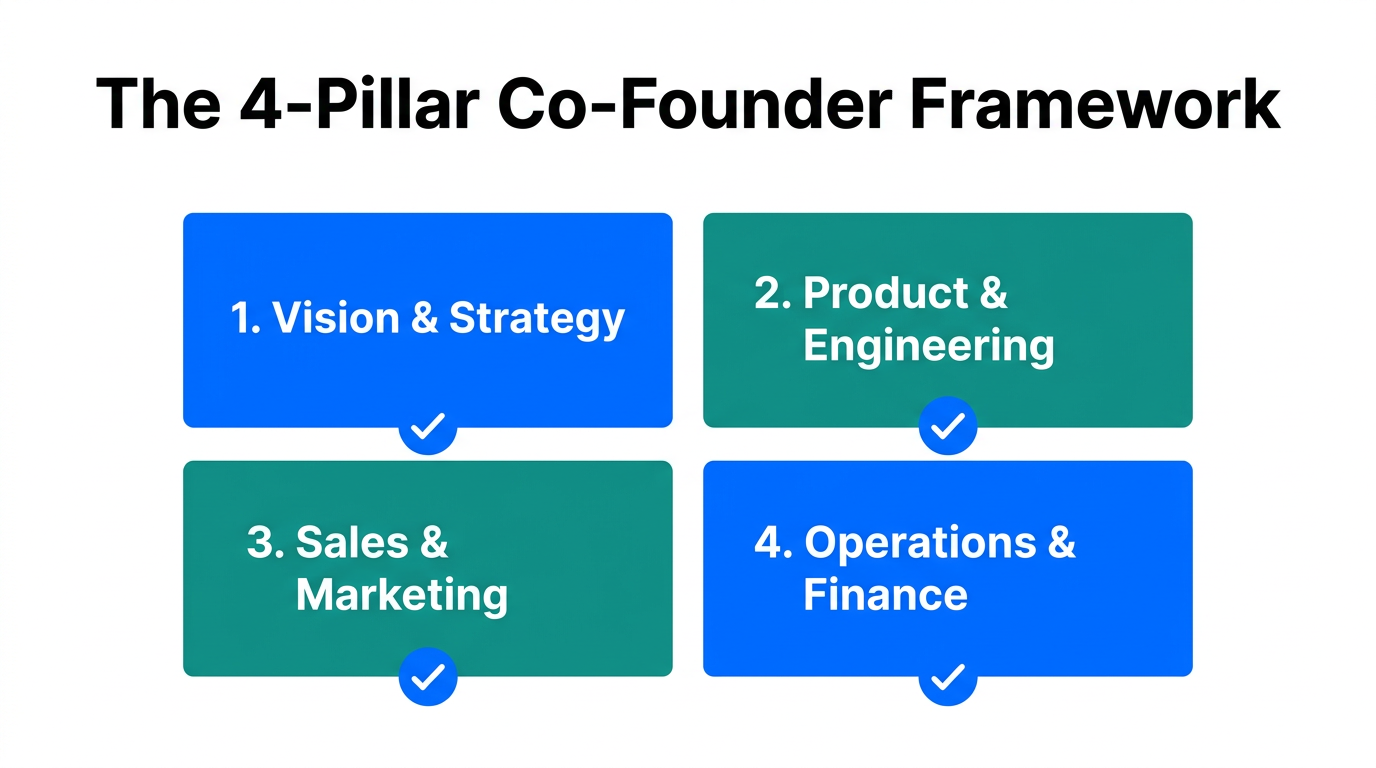
Most startups fail because the founders have overlapping skills or, conversely, massive gaps in critical areas. Andre’s success with List Kit stems from a rigid 4-pillar leadership structure. In this model, every co-founder owns a specific domain, preventing the decision-making paralysis that kills speed. This allows the team to operate as a cohesive unit where the CEO, Marketing, Sales, and Technology arms are independently elite.
"You need to find people with the best skills in the world for their specific domain—if you aren't the best at marketing, find a marketing genius who is."
For List Kit, this meant splitting responsibilities among five co-founders. Andre acts as the CEO and team leader, while Daniel and Christian function as "Marketing Geniuses" handling funnels, content, and Meta Ads. Dan leads the sales team, and Oliver, the CTO, handles the technical execution. This saas co-founder roles framework ensures that no single person is a bottleneck. When scaling a startup in 2026, complementary skill sets are non-negotiable.
| Role | Primary Responsibility | Key Metric Owned |
|---|---|---|
| CEO (Leader) | Vision, Strategy, Team Coordination | Overall ARR & Profitability |
| Marketing | Ads, Funnels, Content, Lead Gen | CAC (Customer Acquisition Cost) |
| Sales | Outbound, Closing, Sales Team Mgmt | New Logo Revenue |
| CTO (Technology) | Product Development, Stability | Churn Rate & Product Velocity |
The Global Hiring Strategy: Why Lebanon and Ukraine are 2026 Powerhouses
Discover the global hiring framework used to manage a growing team of forty people.
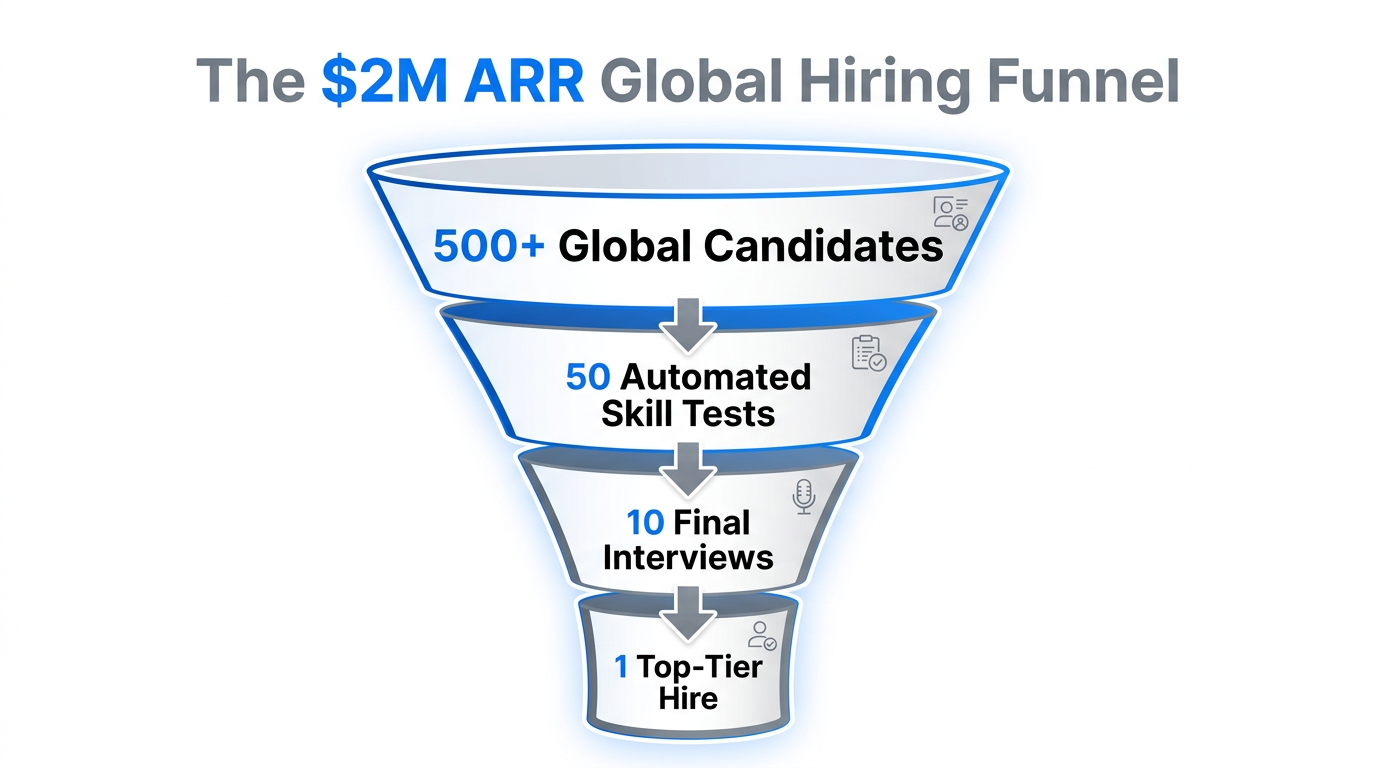
Scaling to 40+ employees while maintaining profitable business scaling in 2026 requires a departure from traditional US-centric hiring. The List Kit hiring strategy relies heavily on offshore talent hubs, specifically in Lebanon and Ukraine. For many founders, the idea of a large team is synonymous with massive overhead, but the reality of global remote work changes the math significantly.
By hiring Customer Success (CS) representatives in Lebanon and developers in Ukraine, List Kit accesses "the hardest workers you've ever come across" at a fraction of the cost of Silicon Valley talent. While a US-based CS rep might cost $70,000 annually, elite talent in Lebanon can be found for $1,000 to $2,000 a month. These individuals are often better communicators and more dedicated to the mission than their local counterparts.
Managing a remote team of this size requires robust systems. Startups in this bracket often pair their core CRM with tools for discovering and managing creator relationships to fuel their organic growth. Using AI-driven workflows, brands can automate the outreach and management of the creators who provide the UGC (User Generated Content) needed for their ads, further leaning into the "automation-first" mindset.
Maintaining Profitability with 40+ Employees
Andre shares the specific strategy for scaling List Kit from $1M to $2M ARR.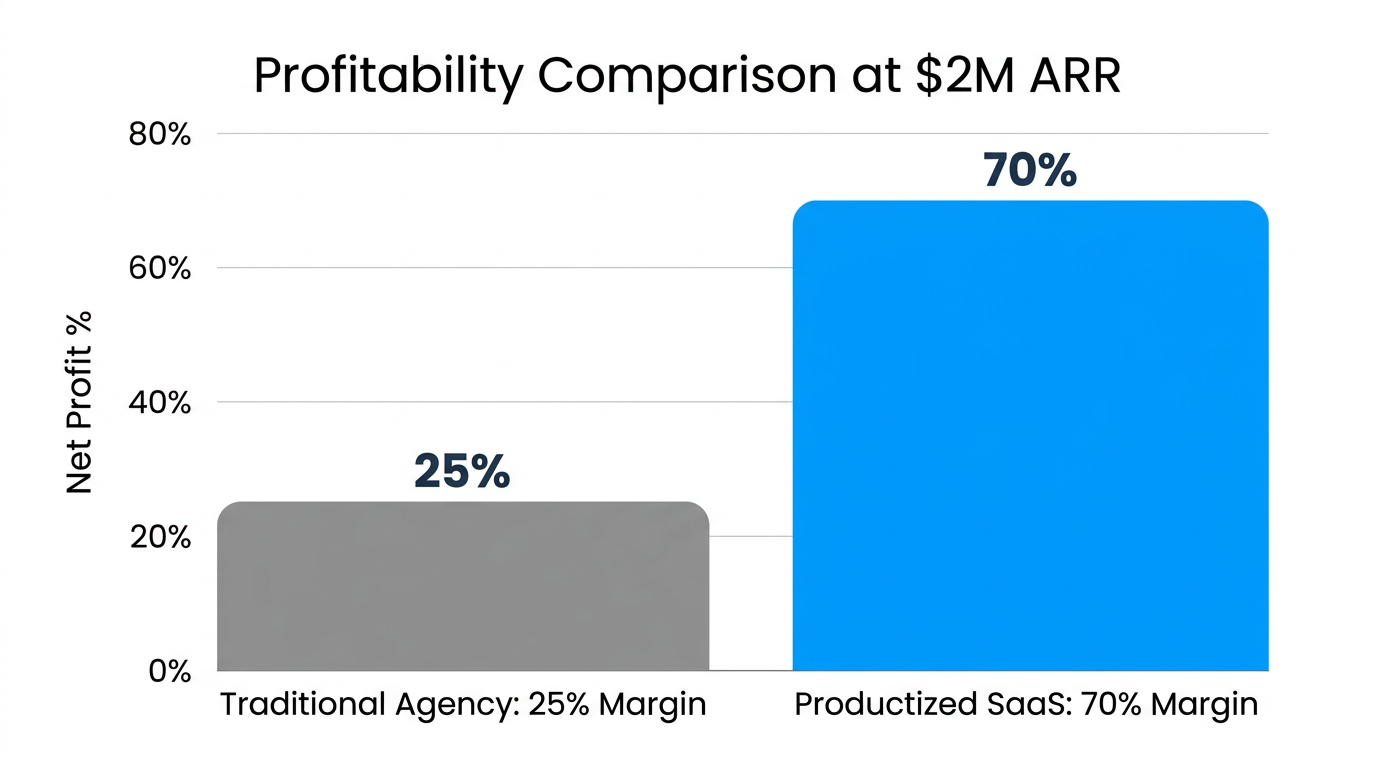
Many SaaS companies see their margins evaporate as they cross the $2M ARR threshold. To stay profitable, List Kit focuses on two major levers: Low Churn and Efficient Acquisition. Instead of offering a standard free trial, which often attracts "freebie seekers," they use a money-back guarantee. This ensures that every user entering the system is a committed buyer, improving the quality of the feedback loop and the health of the cash flow.
"Free trials can attract the wrong crowd. A money-back guarantee frames the offer like a trial but collects revenue immediately, allowing you to reinvest in growth today."
Their acquisition stack is diversified across three main channels:
- Cold Email: Using their own tool to dogfood the product.
- Paid Ads: Scaling past $400/day requires constant creative testing on TikTok Ads and Meta.
- Content Marketing: Leveraging their co-founders' personal brands to build trust and authority on platforms like X/Twitter and LinkedIn.
The Productized SaaS Model: Validating Before You Build
Learn how the business transitioned from a productized service into a scalable SaaS model.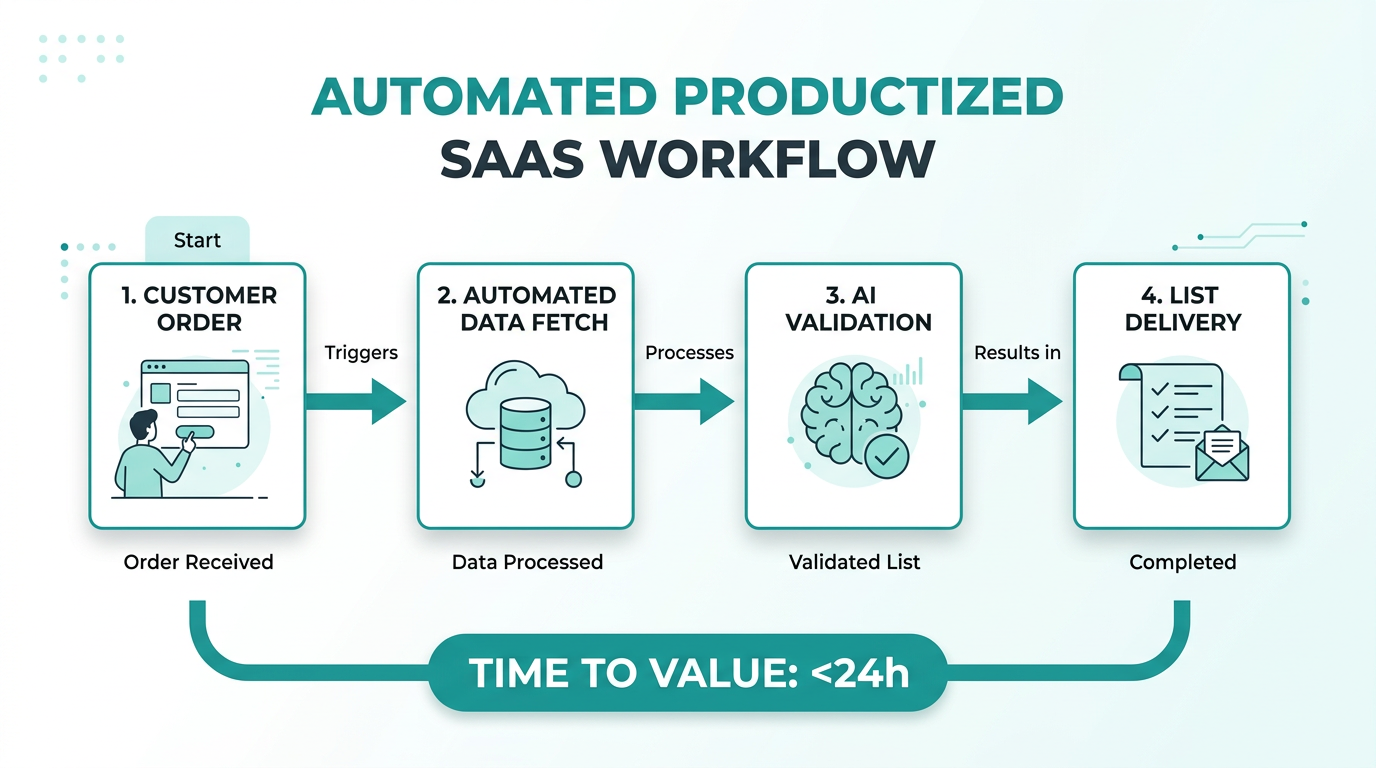
A common mistake in remote team management for startups is hiring developers too early. Before List Kit was a fully-fledged software, it was a productized service. Customers would order leads on the website, and the team would fulfill the order manually behind the scenes. This "Mechanical Turk" approach allowed the founders to prove the market demand and gather research without spending a dime on development fees initially.
Only after they knew exactly what customers wanted—specifically, verified, triple-cleaned leads that didn't bounce—did they invest heavily in building the software. This transition from service to SaaS is the ultimate de-risking strategy for any founder in 2026. It ensures that when you finally do hire that offshore dev team in Ukraine, you are building a product that people are already paying for.
The Founder Mindset: Inputs vs. Outputs
Essential mindset advice for young entrepreneurs looking to build and scale their own companies.Perhaps the most critical part of the List Kit scaling playbook is the mental shift from focusing on results to focusing on controllable actions. Andre emphasizes that for the first four years, his entrepreneurial journey was far from a success. He burned through thousands of dollars on failed developers and nearly gave up.
The breakthrough came from staying consistent with inputs. You cannot control if a lead responds or if a market shifts, but you can control how many emails you send, how many ad creatives you test, and how many customer onboarding calls you take. In 2026, the winners are those who stay in the game long enough to get lucky and then double down when they do.
"It's an inputs game over an outputs game. You can control the inputs; let the results take care of themselves."
Conclusion: The Road to $2M and Beyond
Building a $2M ARR engine in 2026 requires more than just a good idea. It requires a global team scaling strategy that prioritizes efficiency, a co-founder structure built on complementary strengths, and a productized approach to validation. By looking to markets like Lebanon and Ukraine for elite talent and focusing on relentless execution of daily inputs, founders can build businesses that are not only large but highly profitable.
If you're ready to start scaling your creator and influencer acquisition as part of your marketing pillar, platforms like Stormy AI can help you discover, vet, and outreach to the talent you need to dominate your niche. Success in 2026 is about using the right tools and the right people to build a machine that works while you sleep.