In the current digital landscape, the most stable business you can build is an email-based one. Whether you are a solo creator or a VC-backed founder, your email list is the only asset you truly own. While social media algorithms change overnight, your ability to land in an inbox remains constant. But the biggest challenge isn't writing the content—it is the initial acquisition. Many creators struggle with email capture strategies that fail to convert high-intent social followers into long-term readers. If you are just asking people to 'sign up for my weekly updates,' you are leaving thousands of subscribers on the table. To truly scale, you need a high-value digital asset—a lead magnet—that solves a specific problem for your audience instantly.
The Psychology of the Lead Magnet: Solving a Specific Problem
At its core, a lead magnet is an ethical bribe. You are offering a specific piece of value in exchange for a piece of personal data: the email address. The mistake most creators make is being too broad. A general 'guide to marketing' isn't nearly as effective as a 'cheatsheet for $0 to $10k MRR.' The key is targeting your Ideal Customer Profile (ICP). If your magnet is too generic, you attract 'tourists' who will never open your emails or buy your products.
As highlighted by Beehiiv CEO Tyler Denk, effective growth isn't about one silver bullet; it’s a compounding effect of 8 to 10 different strategies working together. One of those is the psychological principle of investment. Based on the framework from Nir Eyal’s Hooked, once a user invests a small amount of effort—like filling out a survey or downloading a resource—they are more likely to commit to the brand long-term. This is why newsletter lead magnets are so powerful: they start the relationship with a win for the subscriber.
Case Study: The $1.6M Seed-Round Pitch Deck Lead Magnet
One of the most successful examples of lead generation for creators involves using 'Building in Public' assets. Tyler Denk recently shared how a simple tweet about a 'shitty' Windows-98-themed seed deck generated massive growth for his newsletter, Big Desk Energy. By sharing the actual deck used to raise $1.6 million for his startup, he tapped into a high-intent audience of founders and tech enthusiasts [source: TechCrunch].
Instead of just talking about fundraising, he offered the raw asset. When users clicked his link on Twitter or LinkedIn, they were sent to one of his high converting landing pages that featured a simple email gate. The results were staggering: tens of thousands of views and a high conversion rate of people signing up just to see that specific deck. Because the lead magnet was so closely aligned with the newsletter’s topic (startups and growth), the new subscribers were high-quality and stayed engaged long after the download.
Step 1: Building Custom Automation Journeys
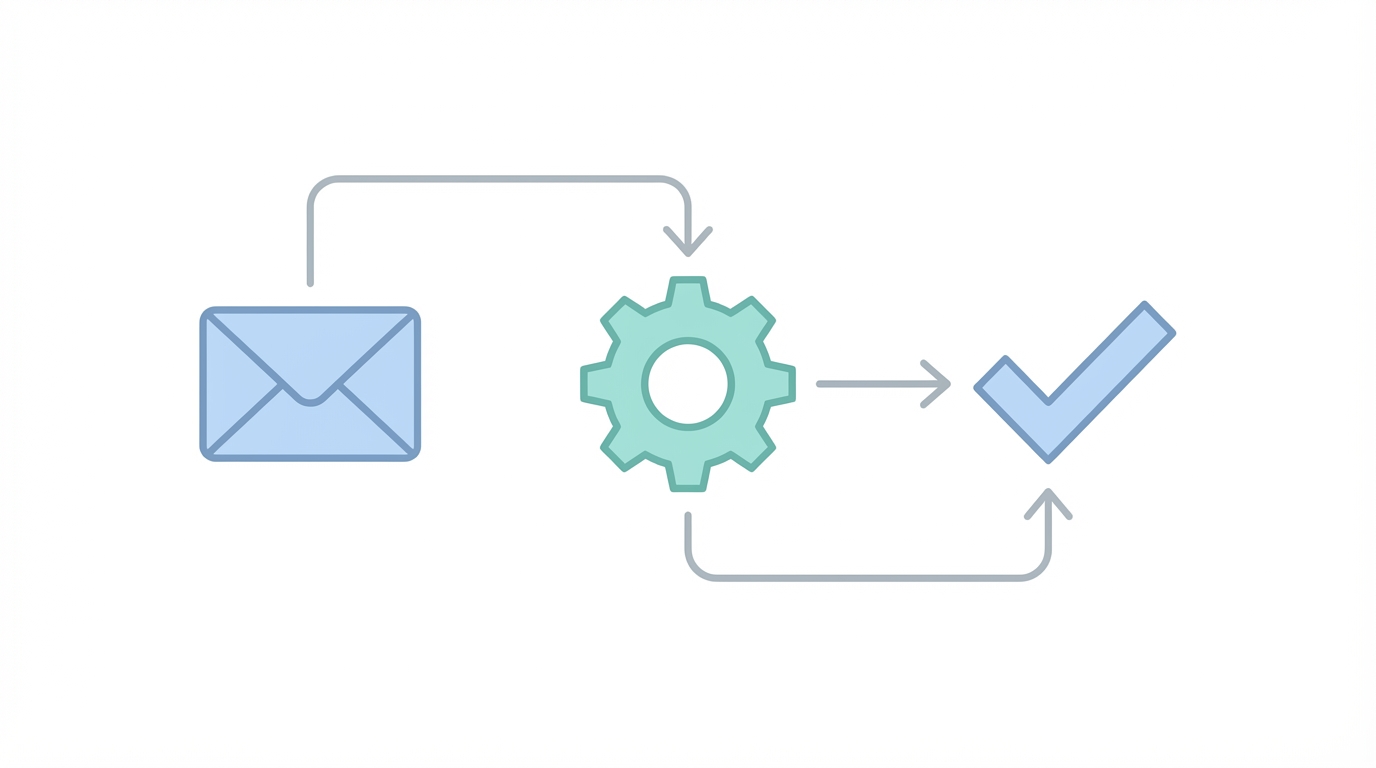
Once you have your lead magnet, the delivery must be frictionless. You cannot manually email every new subscriber a PDF. You need to build a custom automation journey that triggers the moment they hit 'Submit.' Using platforms like Beehiiv, you can set up different flows for different magnets.
Instant Asset Delivery
Your first automated email should contain the download link immediately. If a user has to wait ten minutes for their 'freebie,' they have already lost interest. Modern tools allow for native downloads where the file is embedded directly in the email. This reduces the number of clicks and improves the user experience.
The Welcome Series Sequence
Your automation shouldn't stop at the download. A sophisticated welcome series might look like this:
- Day 0: The Lead Magnet delivery + a brief intro to who you are.
- Day 1: A follow-up asking if they had a chance to read the asset.
- Day 3: A survey to collect data (Role, Goal, Skillset).
- Day 5: A 'Best Of' list of your most popular newsletter posts.
By the time they receive your first regular weekly newsletter, they have already interacted with your brand four times. This builds instant trust and humanizes the person behind the screen.
Step 2: A/B Testing Subscribe Pages and Pop-ups

Not all traffic is created equal. A visitor coming from a professional LinkedIn post has a different mindset than someone clicking a viral thread on X (formerly Twitter). To maximize your email capture strategies, you should customize your landing pages and pop-ups based on the traffic source.
Advanced publishers use logic-based pop-ups. For example, if the UTM source is 'Twitter,' you might show a pop-up that uses more casual, punchy language. If the source is 'LinkedIn,' the language should be more professional and results-oriented. You can even create entirely different high converting landing pages for different platforms to see which audience converts at a lower cost per acquisition (CAC).
Step 3: Tracking ROI and Subscriber Quality
Growth is a vanity metric if those subscribers never open your emails. To run your newsletter like a business, you need to treat it like a vending machine. If you spend $2.50 to acquire a subscriber through a lead magnet, but that subscriber generates $4.00 in revenue via sponsorships or products, you have an infinite growth loop [source: IAB].
Using UTM Parameters
You must use UTM parameters to track where every single subscriber comes from. This allows you to see which lead magnets drive 'active' readers versus 'passive' ones. Using documentation from Google Analytics (GA4), you can track which 'Startup Ideas' magnet has a 60% open rate versus your 'Life Hacks' magnet which only has a 20% open rate, so you know where to double down your marketing spend.
First-Party Data Collection
One of the most overlooked steps in lead generation for creators is the post-signup survey. Asking four simple questions—First Name, Role, Skillset, and 12-Month Goal—allows you to segment your audience. This data is gold for monetization. If you can tell an advertiser that 60% of your audience are 'Founders,' you can charge a much higher premium for ad spots. Tools that integrate with Stripe for payments and Fourthwall for merch fulfillment thrive on this type of granular audience data.
The Power of Content Gating
Content gating is the practice of making a high-value article or resource accessible only after the user provides their email [source: Wikipedia]. This is essentially turning your regular newsletter posts into a series of mini-lead magnets. If you have a deep-dive article that provides immense value, don't give it all away for free on the web. Let them read the first 20%, then 'gate' the rest behind a subscribe form.
This strategy works because the reader is already engaged. They have started the article, they see the value, and the 'cost' of entry (an email address) is low compared to the information they are about to receive. It is one of the fastest ways to convert 'drive-by' traffic into loyal subscribers.
Scaling Your Lead Magnet with Influencer Partnerships

Once you have a lead magnet that converts at 15-20%, the next step is to pour gasoline on the fire. You can do this by partnering with other creators to promote your digital asset. Instead of just running cold ads, you can work with influencers whose audience matches your ICP. For example, if your lead magnet is a 'SaaS Growth Template,' you want to be featured in newsletters and social feeds of creators who talk about software development and startups.
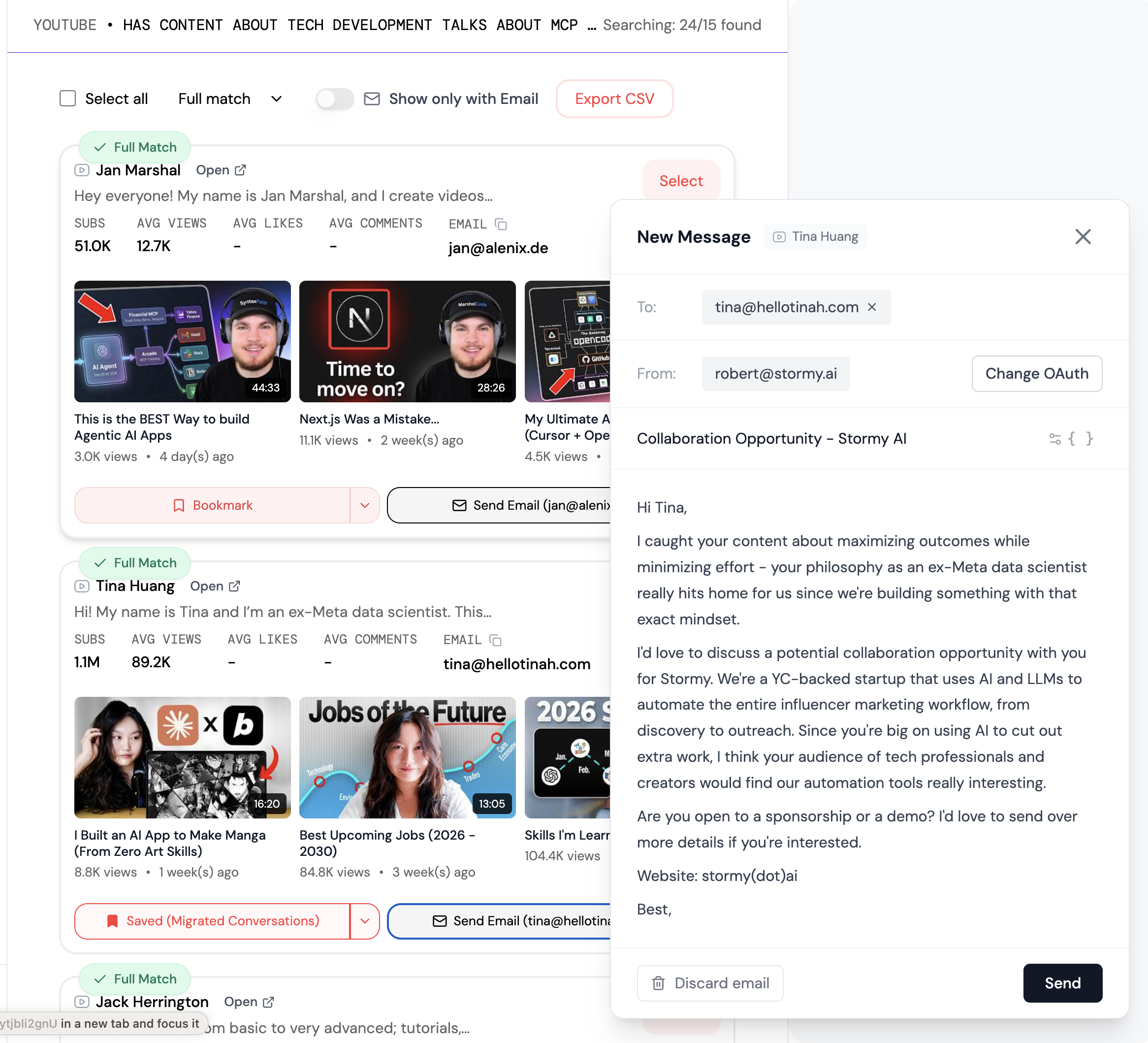
Finding the right partners can be time-consuming, but platforms like Stormy AI streamline creator sourcing and outreach. By identifying UGC creators with high engagement and authentic audiences, you can get your lead magnet in front of thousands of potential subscribers who already trust the person recommending it. You can even use a creator CRM to track which influencer partnerships drive the highest quality subscribers to your automated funnels.
Conclusion: From Passive Reader to Loyal Subscriber
Doubling your newsletter conversion rate isn't about magic; it’s about relevance and automation. By moving away from generic 'Join my list' calls-to-action and toward high-value newsletter lead magnets, you provide immediate utility. Combine this with content gating and source-specific email capture strategies, and you transform your newsletter from a hobby into a high-growth business.
Start by identifying one raw asset you already have—a template, a deck, or a exclusive video—and build a simple automation around it. As your list grows, use data to refine your audience and scale your reach through partnerships. If you're ready to start building your own 'vending machine' of growth, explore the discovery tools and creator management features on Stormy AI to find the perfect partners for your next campaign.