The era of the "non-technical founder" being at a disadvantage is officially over. In 2026, the barrier between an idea and a functional software product has been reduced to a conversation. We have entered the age of vibe coding—a paradigm shift where founders use natural language, AI agents, and rapid prototyping tools to build scalable businesses without ever touching a traditional IDE. If you can describe it, you can build it. This bolt.new business guide provides a step-by-step roadmap for taking a trend from validation to a fully functional micro-SaaS in under 30 days.
The Founder Fit Score: Validating Trends with Idea Browser
 27:16
27:16Success in 2026 isn't just about having an idea; it's about finding the right trend at the right time. Most founders fail because they chase markets that are either too saturated or don't align with their personal strengths. This is where Idea Browser has become an essential tool in the modern founder's stack. It acts as a productized co-founder, scraping platforms like Reddit, YouTube, and X to identify emerging niches with high opportunity scores.
One of the most powerful features is the Founder Fit Score. It’s not enough for an idea to be good; it has to be good for you. By analyzing your skills—whether they lie in community building, sales, or design—the AI generates an assessment of your alignment with the business model. For instance, if you're looking for AI micro-saas ideas 2026, you might stumble upon the concept of "LLM SEO"—the practice of optimizing brands to show up in ChatGPT, Claude, and Perplexity searches. While the market gap is massive, Idea Browser might give you a 6.5/10 if your background is purely in logistics, but a 9/10 if you have experience in digital marketing or Google Ads.
"In 2026, the bottleneck isn't the code; it's the quality of your vision and the clarity of your prompts."
Rapid Prototyping with tldraw: Visualizing Your User Funnel
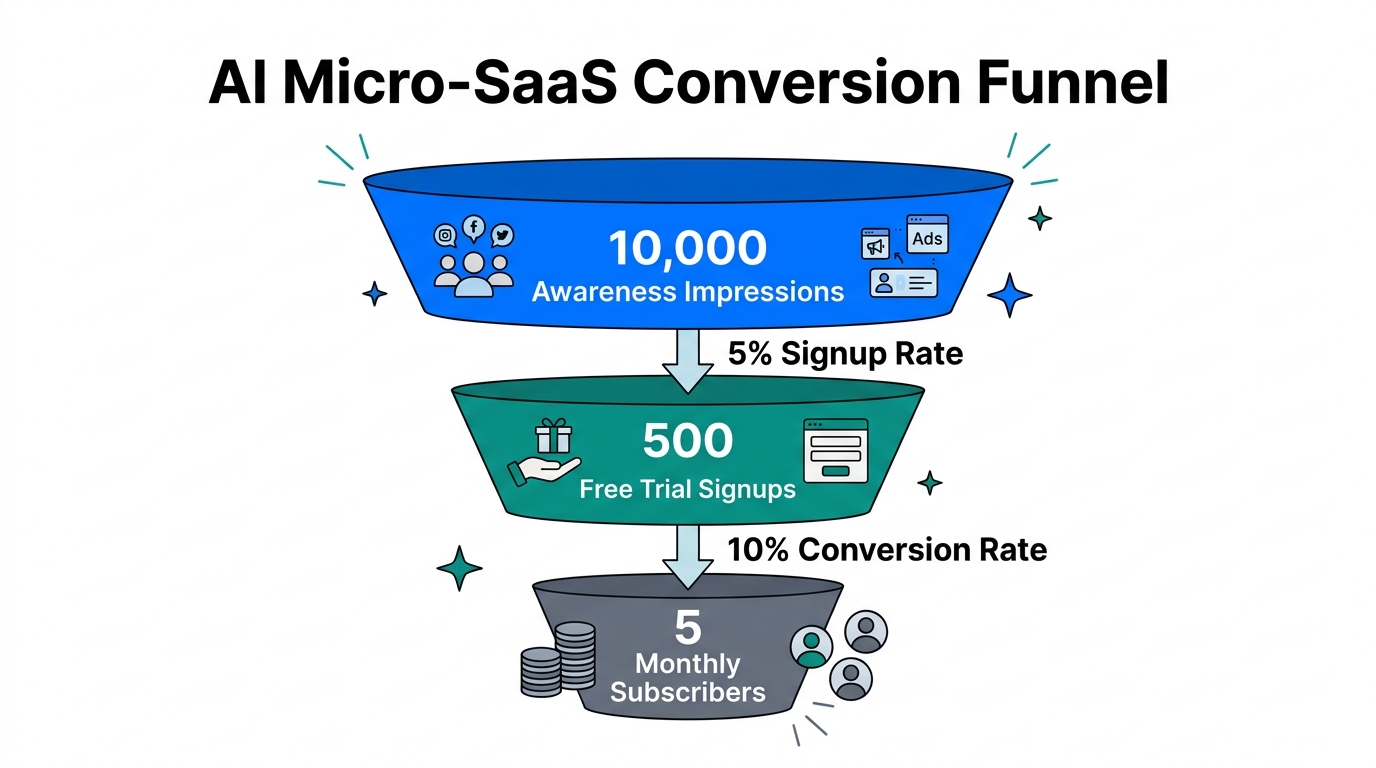
Before you prompt an AI to build your software, you need to visualize the user journey. Many founders make the mistake of jumping straight into code without a blueprint. Tools like tldraw have revolutionized this process for "bad drawers." It allows you to sketch out your user funnel—landing pages, quiz screens, and result dashboards—in a free-form digital canvas.
The secret hack for 2026 is that LLMs process visual context better than text alone. When you draw a box and label it "Input Field for Website URL" on tldraw and then feed that screenshot into an AI agent, the resulting code is exponentially more accurate. It bridges the gap between your mental model and the machine's execution. Whether you are using Figma or tldraw, the goal is to spend seven minutes sketching to save seven days of debugging.
The AI Product Manager: Scoping Your MVP with Manus
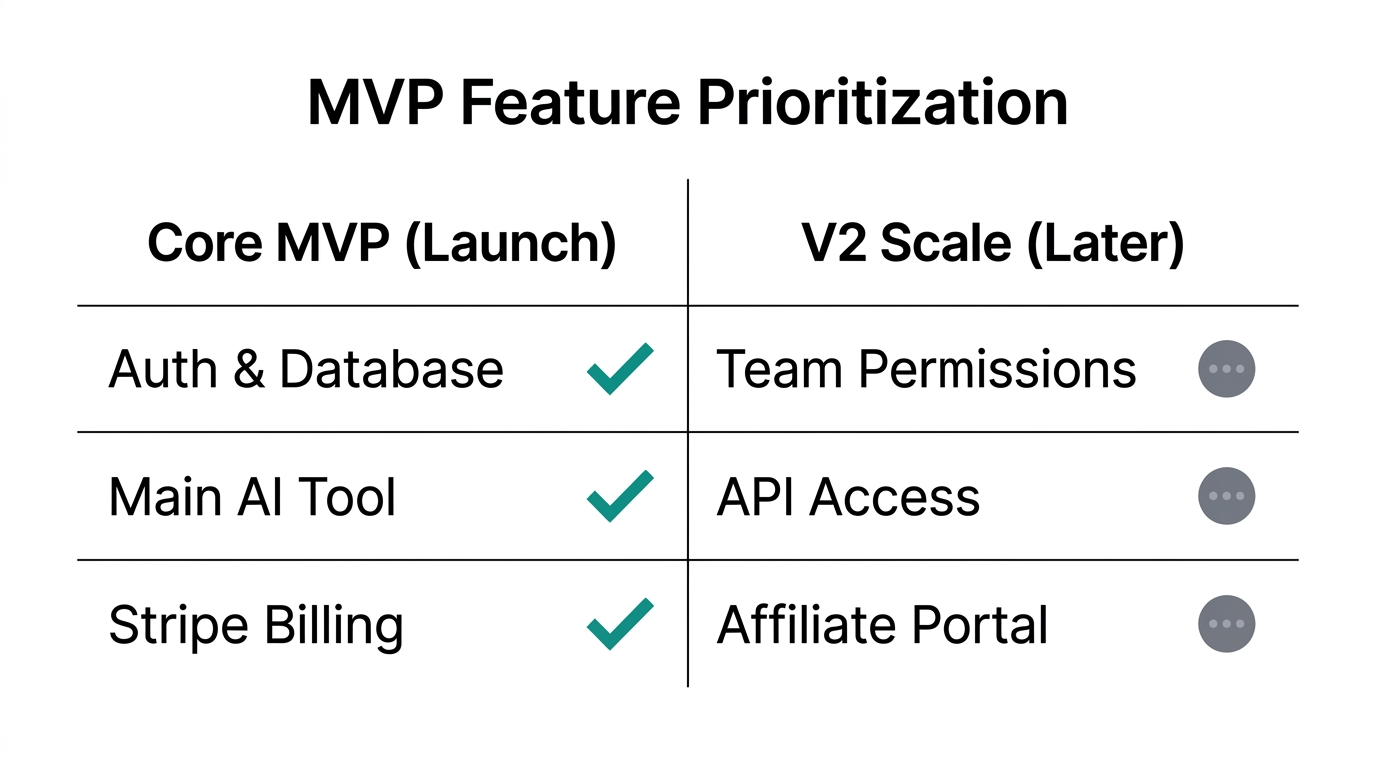
Once you have a trend and a sketch, you need a project plan. Enter Manus, a general AI agent that doesn't just think—it delivers results. Unlike standard chatbots, Manus surfs the web in real-time, analyzes competitors, and builds a comprehensive to-do list for your project. If you are launching an LLM SEO agency, Manus will research exactly how OpenAI Search and Claude's indexing work, then draft the precise questions your MVP needs to ask users.
Using Manus is like having a McKinsey consultant and a Senior Product Manager on your payroll for free. It breaks the build into phases: research, prompt development, validation, and delivery. It can even critique your idea from the perspective of a "cold-hearted operations expert" or a "tech-optimist VC." This rigorous scoping ensures that when you finally move to the build phase, you aren't wasting time on features that don't drive value.
The 'Vibe Coding' Framework: Building with bolt.new
44:46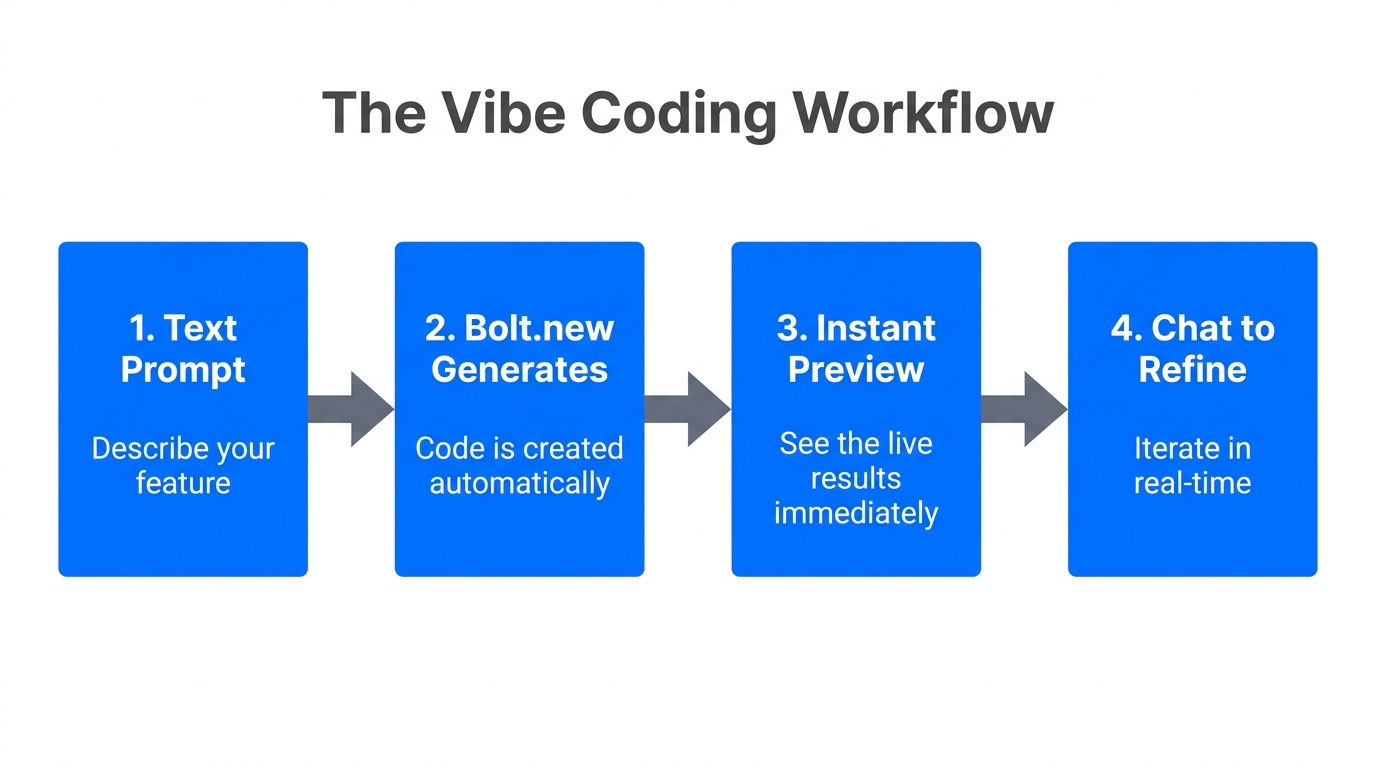
Now we reach the core of the low-code GTM strategy: the actual build. bolt.new is the premier platform for non-technical founders to ship functional web applications. Through vibe coding, you provide the AI with a massive, high-context prompt—often generated by Manus—and watch as it one-shots your entire front-end and back-end logic.
| Feature | Old Way (2024) | New Way (2026) |
|---|---|---|
| Development Time | 3-6 Months | 1-2 Hours |
| Team Needed | Dev, Designer, PM | Solopreneur + AI Agents |
| Cost | $50k - $150k | <$500 (API Credits) |
| Deployment | Manual Server Setup | Instant Vercel/Netlify |
With vibe coding for founders, you aren't writing syntax; you're managing outcomes. If the AI builds a landing page for your "LLM Boost" SaaS and the button looks off, you don't edit the CSS. You tell the AI, "Make this feel more like a premium fintech product," and it adjusts the entire design system. This allows for rapid iteration that was previously impossible. You can build a landing page, a multi-step quiz funnel, and a results dashboard in a single afternoon.
Beyond the Prototype: Integrating Stripe and Supabase
A pretty landing page is a brochure; a database and a payment gateway make it a business. To transition from a prototype to a scalable tech product, you must hook your vibe-coded front-end into a robust infrastructure. In 2026, the standard stack for AI micro-SaaS involves Supabase for data storage and Stripe for monetization.
Because bolt.new understands modern web frameworks, you can simply prompt it to "Add a subscription tier using Stripe Checkout" or "Store all user quiz results in a Supabase table." The AI handles the API integrations, webhooks, and secure authentication. This turns your "vibe" into a legitimate AI micro-saas idea that can actually collect revenue while you sleep. For those moving fast, linking these tools via Zapier or Make can provide even more flexibility in the early days.
"The goal isn't to build the perfect software; it's to build a software that solves a perfect problem."
Vibe Marketing: Scaling Customer Acquisition on Autopilot
29:53Building the product is only half the battle. The most successful founders in 2026 use "Vibe Marketing"—a system of automated outreach and engagement powered by AI agents. Tools like Lindy.ai allow you to create complex workflows that monitor social signals and trigger personalized responses.
For example, if a VP of Product at a major company likes your LinkedIn post about LLM SEO, Lindy.ai can instantly enrich that lead's data, check their company size, and notify your team in Slack. If the lead is qualified, the AI can even draft a hyper-personalized email referencing their recent work. This is where platforms like Stormy AI also shine; if your growth strategy involves influencer partnerships, Stormy's AI agents can discover, outreach, and follow up with creators on a daily schedule, ensuring your brand stays top-of-mind without manual effort.
From MVP to Market: Transitioning in Under 30 Days
41:43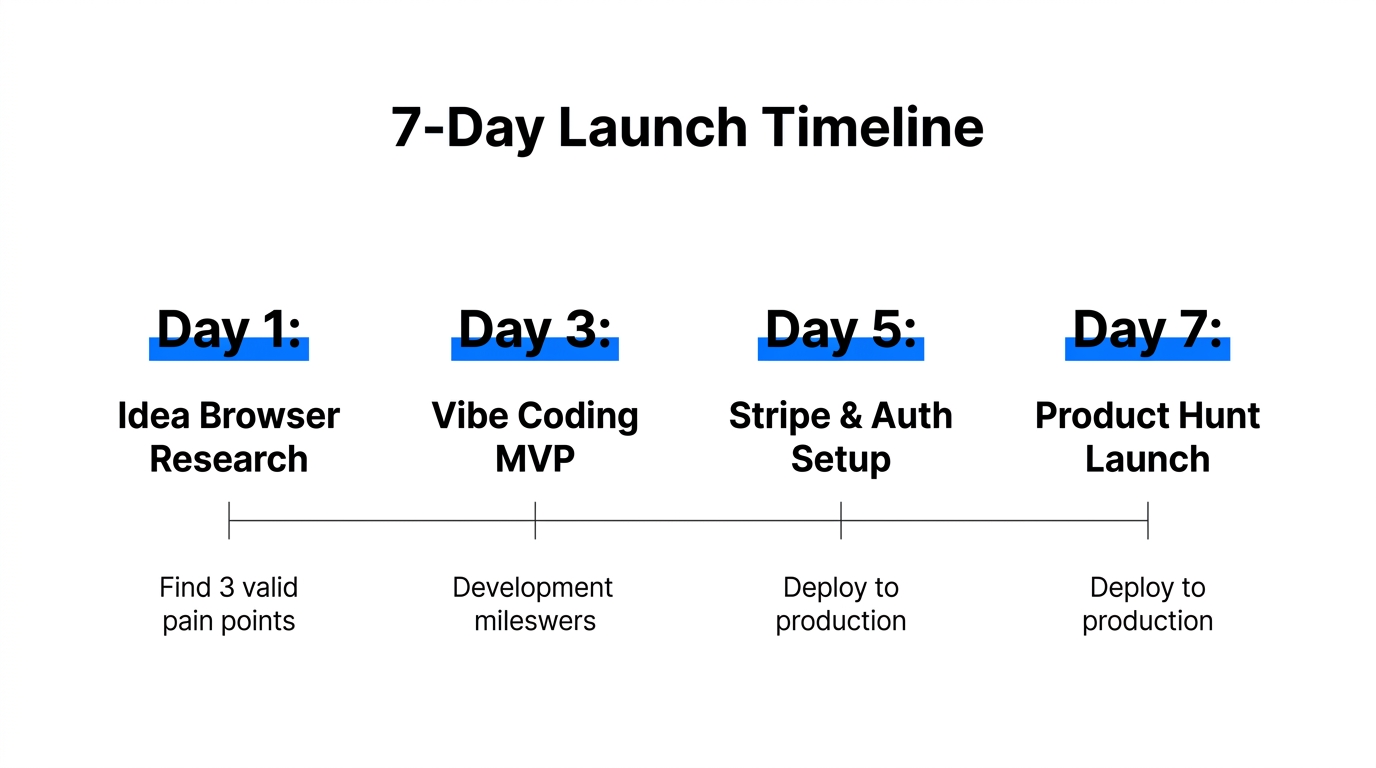
The transition from a service-based business (like a consulting agency) to a scalable SaaS is the ultimate goal for most founders. By productizing your knowledge into a tool—like an automated SEO audit—you shift from trading hours for dollars to generating recurring revenue. This doesn't mean you stop offering services; rather, the software becomes your "low-friction" entry point that leads into high-ticket partnerships.
In 2026, the strategy is simple:
- Identify a high-intent trend using Idea Browser.
- Scope the logic and project plan with Manus.
- Build the core functional prototype on bolt.new.
- Automate growth using Lindy.ai and Stormy AI for creator-led distribution.
- Scale by moving from "vibe coding" to more robust tools like Cursor or Replit as your user base grows.
The Future belongs to the Idea People
As we navigate 2026, the definition of a "developer" has expanded. You no longer need to spend years learning Python or React to bring a sophisticated software product to market. By leveraging the stack of Idea Browser, bolt.new, and Lindy.ai, you can move at a speed that would have been unimaginable just two years ago. The tools are ready; the only question is whether your vision is clear enough to prompt them into existence. Start by validating your first idea today, sketch your funnel, and vibe code your way to a million-dollar business.