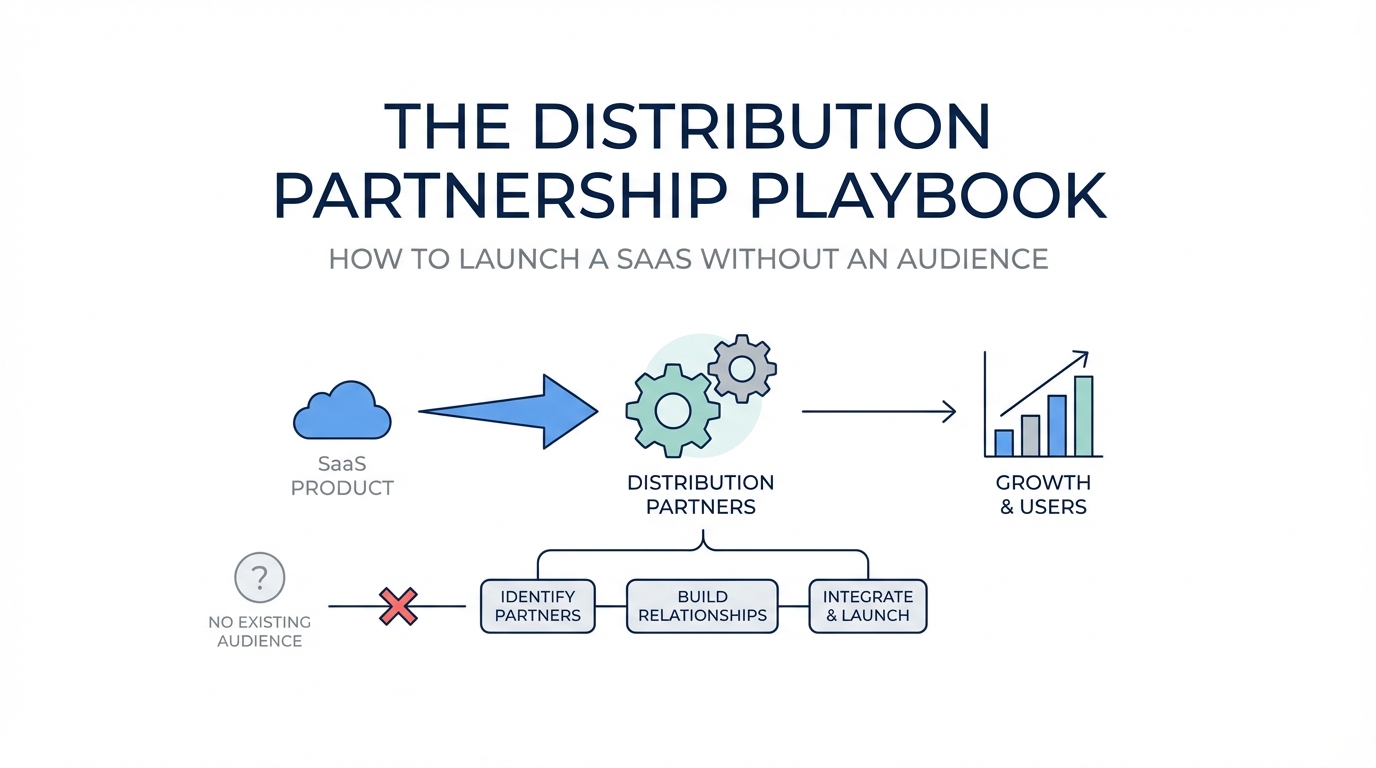
The biggest lie in the software world is that you need a massive personal brand or a pre-existing email list to find success. We’ve all seen the advice: tweet for six months, build a newsletter, and maybe—just maybe—when you launch your product, someone will care. But for most founders, this is the ultimate bottleneck. Building an audience from scratch is a grueling, multi-year process that often has nothing to do with building a great product. If you want to launch saas without audience, you need to stop trying to own the crowd and start partnering with the people who already do. By leveraging a strategic saas distribution strategy based on existing communities, you can bypass the 'invisible phase' and achieve instant product-market fit.
The Audience Bottleneck and the Power of Distribution
In the current market, building the software is no longer the hardest part. With tools like AI, the gap between an idea and a functional MVP has shrunk from months to days. The real challenge is distribution. Most developers spend 1,000 hours building a tool only to realize they have zero ways to reach their customers. This is why influencer marketing for saas has become the secret weapon for solo founders. Instead of shouting into the void of Meta Ads Manager and hoping for a low customer acquisition cost, smart founders are looking for 'Distribution Partners'—entities that already have the trust of their target market.
Consider the story of Hassam, a non-technical founder who used a saas partnership marketing approach to go from zero to $20,000 MRR in just 90 days. He didn't have a Twitter following or a YouTube channel. What he had was niche domain knowledge and a clear understanding of where his customers were already hanging out. By identifying a coaching program that served his ideal users, he turned a potential multi-year struggle into a 90-day success story. Platforms like Stormy AI, which serves as an AI search engine for TikTok, YouTube, and Instagram, are built exactly for this purpose, helping founders identify those niche creators and communities where a single partnership can change the trajectory of a business.
How to Identify the Perfect Distribution Partners

The first step in your b2b influencer outreach is finding the right partner. A distribution partner isn't just someone with a lot of followers; it’s an organization or individual whose success is tied to the success of your target user. Think of coaching companies, specialized influencer communities, or niche Discord groups. These partners are constantly looking for ways to provide more value to their members. If your SaaS makes their members more successful, you aren't just a vendor—you're a strategic asset.
When searching for these partners, you should look for:
- Coaching Programs: Groups that teach a specific skill (e.g., Amazon FBA, Shopify dropshipping, or mobile app development).
- Micro-Influencers: Creators who have a highly engaged, specific audience rather than a broad, generic one.
- Industry Communities: Paid Slack or Discord groups where professionals gather to solve specific problems.
Using market research tools like Ahrefs or Sensor Tower can help you identify which niches are currently seeing high growth. Once you find a niche, you can use Stormy AI to browse profiles and filter by niche or audience quality to find the specific creators and UGC experts who are already dominating that space. This allows you to focus your energy on partners who have a proven track record of moving the needle for their audience.
The '48-Hour Demo' Pitch: A Low-Risk, High-Value Proposition
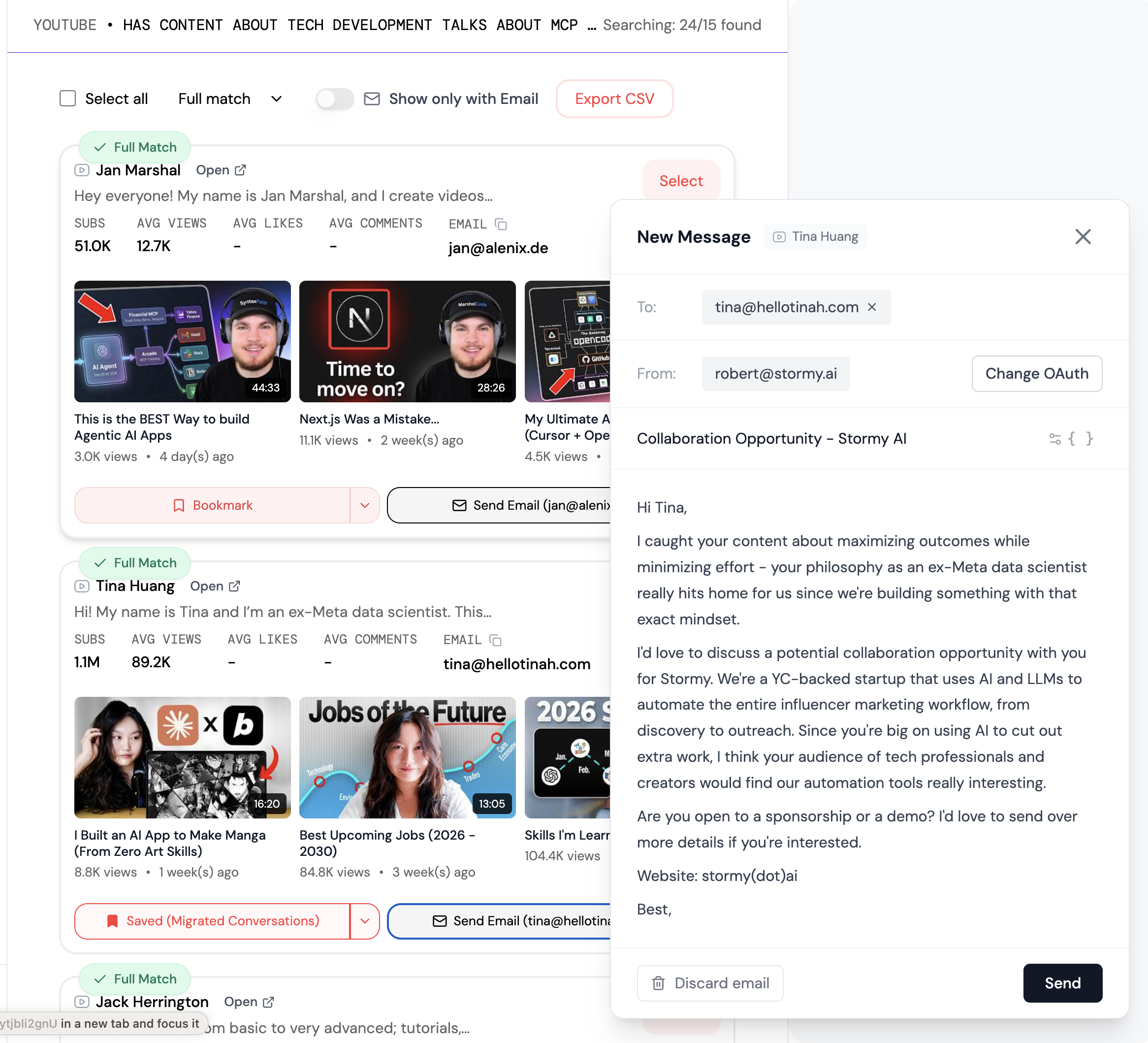
Once you’ve identified a potential partner, the biggest mistake you can make is sending a generic pitch. High-level influencers and coaching companies get hundreds of emails a day. To stand out, you need to prove that you can solve their specific problem with zero risk on their part. This is where the 48-hour demo comes in. Hassam used this exact strategy to land his partnership with Legacy X, a massive Amazon seller coaching company.
The pitch is simple: "I see your students are struggling with [Problem X]. I can build a custom tool that solves this better than anything else on the market. Give me 48 hours to build a demo. If you love it, we can talk about a partnership. If not, no strings attached."
This works because it removes the friction of a long-term commitment. You aren't asking them for money; you're asking for 48 hours to prove your worth. By the time you show them the demo, the value is undeniable. In Hassam's case, his tool, Launch Fast, was built specifically to automate the tedious parts of Amazon product research—something his partner’s students were already doing manually in Google Sheets. By solving a real pain point, he made it impossible for the partner to say no.
Structuring the Deal: Equity vs. Revenue Share
When you launch saas without audience, you have to be willing to trade something for that instant access. Usually, this means giving up a portion of the business. While many founders are hesitant to give up equity, it is often the fastest way to align incentives. In a saas partnership marketing deal, if the partner owns a piece of the tool, they are incentivized to promote it aggressively to their audience.
Hassam chose to offer a significant portion of equity in exchange for exclusive distribution. Within 30 days, he hit $10,000 MRR. By day 90, he was at $21.8K MRR. He notes that while he's sharing the profits, he reached a level of success in three months that would have taken three years on his own. For founders building UGC-heavy apps or mobile tools, this strategy is particularly effective. If you can partner with an influencer who provides the content and the audience, your saas distribution strategy becomes self-sustaining.
Common deal structures include:
- The 50/50 Equity Split: The founder handles all technical aspects and product development, while the partner handles 100% of the marketing and distribution.
- Revenue Share: A higher-than-average affiliate commission (e.g., 40-50%) for every customer the partner brings in.
- White-Labeling: Building the tool as an 'official' part of the partner's existing coaching program or community.
The 6-Step Playbook for Launching Without an Audience
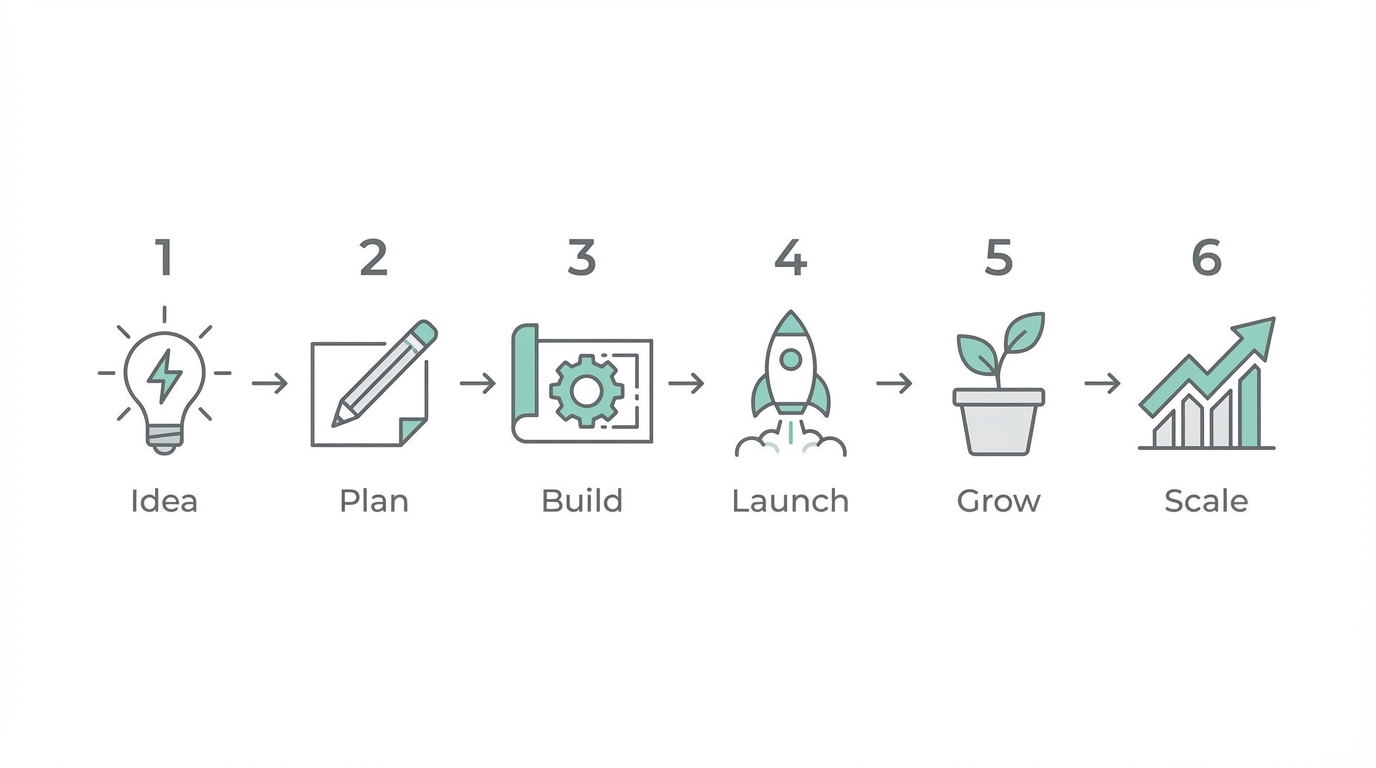
If you’re ready to implement this saas distribution strategy, follow this clear playbook to go from idea to a revenue-generating partnership.
Step 1: Identify Your Niche Domain Knowledge
Stop trying to build generic tools. Write down 3-5 industries where you have deep, personal experience. Hassam failed at 10-12 projects—including AI video generators and job app automators—because he didn't understand the end-user. He succeeded with Launch Fast because he was an Amazon seller himself. Use your unique insights to solve a problem you’ve actually faced.
Step 2: Find Validated Markets
Don't try to invent a new category. Look for niches that already have successful SaaS tools. If competitors are making money, the market exists. Check platforms like Google Ads to see what people are bidding on. You don't need a unique idea; you just need better execution in a proven market.
Step 3: Deep Dive into User Pain Points
Go where the customers are. Spend time in Reddit threads, Facebook groups, and niche forums. Look for what people hate about current tools. Are the tools too slow? Are they too expensive? Do they lack a specific feature? This is where you find your 'hook' for the partnership pitch.
Step 4: Build the MVP with Speed
Use a modern tech stack to ship fast. Hassam used Cursor and Next.js to build his MVP in just 48 hours. Focus on the one feature that provides the highest ROI for the user. It doesn't need to be pretty; it just needs to be functional. Tools like Starter Story Build can teach you the specifics of shipping rapidly with AI.
Step 5: Reach Out to Distribution Partners
List five potential partners who own your target audience. Send them the 48-hour demo pitch. Aim to reach out to at least three by the end of your first week of development. Remember, you are looking for a win-win scenario where your software makes their community more valuable.
Step 6: Iterate and Ship Daily
Once you launch, the work is just beginning. Take every piece of feedback from your partner's audience and turn it into a feature or a fix. Commit to shipping at least one improvement every day for the first 30 days. This builds trust with both the partner and the end-users.
The Modern Tech Stack for Non-Technical Founders
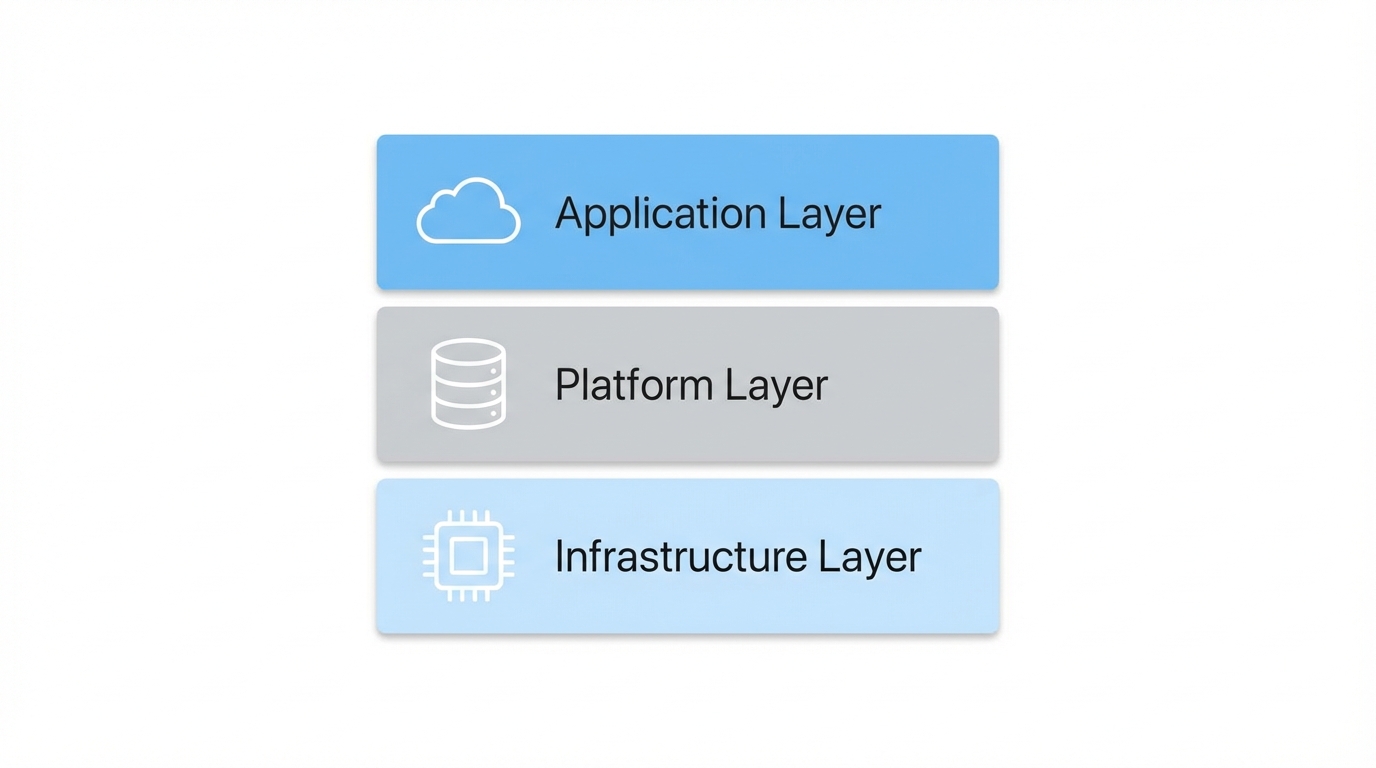
You no longer need a CS degree to build production-quality software. Hassam’s success was built on a lean, AI-friendly stack that allowed him to focus on logic rather than configuration. If you want to launch a saas distribution strategy quickly, consider this stack:
- IDE: Cursor for AI-assisted coding.
- Frontend & Hosting: Next.js hosted on Vercel for seamless deployments.
- Database & Auth: Supabase to handle user data and storage with minimal friction.
- Emails: Resend for personalized developer-friendly onboarding emails.
- Data Aggregation: Apify for scraping and collecting the data that powers your niche tool.
This stack is designed for speed. By minimizing the time you spend on infrastructure, you can maximize the time you spend on b2b influencer outreach and refining your product based on user feedback. For app developers, this is the perfect setup to integrate Apple Search Ads later once you have a stable user base from your initial partnership. Stormy AI is an all-in-one platform that handles everything from discovery to an automated AI outreach agent that follows up with creators while you sleep, which integrates perfectly with this growth-focused stack.
Conclusion: Distribution is the New Moat
In 2025, the code is a commodity, but distribution is a moat. If you want to launch saas without audience, you have to be willing to play the game differently. Stop waiting for your follower count to grow and start looking for the people who are already leading the conversations in your niche. Whether it's through influencer marketing for saas or direct partnerships with coaching companies, the fastest path to $20K MRR is through collaboration, not isolation.
Identify your domain knowledge, build a high-impact demo in 48 hours, and find a partner who can put your tool in front of thousands of users overnight. If you're looking for the right creators to jumpstart this process, tools like Stormy AI can help you find and vet creators with AI-powered quality reports that detect fake followers instantly. Stop planning, stop waiting, and start building. The distribution is already out there—you just have to go and claim it.