The dream of the "one-person million-dollar agency" is no longer a myth. Pioneers like Brett from Designjoy have proven that a solo founder can generate massive revenue by productizing creative services. But the game has changed. We are entering the era of the AI-augmented design agent, where the bottleneck isn't your ability to move pixels, but your ability to direct artificial intelligence. By leveraging a stack of Midjourney, Runway, and ChatGPT, entrepreneurs are now building agencies that can fulfill complex brand and video requests in minutes rather than days. This isn't just about efficiency; it's about a complete shift in the AI design business model that prioritizes high-volume, high-quality output without increasing headcount.
The 'Designjoy' Model: Productizing AI Creativity
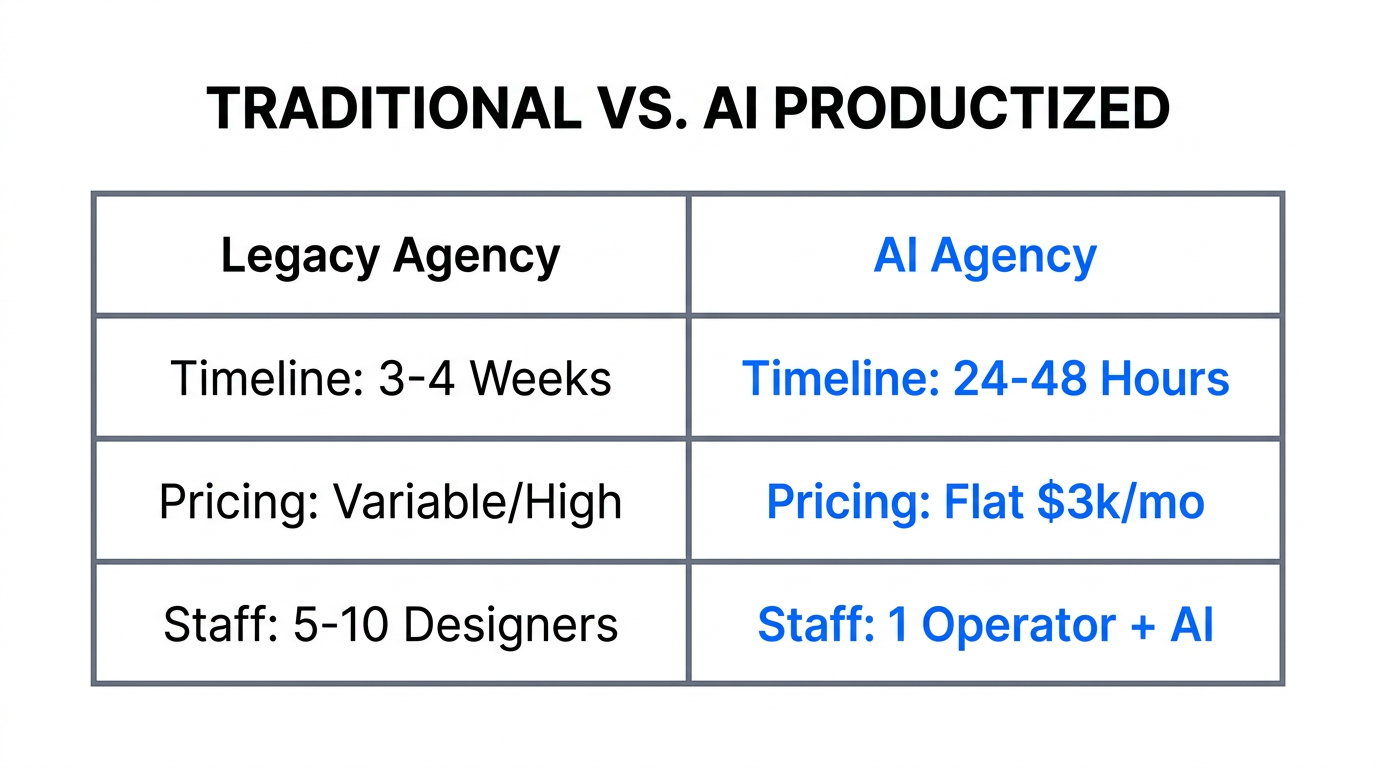
The core of a successful productized design service AI is the removal of friction. Traditional agencies are bogged down by meetings, scoping calls, and endless revisions. The modern AI agency model, inspired by the Designjoy approach, replaces this with a simple subscription: a flat monthly fee for unlimited design requests. In this model, you don't sell hours; you sell an outcome. Because tools like Midjourney and Runway reduce production time for client deliverables by up to 90%, your effective hourly rate skyrockets.
"The hardest part about AI generation is just waiting for the image to generate. The skill issue has been replaced by a taste issue." [Source: Creative Director Insights]
To succeed, you must move away from being a "worker" and toward being a "curator." Your clients aren't paying for you to draw; they are paying for your curated style libraries and your ability to navigate the nuances of generative tools. Whether you are building a fintech startup or a boutique e-commerce brand, the business model remains the same: high-speed execution powered by a refined AI workflow.
The Technical Stack: Integrating ChatGPT, Midjourney, and Runway
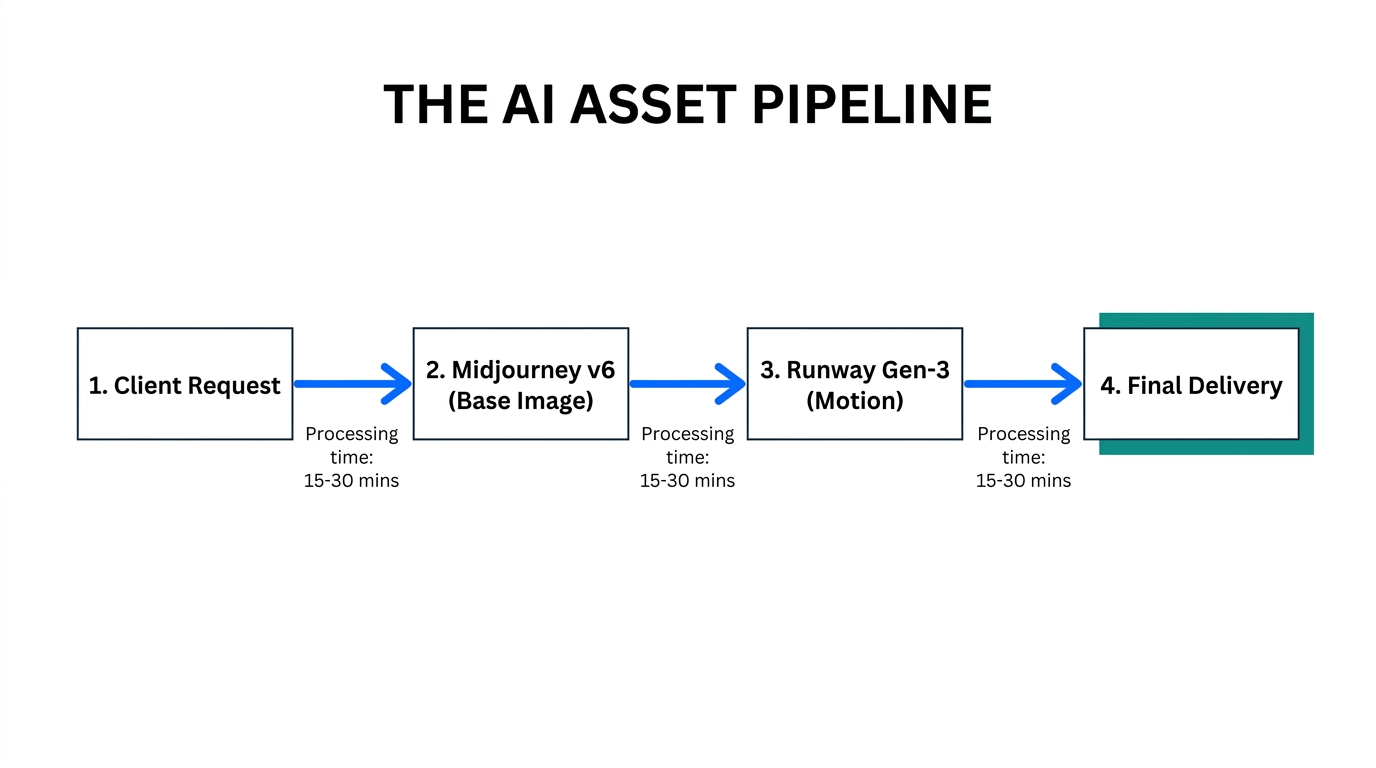
Building a professional-grade workflow requires more than just typing random prompts into a box. To make money with Midjourney, you need a repeatable system. The most effective stack for a Runway for professional designers workflow involves three distinct layers of AI interaction.
Step 1: The Director (ChatGPT)
Most people fail at AI design because they don't "talk like a director." They don't know terms like "dolly in," "isometric 3D," or "Kodak vintage aerial photography." Use ChatGPT as your creative director. Instead of writing prompts yourself, tell ChatGPT: "I am using Runway to add motion to an image of a luxury cabin. Give me a prompt that describes soft water ripples and smoke coming from the chimney in a sophisticated, eloquent way." This ensures your inputs are optimized for the specific quirks of each tool based on prompt engineering principles.
Step 2: The Visual Foundation (Midjourney)
Midjourney is the industry leader for artistic styling. It captures vibe and atmosphere better than any other platform. When you start an AI design agency, you should build a library of style references (SREFs). By using the --sref command, you can maintain brand consistency across hundreds of generated images, ensuring that a client's social media posts look like they belong to the same universe.
| Tool | Primary Role | Key Advantage |
|---|---|---|
| ChatGPT | Prompt Engineering | Eliminates the "skill issue" of describing complex scenes. |
| Midjourney | Static Visuals | Unrivaled artistic styling and brand consistency. |
| Runway | Motion & Video | Professional-grade 4K upscaling and cinematic movement. |
| CapCut | Post-Production | Fastest way to add text overlays and audio. |
Step 3: Cinematic Motion (Runway)
Once you have a base image from Midjourney, you move to Runway for video generation. Runway allows you to upload a reference image and apply specific motion controls. You can even use tools like Luma Dream Machine or Krea.ai for different visual flavors. Finally, use AI sound generation to add an auditory layer to your visuals, creating a full-sensory experience for the client.
Scaling Without Headcount: The Power of Style Libraries
The biggest challenge in a traditional agency is scaling. More clients usually mean more employees, which means more overhead and less profit. In an AI design agency, you scale by building Mood Boards and Style Codes. As discussed in the My First Million podcast, you can create a custom "mood board" for a brand and then use a specific code to replicate that exact aesthetic across every future asset.
This allows you to provide:
- Consistent Social Media Assets: Hundreds of posts that all share the same color grading and "vibe."
- High-Conversion Ad Creative: Cinematic video ads generated from single product photos.
- Productized Branding Packages: Logos, typography, and atmospheric imagery delivered in 24-48 hours.
"You can do remarkable things with very little effort. The goal is to break down the barriers and show that taste is the new technical skill."
As you scale your agency's creative output, you'll find that managing the influx of work requires a robust growth stack. For example, while you use Canva for final layouts, you might use tools like Stormy AI to discover and vet UGC creators who can provide the raw video footage that your AI then enhances or styles. This hybrid approach—combining real human creators with AI post-production—is how elite agencies justify premium pricing.
Pricing Strategies: From Subscriptions to Performance
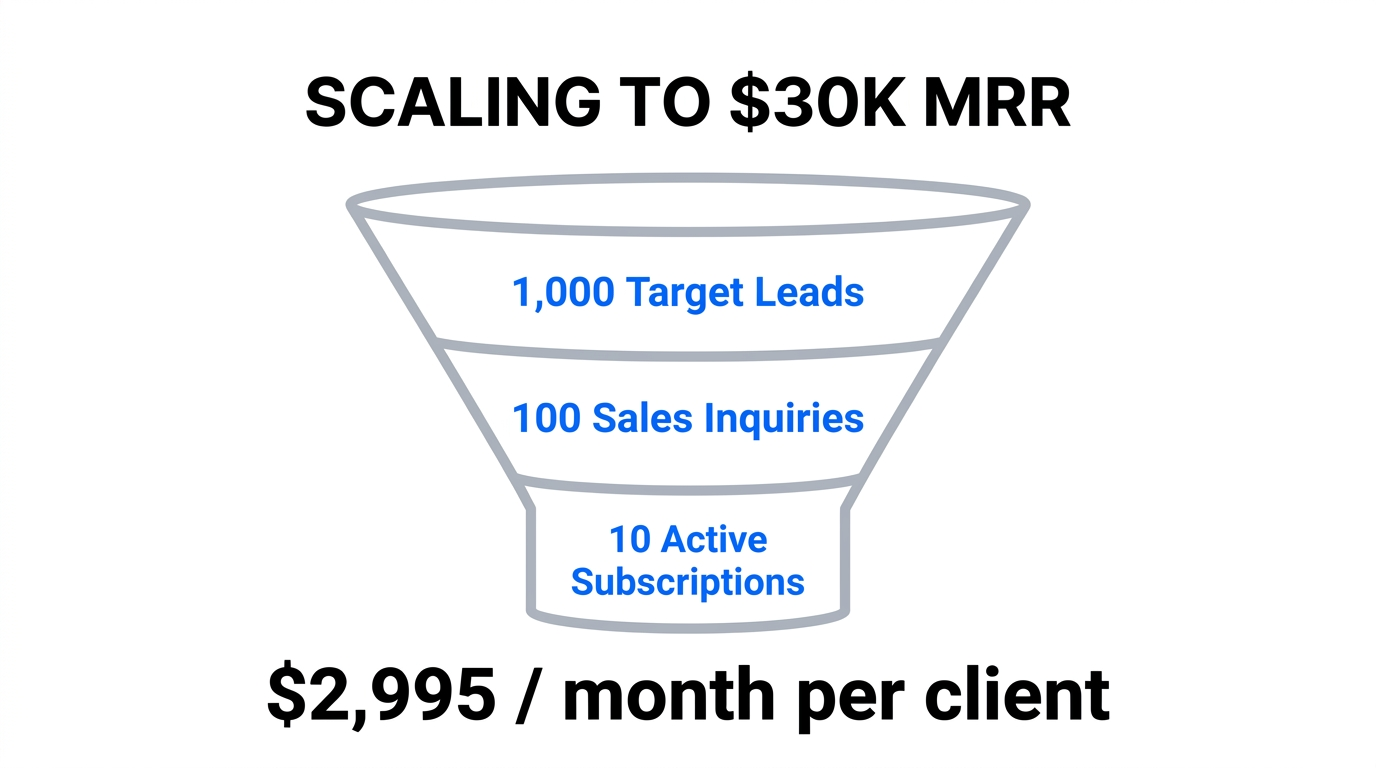
How do you price an AI design business model when the work takes minutes? The secret is to decouple your time from your value. If an AI-generated video ad helps a client lower their Customer Acquisition Cost (CAC) on TikTok Ads Manager, that video is worth thousands of dollars, regardless of whether it took you five minutes or five hours to create.
Consider these three pricing tiers:
- The Subscription Tier: $2,000–$5,000/month for "Unlimited Requests" (one at a time). This is the classic productized model.
- The Project Tier: $1,500 for a full Brand Identity Suite, including 50+ AI-generated brand assets and a style library code the client can keep.
- The Performance Tier: A lower base fee plus a bonus based on the performance of the assets (e.g., click-through rate on Meta Ads).
Managing Your Agency: The Growth Stack
An agency is more than just design; it's about client management and outreach. To keep your pipeline full, you need a systematic way to find clients who need high-velocity creative. While you focus on the creative production in Midjourney, you can use Stormy AI to source creators and influencers who might need your design services to elevate their own personal brands or for their brand deals. By reaching out to creators who are already active on TikTok or YouTube, you are targeting a market that desperately needs high-quality, high-speed content.
To keep the business running smoothly, integrate your AI workflow with these essential tools:
- Outreach: Use Instantly or Lemlist for automated cold email sequences to potential clients.
- Payments: Manage your subscriptions through Stripe to ensure recurring revenue is handled automatically.
- Project Management: Use Trello or Asana to track client requests without the need for endless email threads.
- Web Presence: Build your agency landing page on Framer or Webflow to showcase your AI-generated portfolio in high definition.
Conclusion: Start Getting Your Hands Dirty
The barrier to entry for starting a creative agency has never been lower, but the barrier to excellence remains high. The winners in the AI design agency space will be those who spend the time "getting their hands dirty"—learning which tools excel at specific tasks and which ones are just hype. Don't wait for the tools to be perfect. As we've seen with Bolt.new for coding and Runway for video, the technology is already "good enough" to generate millions in value.
Start by picking a niche—perhaps real estate photography, e-commerce backgrounds, or cinematic social media ads. Build your first style library, generate your first 10-second loop, and launch your productized service today. The era of the solo design giant is here, and the only thing standing between you and a high-revenue agency is the first prompt.