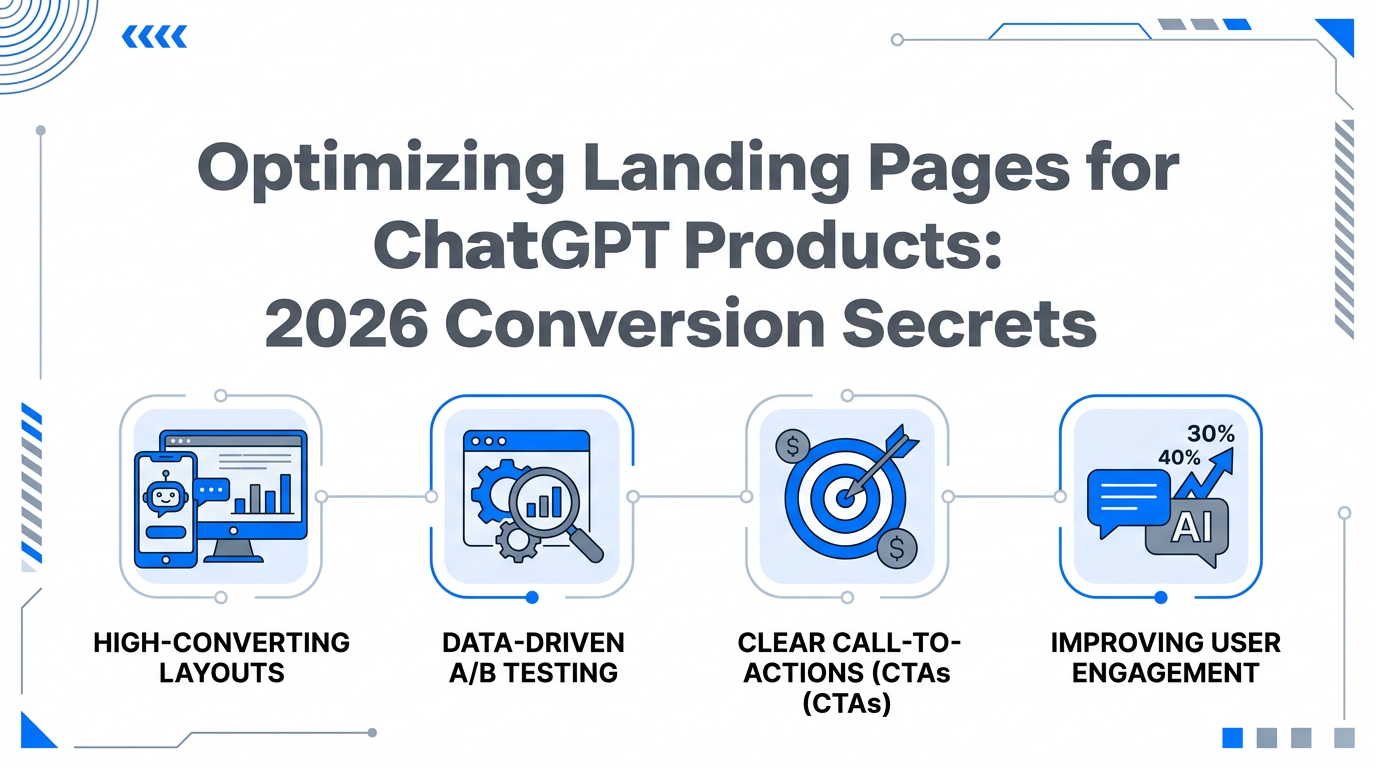
Optimizing Landing Pages for ChatGPT Products: 2026 Conversion Secrets
In 2026, the digital product landscape has shifted from simple automation to high-value curation. The rise of ChatGPT and advanced LLMs like Claude has meant that anyone can build a tool, but only those who master conversion-centric design can actually sell one. When every user has an AI assistant at their fingertips, your landing page must promise more than just "efficiency."
The Shift in AI User Expectations in 2026
In previous years, simply stating a tool was "AI-powered" was enough to generate clicks. Today, users are more sophisticated. They are looking for specific workflows, data privacy assurances, and seamless integrations. According to recent market reports, conversion rates for AI SaaS products depend heavily on the clarity of the "Human-AI" collaborative interface.
Modern landing pages in 2026 prioritize high-fidelity interactions. Instead of static screenshots, top-performing pages use interactive demos built with Framer or Webflow that allow visitors to "chat" with a preview of the product directly on the hero section.
3 Conversion Secrets for ChatGPT-Based Products
1. Social Proof Through Creator Endorsements
Static testimonials are dead. In 2026, the primary driver for AI product growth is video social proof from creators on platforms like TikTok and Instagram. To scale this effectively, marketing teams are moving away from manual spreadsheets and using platforms like Stormy AI to discover niche influencers who can authentically demonstrate how an AI tool fits into a professional workflow. By embedding these creator videos directly onto the landing page, brands see a significant lift in trust scores.
2. Frictionless Monetization and One-Click Setup
If your landing page requires a 10-field sign-up form, you’ve already lost the lead. High-converting pages in 2026 utilize one-click authentication and modern payment gateways like Stripe or Lemon Squeezy. For those selling AI-powered e-commerce extensions, integration with Shopify is no longer optional—it is a baseline requirement for credibility.
3. Real-Time Performance Transparency
Users want to know your AI won't hallucinate their data. Advanced marketers are now embedding live analytics dashboards from PostHog or Amplitude to show real-time uptime and accuracy metrics. This transparency builds the kind of "long-term brand equity" that was often missing in the early AI gold rush of 2024.
Driving Traffic via Automated Influencer Pipelines
Optimization is useless without traffic. In 2026, the most successful AI startups don't just run ads; they build automated "creator engines." By setting up an autonomous AI agent through Stormy AI, teams can discover, outreach, and follow up with hundreds of creators daily. This ensures a steady stream of high-intent traffic hits the landing page, while the AI manages the heavy lifting of influencer CRM and post tracking.
The Role of Automation in the Sales Funnel
Once a user lands on your site, the conversion doesn't end at the "Sign Up" button. Follow-up sequences are now handled by sophisticated email marketing tools like Beehiiv for newsletters or Zapier to bridge the gap between your landing page and your product's internal onboarding flow. By automating the entire lifecycle—from discovery to retention—you ensure that your ChatGPT-based product remains competitive in the crowded 2026 market.
The secret to 2026 conversion isn't more features; it's more trust. By combining high-end design, creator-led social proof, and seamless automation, your AI product won't just be another tool—it will be an essential part of your customer's tech stack.