How to Use Klaviyo AI Predictive Analytics to Increase Customer Lifetime Value in 2026
Master Klaviyo predictive analytics in 2026. Learn how to leverage predictive CLV segments, churn modeling, and automated replenishment to maximize retention.
In 2026, the ecommerce landscape has shifted from a battle for acquisition to a war for retention. With rising ad costs across Meta Ads Manager and Google Ads, brands can no longer afford to treat every customer the same. By now, the "batch and blast" mentality is a relic of the past; data from McKinsey shows that companies excelling at personalization generate 40% more revenue from those activities than their peers. To win in this environment, marketers must master Klaviyo predictive analytics to anticipate customer needs before they arise. This playbook explores how to utilize AI-driven data to refine your customer lifetime value strategy and secure long-term profitability.
The Power of Predictive CLV Segmentation: Targeting Your Top 10%
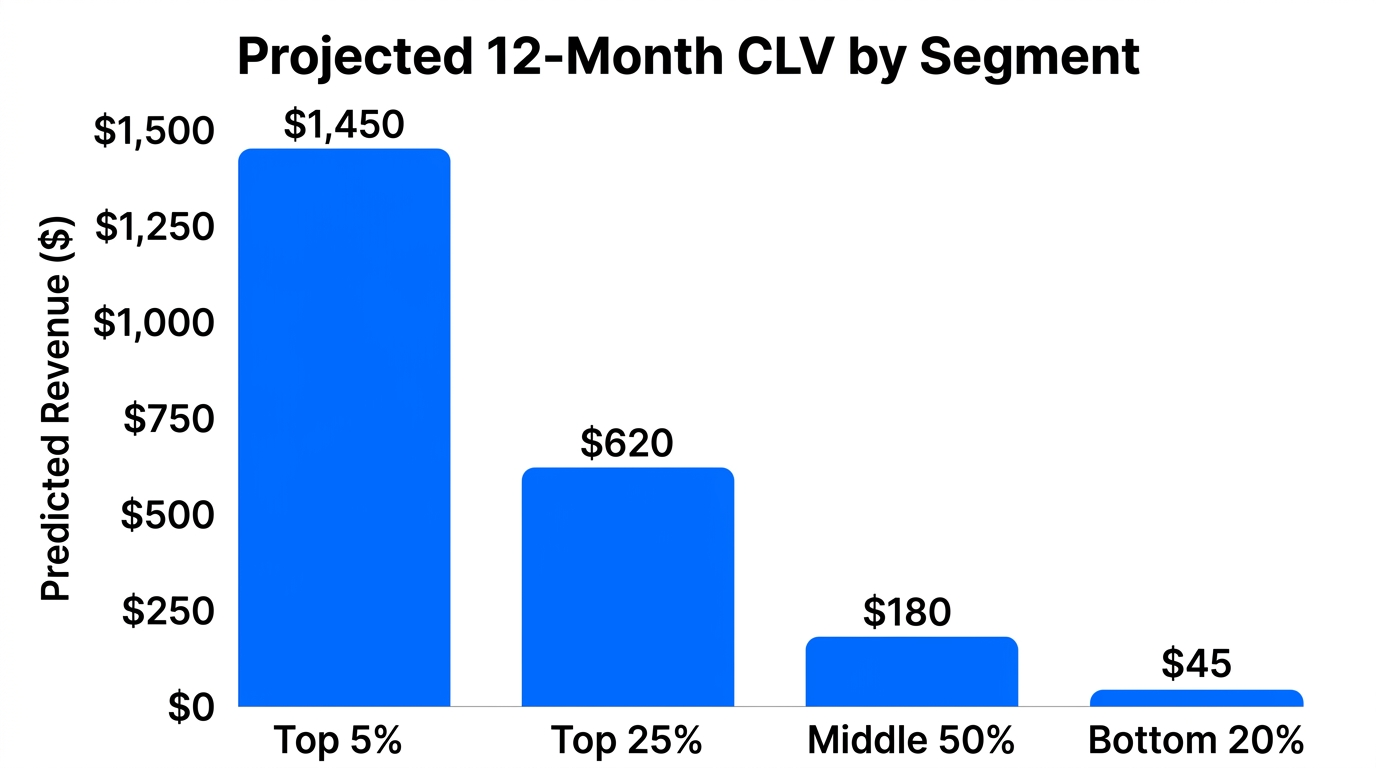
The cornerstone of ecommerce retention marketing is identifying who your best customers are—not just based on what they spent last year, but what they are predicted to spend in the next 12 months. Klaviyo’s AI models analyze historical purchase frequency, average order value (AOV), and engagement patterns to assign a Predictive Customer Lifetime Value (CLV) to every profile.
Marketers using AI-driven segments like predictive CLV see a 14% to 45% increase in revenue per recipient, according to research from Raleon. By building a "VIP" segment that targets the top 10% of predicted spenders, you can deploy exclusive "insider-only" content and early access to sales. This doesn't just reward loyalty; it prioritizes your margin where it matters most.
"2026 is the year AI handles the 'heavy lifting' of execution, allowing marketers to focus entirely on strategy and community." — David Visser, CEO of Zyber.
| Segment Type | Focus Metric | Recommended Action |
|---|---|---|
| Top 10% Predicted Spenders | Future Revenue potential | Early access to new drops & concierge support |
| Predicted High Churn Risk | Probability of leaving | Deep-discount win-back or personal outreach |
| Frequent Shoppers (Low AOV) | Purchase frequency | Upsell bundles to increase lifetime value |
Predictive Replenishment: The 'Expected Next Order Date' Playbook
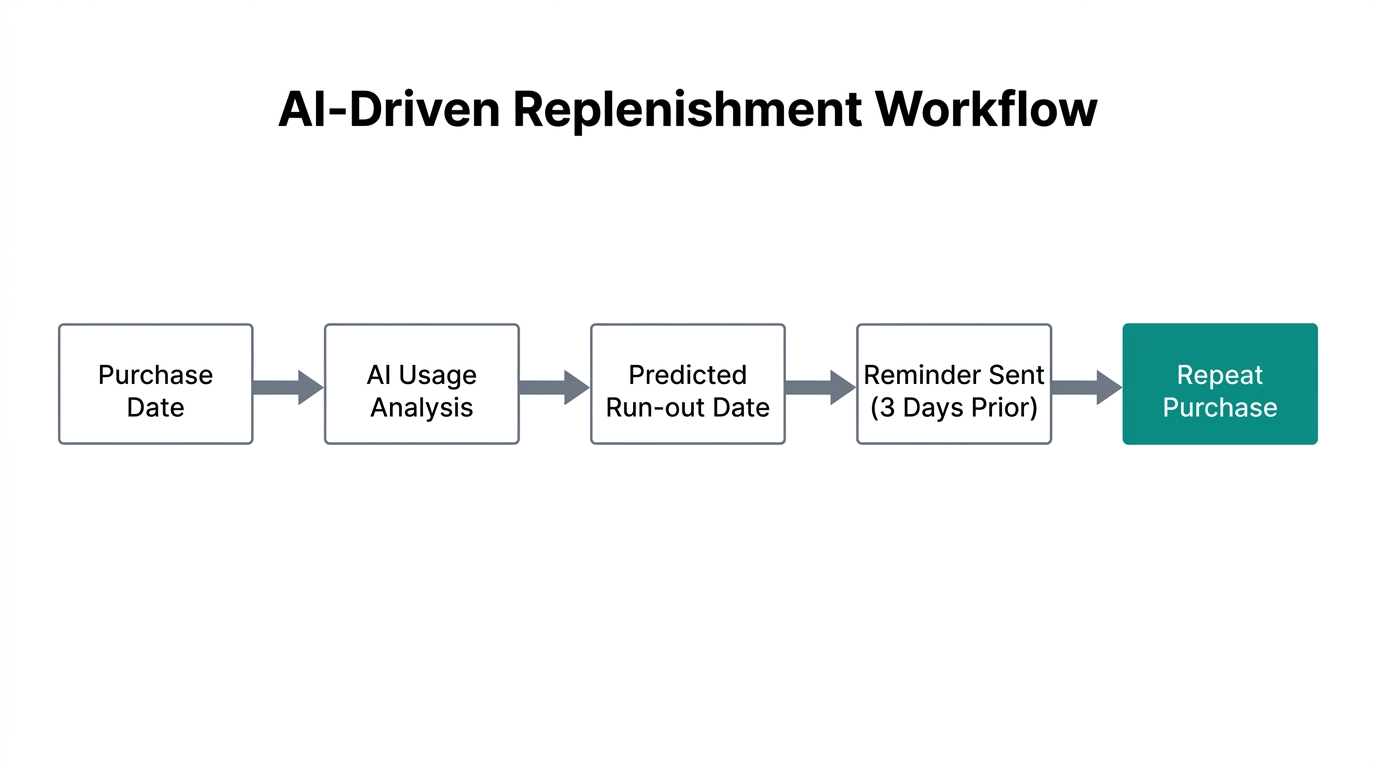
For brands selling consumables—such as skincare, supplements, or pet food—timing is everything. Traditional replenishment flows rely on static time delays (e.g., "send 30 days after purchase"). In 2026, top-tier brands use Klaviyo CLV segments to trigger emails based on the 'Expected Next Order Date'. This AI-calculated date is unique to every individual subscriber's habits.
Automated email flows already generate 30x more revenue per recipient than standard campaigns, per Klaviyo data. When you layer in predictive replenishment, you catch the customer exactly when they are running low, effectively blocking competitors from stealing the sale. If you're running your store on Shopify or BigCommerce, this data syncs automatically, allowing for seamless execution.
Predictive Churn Modeling: Saving High-Value Customers Before They Leave
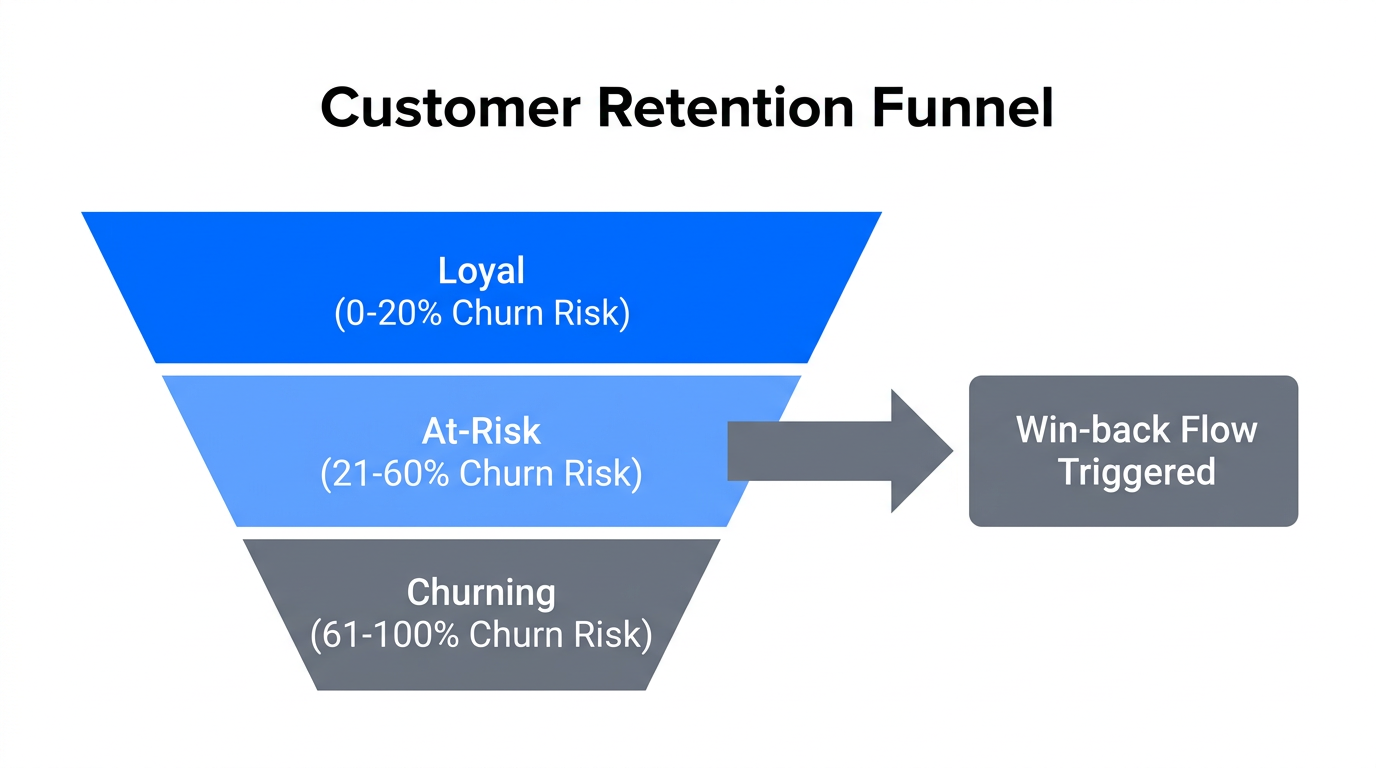
One of the most powerful features in the Klaviyo arsenal is predictive churn modeling. It is far more cost-effective to retain a customer than to acquire a new one via Apple Search Ads. Klaviyo’s AI identifies "at-risk" customers by spotting deviations in their normal behavior—long before they actually stop opening your emails.
As Jade Richardson, Email Strategist at Agital, notes, predictive analytics have become indispensable for identifying these shifts. By creating a flow triggered when a customer moves into the "High Risk of Churn" bucket, you can offer a personalized "We Miss You" incentive that is proportional to their lifetime value. Every Man Jack famously used this strategy to identify at-risk high-value customers, driving significant retention revenue through targeted win-back sequences. To make these emails even more effective, brands often integrate user-generated content sourced from Stormy AI to remind customers of the community they are part of.
"AI will soon spot trends in customer retention cycles and recommend messaging angles before a human even notices the dip in performance." — Stefan Milicevic, Strategy Director at Underground Ecom.
Real-World Implementation: The Willow Tree Boutique Story
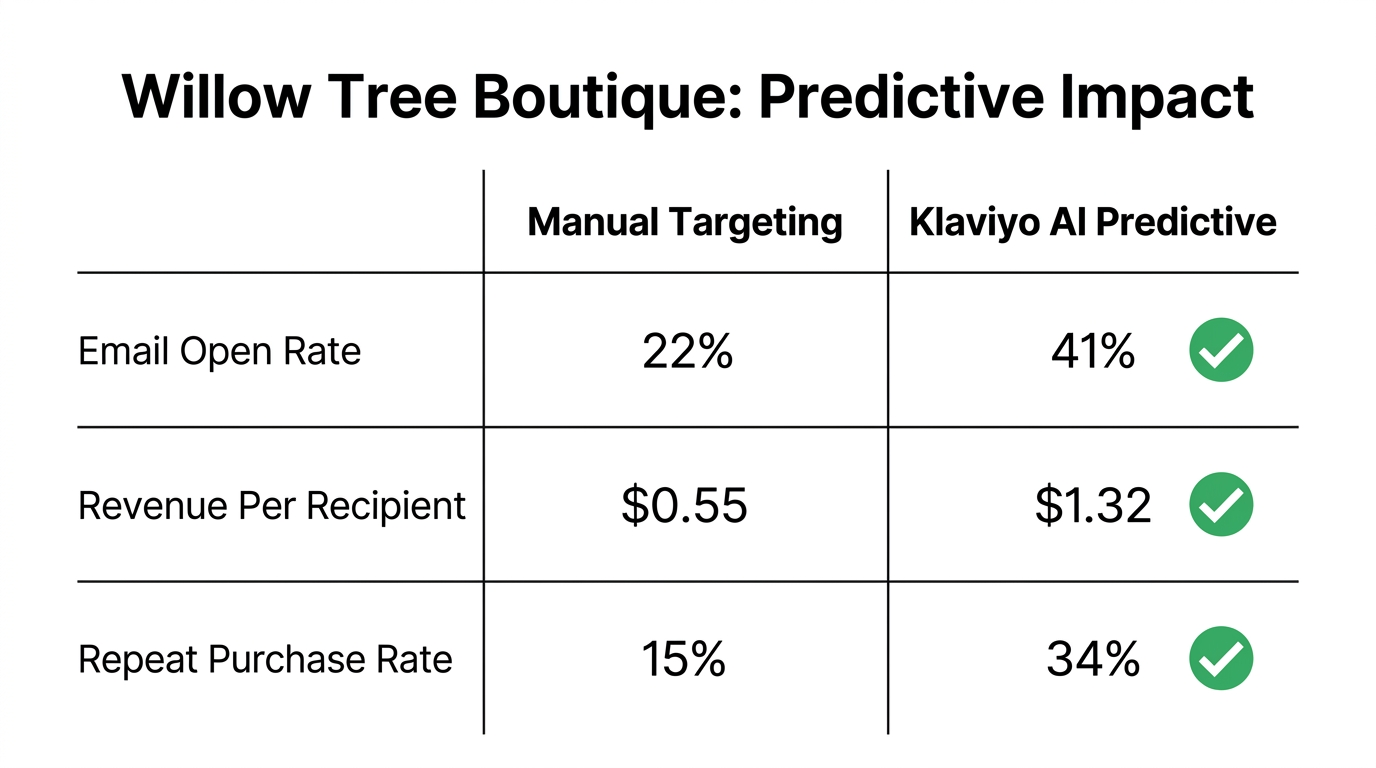
Theory is fine, but results are better. Willow Tree Boutique leveraged predicted CLV to segment their audience specifically for high-ticket items. Instead of discounting for everyone, they identified customers with high demonstrated spending power and sent them tailored, high-end collection previews. The result? A staggering 53.1% HoH revenue growth from their campaigns, as reported in the Klaviyo AI research.
Similarly, Force of Nature utilized Segments AI to build precise audiences, resulting in 140% YoY growth in revenue from automated flows. These stories prove that when you stop treating your list like a monolith and start treating it like a collection of individual journeys, the revenue follows. For brands looking to scale like this, incorporating tools like Gorgias for support and Okendo for reviews ensures your AI has all the data it needs to understand customer satisfaction.
Avoiding Common Pitfalls: Oversegmentation and the 'Robotic' Trap
While the AI is powerful, it is not infallible. Marketers often fall into the trap of oversegmenting. Creating segments smaller than 50 people often means the AI lacks the statistical significance to make accurate predictions. As the Klaviyo Blog warns, too much granularity can lead to deliverability issues and fragmented data.
Another danger is the "robotic" messaging trap. If you ignore exclusion groups, you might send a "buy again" email to someone who just complained to your support team on Gorgias. AI requires a feedback loop; you must monitor your Deliverability Score and benchmarks to ensure the machine's learning stays on track. Marketers using AI effectively are 46% more likely to exceed their goals, but only if they maintain the human touch in their brand voice, according to Flatline Agency.
Conclusion: The Future of Retention is Predictive
In 2026, mastering Klaviyo predictive analytics is the ultimate competitive advantage for ecommerce brands. By moving from reactive campaigns to proactive, AI-driven retention, you can significantly increase your customer lifetime value strategy results. Whether it's targeting the top 10% of spenders, automating replenishment, or saving at-risk customers, the data is there for the taking. To fuel these high-performing flows with fresh content, consider using Stormy AI to discover and collaborate with UGC creators who can provide the visual social proof that drives these predictive conversions home. The machines are ready; it's time to let them do the heavy lifting.