In the world of digital entrepreneurship, social media often steals the spotlight with viral trends and flashy metrics. However, for those building sustainable seven-figure businesses, the real engine of growth is far more predictable and high-leverage. According to Pat Walls, founder of Starter Story, the "best-kept secret in business" isn't a new social algorithm—it is high-performance email marketing automation. By leveraging Klaviyo email marketing, Pat has scaled his business to over $1 million in annual revenue, with email alone generating between $80,000 and $120,000 in monthly revenue.
While many founders treat email as a secondary channel for occasional newsletters, the Starter Story playbook treats it as an automated sales force. With a list of 250,000 to 300,000 subscribers and a monthly software spend of approximately $4,000, the ROI on Klaviyo is unparalleled. This guide breaks down the exact strategies, from 5-part welcome sequences to abandoned checkout flows, that turn passive subscribers into loyal, high-value customers.
Why Email Marketing Remains the Most Consistent Revenue Driver
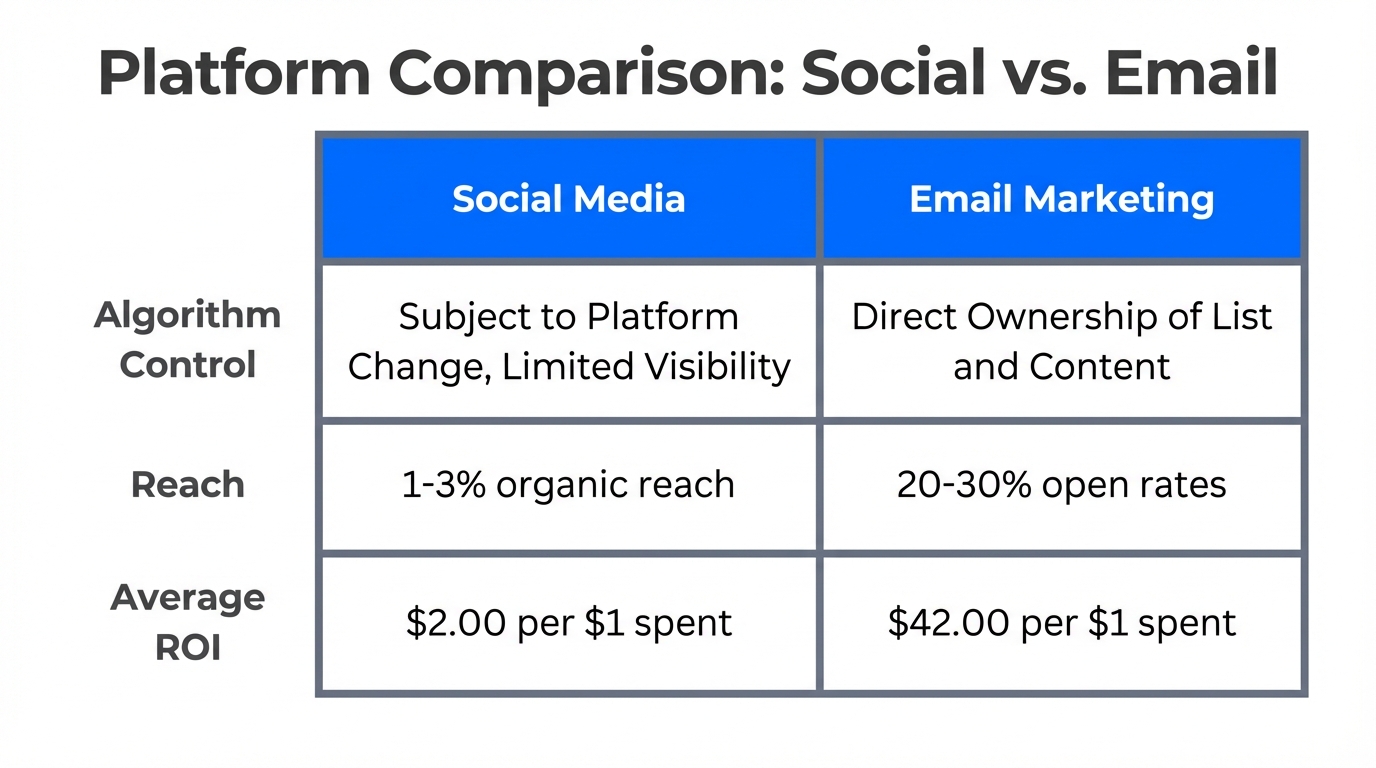
Social media platforms are essentially "rented land." Algorithms change, organic reach fluctuates, and a single policy update can slash your visibility overnight. In contrast, your email list is an owned asset. When Pat Walls first launched Starter Story, he found that a single viral post on Reddit could bring in 1,000 subscribers, but it was the subsequent email sequences that converted those visitors into long-term paying customers. Email provides a direct line to your audience that isn't mediated by a third-party feed.
"Email technically generates somewhere between $80,000 to $120,000 a month... it is the best-kept secret in business."The efficiency of email marketing automation lies in its ability to deliver the right message at the right time. Unlike social media, where you hope your target audience sees your post, Klaviyo email flows trigger based on specific user behaviors. This level of personalization is why a $4,000 monthly investment can return six figures in revenue. It allows a lean team to operate at the scale of a much larger marketing department by automating the entire customer journey.
The Starter Story Playbook: The 5-Part Welcome Email Sequence
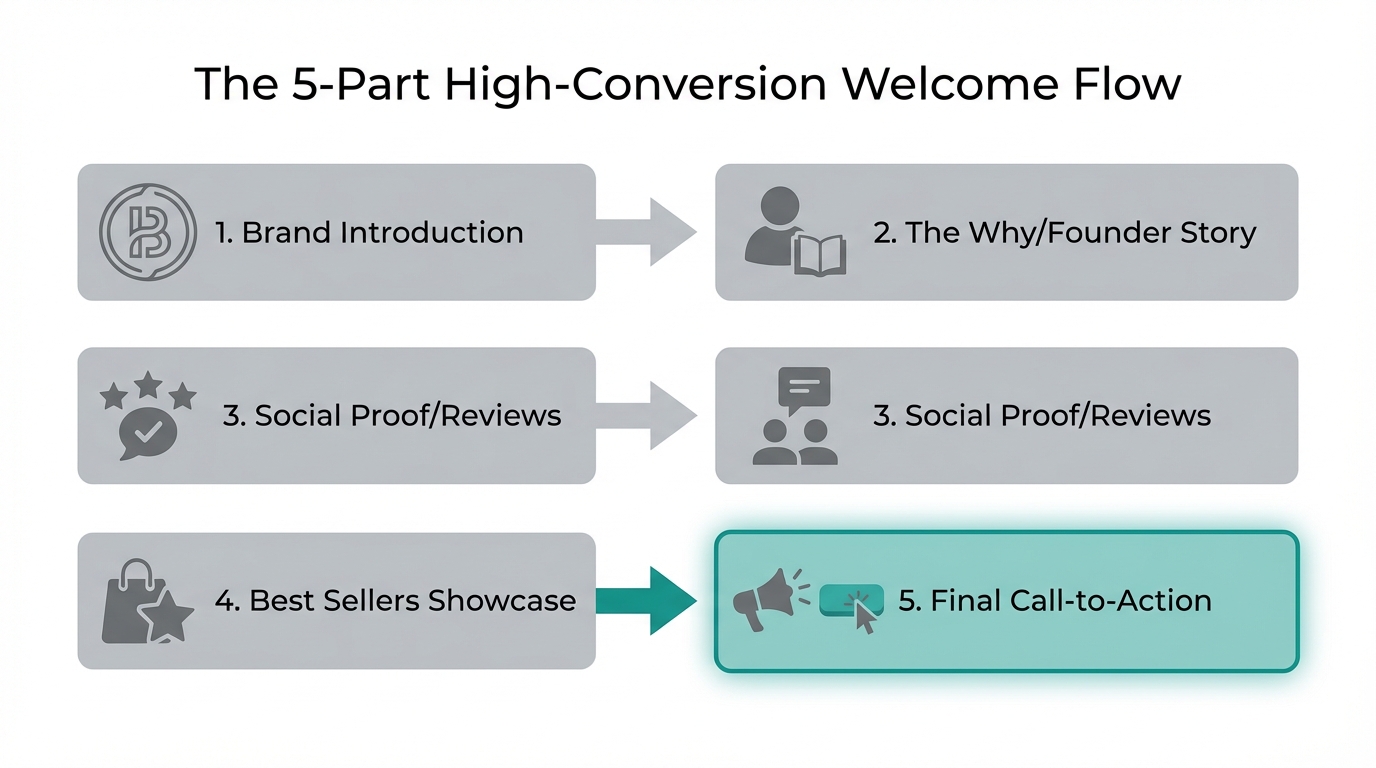
The first few days after a user joins your list are the most critical. Their interest in your brand is at its peak, and your open rates will likely never be higher. A standard one-off "Welcome" email is a missed opportunity. Instead, the Starter Story approach utilizes a 5-part welcome sequence that focuses on storytelling and building a relationship before asking for a sale.
The Sequence Breakdown
- Email 1: The Immediate Delivery. Deliver what you promised (e.g., a lead magnet, discount, or checklist). Introduce the founder and set expectations for how often you'll email.
- Email 2: The Origin Story. Why does this business exist? Share the struggle and the breakthrough. This builds empathy and trust.
- Email 3: The Value Bomb. Provide purely educational content. For Starter Story, this might be a deep dive into a successful founder's journey or a Loom video explaining a complex concept.
- Email 4: Social Proof and Case Studies. Show, don't just tell. Highlight successful customers or users who have seen results with your product according to trust in advertising studies.
- Email 5: The Soft Sell. Now that the relationship is established, introduce your core product or service as the logical next step in their journey.
This sequence ensures that by the time you ask for a purchase, the subscriber already views you as a trusted authority. This method is far more effective for e-commerce revenue growth than aggressive discounting in the very first interaction.
Implementing Abandoned Checkout Flows that Recover Sales Automatically
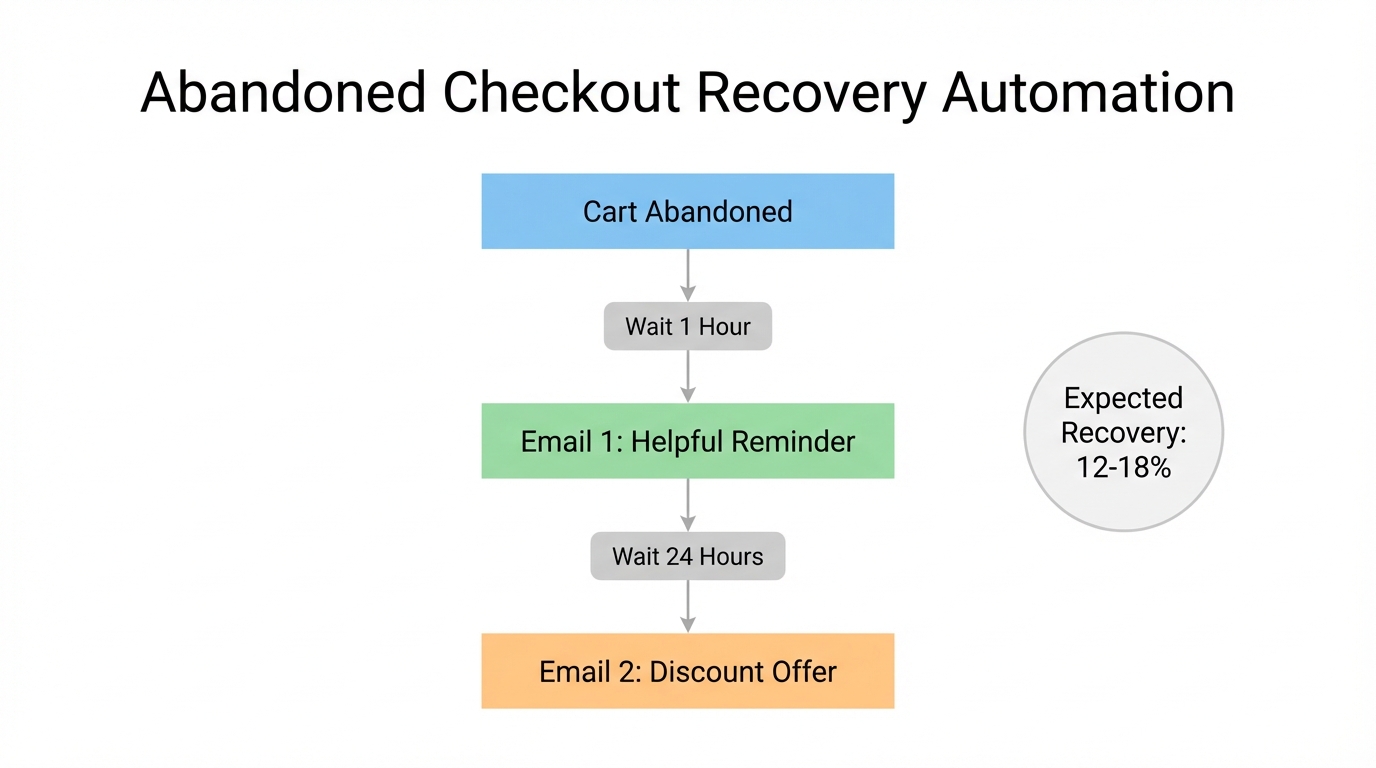
Cart abandonment is one of the biggest revenue leaks in e-commerce. According to industry data, nearly 70% of shoppers leave a site after adding items to their cart. Pat Walls emphasizes that setting up basic abandoned checkout flows is non-negotiable for any business making significant money online. In Klaviyo, these flows are triggered when a user enters the checkout process but does not complete the purchase.
| Flow Type | Trigger Event | Primary Goal | Best Practice |
|---|---|---|---|
| Abandoned Cart | Item added to cart | Return to site | Reminder within 1 hour |
| Abandoned Checkout | Started checkout | Complete purchase | Address objections + discount |
| Browse Abandonment | Viewed product | Re-engage interest | Show recently viewed items |
To maximize recovery, your abandoned checkout sequence should be multi-staged. The first email, sent within 30-60 minutes, should be a simple reminder. The second email, sent 24 hours later, can address common objections or offer a small incentive. The third email might include a limited-time discount to create urgency. This automation ensures you are capturing revenue that would otherwise be lost to distraction or simple hesitation.
The 'Storytelling in Email' Technique: Building Long-Term Relationships
One of the most common mistakes in email marketing is over-relying on discounts. While coupons can drive short-term spikes, they train your audience to only buy when there is a sale, effectively devaluing your brand. Pat Walls advocates for storytelling as the primary engagement tool. By sharing vulnerabilities, behind-the-scenes insights, and personal anecdotes, you create a parasocial relationship that makes your brand memorable.
For example, Pat often uses Loom to record quick, personal videos for his audience. He once recorded a 5-minute Loom video explaining his email flows and sent it to a friend; that single video eventually generated $20,000 in one day through pre-orders because it provided raw, authentic value. This is the power of storytelling—it converts better than any 20% off code ever could.
To fuel this storytelling, brands need a constant stream of authentic content. This is where modern influencer discovery tools become essential. Using Stormy AI, brands can discover and vet creators to produce the user-generated content (UGC) that fuels these narrative-driven email flows. High-quality UGC provides the visual proof that supplements your written stories, making your email welcome sequence significantly more persuasive.
Scaling to 300,000 Subscribers and Managing High-Volume Costs
Scaling an email list to hundreds of thousands of subscribers requires a diversified distribution strategy. Pat didn't build the Starter Story list in a vacuum; he utilized Reddit for early traction and YouTube for long-term brand authority. Distribution is the lifeblood of email growth. As Pat notes, "In 2024, it doesn't matter what product you build... it is about the distribution of your product."
"Redditors hate spam; they can smell your solicitation from a mile away. My advice is to find posts that are secretly showing off a startup and learn from them."As your list grows, so does the cost. Managing a list of 300,000 people on Klaviyo costs roughly $4,000 per month. While this might seem high, it is vital to view this as a percentage of revenue. If that list is generating $100,000 a month, your software cost is only 4% of your top-line revenue—an incredibly efficient marketing margin. To keep these costs optimized, regular list cleaning is essential. Remove subscribers who haven't opened an email in 60-90 days to ensure you aren't paying for "dead weight" and to protect your deliverability rates.
Final Takeaway: Implementing the Starter Story Framework
The success of Starter Story proves that email marketing automation is not just a support channel—it is a primary revenue engine. By shifting focus from social media vanity metrics to owned assets and automated flows, you can build a business that makes money while you sleep. The key is to start simple: set up your 5-part welcome sequence, implement your abandoned checkout flows, and prioritize storytelling over constant discounting.
As you scale, remember that the quality of your content determines the success of your emails. Tools like Stormy AI can help you source the creators and influencers who will provide the authentic stories your audience craves. Whether you are building a side hustle on your 16-inch MacBook Pro or managing a million-dollar enterprise, the playbook remains the same: own your audience, automate your value, and tell a story that resonates.