In the fast-paced world of 2026, e-commerce brands have moved beyond the simple realization that retention is cheaper than acquisition. With the AI-enabled e-commerce market projected to reach a staggering $37.69 billion by 2032, according to data from Precedence Research, the competitive advantage has shifted to proactive behavioral intervention. It is no longer enough to wait for a customer to leave; growth marketers are now using Klaviyo AI and sophisticated predictive modeling to catch at-risk shoppers before they ever cross the threshold of abandonment. This playbook outlines exactly how to build a high-converting predictive churn prevention engine that treats retention as a profit center rather than a cost center.
"The future of e-commerce isn't just about selling more; it's about knowing who is about to stop buying and intervening with surgical precision before they do."The 2026 Retention Economy: Why Predictive Churn Matters
As we navigate 2026, the cost of customer acquisition continues to climb, often exceeding 5x the cost of retention. Research from Harvard Business Review highlights that a mere 5% increase in customer retention can lead to a profit boost of 25–95%. Despite these compelling economics, only 29% of e-commerce teams have fully automated their AI-powered retention workflows. This gap represents a massive opportunity for brands to leverage AI-powered email marketing to secure their market share.
Step 1: Setting up AI-Driven 'Churn Risk' Segments in Klaviyo
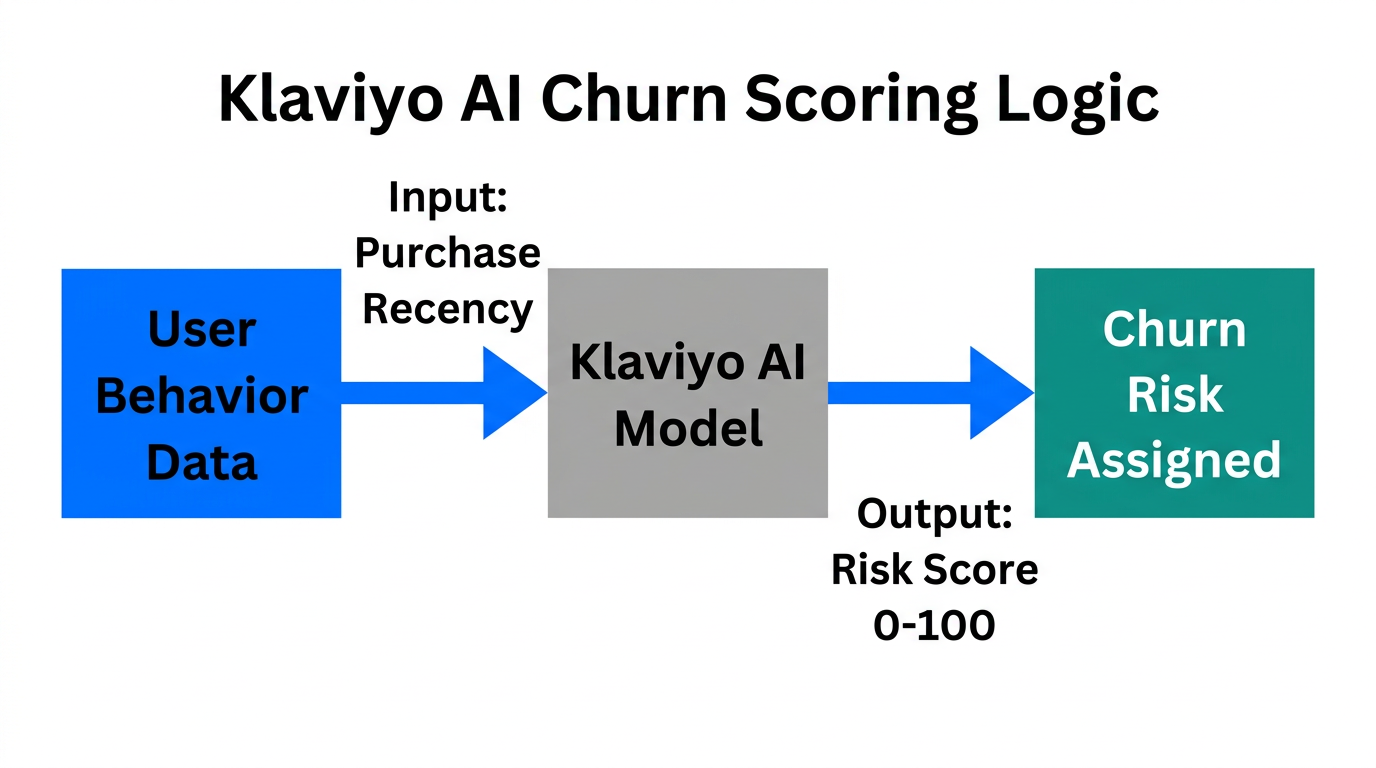
The foundation of any successful eCommerce retention strategy in 2026 is the ability to segment customers based on likelihood rather than just history. Klaviyo AI has evolved to provide deep predictive analytics that categorize your audience into risk tiers. To begin, you must sync your historical purchase data, website engagement signals, and email interaction rates. Platforms like Triple Whale can provide the necessary data infrastructure to feed these models accurately.
Defining High, Medium, and Low Risk
Your segments should be dynamic. A 'High Risk' customer in 2026 isn't just someone who hasn't bought in 90 days; it’s someone whose behavioral decay—measured by fewer site visits, decreased email open rates, and ignored SMS notifications—suggests a shift in brand affinity. By using Klaviyo's predictive analytics, you can automatically flag users when their individual Expected Date of Next Order passes without a conversion.
- High Churn Risk: Customers whose probability of purchase has dropped by 50% compared to their baseline.
- Medium Churn Risk: Customers showing 'lapsed' engagement—opening emails but no longer clicking or adding to cart.
- Low Churn Risk (Loyalists): High-frequency buyers who need VIP treatment to prevent future fatigue.
Step 2: Automating Proactive Win-back Flows
The traditional "We miss you" email is dead. In 2026, customer win-back automation must be proactive. If you wait until a customer has already uninstalled your app or unsubscribed, you've already lost. Proactive flows trigger before the churn event occurs, using agentic commerce principles to deliver value.
The 'Intervention' Logic
Instead of a generic discount, your AI should analyze why the customer is drifting. Is it price sensitivity? Use an AI pricing engine like Competera to offer a personalized markdown. Is it product exhaustion? Leverage Voyado Elevate to suggest a completely different product category based on visual discovery trends. AI-driven chat from Rep AI can also be triggered via SMS to ask the customer if they need help finding their next favorite item, a tactic that delivers 4x higher conversion rates than standard messaging.
| Feature | Traditional Win-back | AI Predictive Win-back (2026) |
|---|---|---|
| Trigger | Days since last purchase (Fixed) | Behavioral decay & predictive risk score |
| Content | Generic "We Miss You" + 10% Off | Hyper-personalized product recommendations (XAI) |
| Timing | Reactive (after churn) | Proactive (before expected purchase date) |
| Outcome | Low conversion, high margin erosion | High retention, optimized margin protection |
"Predictive retention is about shifting from 'deflection' to 'value contribution'—using AI to generate repeat revenue through proactive service." — Adrian SwinscoeStep 3: Leveraging Agentic Commerce for Repurchase Reminders
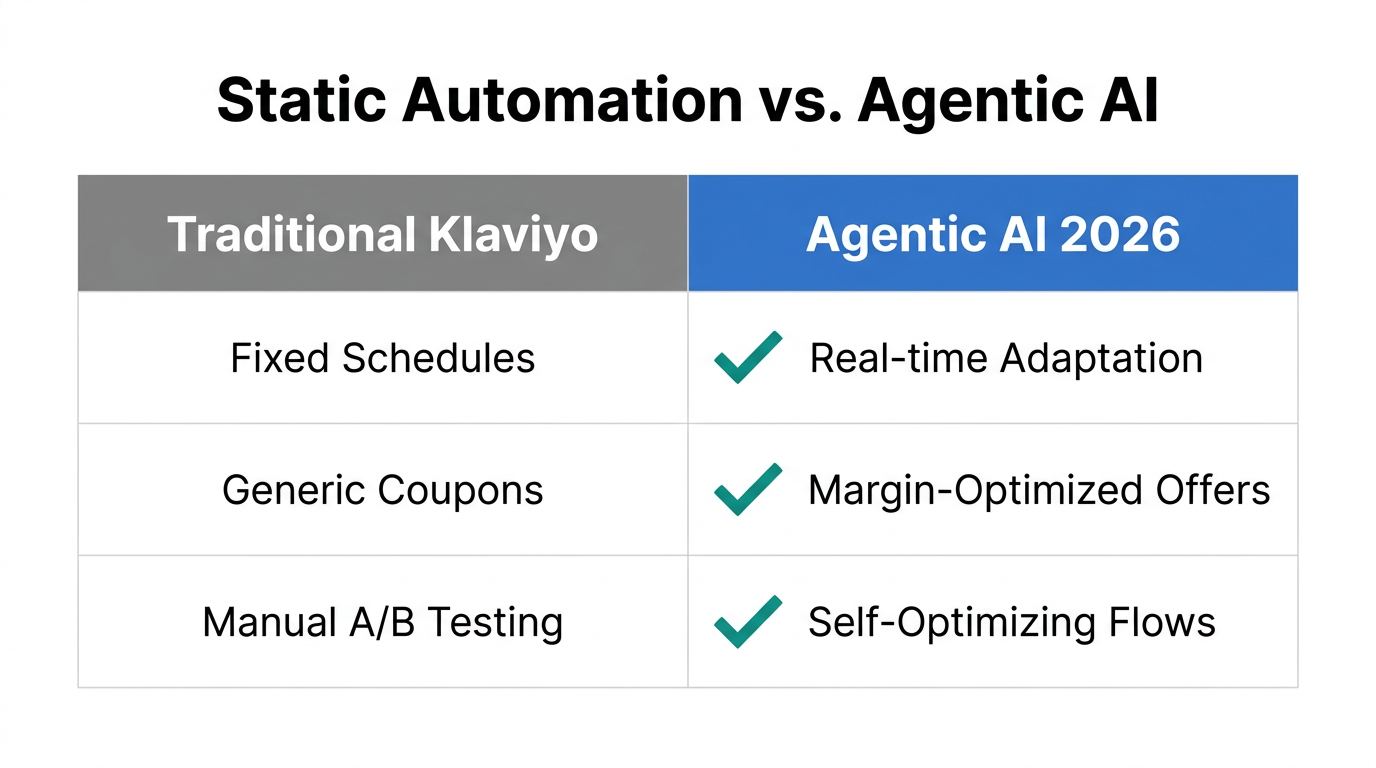
In 2026, we have moved into the era of Agentic Commerce. This means your Klaviyo AI setup isn't just sending emails; it's acting as an autonomous agent that manages the entire repurchase cycle. For replenishment-based brands (skincare, supplements, pet food), these agents can observe usage patterns and execute autonomous repurchase reminders.
For instance, if a customer typically buys a 30-day supply but hasn't reordered by day 25, the AI agent can send a personalized checkout link via SMS. This frictionless experience, powered by tools like Bloomreach, helps shoppers complete purchases 47% faster. When you combine this with influencer-driven social proof—easily sourced and managed via Stormy AI—you create a powerful reinforcement loop that keeps your brand top-of-mind.
Step 4: Maintaining Data Hygiene to Avoid 'Garbage In, Garbage Out'
The biggest pitfall for predictive churn prevention in 2026 is poor data hygiene. 95% of AI pilots fail due to a lack of ongoing optimization. If your Klaviyo AI is trained on duplicated customer profiles or incomplete purchase histories, your predictions will be worthless. Experts at Wagento emphasize that structured data is the fuel for effective AI modeling.
Key Data Hygiene Pillars:
- Identity Resolution: Ensure that a customer’s guest checkout and logged-in sessions are merged into a single profile.
- Zero-Party Data Integration: Use post-purchase surveys to understand intent. If a customer bought a gift, don't flag them as 'churned' when they don't buy for themselves next month.
- Privacy Compliance: Ensure all AI workflows adhere to updated 2026 GDPR and CCPA standards. Trust is a core driver of CLV; losing it is a fast track to total project collapse.
Step 5: Scaling Retention with AI-Powered Creator Insights
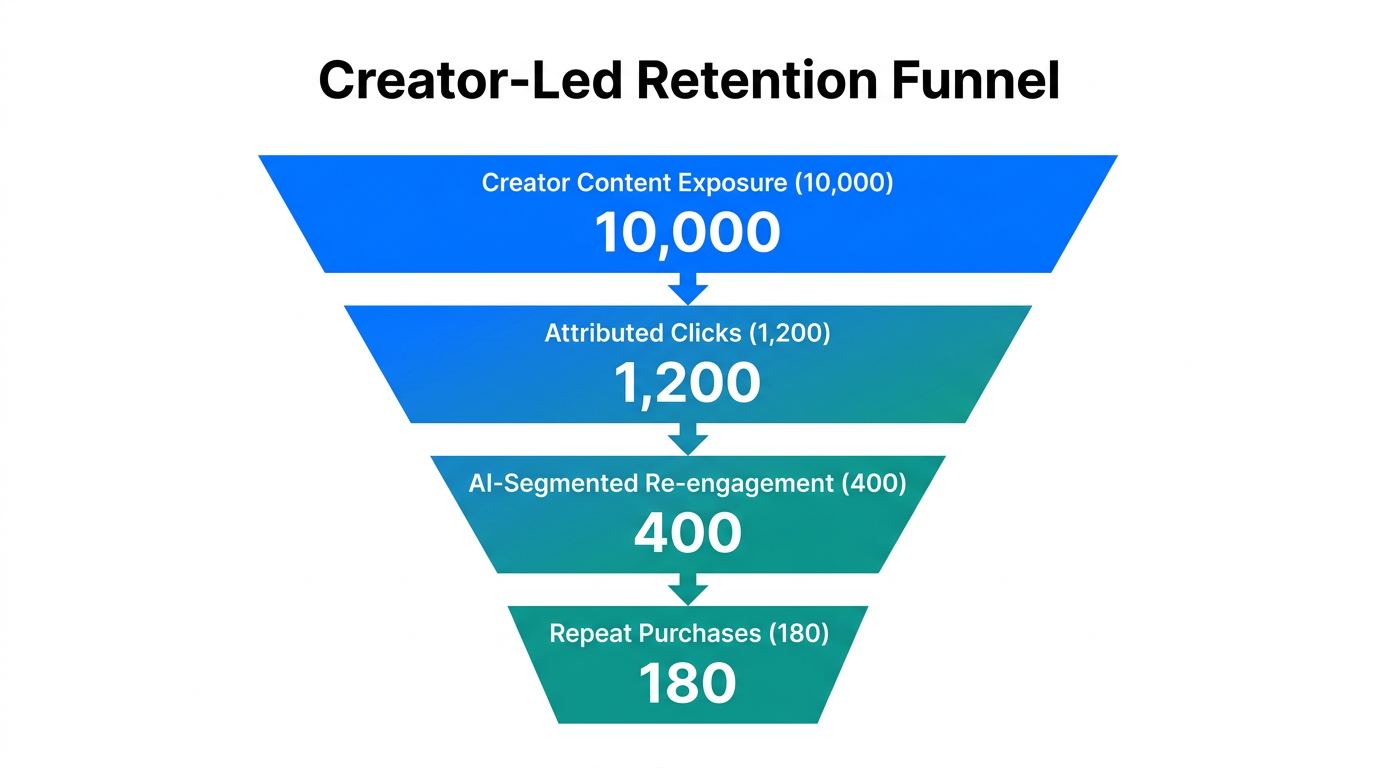
Modern retention doesn't happen in a vacuum. To truly prevent churn, you must reinforce your brand's value proposition through the voices your customers trust. In 2026, growth marketers are using Stormy AI to find UGC creators who resonate specifically with their high-churn-risk segments. By identifying influencers who drive high repeat-purchase rates rather than just one-off vanity metrics, you can inject fresh, personalized content into your win-back flows.
For example, if Stormy AI identifies a creator whose audience aligns with your lapsed 'Medium Risk' segment, you can automate a flow that sends a personalized video message from that creator to those specific customers. This blend of AI-powered email marketing and authentic human content is the gold standard for retention in 2026.
Conclusion: The Future is Predictive
Predictive churn prevention is no longer a luxury—it is a requirement for survival in the 2026 e-commerce landscape. By setting up Klaviyo AI risk segments, automating proactive interventions, and leveraging the power of agentic commerce, you can turn churn into an opportunity for growth. Remember that a 1% uptick in retention can boost revenue by 5%, making every customer you save a significant contributor to your bottom line. Start by cleaning your data, identifying your at-risk tiers, and using platforms like Stormy AI to bring the human touch back to your automated workflows. The brands that win in 2026 will be those that use AI not just to predict the future, but to actively shape it.