In 2026, the marketing landscape has shifted from manual campaign execution to autonomous orchestration. As third-party cookies have become a relic of the past, the brands winning the digital arms race are those that leverage AI-analyzed zero-party data to create a seamless, surround-sound customer experience. Companies that excel at this level of personalization are currently generating 40% more revenue from their marketing activities than their average competitors. The era of "batch and blast" is over; today, success is defined by how well your AI tools—like Klaviyo—understand the nuances of customer intent across every touchpoint.
The Death of Third-Party Cookies and the Rise of AI-Analyzed Zero-Party Data
By 2026, the reliance on third-party tracking has fully dissolved, replaced by a strategic focus on zero-party data marketing. This is information that customers intentionally and proactively share with a brand, such as quiz results, preference center selections, and direct feedback. However, the challenge isn't just collecting this data—it’s processing it at scale. This is where the AI customer data platform comes into play.
Modern marketing teams are no longer manually tagging profiles based on a single purchase. Instead, they use AI models to analyze raw data from interactive quizzes and surveys. For instance, if a customer takes a skincare quiz and mentions they have "dry skin" and "live in a cold climate," Klaviyo AI doesn't just put them in a "Dry Skin" segment. It uses predictive intelligence to forecast their replenishment dates and recommends specific products based on real-time weather patterns and regional trends.
"In 2026, AI is shifting from a manual tool to a 'marketing copilot' that autonomously builds flows and optimizes send times based on zero-party intent."
Building Hyper-Relevant Segments from Quiz Results and Support Tickets
The most effective cross-channel marketing automation involves breaking down the walls between marketing and customer service. In 2026, the integration between Klaviyo and support platforms like Gorgias is a mandatory component of a high-ROI strategy. When a customer submits a support ticket regarding a delayed shipment or a product defect, the AI should immediately exclude them from any "Buy Now" promotional flows to avoid friction.
Conversely, positive sentiment identified in reviews via platforms like Okendo can trigger an automated invitation to an exclusive VIP tier. By 2026, the Smart Send Time (SST) feature in Klaviyo has evolved; it doesn't just know when to send an email, but on which channel a specific customer is most likely to convert. For some, it’s a detailed email on a Tuesday morning; for others, it’s a personalized SMS notification on a Friday afternoon.
| Data Source | AI Action | Marketing Result |
|---|---|---|
| Quiz Results | Predictive Product Matching | 3.75% - 8.79% CTR |
| Gorgias Tickets | Dynamic Suppression | Lower Unsubscribe Rates |
| Okendo Reviews | Automated VIP Tagging | Higher Customer Lifetime Value |
Omnichannel 'Surround Sound': Syncing Klaviyo AI with Meta and Google Ads
True SMS and email synchronization is no longer enough. To achieve maximum ROI, brands must implement an "Omnichannel Surround Sound" strategy. This involves syncing your Klaviyo AI segments with Meta Ads Manager and Google Ads in real-time. When a customer enters a "High Probability to Purchase" segment in Klaviyo, the AI automatically pushes that profile to a custom audience in Meta to show them a supporting video ad.
This synchronization ensures that your brand remains top-of-mind without being repetitive. If a customer clicks an email but doesn't buy, the AI might trigger a retargeting ad on Instagram. If they still haven't converted after three days, it might send a personalized SMS with a limited-time discount. This level of coordination is what drives a 30x increase in revenue per recipient compared to standard campaigns.
"The goal is not to be everywhere; it's to be everywhere your best customers are, at the exact moment they are ready to buy."
While sourcing high-quality leads is the first step—often streamlined by using AI-powered creator platforms like Stormy AI to find the right influencers—the real revenue is made in the follow-up. Integrating your influencer-generated content (UGC) directly into these automated Klaviyo flows creates a consistent brand narrative that builds trust and accelerates the path to purchase.
Case Study: Culture Kings and the Power of SMS Integration
One of the most notable examples of Klaviyo omnichannel strategy in action is the streetwear giant Culture Kings. By consolidating their SMS and email efforts into a single AI-driven ecosystem, they were able to track behavior across every digital touchpoint. This allowed them to understand which customers preferred SMS for drop alerts and which preferred email for long-form brand stories.
- The Challenge: Fragmented data across multiple platforms leading to inconsistent customer experiences.
- The Solution: Implementing Klaviyo’s unified platform to synchronize SMS, email, and social segments.
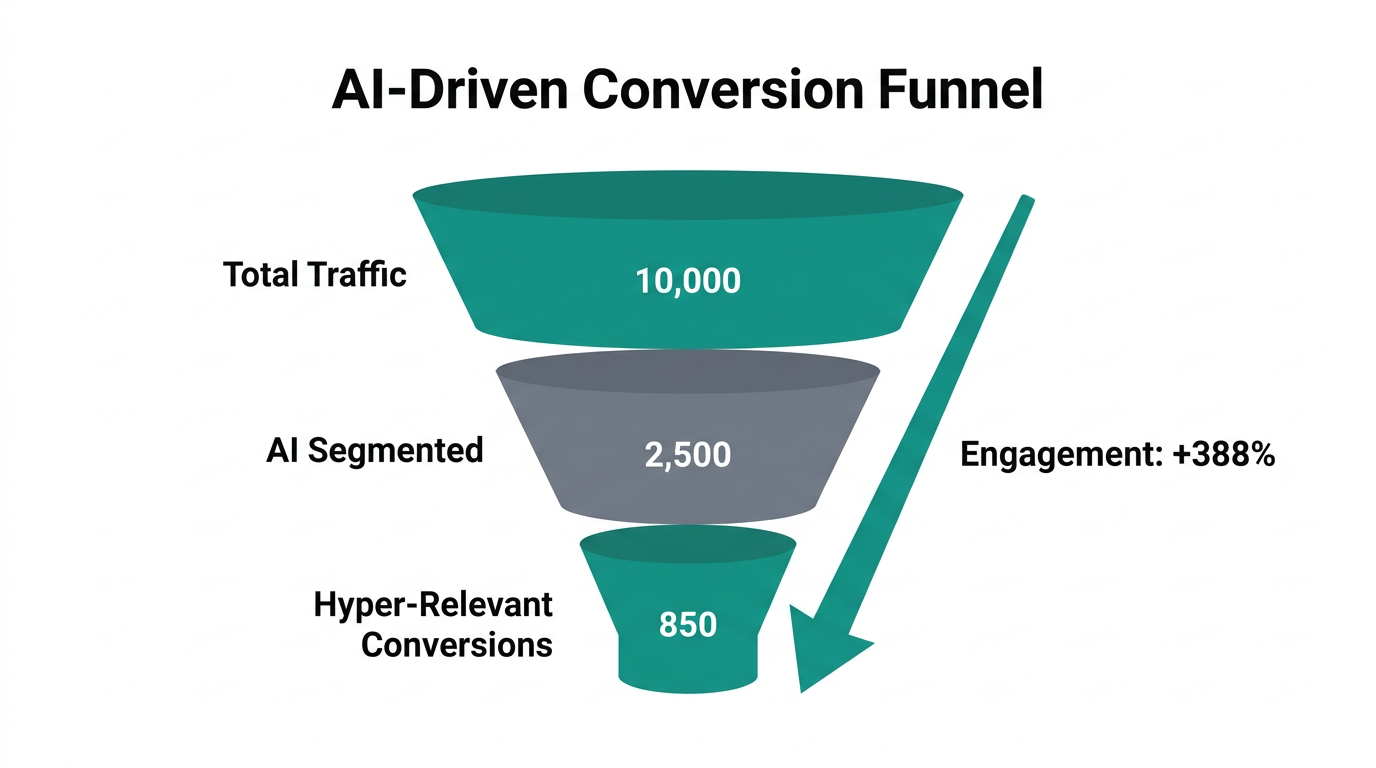
- The Result: A staggering 388% YoY increase in SMS click rates.
This success story highlights the importance of data consolidation. When your AI has the full picture of a customer's journey—from the first TikTok ad they clicked to the last support ticket they opened—it can make significantly better decisions about what message to send next.
How to Audit Your Data Silos for Klaviyo AI
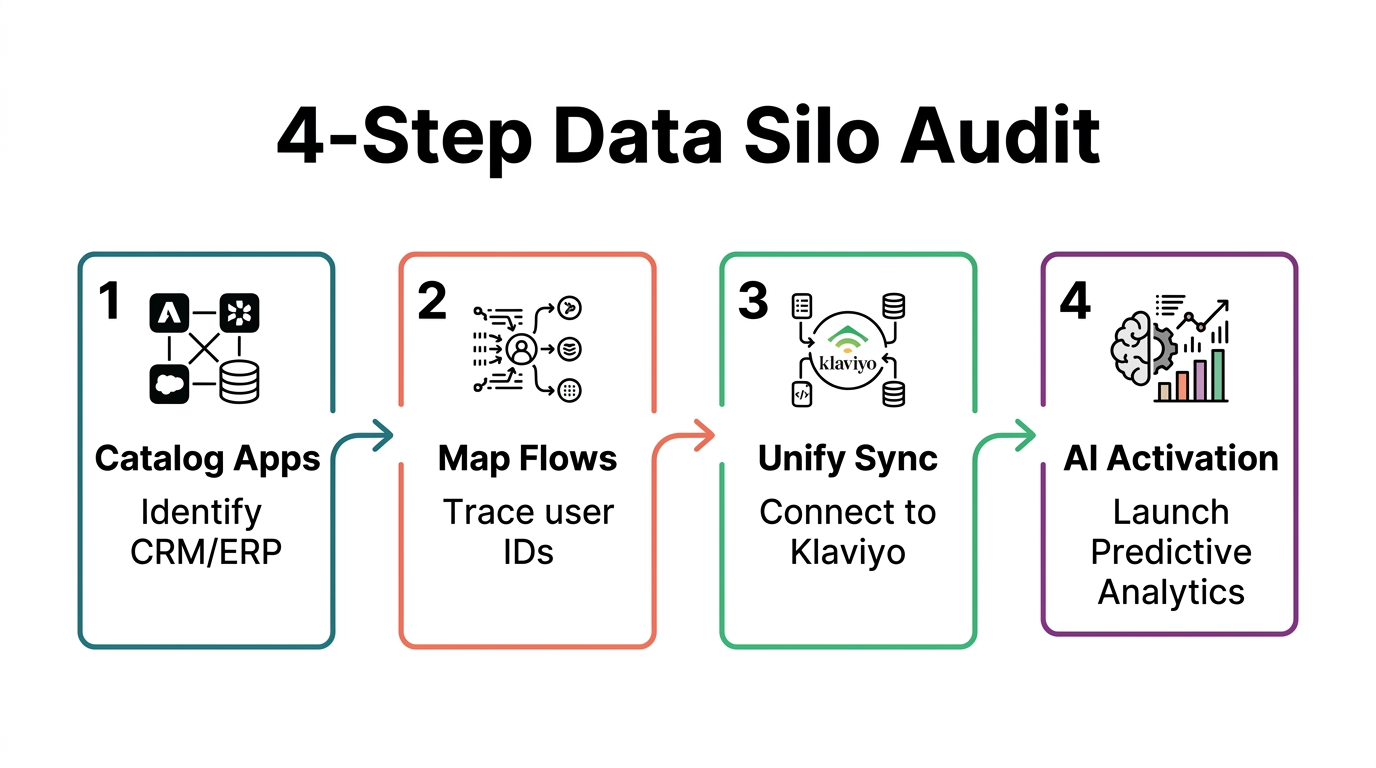
Before you can unleash the full power of AI customer data platforms, you must ensure your data is clean and connected. Many brands suffer from "data silos" where their Shopify purchase data doesn't talk to their SMS platform, or their review data is locked away in a separate app. In 2026, an audit of these silos is the first step in any growth strategy.
Step 1: Map the Customer Journey
Identify every point where a customer interacts with your brand. This includes your Shopify store, your social media channels, your email inbox, and your customer support desk. Ensure that every one of these tools is integrated with Klaviyo.
Step 2: Consolidate Your Channels
If you are still using separate platforms for email and SMS, you are losing money. By 2026, consolidated platforms allow AI to manage frequency capping—ensuring you don't annoy a customer with an email and an SMS at the exact same time.
Step 3: Activate Predictive Analytics
Turn on Klaviyo’s Predictive Customer Lifetime Value (CLV) and Predicted Gender features. These tools use machine learning to fill in the gaps in your data, allowing you to target high-value customers before they've even reached that status manually.
Actionable AI Strategies for Klaviyo in 2026
To stay ahead of the competition, marketing leaders must move beyond basic automation. Here are three advanced strategies to implement today:
- Predictive Replenishment: Use the "Expected Next Order Date" trigger for consumable products. AI analyzes a customer's specific usage rate rather than a generic 30-day window.
- AI Subject Line Optimization: Leverage AI to A/B test subject lines based on historical performance data. AI often identifies high-converting keywords—like specific emojis or urgency markers—that humans might overlook.
- Dynamic Product Feeds: Stop using static images in your emails. Use AI feeds like "Products you may also like" powered by BigCommerce or Shopify data to show every customer a unique storefront tailored to their browsing history.
By 2026, AI has become the primary execution engine for digital marketing. According to Agital strategist Jade Richardson, predictive analytics are now indispensable: "I hardly ever send a campaign without them." This sentiment is echoed across the industry; if you aren't using AI to orchestrate your omnichannel presence, you are leaving revenue on the table.
Conclusion: The Future of Autonomous Marketing
The transition to a Klaviyo omnichannel strategy powered by AI is not just about efficiency—it's about survival in a post-cookie world. By integrating zero-party data, synchronizing SMS and email, and auditing your data silos, you can create a customer experience that feels personal, timely, and relevant. Whether you are using Stormy AI to discover creators for top-of-funnel growth or Klaviyo to maximize bottom-of-funnel retention, the key is the intelligent use of data. Start your audit today, activate your predictive segments, and watch your ROI scale as your marketing becomes truly autonomous.