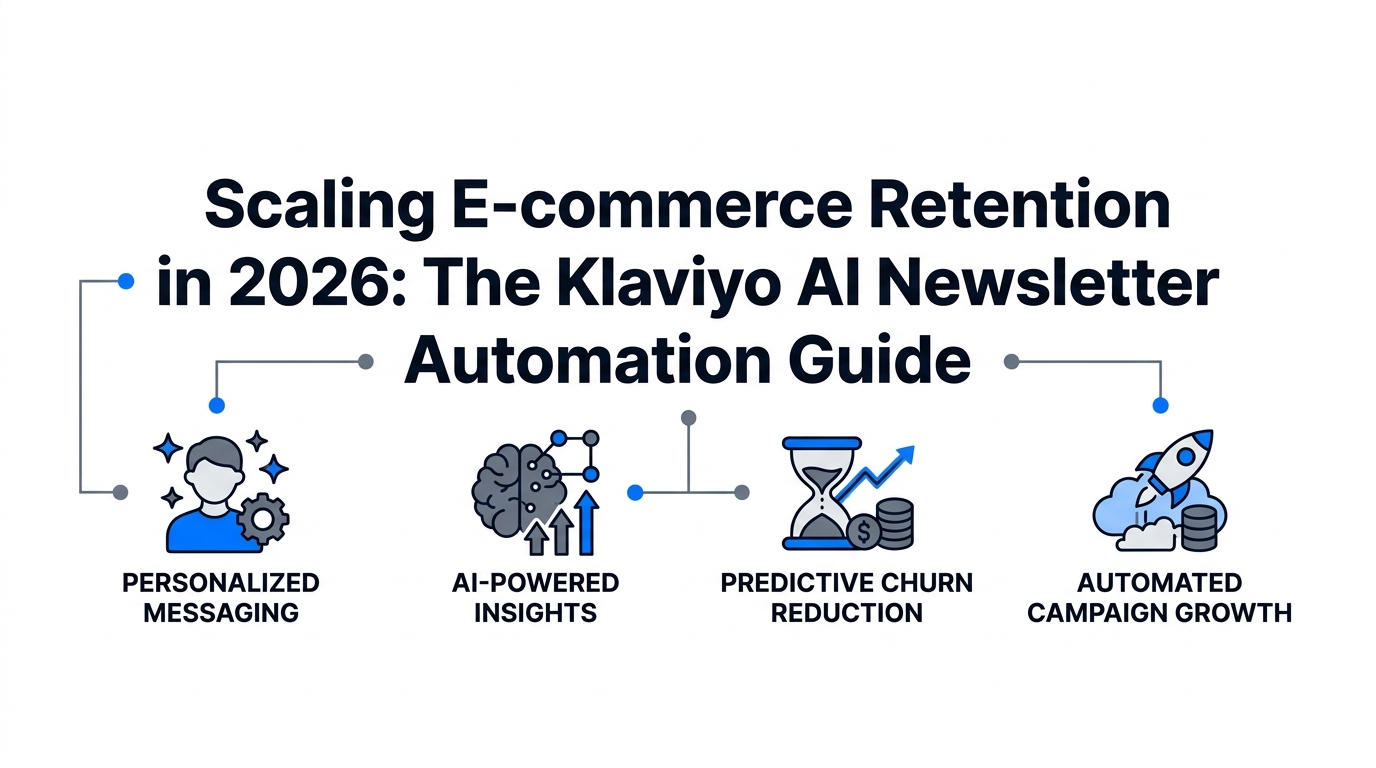
In 2026, the battle for consumer attention isn't won on the acquisition front alone; it is won in the inbox. While TikTok Ads Manager and Meta Ads Manager continue to drive top-of-funnel traffic, the rising cost of customer acquisition (CAC) has forced brands to pivot toward high-efficiency retention. Yet, a massive discrepancy exists in the market. Most mid-market brands are paying for premium instances of Klaviyo but are only utilizing a fraction of its power. This article explores how to bridge the 'Klaviyo Gap' using AI-driven automation to transform stagnant newsletters into narrative-driven revenue engines.
The '80/20' Klaviyo Gap: Why Most Brands Leave Money on the Table
Discover why 80% of users fail to leverage Klaviyo's full feature set.
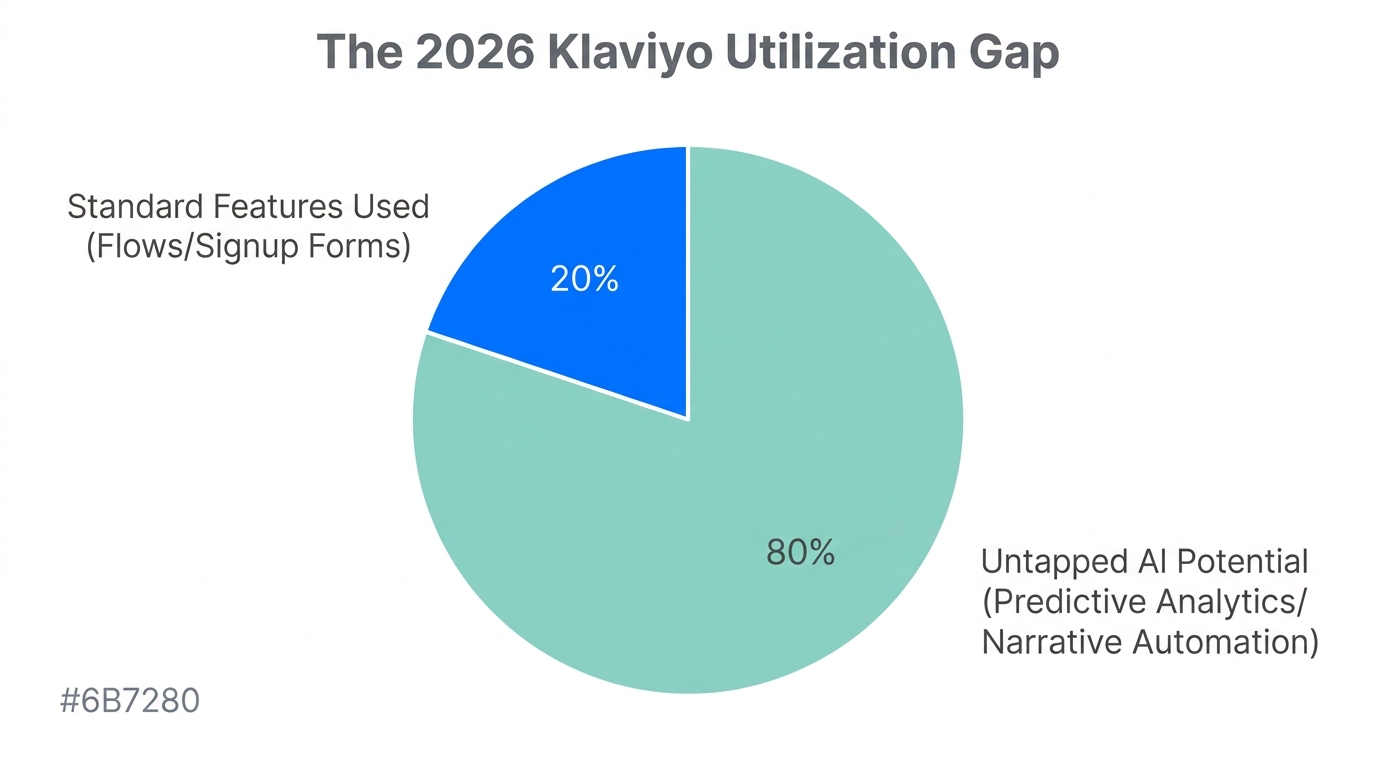
It is a well-documented phenomenon in the SaaS world: the more powerful the tool, the less likely the average user is to master it. Research suggests that 80% of Klaviyo users are only utilizing 20% of the platform's capabilities. They pay for advanced segmentation, predictive analytics, and multi-channel flows, but they often default to sending a single, manual weekly blast to their entire list. For a platform where the average Customer Lifetime Value (LTV) can reach upwards of $25,000, this underutilization represents millions in lost revenue.
The core problem is the creative bottleneck. Building a high-converting Klaviyo automation workflow requires more than just logic; it requires a constant stream of fresh copy, product photography, and design. When brands fail to produce this at scale, they revert to basic templates that fail to engage. To solve this, savvy marketers are turning to SaaS productized service models that leverage AI to handle the heavy lifting of content generation and layout design.
"Most brands are paying $1,000 a month for Klaviyo and using it like a $20 Mailchimp account. The gap isn't the software; it's the lack of a repeatable AI content engine."
From 'Tables-Within-Tables' to Prompt-Based Design
Exploring the transition from manual table coding to streamlined prompt-based design workflows.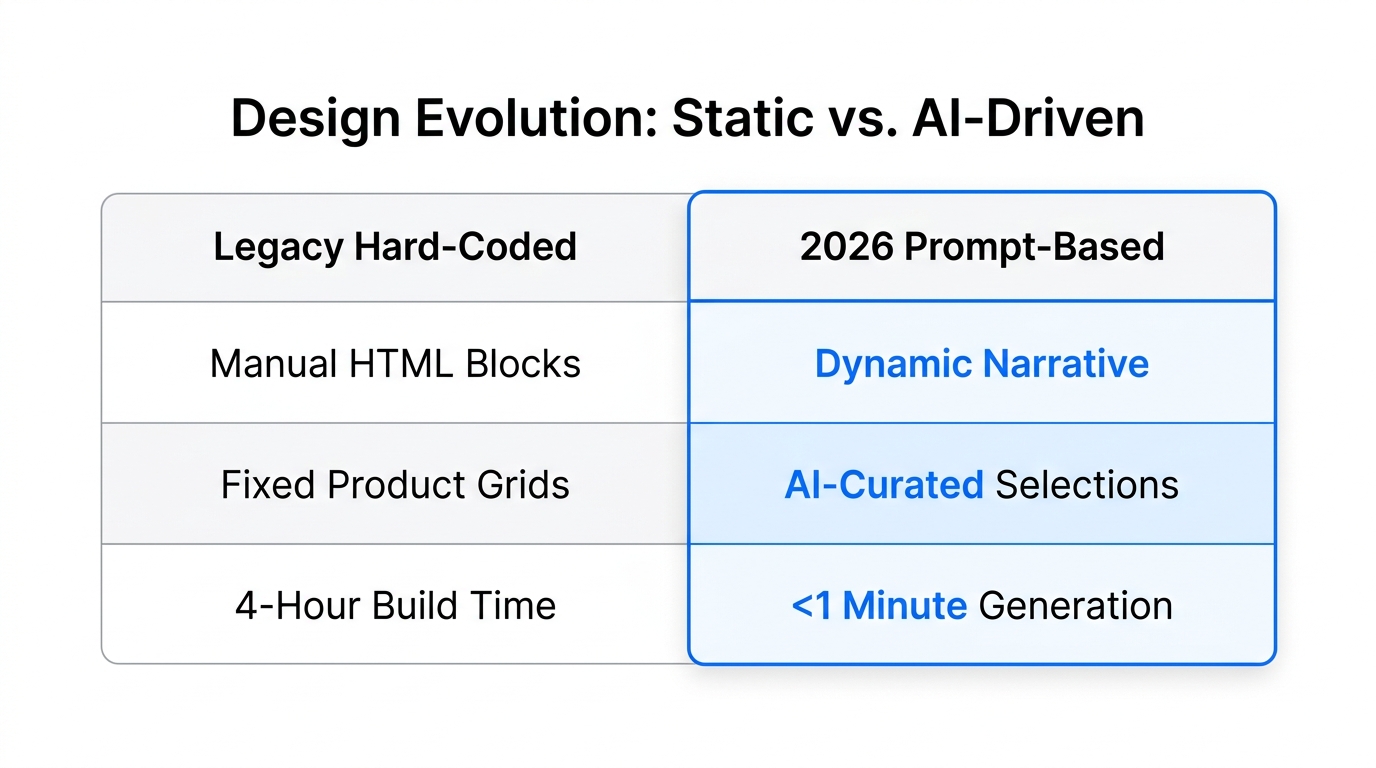
For years, e-commerce email design was a nightmare of legacy code. Developers spent hours wrestling with nested HTML tables to ensure emails didn't break in Outlook or Gmail. In 2026, the AI for ecommerce newsletters movement has effectively killed the need for manual coding. We have moved into the era of "Prompt-to-Template" design, where tools like V0 and specialized AI wrappers allow marketers to describe a layout and receive production-ready Klaviyo code instantly.
Instead of hard-coding a product grid, marketers now use AI agents to dynamically adjust layouts based on the recipient's behavior. If a subscriber frequently clicks on UGC (User-Generated Content), the AI modifies the template to prioritize social proof over studio photography. This level of dynamic design used to require a dedicated engineering team; now, it requires a well-structured prompt and an API connection to your content library.
| Workflow Phase | Old Manual Method | 2026 AI-Automated Method |
|---|---|---|
| Layout Creation | Wrestling with HTML table code | Prompt-based template generation |
| Product Selection | Manual catalog picking | AI catalog mapping to trends |
| Copywriting | Generic 'Shop Now' blasts | Narrative-driven storytelling |
Narrative Automation: Mapping Your Catalog to the Cultural Moment
How to create compelling email narratives by mapping product catalogs to trends.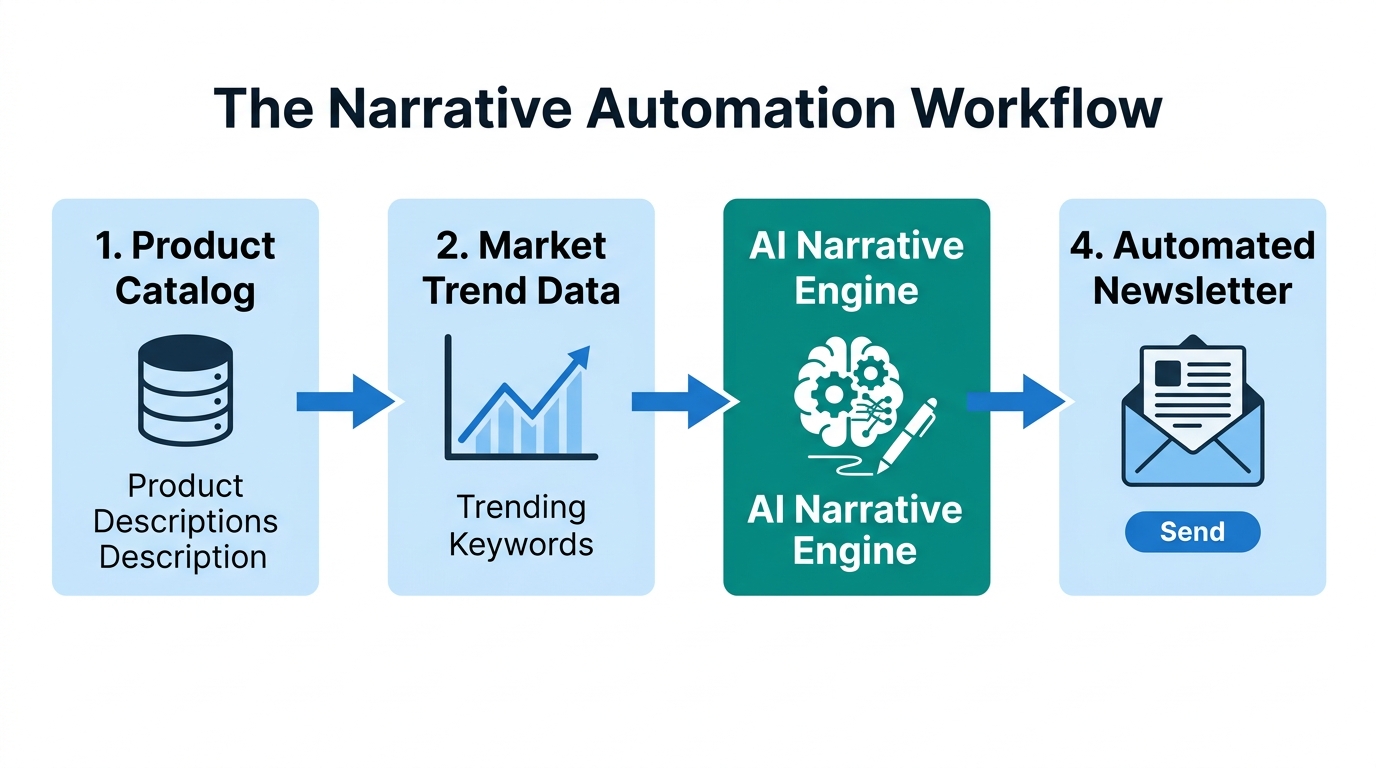
The most significant breakthrough in Klaviyo email marketing 2026 is the ability to automate narrative storytelling. A product catalog is just a list of items until it is placed within a story. AI can now analyze seasonal trends, local weather patterns, and even viral social media topics to identify which products in your catalog are most relevant right now.
For example, if an AI agent detects a rising trend in "Boho aesthetic" through social listening platforms like Stormy AI, it can automatically scan a brand's Shopify catalog for related items—perhaps a specific set of mugs or linens. The AI then generates a story-driven newsletter that doesn't just say "Buy this mug," but instead tells a story about a slow, aesthetic Saturday morning. By using Claude or ChatGPT integrated via Zapier, brands can generate 52 weeks of narrative content in a single afternoon.
"Storytelling is the only thing that reduces subscriber churn in an era of infinite choices. If your email doesn't feel like a letter from a friend, it's just spam."
To make this content truly authentic, brands are increasingly using UGC-sourced assets. Platforms like Stormy AI enable marketers to find the perfect creators to film the raw footage that feeds these automated newsletters. When you pair an AI-written narrative with a high-quality video from a vetted influencer, the engagement rates often double compared to standard promotional graphics.
The Productized Agency Model: Maximizing ROI for Mid-Market Brands
There is a massive opportunity for consultants to build a SaaS productized service model around Klaviyo optimization. Similar to how Sage or Salesforce consultants operate, these agencies don't just 'do marketing'—they build owned media assets. They take over the technical and creative debt of the brand, implementing the 'Sage Consulting' playbook: identifying underserved workflows and automating them into high-margin revenue streams.
A productized agency focuses on three core pillars:
- Infrastructure Audit: Identifying which of the 80% unused Klaviyo features (like price-drop triggers or replenishment flows) will move the needle for the specific niche.
- Lead Farming: Using long-tail exact-match domains registered through providers like Namecheap to capture high-intent search traffic and funneling those leads directly into specialized Klaviyo welcome sequences.
- Content Pipeline: Setting up an autonomous AI agent that discovers creators on Stormy AI, outreaches for content, and feeds the resulting UGC into the email automation engine.
A/B Testing and Churn Reduction: The 2026 Playbook
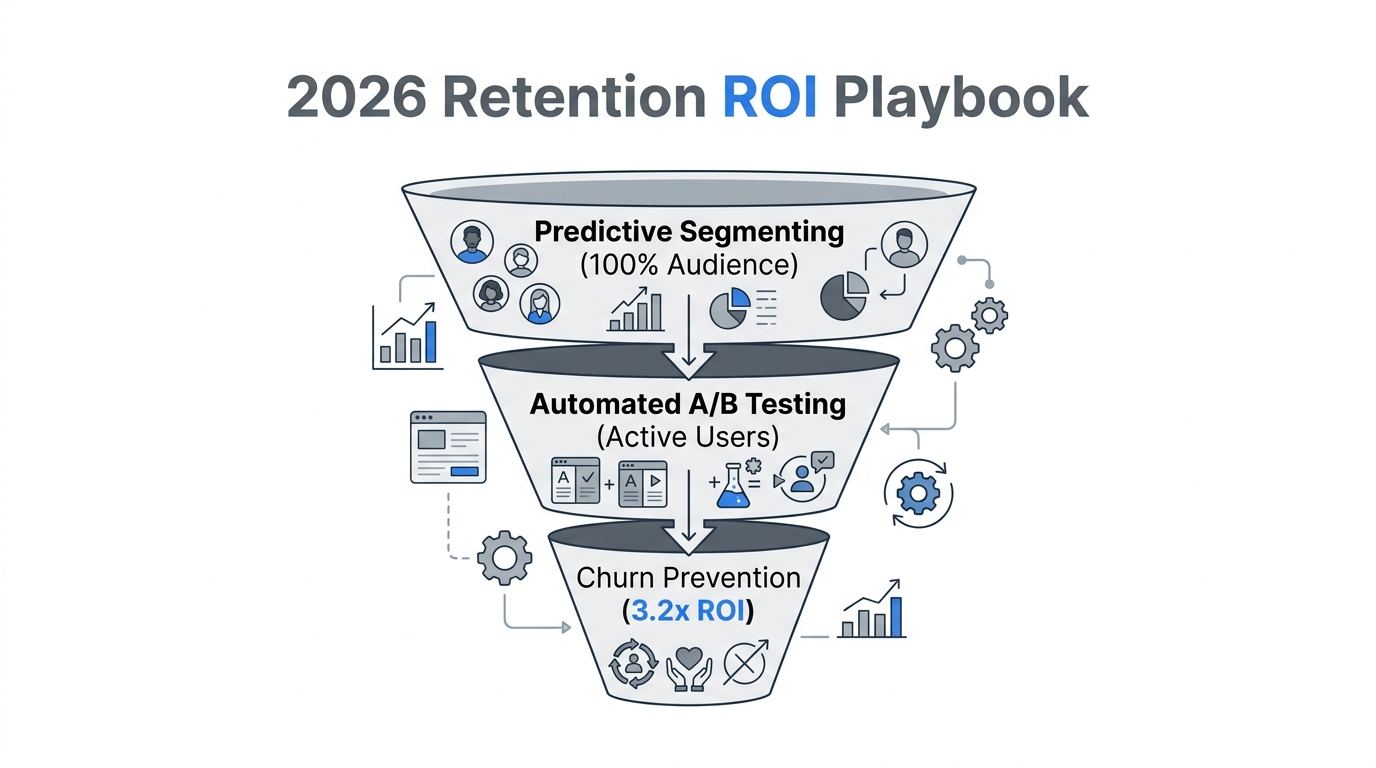
Subscriber churn is the silent killer of e-commerce. In 2026, reducing churn requires more than just a 'Unsubscribe' link at the bottom. It requires hyper-personalization of the visual layout. Using AI to A/B test not just subject lines, but the entire structure of the email, is now standard practice. Brands are testing "Text-Heavy Narrative" vs. "Image-Heavy Visual" layouts at the individual subscriber level.
Data from Google Analytics and Mixpanel can be fed back into Klaviyo to create a closed-loop system. If a segment of your audience only opens emails on Sunday evenings and only clicks on educational content, the AI agent schedules a custom-designed educational newsletter for that specific window. This level of micro-targeting ensures that the brand remains relevant without being intrusive.
How to Implement This Today
- Audit your flows: Identify the top 3 underutilized flows in your Klaviyo account (e.g., Post-Purchase Upsell, Browse Abandonment).
- Map your catalog: Use an AI tool to categorize your products by 'Vibe' or 'Story' rather than just SKU type.
- Automate your UGC: Use Stormy AI to find 10 creators this week who fit your brand's aesthetic and set up an automated outreach agent to secure content rights.
- Test the narrative: Run an A/B test between a standard discount-led email and a story-led AI-generated newsletter.
Conclusion: The Future of Retention is Automated
The brands that will dominate the e-commerce landscape in 2026 are those that view their email list not as a distribution channel, but as a data-rich community. By bridging the Klaviyo Gap with AI-powered narrative automation and prompt-based design, you can transform your retention strategy from a manual chore into a fully autonomous revenue engine. The tools are already in your hands—it’s time to stop paying for the 80% you aren’t using and start building the future of your brand's retention today.