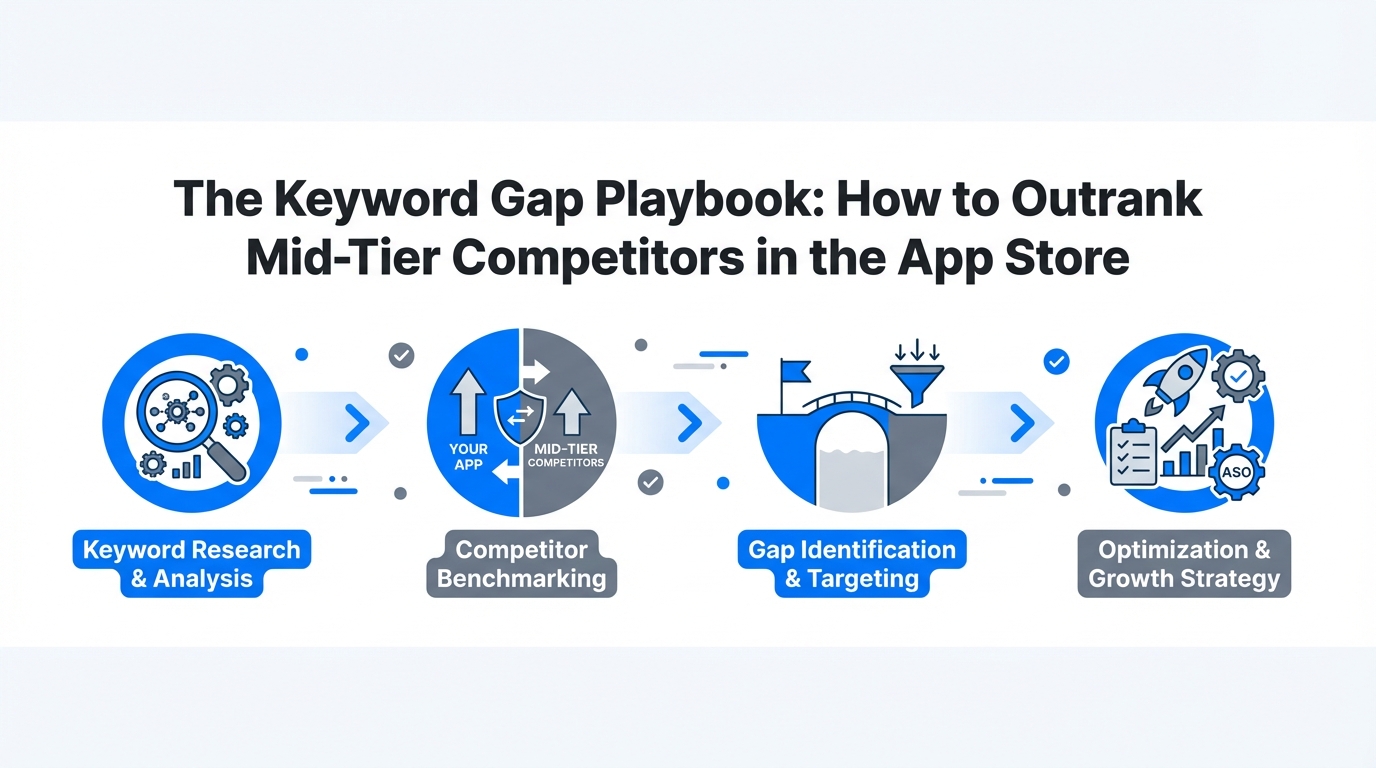
Most mobile app developers fall into a predictable, yet fatal, trap: they look at the category leaders—the TikToks, the Ubers, the Instagrams—and try to replicate their metadata. They see a massive Search Popularity index and assume that by targeting the same high-volume head terms, they can siphon off a fraction of that traffic. However, in the modern App Store ecosystem, this is a recipe for invisibility. Category leaders don't rank because of their ASO; they rank because of their massive brand equity and billion-dollar marketing budgets. If you want to drive sustainable growth, you need a different mobile app growth strategy.
The real opportunity lies in the "Keyword Gap." By performing a rigorous app store competitor analysis focusing on apps ranked #10 through #50, you can identify high-intent terms that are within your reach. This playbook will guide you through the technical process of identifying these gaps, leveraging semantic indexing, and executing a localization strategy that goes beyond simple translation to dominate your niche.
The Fallacy of Copying Category Leaders
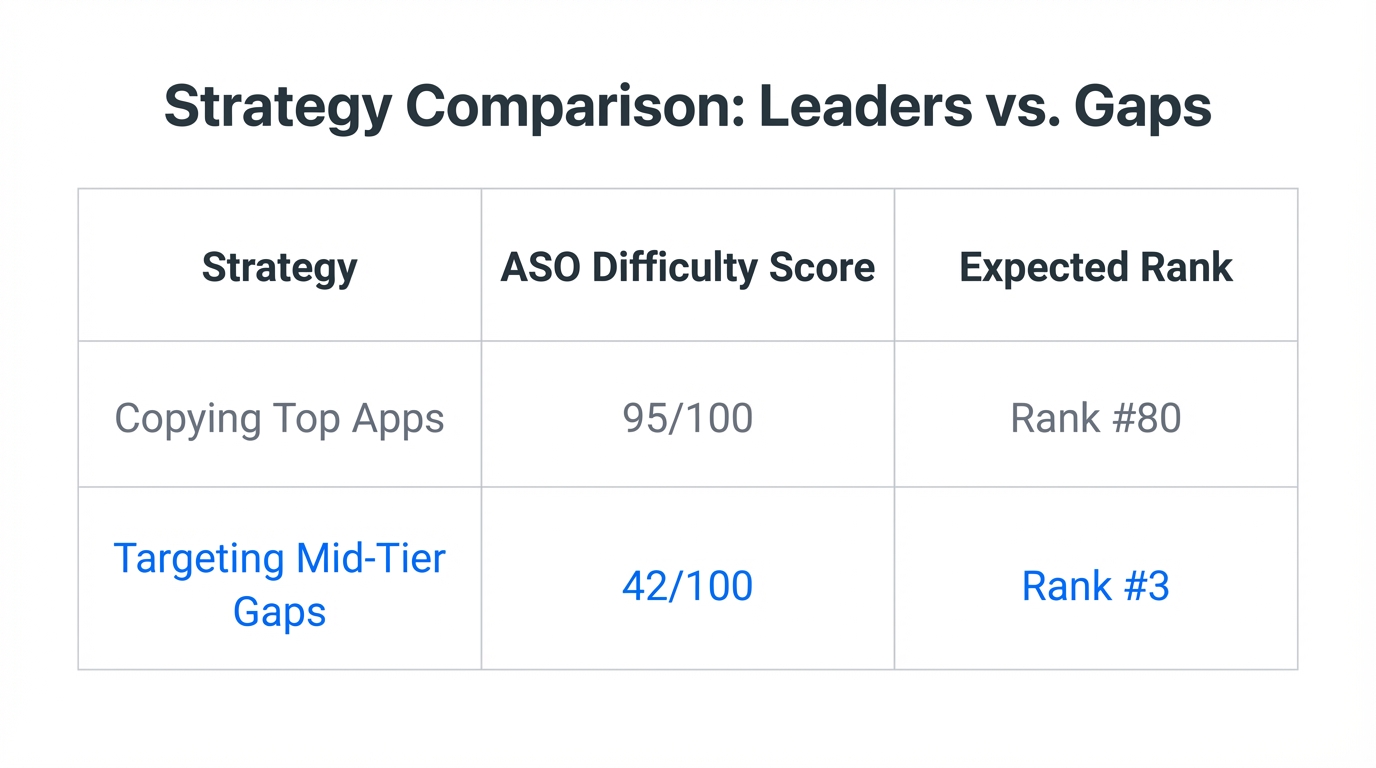
It is tempting to target terms with a Search Popularity score of 80 or 100. But for a new or growing app, these terms are often impossible to rank for. Data from ASOMobile indicates that approximately 70% of total search volume on the App Store is driven by branded terms. When a user searches for "Instagram," they aren't looking for a generic photo-sharing app; they are looking for a specific destination. If you optimize for these terms, you are competing against a brand intent that you cannot win.
Furthermore, the app store ranking factors heavily weigh conversion rate (CVR) and retention. As expert Gabe Kwakyi points out, search volume is meaningless without CVR relevancy. If you manage to rank for a massive head term but users don't download your app because it doesn't perfectly match their intent, Apple’s algorithm will demote you almost instantly. In contrast, long-tail, functional keywords like "affordable fitness tracker for beginners" have shown a 32% growth in organic installs, according to Dot Com Infoway, because they align perfectly with user intent.
Identifying the Goldilocks Zone: ASO Keyword Difficulty
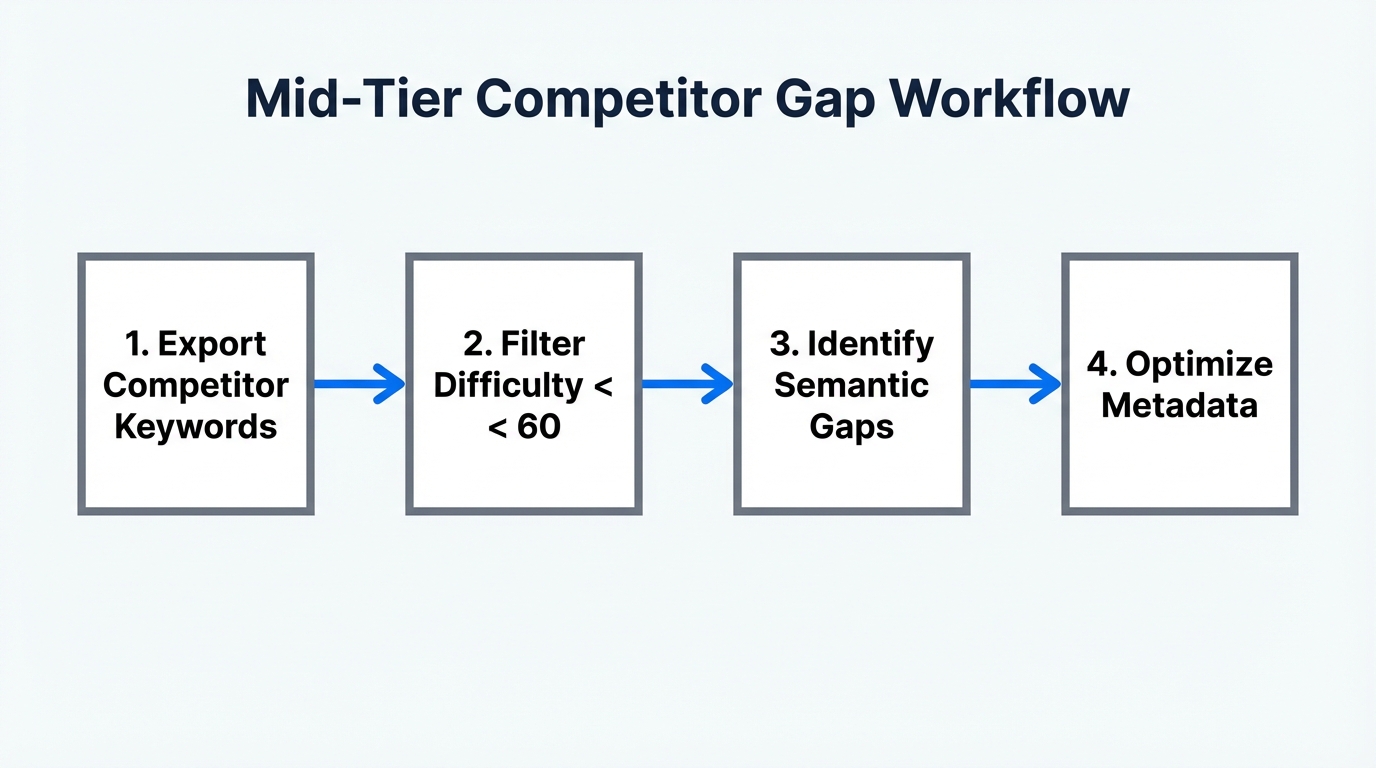
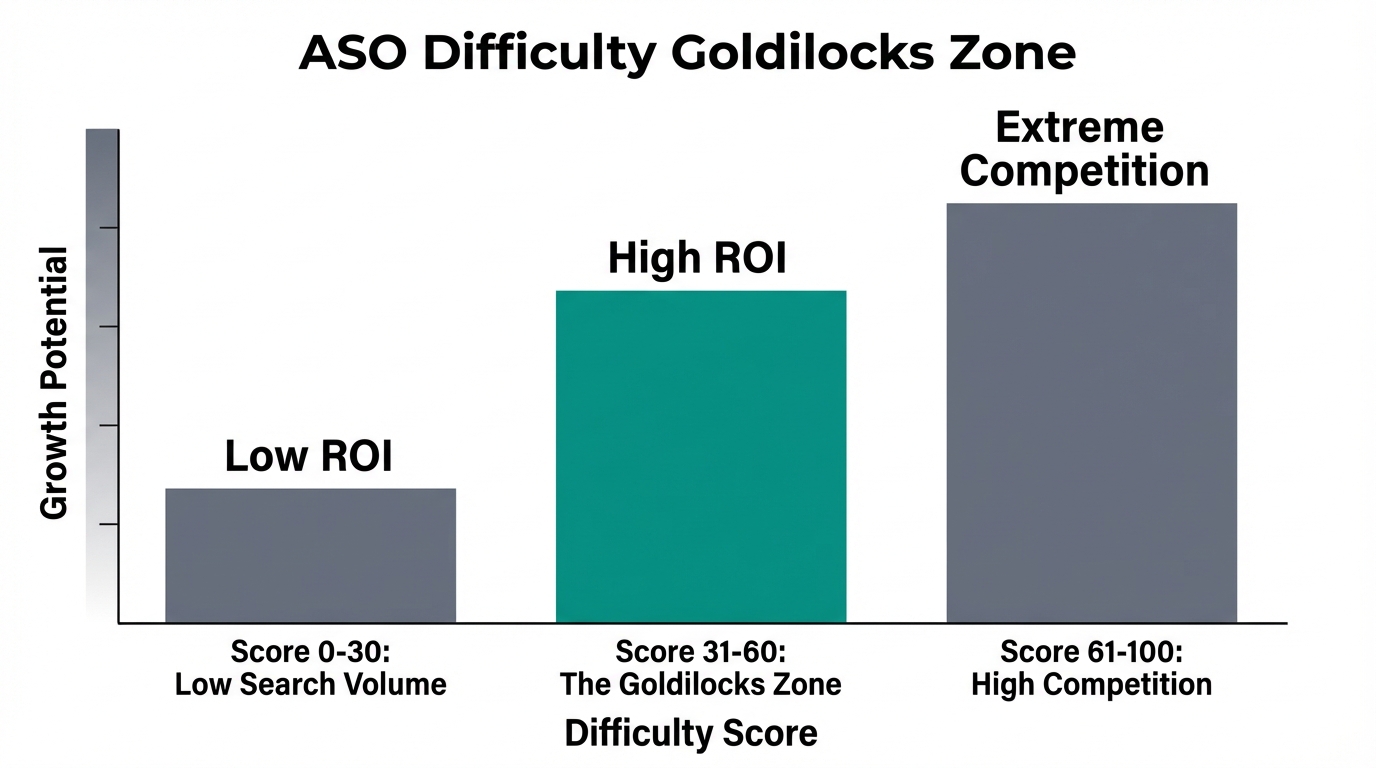
The core of a successful keyword gap analysis is finding terms with an ASO keyword difficulty score that matches your app's current authority. If your app is new, you should prioritize keywords with a Difficulty Score below 40. These are terms where the top-ranked apps are not overly dominant, or where their metadata is poorly optimized.
To find these opportunities, you should ignore the top 5 apps in your category. Instead, study the apps ranked #10 to #50. These developers are the ones most aggressively fighting for visibility and are likely using sophisticated tactics to maintain their positions. Tools like ASOTools allow you to "spy" on these competitors to see which functional terms are driving their organic growth. For a more holistic view of how competitors leverage external traffic, platforms like Stormy AI streamline creator sourcing and outreach, allowing you to identify the influencers driving downloads for rival apps.
"The most optimized apps in the store aren't the giants; they are the mid-tier challengers fighting for every single download with precision metadata."
When analyzing these competitors, look for keywords where they rank in the top 10, but have a low total number of ratings or a lower average rating than your app. This indicates a gap where your app’s superior quality could help it leapfrog the competition once you achieve keyword relevancy. Managing these relationships and tracking which creators contribute to your rating boosts can be handled effectively through the CRM features in Stormy AI.