The Amazon marketplace in 2026 is defined by a professionalization paradox. While fewer new sellers are entering the arena — hitting a decade low of 165,000 in 2025 — the number of million-dollar sellers has nearly doubled since 2021, now exceeding 100,000 elite businesses. With Amazon’s global GMV projected to exceed $700 billion this year, according to data from Statista, the stakes for software selection have never been higher. For the modern seller, the choice often boils down to two titans: Jungle Scout and Helium 10. But as Amazon shifts toward AI-driven search (Rufus) and complex fee structures, which tool actually delivers ROI in 2026?
Running a high-scale FBA business today requires more than just a dashboard; it requires an autonomous operation. An AI ecommerce employee like Stormy AI can now sit on top of these tools, using a browser to pull data from Jungle Scout, updating restock spreadsheets, and following up with suppliers when inventory levels trigger an alert. In this guide, we break down the 2026 feature sets, pricing, and user sentiment for the two most popular suites on the market.
"The failure rate for Amazon sellers who skip systematic validation in 2026 is a staggering 97%." — [Source: Jungle Scout State of the Seller Report]
Evaluating Predictive Demand vs. Cerebro: 2026 Capabilities
In 2026, static historical data is obsolete. Jungle Scout has pivoted heavily into Generative AI forecasting with its "Predictive Demand" engine. This tool integrates macro-economic indicators, such as inflation rates and housing starts from sources like Nova Analytics, to predict seasonal demand spikes up to four months in advance with a claimed 88% accuracy.
Helium 10, conversely, remains the king of keyword-level intelligence. Its flagship tool, Cerebro, has been upgraded to handle "Intent Clusters" rather than just simple keywords. Since 30% of purchases now happen through the Amazon Rufus AI assistant without a traditional search, Cerebro now maps the specific questions Rufus asks users. This allows sellers to optimize for "relevance density" rather than just high-volume short-tail terms.
AI Review Analysis: Turning Complaints into Manufacturing Specs
Product research in 2026 has moved from finding "winning items" to validating market gaps. Both platforms now offer AI Review Analysis, but the implementation differs. Jungle Scout’s Professional tier includes a robust AI that summarizes thousands of reviews into a concise "Pros/Cons" list. For instance, a seller in the home organization niche can instantly identify that "flimsy material" is the #1 complaint for the top three competitors, providing a clear blueprint for a "V2" product launch.
Helium 10’s review insights are deeply integrated with its listing builder. While Jungle Scout helps you design the product, Helium 10 helps you write the listing that addresses those negative sentiments. Both tools are essential for hitting the 14.2% CVR benchmark required for A10 algorithm success this year, as noted in recent ecommerce performance reports.

Pricing Breakdown: Which Offers Better ROI?
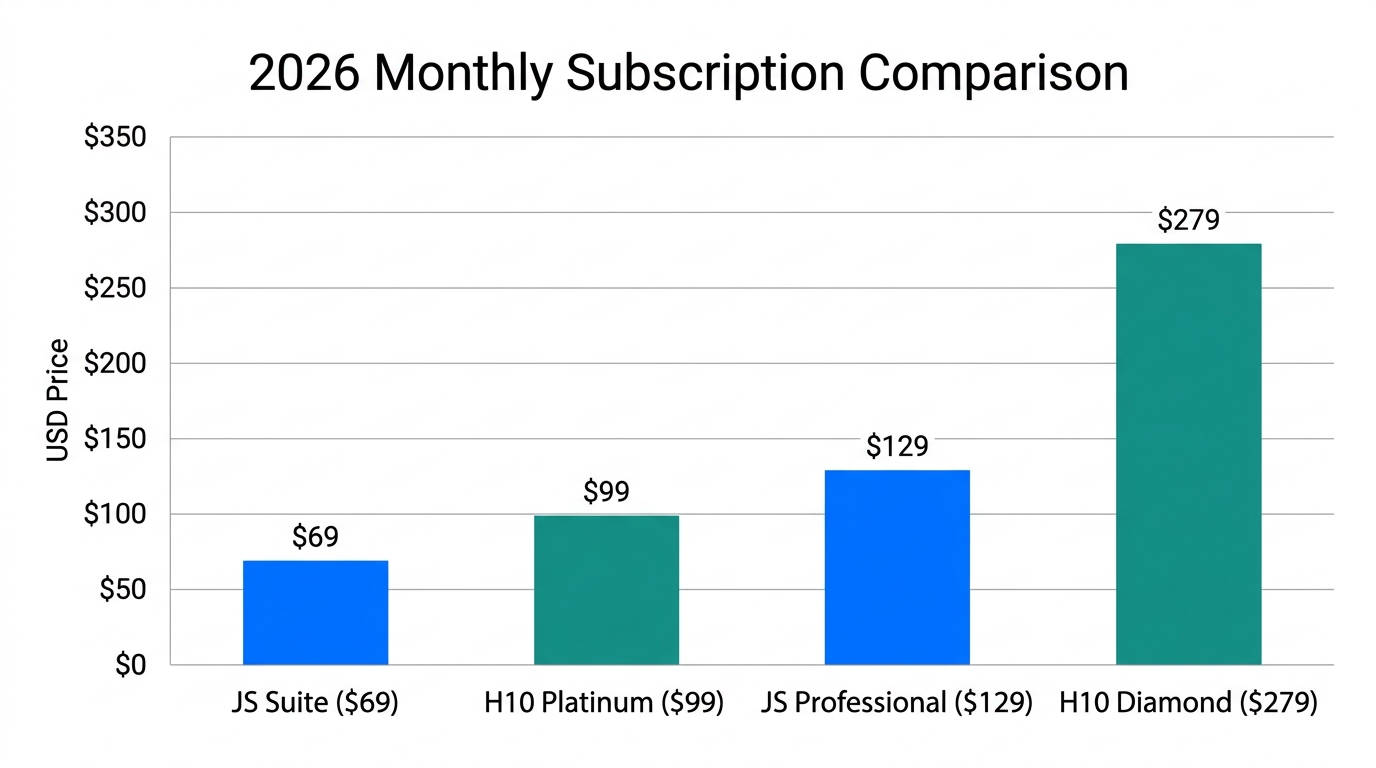
Cost efficiency is critical as Amazon fees now consume 30–45% of revenue for the average seller. Jungle Scout pricing has shifted toward an enterprise-heavy model, while Helium 10 maintains a more accessible entry point for mid-tier brands.
| Feature | Jungle Scout (Professional) | Helium 10 (Platinum) |
|---|---|---|
| Monthly Price | $129 | $99 |
| Core Strength | Supplier Database & Demand Prediction | Deep SEO & PPC Automation |
| AI Analysis | Review Summary & Market Share | Listing Optimizer & Review Insights |
| Best For | Beginners / Product Research | Scaling / Advanced Operators |
While Jungle Scout's $129 tier seems pricier, it includes access to their world-class Supplier Database, which allows you to find the exact factories used by market leaders. For a beginner, this is worth the extra $30/month. For an established brand already spending $5,000+ on Amazon Ads, Helium 10’s Adtomic PPC automation tools typically provide a better return on ad spend (ROAS).
The 'Bloatware' Factor: UI and Performance in 2026
User sentiment on platforms like Reddit and G2 has become increasingly vocal about "feature bloat." Modern sellers are often "on-the-go" operators who need speed. Recent critiques suggest that Jungle Scout is becoming too enterprise-focused and slow, particularly in its Cobalt (Market Share) integrations. Helium 10, while faster, is frequently criticized for its fragmented UI, requiring users to jump between dozens of separate tools (Cerebro, Black Box, Magnet) to complete a single task.
This is where an AI agent like Stormy AI changes the game. Instead of navigating these complex UIs yourself, you can ask Stormy to "Go to Jungle Scout, find the top 5 competitors for [Category], and export their estimated monthly units into our inventory spreadsheet." Stormy handles the messy back-office clicks so you can focus on brand strategy.
Choosing a Tool Based on Your Business Model
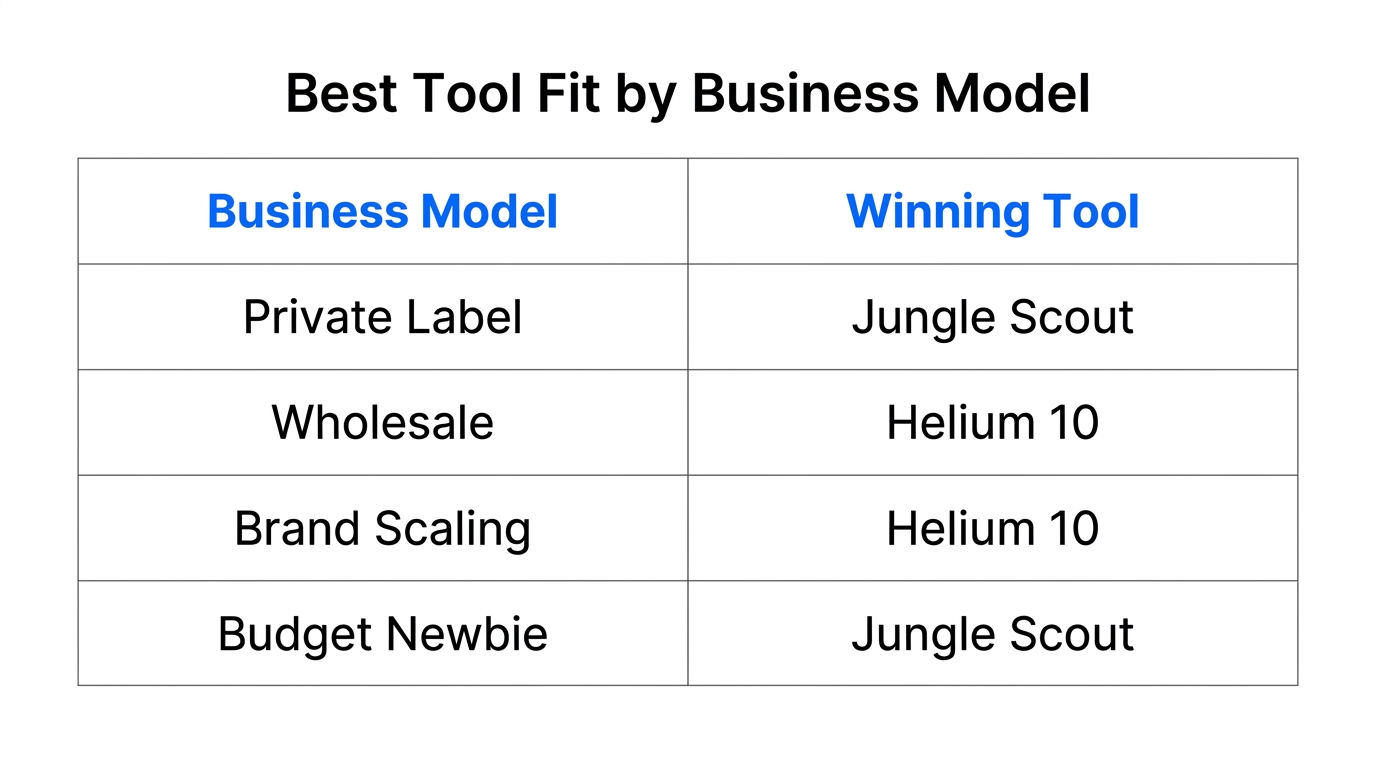
The best Amazon seller tools depend entirely on how you source and sell. In 2026, the strategy has shifted from high-volume "trinkets" to value-based intent products.
- Private Label: Jungle Scout is the winner here. Their 13-point validation framework and supplier database are tailor-made for creating a brand from scratch.
- Wholesale & Arbitrage: Helium 10 (or specialized tools like SellerAssistant) is superior. The ability to quickly analyze buy-box history and BSR stability is paramount for wholesale margins.
- Enterprise Brands: Many top-tier brands are moving to SmartScout for brand-level mapping, but usually keep Helium 10 for their daily keyword management.
"Data accuracy is the only moat left. If your sales estimate is off by 20% in 2026, storage fees and low-inventory surcharges will eat your entire margin." — Greg Mercer, Jungle Scout Founder
The 2026 Research Playbook: Find, Filter, Validate
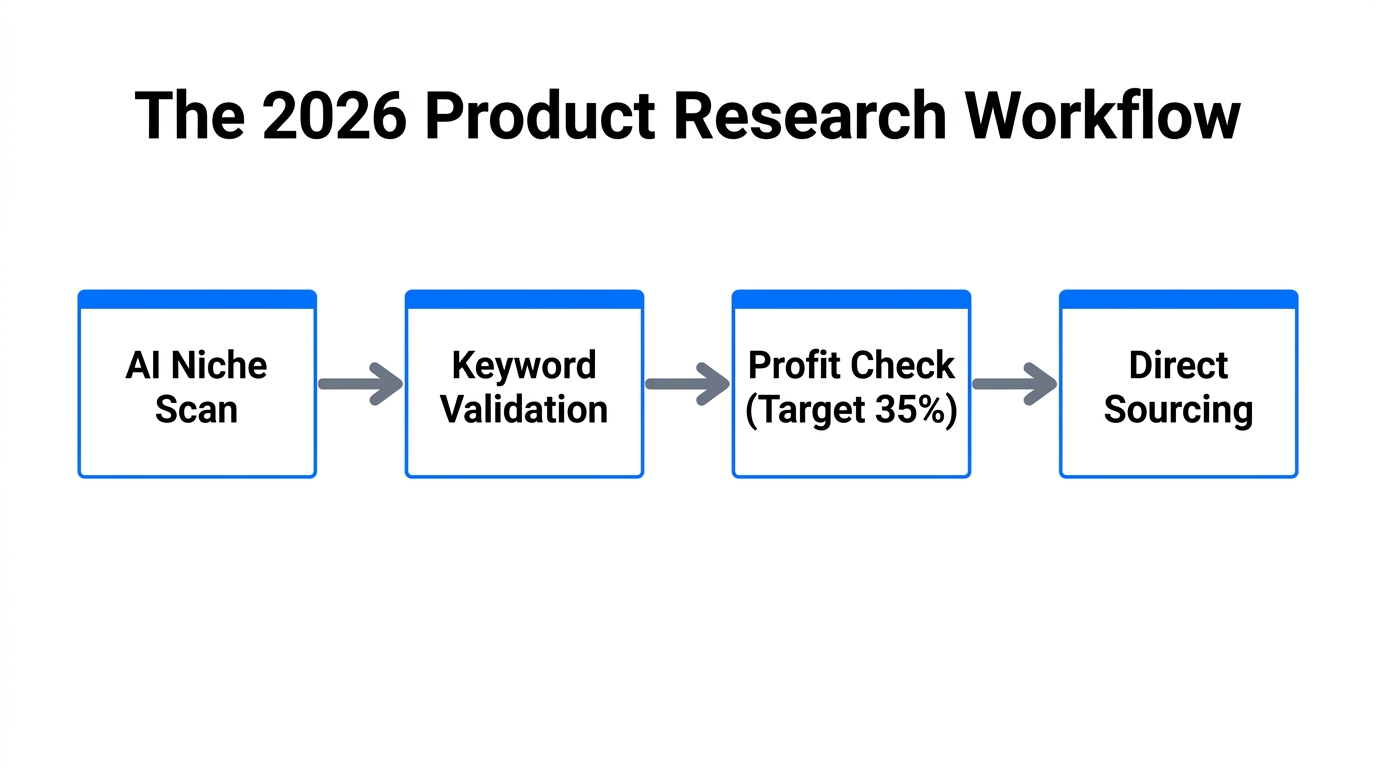
To succeed today, you must follow a systematic approach. Here is how top practitioners use these tools in 2026:
Step 1: Niche Hunting (The Find)
Open the Jungle Scout Opportunity Finder. Filter for categories like Pet Supplies or Office Products with average units sold between 300–1,000 per month. Look for a "Niche Score" of 7 or higher. According to Marketplace Pulse, these mid-demand niches are less likely to be flooded by copycat manufacturers within 45 days.
Step 2: The 13-Point Checklist (The Filter)
Validate your lead against these 2026 benchmarks:
- Price: $20–$50 (the sweet spot for healthy margins).
- Weight: Must fit in "Small Standard" to avoid the 2026 bulky item fee spikes.
- Net Margin: Target 25% minimum after COGS and the 35% "Amazon Tax."
- Review Gap: Top competitors should have fewer than 500 reviews.
Step 3: AI Sentiment Audit (The Validate)
Use the AI Review Tool to identify unresolved complaints. Then, simulate a "Rufus Chat" by asking a generative AI like Claude: "Why should I NOT buy this product?" If you can solve those objections in your manufacturing phase, you have a Market Gap. Once your product is live, Stormy AI can monitor your inventory levels to ensure you stay in the 35-45 day "Goldilocks Zone," avoiding the $0.97 per unit Low-Inventory Surcharge.
Final Verdict: Jungle Scout vs Helium 10
In 2026, Jungle Scout remains the best tool for beginners and those launching new Private Label brands due to its superior supplier data and intuitive AI insights. Helium 10 is the choice for established sellers who need the absolute best SEO and PPC automation to maintain their rank against aggressive competition.
Regardless of which tool you choose, the "messy back office" of Amazon remains a burden. Running a lean ecommerce business requires AI doing the boring parts. Whether it's monitoring for suppressed listings, drafting restock POs, or tracking creator affiliate posts, Stormy AI acts as the teammate that keeps your operations running 24/7. Stop clicking through dashboards and start building your brand.