In the early 1980s, a 5'5" Brooklyn native named Larry Joltin became a national phenomenon not by inventing a new technology, but by mastering the dying art of the floor sale. Working at Reyer’s Shoe Store in Sharon, Pennsylvania—a town of just 20,000 people—Joltin managed to sell roughly $500,000 worth of shoes annually. In today's economy, that is the equivalent of $1.5 million in yearly personal production. He wasn't just a clerk; he was a machine, averaging one pair of shoes sold every 15 minutes, or 9,000 pairs a year. His success earned him the National Shoe Retailers Association Salesman of the Year award three years running.
Joltin’s success wasn't a fluke of geography or luck; it was a rigorous application of sales psychology for retail and a obsessive commitment to a specific routine. Today, while the global footwear market is projected to hit $588 billion by 2030, the core principles of high-ticket retail remain unchanged. Whether you are selling luxury footwear or high-end electronics, the "Joltin Method" provides a definitive retail sales training playbook for converting foot traffic into high-AOV (Average Order Value) loyalists.
1. The 'Taking Charge' Theory: Measure, Don't Ask
The most common mistake in retail is asking, "What size do you wear?" According to Joltin, this is a fatal error because most people haven't been properly measured in over a decade and are often wearing the wrong size. His "Taking Charge" theory posits that the salesperson must be the absolute authority from the first interaction. Instead of asking for a size, Joltin would immediately guide the customer to a seat and reach for the Brannock Device. By insisting on measuring every customer, he established himself as a consultant rather than a mere order-taker.
This consultative selling technique is more relevant than ever. With online return rates for footwear hovering between 30% and 40%, consumers are starving for a "fit-first" experience. Modern retailers are evolving this by using Volumental 3D scanners to provide precision fitting. However, the psychology remains the same: you must take control of the discovery phase to build trust. When you tell a customer, "Let's check your measurement to see how this specific brand fits today," you eliminate guesswork and position yourself as the expert.
2. The Back Room Play: The Rule of Three

When a customer asks for a specific item, most sales associates go to the back, grab that one item, and return. Joltin’s strategy was more calculated. He would never return with just one box. He practiced what is known as the "Back Room Play," always emerging with at least three options: the item requested, a "need" item (a practical alternative), and a "surprise" item (something bold or higher-priced that the customer didn't know they wanted).
This approach leverages the psychological principle of choice architecture. By providing a curated selection, you move the conversation from "Should I buy this?" to "Which of these do I prefer?" This is a foundational upselling strategy in retail. Today, high-performing stores use tools like Bluecore to trigger real-time inventory suggestions, but the physical act of bringing multiple options to the customer remains the gold standard for increasing multi-pair sales.
3. Closing Techniques for 80% Conversion Rates

Top-performing specialty retailers, including the legendary Reyer’s Shoe Store, target a conversion rate of 80% or higher for customers who sit down for a fitting. To reach this number, Joltin utilized a "closing from the start" mentality. He didn't wait for a formal closing moment; he assumed the sale the moment the measurement was taken. He focused on the benefits of the fit rather than the price, famously stating, "Don't buy my size, buy by the fit."
To how to increase retail conversion rate, you must handle objections before they arise. If a customer hesitates, Joltin would pivot to the longevity of the product. This mirrors modern trends where nearly 80% of retail transactions still happen in-store because customers value the physical validation of quality. Use social proof during the close—referencing customer reviews or "expert picks" via platforms like Yotpo—to reinforce that the customer is making a sound investment.
4. The Attachment Rate Masterclass
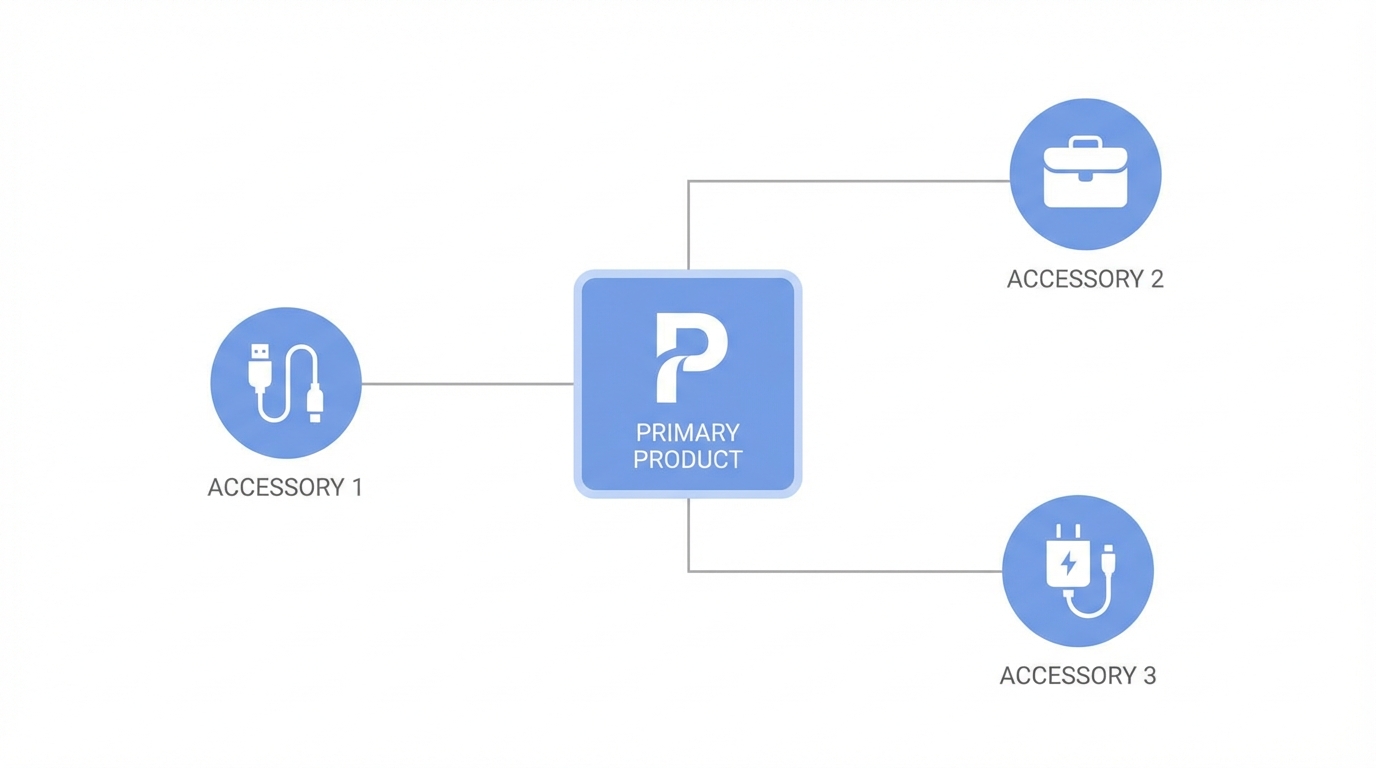
High-ticket sales aren't just about the primary item; they are about the "attachment rate." Joltin was a master at selling the "invisible" items: socks, waterproofing sprays, and shoe trees. While a pair of shoes might have a 40-50% margin, accessories often carry profit margins of 60% or higher. He never treated these as afterthoughts. Instead, he integrated them into the fitting process. If he was putting a boot on a customer, he was already explaining why a specific moisture-wicking sock was required for that specific leather.
In modern upselling strategies in retail, this is called "completing the look." Retailers should train staff to treat the accessory as a necessary component of the primary purchase's performance. Data from Financial Models Lab suggests that increasing your attachment rate by just 10% can lead to a disproportionate jump in net profit, as the acquisition cost for that customer has already been paid by the primary item.
5. Developing 'The Hustle': Active Floor Presence
Joltin’s Rule #1 was simple: "If you're standing still, you're not selling." He famously loathed the "counter-waiter"—the salesperson who stands behind the register waiting for someone to approach. Joltin was always on the move, tidying displays, engaging customers as they walked in, and maintaining a high-energy presence. This active floor presence is what allowed him to draw customers from a 75-mile radius, as noted in his Time Magazine profile.
Retail expert Bob Phibbs emphasizes that the way you engage a customer in the first 30 seconds determines the trajectory of the entire visit. The "hustle" isn't just about speed; it's about being proactive. This includes following up with customers post-purchase. While Joltin made manual phone calls, modern brands can automate this "hustle" using Klaviyo for SMS and loyalty engagement, ensuring the relationship continues long after the customer leaves the store.
6. Scaling Sales Through Modern Discovery
While Joltin relied on local fame and word-of-mouth, modern retail success requires a bridge between the physical floor and the digital world. To drive the kind of foot traffic Joltin enjoyed, brands today must leverage User-Generated Content (UGC) and influencer partnerships. Seeing a trusted creator demonstrate the "sit-and-fit" experience or the quality of a high-ticket item acts as a digital version of Joltin’s regional draw.
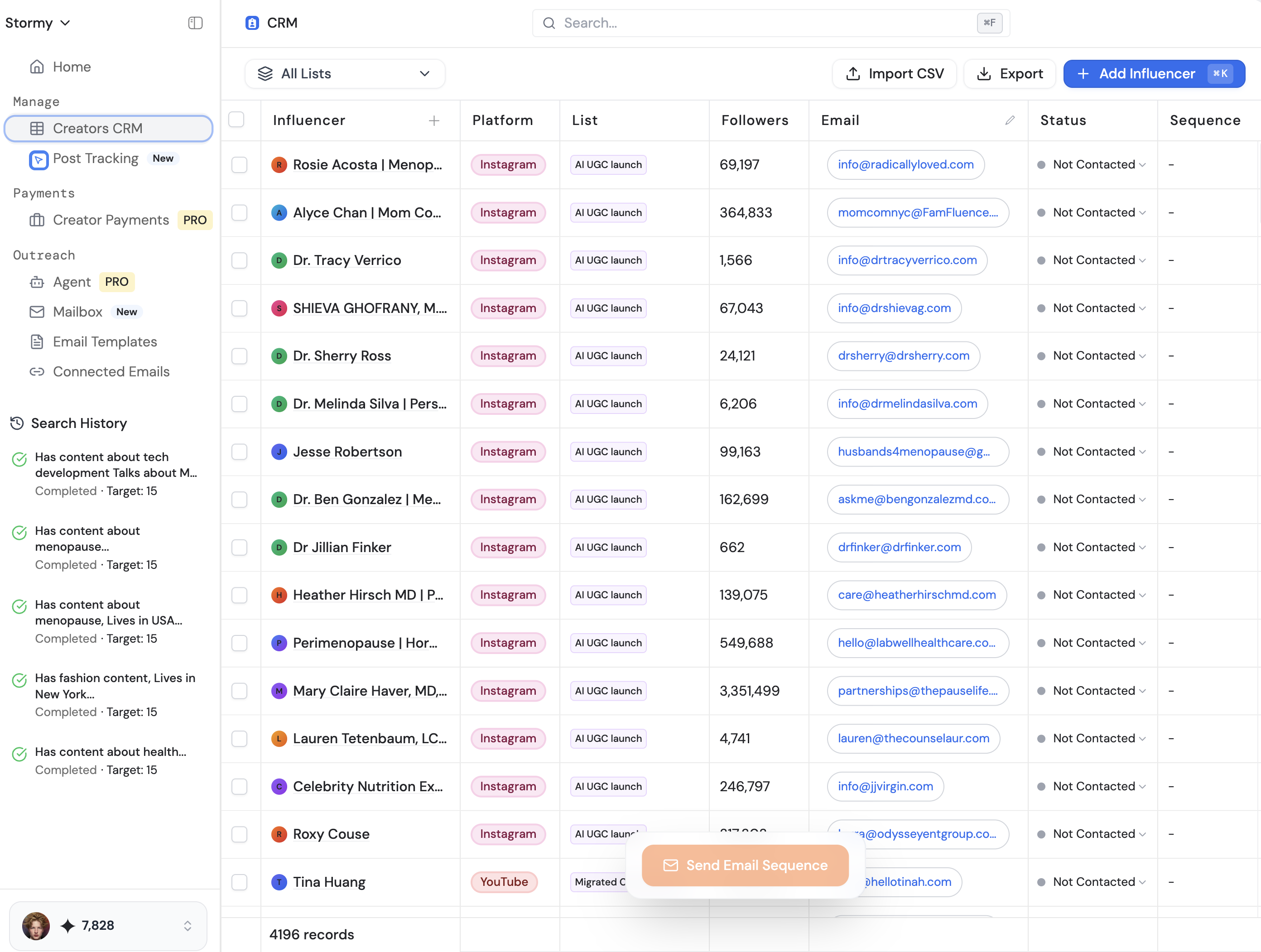
Tools like Stormy AI can help brands find and manage the right UGC creators who can replicate that "consultative" authority on social media. By sourcing influencers who prioritize fit and quality, retail brands can build a pipeline of high-intent customers who arrive at the store already half-sold. Managing these relationships through a creator CRM ensures that your digital "hustle" is as organized and effective as Joltin's floor work.
7. Avoiding Common Retail Sales Pitfalls
To maintain a $500k-a-year pace, Joltin had to eliminate inefficiencies. The biggest pitfall he identified was pre-judging the customer. Whether a customer walked in wearing a tailored suit or work-worn overalls, Joltin treated every individual as a potential multi-pair buyer. Pre-judging leads to lazy selling and missed opportunities for upselling.
Another common error is failing to adapt to the customer's pace. While Joltin was fast, he was never rushed. He understood the sales psychology for retail required a balance of urgency and hospitality. Even when Reyer's moved to its modern location at the Eastwood Mall, they maintained this service-first philosophy. To avoid the "clerk" trap, always focus on the discovery questions: Why do they need this item? What problem is it solving? Where will they be wearing it? The answers to these questions are your roadmap to a higher AOV.
Conclusion: The Joltin Legacy in a Digital World
Larry Joltin’s career proves that high-ticket retail is not about the product, but the process. By taking charge of the measurement, utilizing the back room for curated choices, and maintaining an unrelenting hustle, he turned a small-town shoe store into a national landmark. His techniques—from the 80% conversion goal to the attachment rate masterclass—remain the blueprint for any salesperson looking to dominate the floor.
In today's landscape, combining these timeless consultative selling techniques with modern technology like 3D scanning and AI-driven creator discovery allows for unprecedented scale. Whether you are fitting a customer for their first pair of luxury boots or managing a nationwide retail campaign, the goal remains the same: stop being a clerk, start being an authority, and always, always keep the hustle alive.