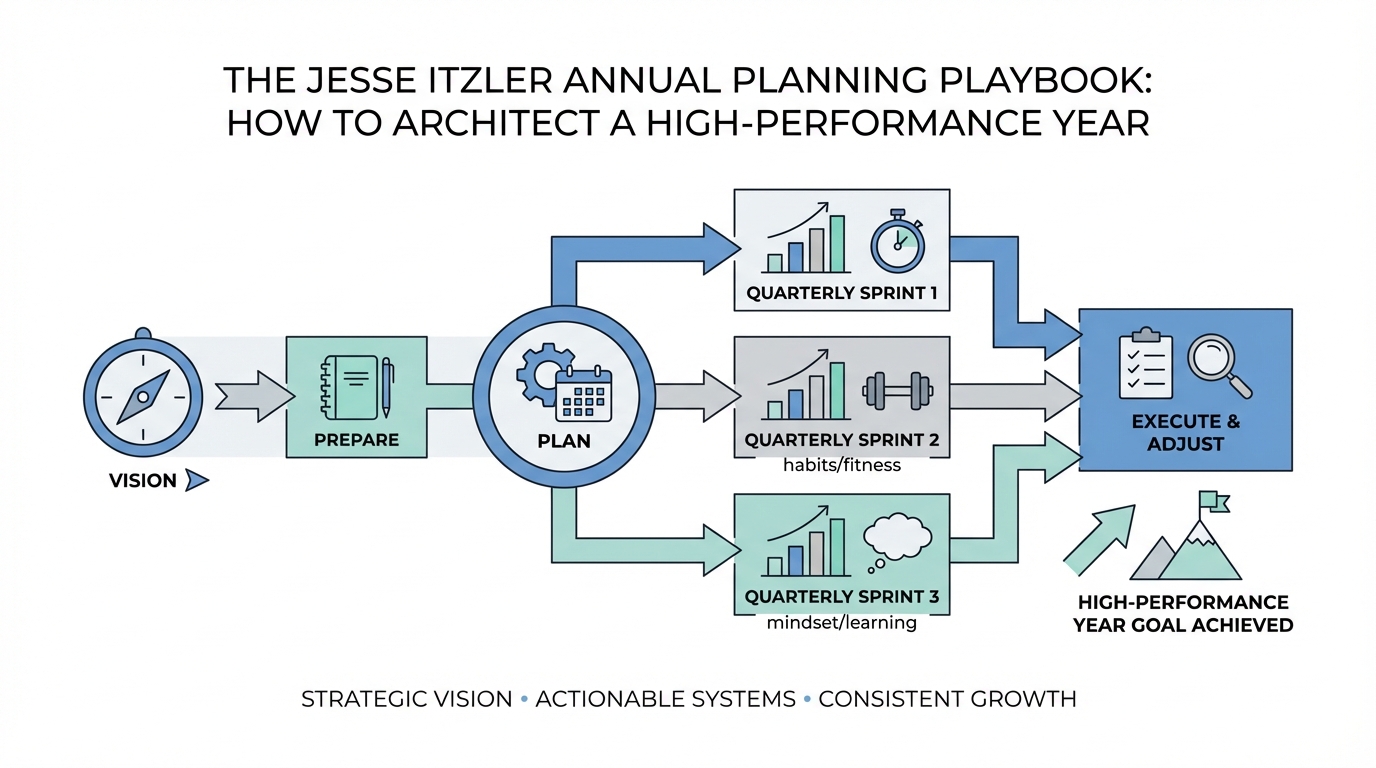
Most high-performers spend their lives playing defense. We wake up to a barrage of emails, lose hours to unscheduled meetings, and find our personal aspirations buried under the weight of professional obligations. We treat our calendars as a repository for other people's requests rather than a blueprint for our own fulfillment. But what if you treated your life as the ultimate project? Billionaire entrepreneur Jesse Itzler, a man who sold a jet company to Warren Buffett and co-founded Zico Coconut Water, operates on a different frequency. He doesn't just plan his business; he architects his life. The Jesse Itzler annual planning playbook is a masterclass in shifting from a reactive existence to a proactive, high-performance year by prioritizing life over work.
The Philosophy of Lifestyle Architecture: Moving from Defense to Offense
The core of the Itzler philosophy is simple but radical: we don’t lack time, we lack a system. Most entrepreneurs are the CEOs of their companies but the interns of their own lives. They allow their schedules to be dictated by external pressures, leaving personal growth and family connection to the "leftover" hours that rarely materialize. Lifestyle architecture is the practice of designing your year with your personal highlights as the non-negotiables. By planning your life first and fitting work into the remaining gaps, you ensure that the most important things actually happen.
To start this process, you must view your calendar as a blank check. This isn't just about managing tasks; it's about writing your autobiography in advance. If you want to scale your business using advanced growth strategies like Meta Ads Manager, you need the mental clarity that only comes from a structured personal life. When you know your family vacations and physical challenges are locked in, you can work with a level of intensity and focus that most people can't match because they are constantly worried about what they are missing out on.
Step 1: 'Getting Light' — The Momentum of Decluttering

Before you can build the future, you must clear the wreckage of the past. Jesse calls this process "getting light." It’s about entering the new year with no baggage and maximum momentum. This isn't just a physical cleanup; it's a mental reset that removes the friction from your daily life. For a mobile app developer or an entrepreneur, this might mean cleaning up your digital workspace or auditing your tool stack. Platforms like Stormy AI, an AI search engine across TikTok, Instagram, and YouTube, can help streamline your creative discovery, but that only works if you aren't bogged down by obsolete processes.
To 'get light' effectively, follow this checklist:
- Digital Purge: Delete every app on your phone that you haven't used in the last 30 days. Cancel the "ghost" subscriptions that are draining your bank account. If you’re running campaigns on Google Ads, audit your account to ensure you aren't wasting budget on outdated experiments.
- Physical Workspace: Clean your desk, your car, and your closet. Donate clothes you don't wear. A cluttered environment leads to a cluttered mind.
- Communication Audit: Clear your inbox and your text messages. Jesse highlights the weight of unread messages—each one is a tiny "guilt trip" that saps your energy.
The goal is to reach a state where you feel ready to attack. This process should take about an hour, but the momentum it generates is permanent. When you are "light," you can move faster, react more precisely, and make better decisions for your brand or app growth.
Step 2: The Personal Year-End Audit and Highlight Reel

Every successful business closes its books at the end of the year, yet few individuals do the same for their personal lives. To plan a better future, you must understand your past. Jesse’s system involves a thorough personal audit that goes beyond financial metrics. The most effective way to do this is by reviewing your phone's camera roll from the previous twelve months. This serves as an objective record of how you actually spent your time.
Go through your photos and note the moments that truly "lit you up." Was it a specific family trip? A physical milestone? A successful product launch using influencer vetting and fraud detection tools like Stormy AI? Write these highlights down on a single piece of paper. This "one-page recap" allows you to see the gaps in your year. If your highlights are sparse in March and April, you know exactly where you need to inject more intentionality in the coming year. This audit creates a time capsule of your growth and ensures you don't forget the small wins that contribute to a rich life.
The Power of Handwritten Letters
As part of closing out the year, Jesse advocates for the "Inkstain in the Brain" strategy. He writes 10 to 25 handwritten thank-you letters to people who made an impact on his year. In an era of digital noise, a physical letter stands out. Whether it's a mentor, a partner, or a creator you found through the AI-personalized outreach tools in Stormy AI, a handwritten note builds a different kind of relationship. It shows that you took the time to reflect, get a stamp, and mail a message, which creates a lasting impression that an email or Slack message never could.
Step 3: The 'Big Ass Calendar' System for Visual Goal Tracking
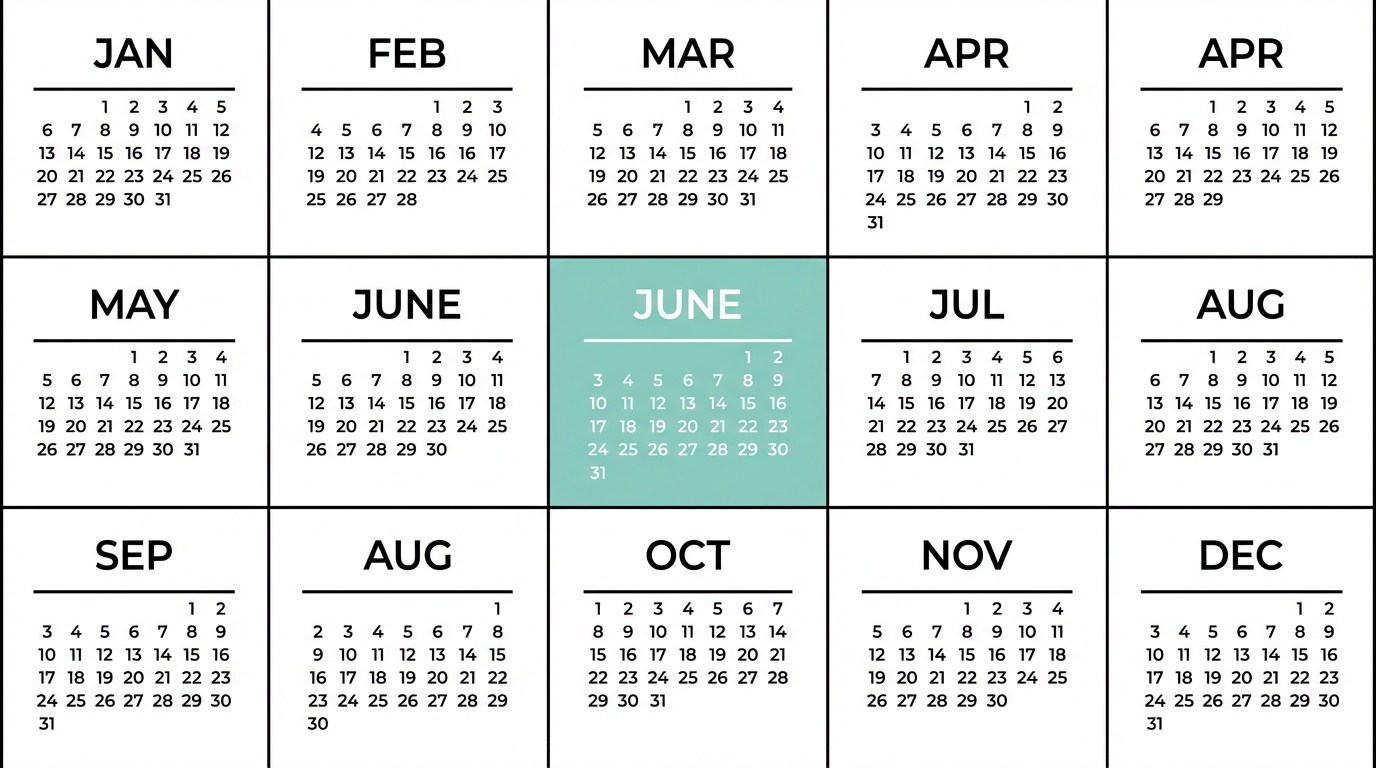
The centerpiece of Jesse’s planning is the "Big Ass Calendar." This is a large-format physical calendar that displays the entire year at once. Digital calendars are great for micro-scheduling, but they fail at providing the macro-perspective needed for lifestyle architecture. When you can see all 365 days on one wall, you realize that a year is both very long and incredibly short. It forces you to be honest about how much time you actually have left for your goals.
By using a physical calendar, you create a forcing function for your priorities. If you want to scale your app's user base through Apple Search Ads, you can map out your peak campaign periods around your personal life, ensuring you have the bandwidth to manage both. The calendar acts as your script, and all you have to do is follow it.
Step 4: Color-Coding Your Priorities

A high-performance year requires balance across multiple domains. Jesse uses a color-coding system to ensure his energy is distributed according to his values. This visual representation allows you to instantly see if your year is lopsided toward work or if you are neglecting your health.
The Color Mapping Guide:
- Green (Family and Travel): These are the first things to go on the calendar. Birthdays, anniversaries, and one big family trip per quarter. By locking these in first, you prevent work from encroaching on your most important relationships.
- Red (Physical Challenges and Misogis): These are your "races" or endurance events. Jesse is famous for running 100-mile races and cycling across America. For you, it might be a marathon or a consistent 30-day fitness challenge. These events build the mental toughness required for entrepreneurship.
- Black/Blue (Career Milestones): This is where your business goals live. Product launches, marketing sprints, and board meetings. Because the green and red blocks are already there, you are forced to be more efficient with your work hours.
This system ensures you are winning in all areas of life, not just financially. It prevents the "burnout" that often comes when entrepreneurs neglect their health and family in pursuit of growth.
Step 5: The Misogi — Defining Your Year Through Difficulty
One of the most powerful components of the Itzler playbook is the Misogi. Based on an ancient Japanese ritual of purification, a modern Misogi is one big, year-defining challenge that is so difficult it has a 50% chance of failure. The goal isn't just to accomplish the task; it's to expand your sense of what is possible. Jesse suggests that if you do one Misogi every year, by the time you are 87, you will have 50 monumental accomplishments that define your life.
A Misogi should be something that scares you. It could be learning a complex new skill, like how Jesse's friend Sean learned to play a difficult piano piece, or it could be a physical feat like the "Everesting" challenge (climbing the equivalent height of Mt. Everest). In the context of business, a Misogi might be a radical pivot in your marketing strategy, such as moving entirely to UGC-driven mobile app ads discovered via the automated AI agents in Stormy AI. Whatever it is, it must be hard enough to change your perspective on your own potential.
Conclusion: Become the Architect of Your Bliss
The Jesse Itzler annual planning playbook is not about adding more to your to-do list; it’s about subtracting the noise so you can focus on what matters. By "getting light," auditing your past, and mapping out your future on a Big Ass Calendar, you transition from a passenger to the pilot of your life. You stop playing defense and start building a year that you will be proud to look back on.
As you move into your next planning cycle, remember that your calendar is a blank check. You have the power to decide how much adventure, connection, and success you want to write into the script. Whether you are scaling an app using Meta Ads or training for your first marathon, the system is what makes the success sustainable. Don't just hope for a great year—architect one. Use tools like Stormy AI to find the right partners for your journey, but keep your hand firmly on the steering wheel of your own life architecture.