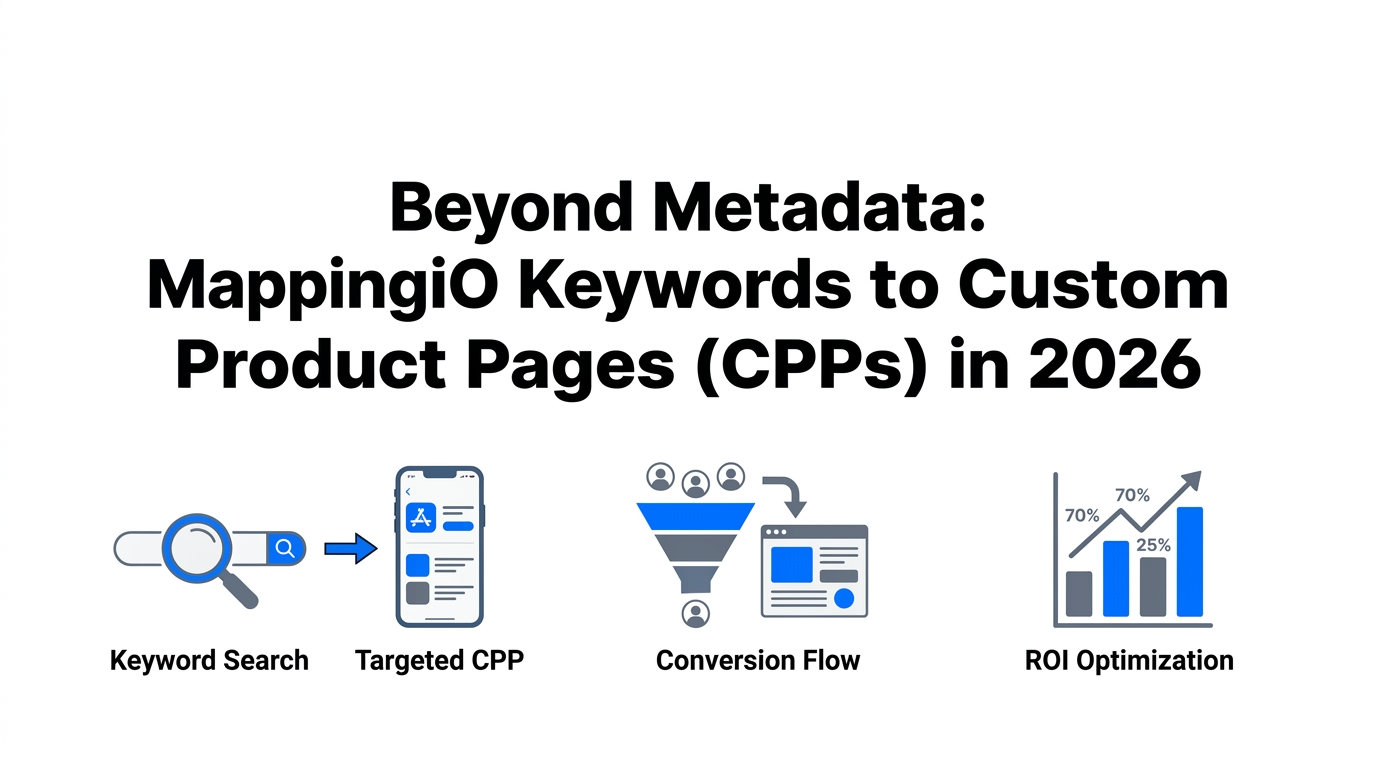
In the rapidly evolving landscape of 2026, the traditional rules of App Store Optimization (ASO) have been fundamentally rewritten. For years, developers focused almost exclusively on the metadata—titles, subtitles, and the hidden keyword field—within App Store Connect. However, as user expectations for relevancy have skyrocketed, the focus has shifted toward hyper-personalization through Custom Product Pages (CPPs).
The core of this modern strategy is mapping specific high-intent keywords to tailored landing experiences. In 2026, simply ranking for a term isn't enough; you must convert that intent with visual precision. By utilizing Apple Search Ads (ASA), marketers can now ensure that a user searching for a specific feature—such as "AI workout planner"—is directed to a CPP that highlights that exact functionality, rather than a generic app overview. This alignment has been shown to increase conversion rates by up to 40% according to recent AppsFlyer industry reports.
To execute this at scale, creative teams are moving beyond static screenshots. Leading developers use tools like Figma to design modular assets that can be quickly adapted for up to 35 different CPPs. These pages are then tracked using sophisticated mobile measurement partners (MMPs) like Adjust to verify that the keyword-to-page mapping is delivering high-LTV (Lifetime Value) users.
This level of precision isn't limited to paid search. In the era of creator-led growth, savvy brands are using CPPs as the destination for influencer campaigns. For instance, platforms like Stormy AI allow marketing teams to source influencers whose niche audiences match specific app features. By providing these creators with unique deep links to a dedicated CPP, brands can maintain a consistent narrative from a TikTok or Instagram video directly to the App Store install button.
Data-driven teams are also integrating post-install analytics from Mixpanel or PostHog to ensure that the promise made on the Custom Product Page is fulfilled within the app onboarding experience. This creates a cohesive "hook-to-habit" loop that is essential for retention in the 2026 app economy.
For apps that monetize through subscriptions or digital goods, connecting these CPP journeys to a robust payment infrastructure like Stripe or RevenueCat provides the final layer of visibility. When you can see which specific keyword mapping led to the highest renewal rate, your ASO strategy becomes a powerful engine for predictable revenue.
As you scale your 2026 growth roadmap, remember that metadata is just the beginning. The real competition is won in the mapping—bridging the gap between a user’s search query and a visual experience that speaks directly to their needs. Utilizing a Creator CRM like Stormy to manage the influencer side of this funnel ensures that your CPP strategy is fueled by the right traffic sources, creating a holistic approach to modern app growth.