In the high-stakes retail environment of 2026, the traditional wall between the warehouse and the storefront has finally crumbled. We have officially moved past the era where pricing was a static marketing decision made in a vacuum. Today, the most successful brands treat their inventory levels as a living, breathing signal that dictates every price point in real-time. Inventory-linked AI dynamic pricing is no longer just a luxury for Amazon-level giants; it is the fundamental infrastructure for any brand looking to scale without being buried under the weight of unsellable stock.
The 2026 Connection: Why Supply Chain and Pricing Can No Longer Operate in Silos
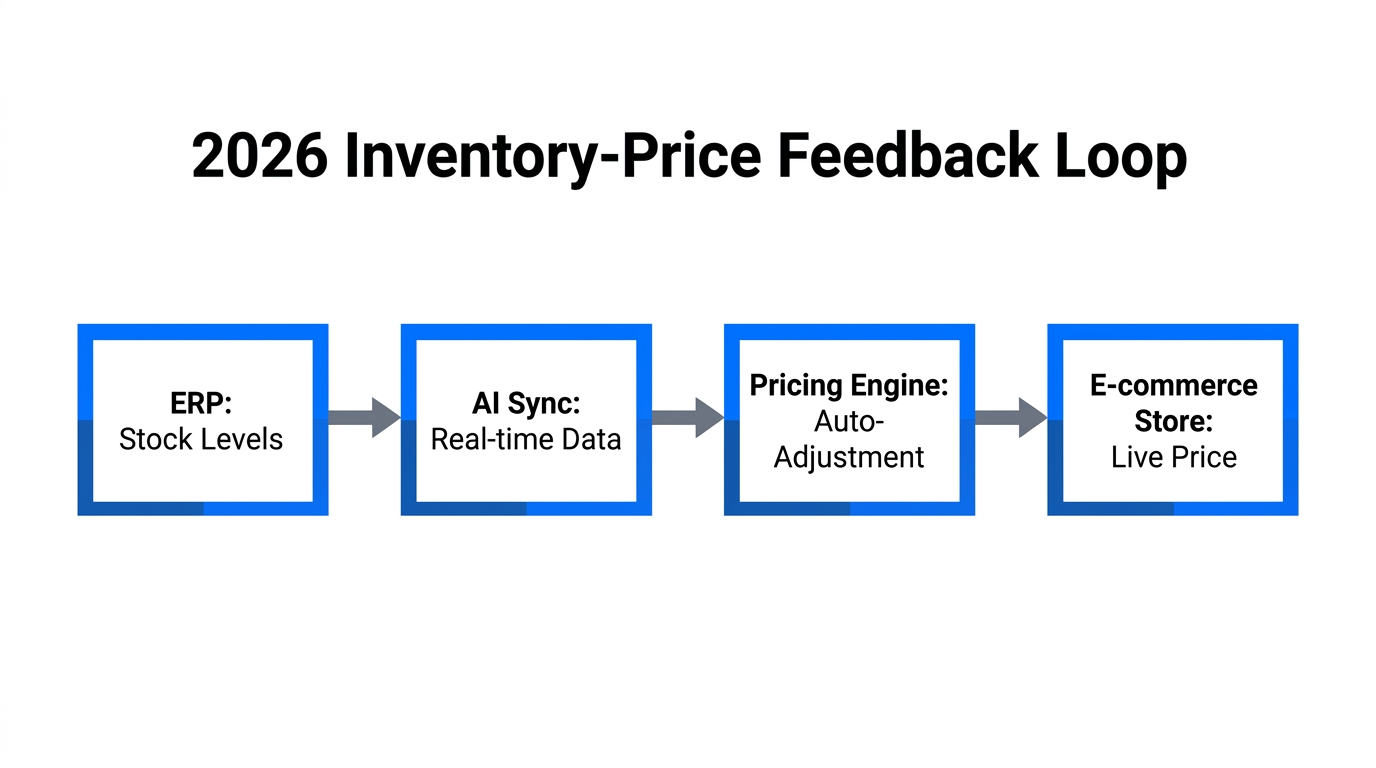
For years, e-commerce managers and supply chain directors operated on different planets. One focused on moving units at any cost, while the other focused on minimizing storage fees. In 2026, this lack of synchronization is a recipe for bankruptcy. Data from the World Journal of Advanced Research and Reviews (WJARR) shows that the global AI in retail market is projected to reach $85.3 billion by 2032, with a staggering CAGR of 26.2%. This growth is driven by the realization that pricing and inventory are two sides of the same coin.
When supply chain data flows directly into your pricing engine, you eliminate the "lag" that causes stock bloat. Companies that bridge this gap are seeing average margin improvements of 5% to 15% according to research by Valcon. In 2026, your pricing strategy must be reactive to what is physically sitting on your pallets. If a SKU isn't moving, the AI should know before your warehouse manager even has a chance to send the weekly report.
"The brands winning in 2026 aren't just selling products; they are managing a real-time data loop where every stock unit has a ticking clock on its value."
How to Program AI to Automatically Trigger Price Drops for Slow-Moving Inventory
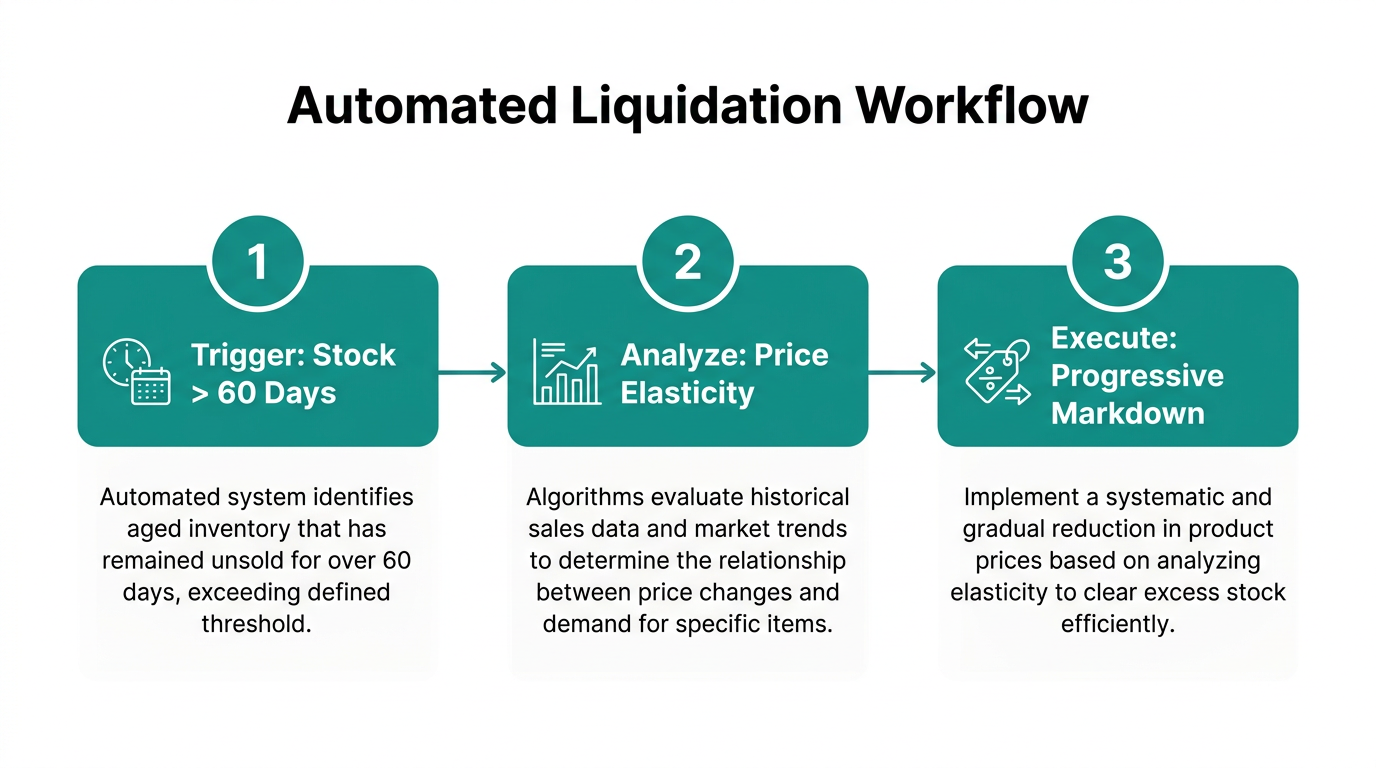
The goal of inventory-led pricing is to ensure that no product becomes a liability. Instead of waiting for a massive "End of Season" clearance sale that guts your brand value, AI allows for micro-liquidations. By using tools like Quicklizard dynamic pricing, brands can set automated triggers based on stock age and velocity.
Step 1: Define Your Velocity Thresholds
Identify the ideal number of days a product should sit in the warehouse. If a product’s sales velocity drops 20% below this threshold, the AI triggers a marginal price decrease—perhaps 5%—to stimulate demand without signaling a "fire sale." This subtle adjustment often captures price-sensitive customers who were on the fence, boosting conversion rates by up to 20% compared to batch pricing models, as noted by Envive.
Step 2: Establish Price Guardrails
To maintain brand integrity, you must set hard "floors" and "ceilings." As the engineering team at Couture AI suggests, these guardrails prevent the algorithm from spiraling into a race to the bottom. Even if stock is high, the AI should never drop the price below a level that erodes your base profit margin unless specifically authorized for clearance.
| Inventory Status | AI Pricing Trigger | Objective |
|---|---|---|
| Overstock (>120% of target) | Incremental 2% drops every 48 hours | Increase turnover, avoid storage fees |
| Balanced (80-100% of target) | Value-based pricing (+/- 1% vs competitors) | Maintain market share and margin |
| Low Stock (<20% of target) | Increase price by 5-15% | Maximize margin on remaining units |
Using Real-Time Demand Signals from Social Media to Adjust Trend-Based Pricing
In 2026, demand isn't just measured by clicks on your website; it's measured by mentions, shares, and viral loops. Fashion giants like Boohoo and PrettyLittleThing have mastered the art of using real-time demand signals to adjust prices daily. If a specific style starts trending on TikTok, their pricing engines immediately respond to the surge in interest.
This is where supply chain price optimization becomes a competitive moat. When a product goes viral, the risk of stockout increases. Instead of selling out in two hours and leaving money on the table, an AI-driven engine raises the price as stock thins, effectively capturing a "trend premium." This approach allows brands to manage the out-of-stock risk while simultaneously maximizing the Customer Lifetime Value (CLV) of those who are willing to pay more for the "it" item of the moment.
To truly capitalize on these social shifts, brands often use platforms like Stormy AI to identify which creators are driving the most authentic engagement before the trend peaks. By syncing influencer discovery with pricing data, brands can predict demand surges 48 hours before they hit the checkout page.
"Social media is the new early-warning system for supply chain managers. If you aren't pricing based on the 'hype cycle,' you're losing 10-15% of your potential margin."
Case Study: How a French Perfume Retailer Boosted Peak-Season Margins by 12%
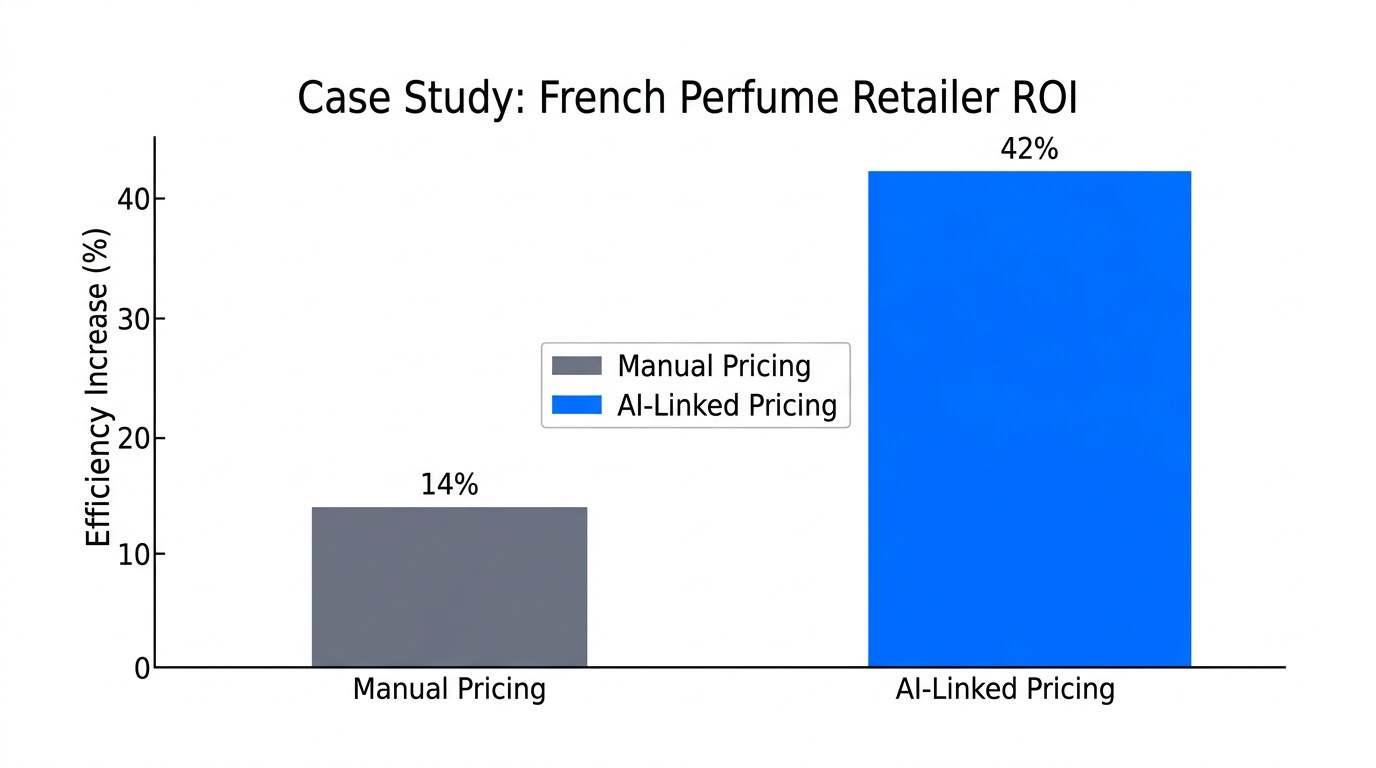
A leading French perfume retailer faced a common challenge: high competition and volatile demand during the holiday season. By implementing an AI dashboard to track price elasticity alongside competitor stock levels, they moved away from flat discounts. Using insights from X-Byte Analytics, the retailer identified products that were "inelastic"—items where customers were loyal and wouldn't switch brands even with a price hike.
The Strategy:
- The AI monitored competitor "Out of Stock" messages across 15 major marketplaces.
- When a competitor ran out of a popular scent, the retailer’s AI immediately raised prices by 8%.
- For slow-moving niche scents, the AI offered personalized dynamic discounts to repeat buyers, increasing loyalty without a public price drop.
The results were conclusive: a 12% increase in overall margins during the peak shopping season and a 15% reduction in year-end overstock. This proves that ecommerce stock management in 2026 is as much about psychological pricing as it is about logistics.
A Checklist for Integrating Quicklizard with Existing E-commerce ERPs
Implementing dynamic pricing tools requires a tight integration with your Enterprise Resource Planning (ERP) system—like NetSuite or SAP—and your e-commerce platform like Shopify. Use this checklist to ensure a seamless growth-ops rollout:
- Data Cleanliness: Ensure your SKU data, cost of goods sold (COGS), and real-time warehouse counts are accurate. Remember the "Garbage In, Garbage Out" (GIGO) rule emphasized by Reactev.
- API Latency Check: Your pricing engine needs to pull stock levels and push price updates every 10–30 minutes. Verify your ERP’s API can handle the request volume without slowing down your site.
- Multi-Channel Sync: Ensure that your dynamic prices are consistent across Meta Ads, Amazon, and your D2C site. Failure to do so can lead to "buy-box" penalties, as noted by Amazon experts at Emplicit.
- Ethical Transparency: Follow the advice of pricing experts at Competera: avoid perceived price gouging by using GenAI to explain price fluctuations (e.g., "Seasonal Demand" or "Limited Stock") to maintain customer trust.
- Human-in-the-Loop: Set up an alert system where any price change exceeding 20% requires manual approval from a category manager.
Conclusion: The Future of Growth-Ops is Dynamic
In 2026, the brands that thrive are those that view their inventory not as a static pile of goods, but as a strategic lever. Inventory-led pricing allows you to be aggressive when you have the stock and protective when you don't. By integrating AI-powered tools like Quicklizard and monitoring social demand signals through platforms like Stormy AI, you can ensure that your pricing strategy is always one step ahead of the market.
Stop letting stock bloat eat your margins. Synchronize your supply chain with your pricing engine today, and turn your warehouse into your most powerful profit center.