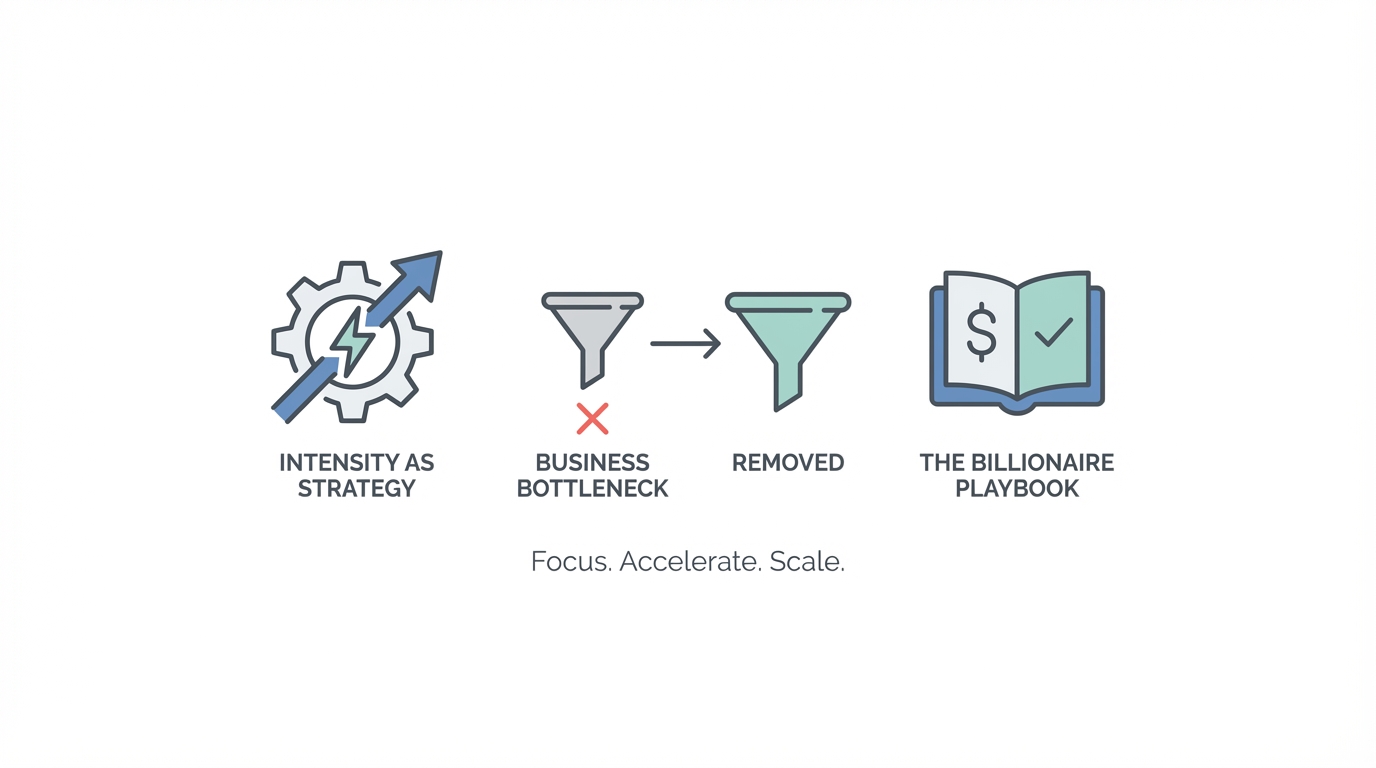
We often romanticize the image of the visionary CEO—the leader who sits in a glass-walled office, staring at the horizon, contemplating the next decade’s industry-shifting moves. But if you were to spend a weekend at the "Billionaires’ Basketball Camp," a private gathering recently covered by Forbes as a hub for the world’s most successful founders, you would find a very different reality. The most successful leaders aren't just looking at the 10,000-foot view; they are obsessed with the plumbing. In this circle, intensity is the strategy, and scaling is a result of living in the details, not avoiding them.
The Matt Ishbia Method: Solving 1,000 Problems a Year

At the center of this philosophy is Matt Ishbia, the billionaire owner of the Phoenix Suns and CEO of United Wholesale Mortgage (UWM). When Ishbia joined his father’s company in 2004, it was a 12-person side hustle. Today, UWM handles over $200 billion in loans and generates billions in annual profit. How do you scale a 12-person team into a market-dominating titan? You don't do it through a single stroke of genius; you do it by identifying business bottlenecks every single day.
Ishbia operates on a simple, yet grueling, rule: Find and solve three problems a day. This isn't about high-level strategic shifts. It’s about walking the floor and talking to everyone from the janitor to the senior executives. If a sales rep mentions a glitch in the IT system, Ishbia doesn't just send an email. He calls the IT manager on the spot, demands they walk over, and ensures the problem is fixed immediately. By solving three small problems a day, 365 days a year, he removes over 1,000 bottlenecks annually that would otherwise slow the company's growth.
Why Intensity Trumps Vision in the Growth Stage
In the early-to-mid stages of a business growth strategy, many founders fail because they think their job is solely "the vision." They delegate the "boring" details too early, assuming that operational excellence will happen by osmosis. Billionaires like Ishbia and Amazon’s Jeff Bezos suggest the opposite: the more you scale, the more the details matter. Operational excellence is not a department; it is a mindset of being a "maniac" in the details.
This level of intensity allows a leader to see the delta between where the company is and where it should be. For example, during a late-night tour of Target, high-performing CEOs were observed literally ripping open display panels to find unstocked inventory. This scrappiness is what separates a $100 million company from a $10 billion one. When you use Stormy AI to discover creators who exhibit this same level of obsessive dedication to their craft, you start to see why certain influencers experience exponential growth while others plateau.
The 'Day-to-Day Contract': Performance-Based Accountability
One of the hardest leadership lessons from billionaires comes from the world of professional sports. Imagine leading an organization where your top performers have guaranteed contracts. In the NBA, a player might have a 5-year, $150 million deal. Whether they play like an MVP or sit out with a minor injury, the check clears. This creates a massive leadership challenge: how do you instill intensity when the upside is already guaranteed?
The solution is the "Day-to-Day Contract." Successful CEOs treat every day as a new agreement with themselves and their team. They don't rely on the safety of past successes or long-term employment agreements. Instead, they foster a culture where performance-based accountability is the norm. To how to scale a business effectively, you must find ways to make your team feel the stakes every single day. This is why tools like Meta Ads Manager or Google Ads are so vital; they provide the real-time data needed to hold teams accountable for immediate results.
Walking the Floor: A CEO Playbook for Operational Excellence
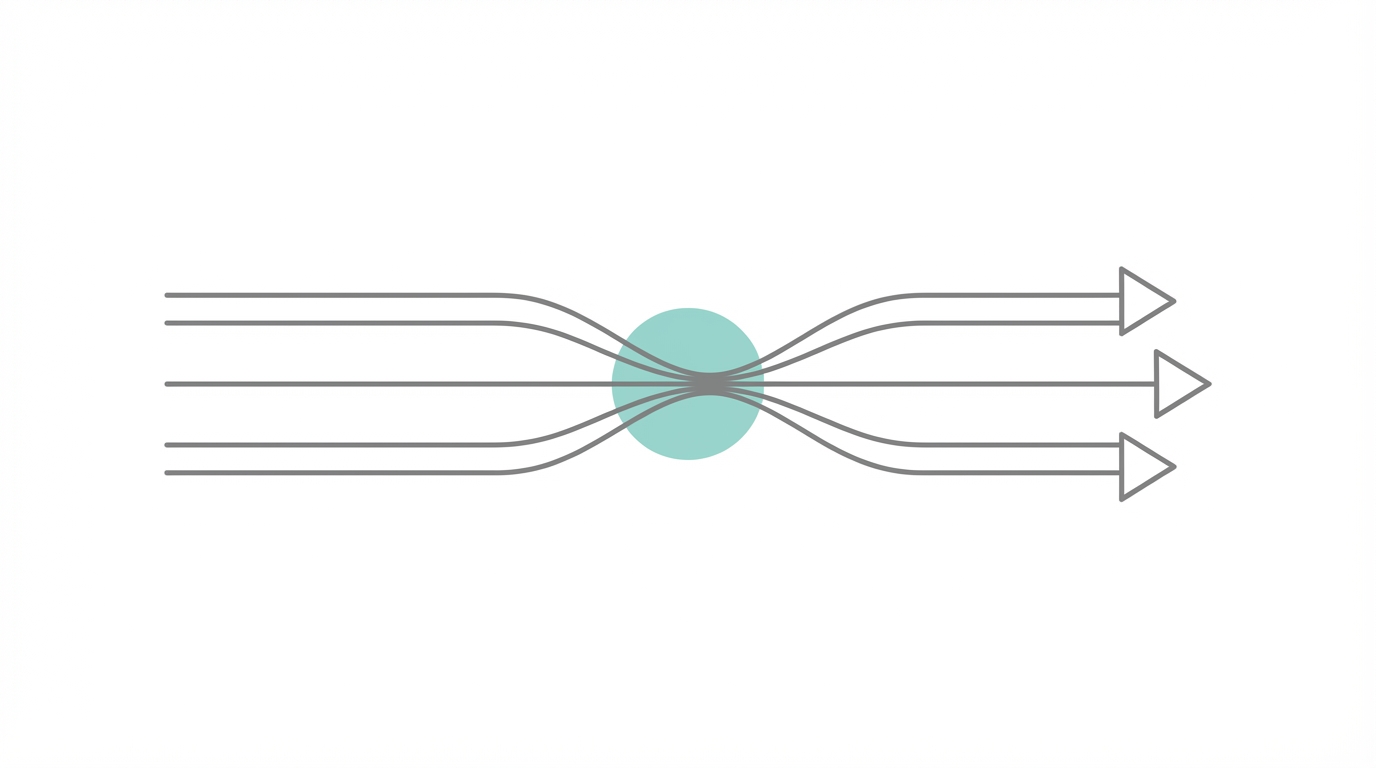
To truly understand how to scale a business, you must leave your office. Walking the floor (physical or digital) is the only way to see the reality of your operations. Use this step-by-step guide to find the friction in your machine:
Step 1: The IT Audit
Talk to your front-line employees—the ones using your internal tools every day. Ask them: "What is the one software tool that makes you want to quit?" Often, a small lag in a CRM—especially when legacy platforms like Tagger or Captiv8 feel outdated compared to a modern AI-native CRM like Stormy AI—is costing your team hundreds of hours in lost productivity. Fix it on the spot.
Step 2: The Sales Friction Check
Sit with your sales team and watch them work. Are they spending more time on data entry than on the phone? Identify the administrative business growth strategy bottlenecks that prevent them from closing deals. If they are struggling to find the right voices to represent the brand, suggest they use Stormy AI to automate hyper-personalized outreach to Instagram creators and streamline their process.
Step 3: Logistics and Fulfillment
Whether you are shipping physical products from Walmart shelves or delivering digital services, look for the "under-the-panel" problems. Is inventory sitting in the back because the restocking process is broken? Is your customer support team waiting too long for developer sign-offs? Identifying business bottlenecks here can immediately increase your ROI.
Culture is an Action Word: The Savannah Bananas Model
Intensity isn't just about fixing IT bugs; it’s about how you treat your people. Jesse Cole, the founder of the Savannah Bananas, turned a failing minor league baseball team into a global phenomenon with a 3-million-person waitlist. He did this by treating "culture" as a verb rather than a set of values on a wall.
Cole’s business growth strategy involves "plussing" the experience for his employees so they can "plus" it for the fans. When new players arrive, he doesn't give them a handbook; he gives them a police escort and a fireworks display. He makes them feel like stars the moment they step off the bus. Because he lives the values of entertainment and service, his employees do the same. If you want your team to care about the customer, you have to show them that you care about them with the same level of intensity.
Avoiding the 'Multiply by Zero' Moment

One of the most profound leadership lessons from billionaires is their ability to avoid the "multiply by zero" event. In mathematics, no matter how large a number is, if you multiply it by zero, the result is zero. In business, a "zero" can be running out of cash, a catastrophic legal failure, or a total loss of market relevance. Companies like Airbnb and Brex survived multiple "zero" moments where the business almost died due to inventory errors or funding pulls.
The difference between a billionaire’s company and a failed startup is often just uncommon endurance. These leaders stayed in the game longer, refused to sell early, and navigated the miracles required to keep the "zero" at bay. They understand that operational excellence is a survival mechanism. By obsessively identifying business bottlenecks, they ensure that no single point of failure can bring the entire structure down.
Strategic Project Selection: Can You Top Pigs with Pigs?
Walt Disney famously said, "You can't top pigs with pigs," referring to his refusal to just make sequels to his successful Three Little Pigs short. He believed in originality and reinvention. This same mindset is visible in founders like Joe Gebbia of Airbnb, who left his multi-billion dollar tech giant to reinvent the way the US government approaches design. Or the founder of Brex, who, on the day he sold a company for $5 billion, was already back in "white belt" mode, learning to code with AI.
Scaling requires a balance between exploiting what you know and reinventing yourself to meet the next challenge. This applies to your marketing as well. If your current TikTok strategy is plateauing, don't just do more of the same. Instead, use Stormy AI to vet TikTok creators and analyze their audience quality to ensure your pivot to a new format is data-driven. As James Clear points out in his work on habits, the biggest gains often come from choosing the right "Total Addressable Market" (TAM) for your efforts. Sometimes, that means changing the cover of the book from "Deliberate Practice" to "Atomic Habits."
Conclusion: The Billionaire's Operational Edge
The billionaire playbook isn't a secret; it’s just harder to execute than most people want to admit. Operational excellence is a daily choice to be "in the details." Whether it's Matt Ishbia's commitment to solving 1,000 problems a year or Jesse Cole’s theatrical employee orientations, the lesson is clear: intensity is the strategy.
Start today by walking your own digital floor. Look for the bottlenecks in your outreach, your sales, and your operations. If you need to scale your creator marketing with the same level of precision, use Stormy AI to find YouTube creators and track their campaign performance in real-time. Stop looking for the 10,000-foot vision and start looking for the three problems you can solve before lunch. That is how you scale a business to the moon.