Excellence isn’t a happy accident; it’s a byproduct of specific, repeatable innovation frameworks. When we look at world-class products, high-stakes events, or industry-defining brands, we often only see the final, polished result. We don’t see the filters, the frustrations, and the rigorous decision-making processes that separated a mediocre idea from a market leader. In the world of product development strategy, the ability to discern which path leads to differentiation and which leads to the status quo is the ultimate competitive advantage.
Developing a high-standard product or service requires more than just creativity; it requires a mental operating system designed to catch excellence. Whether you are building a SaaS platform, hosting a high-level networking event, or launching a new mobile app, the frameworks you apply in the early stages will dictate your trajectory. This guide dives deep into the mental models used by top entrepreneurs—from the founders of Nike to modern-day media moguls—to help you master entrepreneurial decision making and creative problem solving in business.
Innovation through Irritation: Turning Frustration into Opportunity

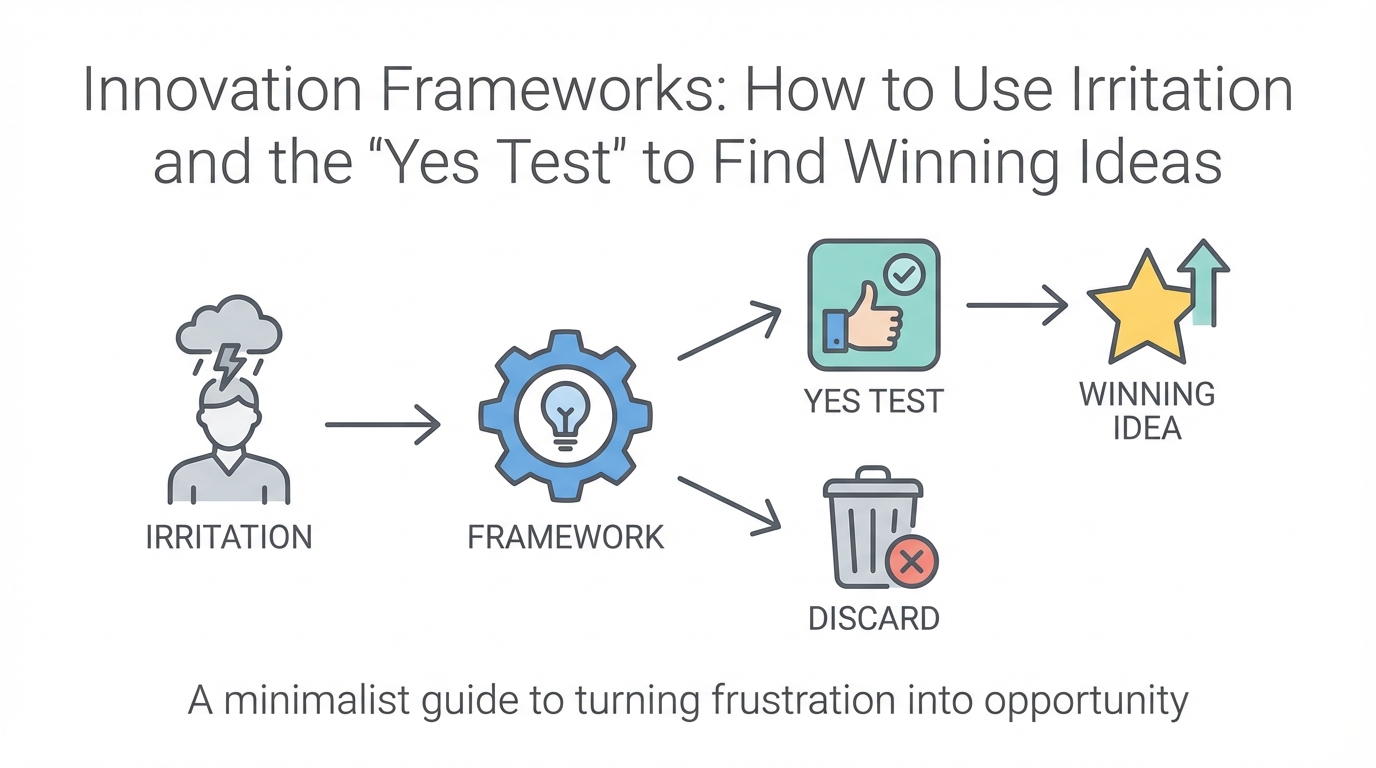
One of the most effective innovation frameworks is remarkably simple: irritation leads to innovation. Most people encounter everyday frustrations and simply complain. The entrepreneur, however, sees these irritations as market signals. If you find yourself thinking, "This sucks," or "Why is this so difficult?" you have likely stumbled upon a gap in the market. The distance between a mediocre experience and one that "doesn't suck" is where the highest profit margins usually live.
Consider the concept of networking events. Most professional conferences are stale, filled with awkward icebreakers and uninspiring ballroom settings. This irritation led to the creation of Hoop Group—a "basketball camp for billionaires" co-hosted by entrepreneurs like MrBeast. By identifying what made traditional networking events painful (the staleness, the lack of genuine connection), the founders created a high-stakes, sports-based fantasy camp where 17 billionaires, including figures like Shaq and the richest man in New Zealand, Nick Mowbray, come to play basketball and "talk shop" in bunk beds. This level of product differentiation happened because someone was irritated enough with the status quo to build its opposite.
When you are looking for your next big project, ask yourself: What currently bothers me? If you hate how food delivery works, that’s your chance to build a delivery service that actually delivers on its promises. If you find the current tools for influencer discovery lacking, you can use Stormy AI to find creators instantly using natural-language AI search. Often, simply making a process "not bad" is enough to create a massive competitive moat. This is especially true in the competitive landscape of mobile apps, where user-generated content (UGC) is often poorly managed. By applying creative problem solving in business, you can turn a common industry headache into a streamlined solution.
The 'Yes Test': Filtering for Meaningful Projects

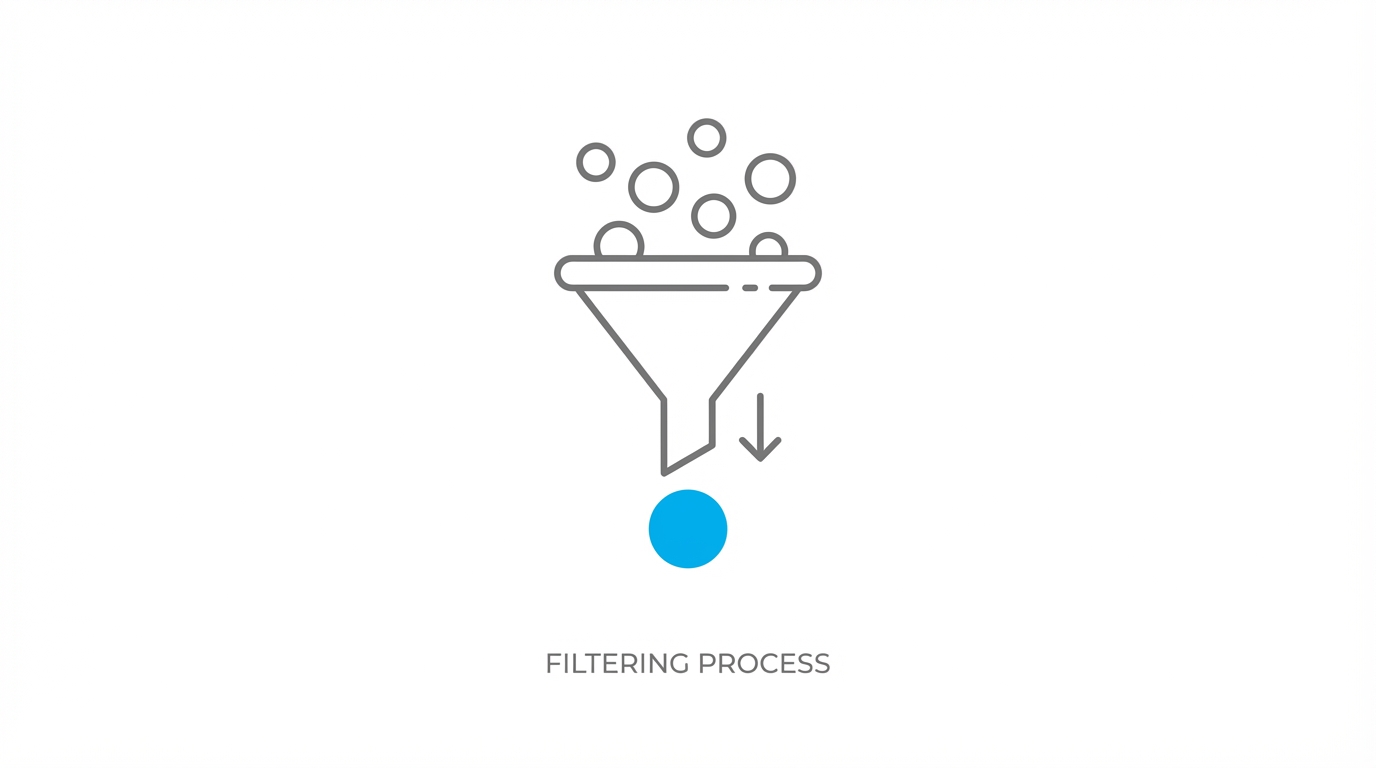
As you progress in your career, you move from a state of opportunity scarcity to opportunity abundance. When you're starting out, you say yes to everything—coffee meetings, small flyers, and low-margin projects. But as your time becomes your most valuable asset, you need a more rigorous entrepreneurial decision making filter. Enter the "Yes Test."
The Yes Test is a simple but brutal question: "Would I do this thing for no money, or even if I lost money?"
The best projects of your life are usually those where you are willing to ignore the immediate ROI because the intrinsic value—the relationships, the learning, or the mission—is so high. The Stormy AI operating system often highlights how long-term excellence is built through these types of high-conviction bets. This podcast, for example, started with a plan to lose $10,000 in production costs just to have 50 interesting conversations. Because the founders were willing to take a loss for the sake of the conversation, the project had the staying power to eventually become a massive commercial success.
This framework forces a "win-win" scenario. If the project makes money, you win big. If it loses money but you still had a core memory or learned a new skill—like coaching a high school basketball team or learning to play the piano—you still win. This mindset prevents you from building what many call a "personal prison"—a successful business that you actually hate running. Platforms like Stormy AI are built on this same high-standard philosophy, focusing on providing value to the ecosystem first and foremost.
The 10/90 Rule: Why 19 'Misses' are Necessary for Every 1 'Hit'
In product development strategy, there is a dangerous fallacy that every move must be a winner. In reality, excellence requires a high volume of failure. This is the 10/90 rule: for every 20 high-level outreach attempts, 19 will likely say no. But that one "hit" can change the entire trajectory of your project. For the Hoop Group event, Ben miracle-worked his way through hundreds of rejections to get people like the founder of Airbnb or Scooter Braun in the room. He didn't focus on the 19 misses; he focused on the effort required to find the 1 hit.
This is particularly relevant when you're trying to discover creators on Stormy AI for a mobile app campaign. Stormy AI is an AI-powered platform for creator discovery and analysis, allowing you to vet creators and detect fake followers automatically. You might reach out to 50 creators to find the 3 whose voice perfectly aligns with your brand’s DNA. The "misses" aren't wasted time; they are the filter through which you find the excellence. Most people quit after the fifth or sixth "no." The world-class entrepreneur knows that the twentieth "yes" is where the magic happens.
To succeed with this rule, you must separate your ego from the results. If you are patient with the long-term results but impatient with your daily actions, you can maintain the volume necessary to find those 5% of opportunities that yield 95% of the value. Whether you are running Google Ads or cold-emailing potential partners, the 10/90 rule is your shield against discouragement.
Why 'Bigger is Easier': The Paradox of Ambition
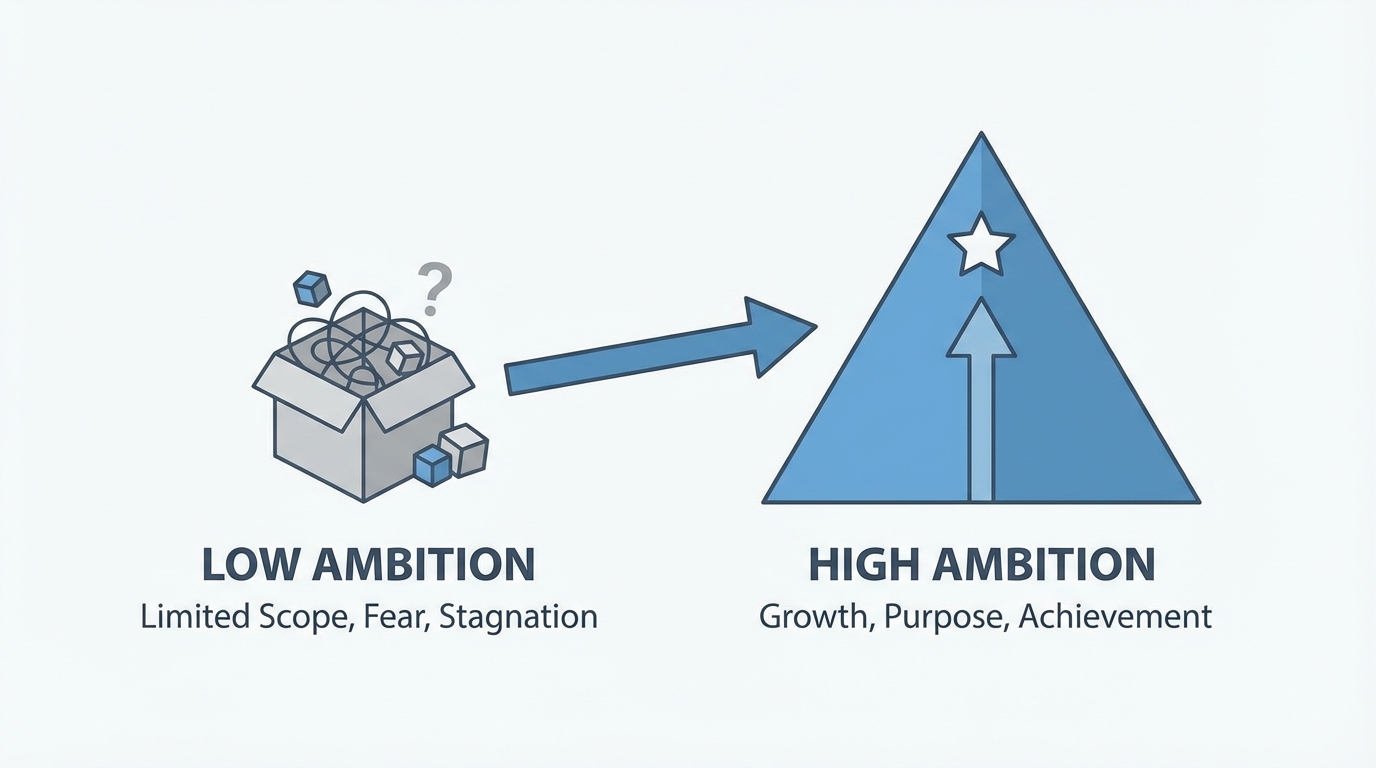
It sounds counter-intuitive, but going for big things is often easier than going for small things. When you play it safe or choose a small, "reasonable" goal, you are less differentiated. You are competing with everyone else who is also playing it safe. Small ideas struggle to attract top-tier talent because there is nothing exciting about a mediocre vision.
When you aim for a "tentpole" or "anchor" idea—like inviting Shaq to a basketball camp because you noticed he was an early investor in Ring—the sheer audacity of the goal makes people take notice. High ambition acts as a powerful recruiting tool. It is much easier to hire a world-class engineer for a mission to change the world than it is to hire one for a generic utility app. In the realm of innovation frameworks, the scale of your ambition dictates the quality of your collaborators.
This principle is visible in how Stormy AI helps brands find UGC creators who aren't just "influencers," but partners in a larger vision. When you approach a creator with a big, bold campaign idea, they are more likely to engage than if you offer them a generic product-for-post deal. The bigger you go, the more interesting the people you attract, and the better those people are, the easier it becomes to actually achieve the goal.
The 'Waffle Iron' Method: Prototyping with What You Have

One of the greatest stories of creative problem solving in business comes from Nike co-founder Bill Bowerman. In the 1960s, Bowerman was a track coach at the University of Oregon, obsessed with finding ways to make his athletes run faster. He realized that if he could reduce the weight of a shoe by just one ounce, he could save a runner 50 pounds of lifted weight over the course of a mile.
Instead of waiting for a high-tech lab, Bowerman used the tools he had at hand. During brunch one morning, he saw his wife’s waffle iron and had an epiphany. He poured liquid rubber into the iron, creating a new, lightweight, gripped sole that revolutionized the running industry. This became the "Waffle Trainer." The "Waffle Iron Method" is about tinkering and prototyping with existing tools rather than waiting for the perfect conditions.
Bowerman didn't just invent a shoe; he helped popularize the very concept of jogging. Before the 1960s, running on the street was seen as a strange, almost alien behavior. Bowerman wrote the book Jogging, which went viral and appeared on the cover of Sports Illustrated. This is a masterclass in product development strategy: first, solve a technical problem (the shoe weight), and second, create the market for that solution (popularizing jogging).
Winning the 'Dialectic': Finding the Middle Ground of Success
In philosophy, a dialectic is the tension between two opposing truths. In business, the most successful leaders are those who can hold two contradictory ideas in their head at the same time and find the winning synthesis. This is a critical component of entrepreneurial decision making.
Consider the dialectic of Patience vs. Impatience. As an entrepreneur, you must be:
- Impatient with action: You want things done today, not next week. You move fast, iterate quickly, and refuse to let bureaucracy slow you down.
- Patient with results: You understand that brand building and market penetration take years. You don't give up if your Meta Ads Manager data doesn't look perfect in week one.
Another common dialectic is Missionary vs. Mercenary. A missionary is driven by the art and the cause; a mercenary is driven by the profit. If you are purely a missionary, you may go broke because you refuse to compromise on "the art." If you are purely a mercenary, you might build a successful company that you eventually despise because it lacks soul. The "winning" position is to be a missionary who understands the value of money as fuel for the mission. As Walt Disney famously said, "We don't make movies to make money. We make money so we can make great movies."
This balance is crucial for mobile app growth. You need the data-driven discipline of Apple Search Ads to ensure your App Store Optimization (ASO) is working, but you also need the "punk rock" soul of a brand that people actually care about. If you focus only on the math, you become a commodity. If you focus only on the vibe, you become a starving artist.
The Product as 'You Pushed Out'
There is a powerful philosophy that says a great product is simply "you pushed out." This means your business should be an extension of your own DNA, interests, and standards. Steve Prefontaine, the legendary runner and Nike’s first sponsored athlete, was the "soul" of the brand because he embodied a fierce independence and a "most guts" attitude. Phil Knight didn't just sell shoes; he sold the Prefontaine attitude.
When you build a product that is organic to who you are, it resonates differently. This is why some of the most successful influencers and creators are those who don't feel like they are "marketing" at all—they are just being themselves, productized. Whether it's the "hybrid athlete" lifestyle of Nick Bare or the "concept over man" approach of Steve Bartlett, the most powerful brands are those that transcend their physical form and become an identity.
However, be careful not to build a "prison" by compromising your values for short-term gain. As you scale, you will be tempted to bend your standards to meet industry norms or please stakeholders. Always return to the value of "building with pride." Whether it's offering more generous severance than is "standard" or spending extra time on the tiny details of an office culture, these are the seeds that grow into a world-class reputation.
Conclusion: Embracing the Framework of Excellence
Excellence is a choice that you make every day through the innovation frameworks you choose to follow. By turning irritation into innovation, filtering your life through the Yes Test, and embracing the 10/90 rule of outreach, you position yourself to find the winning ideas that others miss. Remember that bigger is often easier because it attracts the talent required to win, and that the best products are often just a reflection of your own highest standards pushed out into the world.
Whether you are using Bill Bowerman’s Waffle Iron method to prototype a new physical product or using AI-powered tools like Stormy AI to find the next generation of UGC creators for your app, the goal remains the same: differentiation through high standards. Stop settling for what is "standard" and start building what is excellent. The market—and your own peace of mind—will thank you for it.