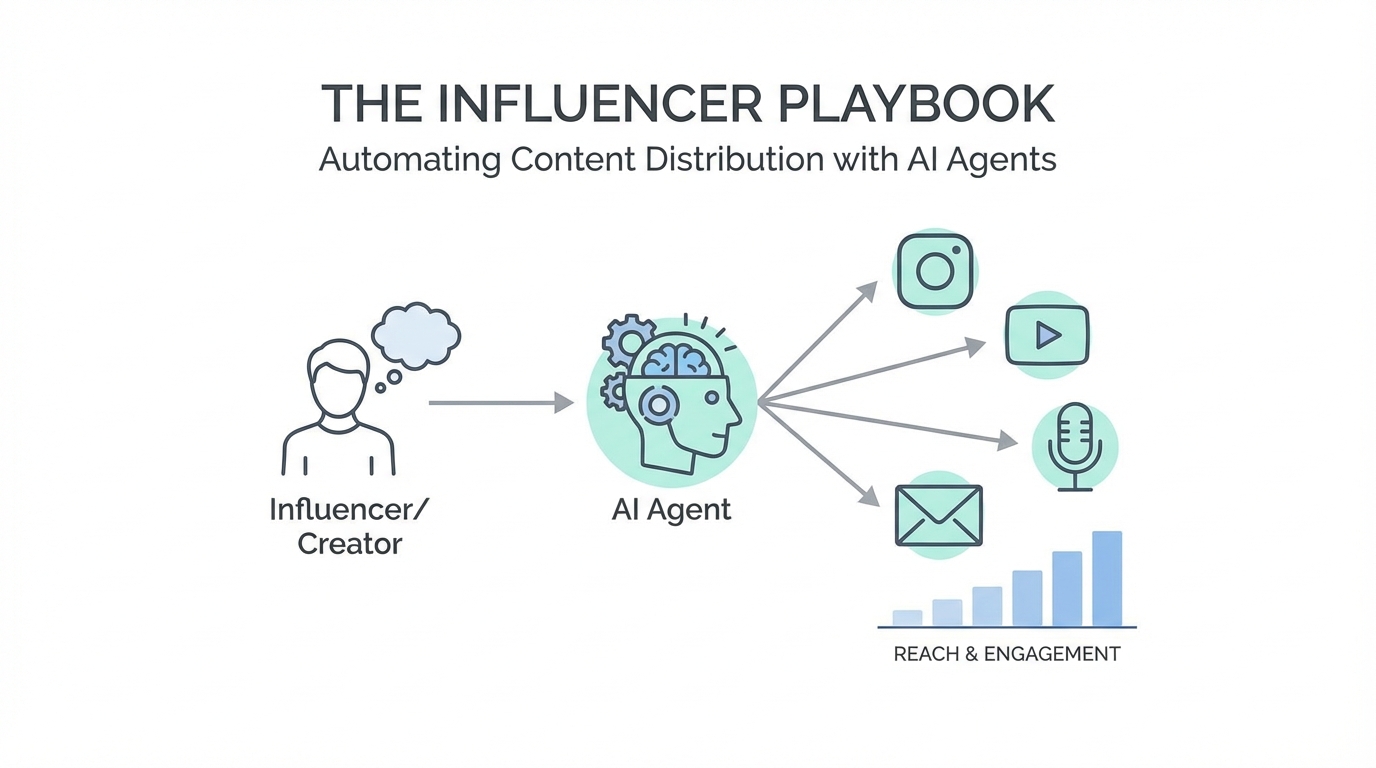
The traditional content treadmill is broken. For years, influencers and marketers have been told that the only way to stay relevant is to manually grind out posts across every platform, every single day. But as the volume of content explodes, the manual approach is becoming a recipe for burnout rather than growth. We are entering what Sam Altman, co-founder of OpenAI, calls the "era of the idea guy." In this new landscape, success isn't determined by how fast you can type or how many hours you spend in a scheduling tool; it is determined by how effectively you can build and deploy AI content distribution systems that work while you sleep. This playbook will show you how to build a 'super-human' automation engineer using autonomous agents that turn your blog, RSS feeds, or industry news into high-performing social media assets.
The Rise of Vibe Coding and Agentic Distribution
For a long time, building complex workflows required deep technical knowledge of tools like n8n or Pipedream. While powerful, these platforms often felt like a "beautiful mind" of confusing node charts and API configurations. However, a new wave of "vibe coding" platforms like String is changing the game. Instead of dragging and dropping boxes, you can now use natural language prompts to build social media workflow AI that handles everything from discovery to publication. This shift from manual configuration to natural language instruction is what allows solopreneurs to scale their content output without increasing headcount.
The core of this evolution is the transition from simple automations to true autonomous agents. While an automation might just post a link to X (formerly Twitter) whenever a new blog is published, an agent can analyze the content, determine the sentiment, and rewrite the message to fit a specific brand voice. Tools like Pipedream have provided the infrastructure for years, but agents now layer intelligence on top of those integrations to perform tasks that previously required a human touch.
Step 1: Building an RSS-to-Social Pipeline
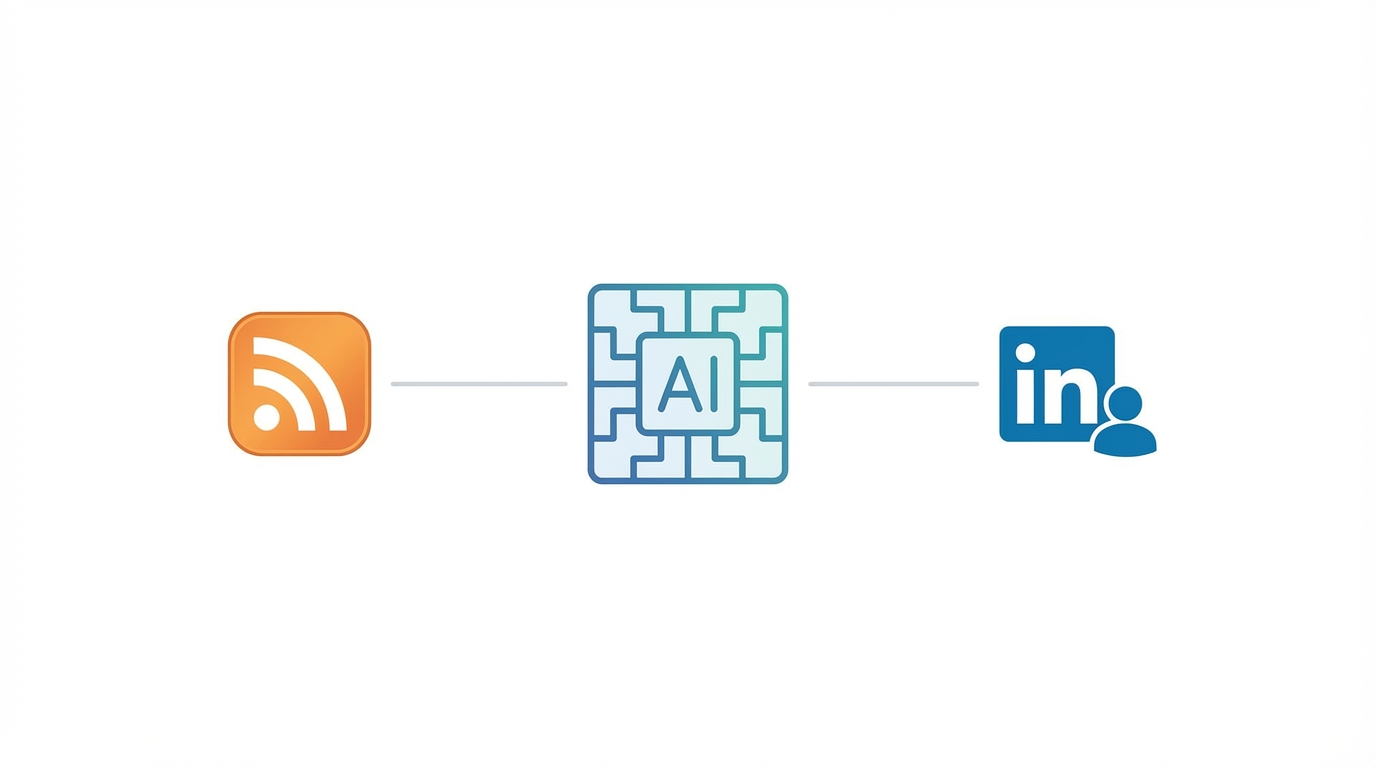

The first step in influencer marketing automation is creating a reliable trigger system. You cannot distribute content if you aren't monitoring the right sources. A sophisticated pipeline starts with an RSS feed—either from your own blog or from industry news hubs like Hacker News. By setting up an agent to monitor these feeds, you ensure that you are always the first to join the conversation on trending topics. For example, if you are in the developer tools space, you might set an agent to look for mentions of specific keywords like "MCP" (Model Context Protocol) and instantly notify your team via Slack.
This isn't just about speed; it's about intelligence. A basic trigger-action pair is the foundation, but a superhuman agent will go further. It can summarize the article, perform sentiment analysis to see if the news is positive or negative, and even suggest a clever comment for you to post. This level of AI content distribution allows you to maintain a high-quality presence across platforms without spending hours scrolling through feeds. You are essentially hiring an invisible employee whose only job is to find opportunities for you to go viral.
Step 2: The 'LinkedIn Viral Prompt' Framework
Once your agent has captured a piece of content, the next challenge is formatting it for social media. LinkedIn, in particular, has a very specific style that performs well. To automate LinkedIn posts effectively, your agent needs a prompt framework that mimics a human brand voice. This means moving away from generic AI summaries and toward "short, punchy paragraphs" and "one-sentence lines" that drive engagement.
A high-performing prompt for a LinkedIn agent should include three viral components: a strong hook, a value-driven body, and a clear call to action. You can instruct your agent to use OpenAI's latest models to transform a dense 2,000-word blog post into a 150-word LinkedIn masterpiece. By refining this prompt over time, you can ensure the output feels authentic. The goal is to get the AI to do 90% of the heavy lifting, leaving only the final "polish" for you. This is how platforms like Idea Browser leverage AI to deliver daily insights without a massive editorial team.
Step 3: Designing Multi-Step Agent Workflows
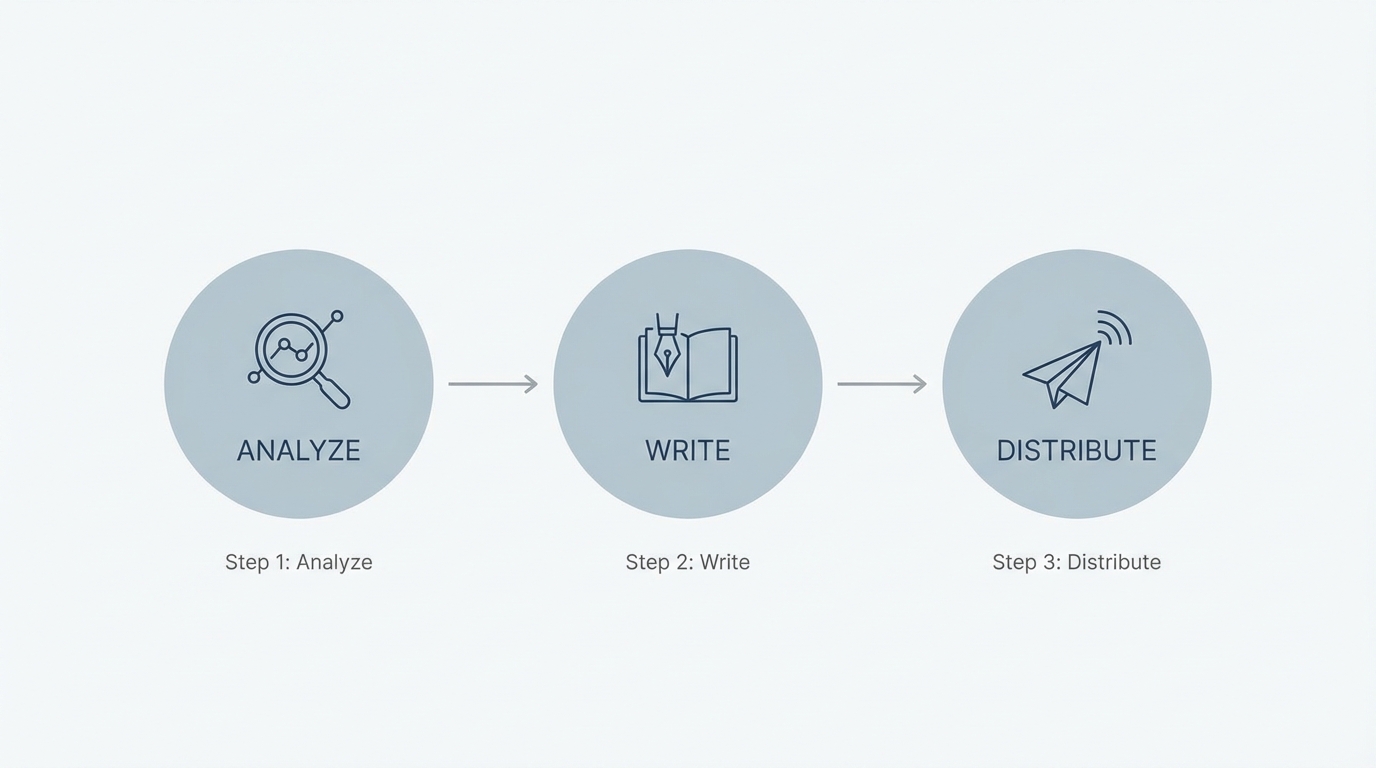
The true power of social media workflow AI lies in multi-step sequences. A single trigger shouldn't just result in one action; it should initiate a chain of events that ensures quality and organization. A typical high-level workflow might look like this: the trigger detects a new post, the AI generates the social copy, the content is saved into Google Docs for record-keeping, and finally, a notification is sent to a team channel for review.
Using a tool like String, you can even build agents that "recover" from errors. For instance, if an agent tries to pull data from a blog but find nothing recent, a sophisticated agent will realize the date range is too narrow and automatically expand its search to find the most relevant content. This self-healing capability is what separates modern AI agents from old-school, fragile automations. For influencers managing multiple brand deals, this level of reliability is critical when tracking campaign performance or managing UGC creator sourcing at scale.
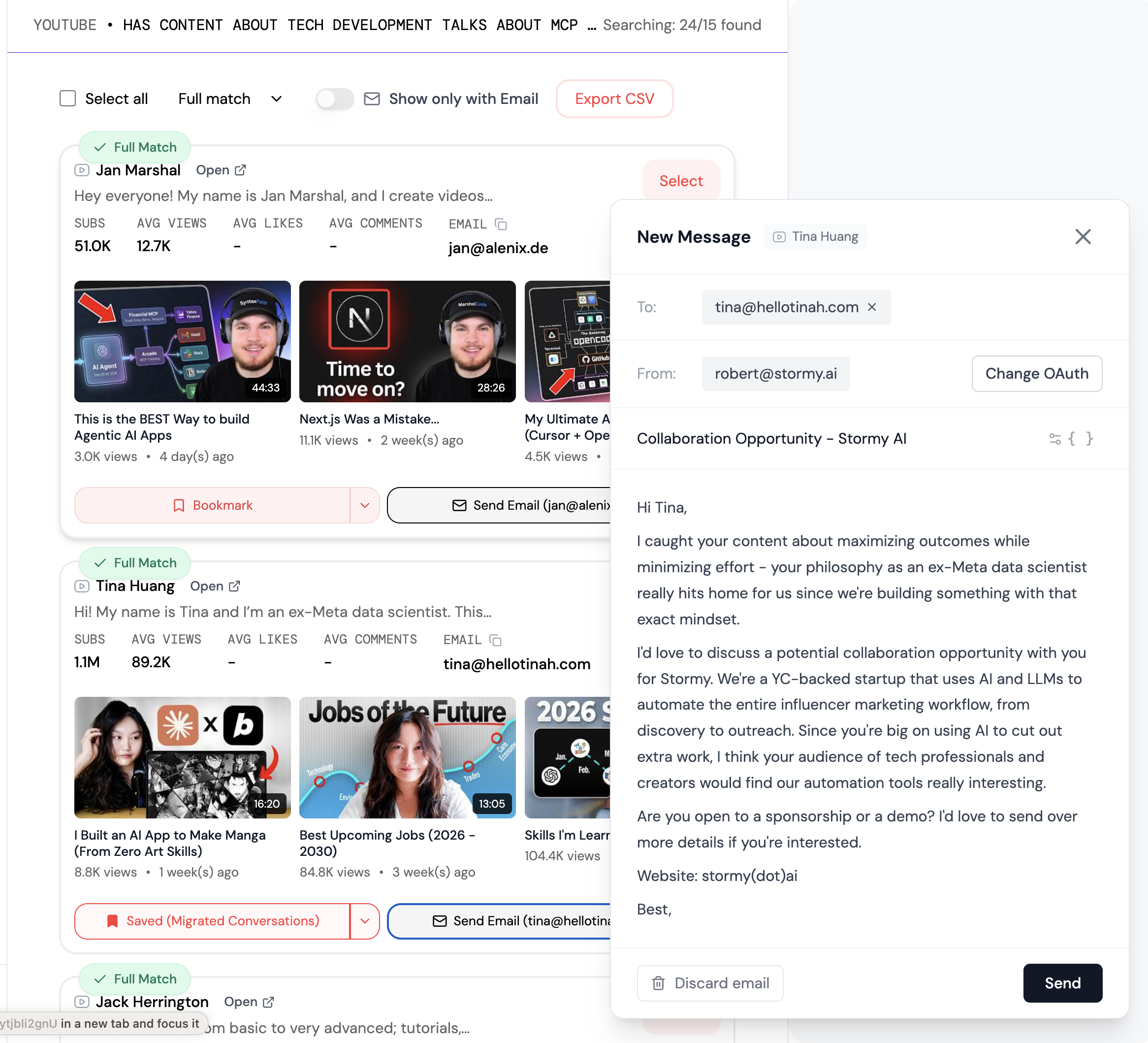
When you are managing a large roster of creators, platforms like Stormy AI streamline creator sourcing and outreach, allowing you to focus on the creative strategy while the AI handles the administrative discovery. By integrating your distribution agents with a dedicated influencer CRM, you can track which automated posts are driving the most engagement and adjust your strategy in real-time.
Step 4: Best Practices for 'Human-in-the-Loop'
Despite the advancements in autonomous agents, the "Human-in-the-Loop" (HITL) model remains the gold standard for high-tier influencers. The final 10% of the content—the unique voice, the personal anecdote, the specific industry nuance—is where the real value lies. You should never set an agent to post directly to your main channels without a review step. Instead, have the agent deliver the draft to a staging area like Notion or a Google Doc.
This approach allows you to "vibe check" the content. AI is excellent at structure and summarization, but it can occasionally miss the mark on cultural context or humor. By spending five minutes polishing an AI-generated draft, you get the efficiency of an automation with the authenticity of a human. Furthermore, you can use these reviews to feed better data back into your agent prompts. If the AI consistently misses a certain brand tone, you update the instructions, and the agent gets smarter for the next run. This iterative process is how you build a truly "super-human" system.
Step 5: Scaling Output with Data-Driven Insights

Finally, a great distribution playbook includes a feedback loop. You shouldn't just automate the posting; you should automate the analysis. Advanced workflows can pull data from Google Analytics or social platform APIs to summarize how your content is performing. For example, an agent could send you a weekly Slack summary of your top-performing LinkedIn posts and suggest new topics based on what is currently driving traffic.
This is particularly useful for managing technical aspects of digital marketing, such as monitoring sender reputation through Google Postmaster Tools. If your email outreach or distribution starts hitting the spam folder, an agent can catch the dip in reputation and notify you before it ruins a campaign. For those in the influencer space, this kind of oversight is essential for maintaining long-term growth. To find the right talent to help fuel these content cycles, you can discover creators on Stormy AI who specialize in niche categories and use AI vetting to ensure they have high-quality, authentic audiences.
Conclusion: The Automation Advantage
The goal of influencer marketing automation is not to replace the creator, but to amplify them. By building an RSS-to-social pipeline, mastering the viral prompt framework, and maintaining a human-in-the-loop workflow, you can significantly increase your content output without burning out. Start small by automating one repetitive task—like summarizing your weekly blog posts—and gradually build toward a fully autonomous agent ecosystem. In the era of the idea guy, the winners are those who use AI to turn their best ideas into a omnipresent digital brand. Whether you are using String for vibe coding or Stormy AI for creator management, the tools are now available for anyone to become a superhuman marketer.