In the rapid-fire marketing landscape of 2026, the traditional role of the "Influencer Manager" has officially hit its ceiling. Managing twenty creators used to be a full-time job; today, it’s a afternoon task. The industry is no longer just "AI-assisted"—it is AI-led. As the influencer marketing industry climbs toward a projected $35.09 billion valuation by the end of 2026, reflecting a staggering 33.1% CAGR, the bottleneck isn't budget—it's bandwidth. To survive, marketing directors are restructuring their teams, retiring the title of Influencer Manager in favor of the Portfolio Architect.
This evolution is driven by necessity. With roughly 73% of brands now utilizing AI for discovery, optimization, and ROI tracking, the competitive edge has shifted from who you know to how well you can orchestrate. By leveraging autonomous digital teammates like Stormy AI, marketing leaders are now managing rosters of hundreds, even thousands, of creators with the same precision once reserved for a boutique list of ten. This is the 2026 playbook for scaling influencer marketing beyond human limits.
The Evolution of the Influencer Manager: From Coordinator to Portfolio Architect
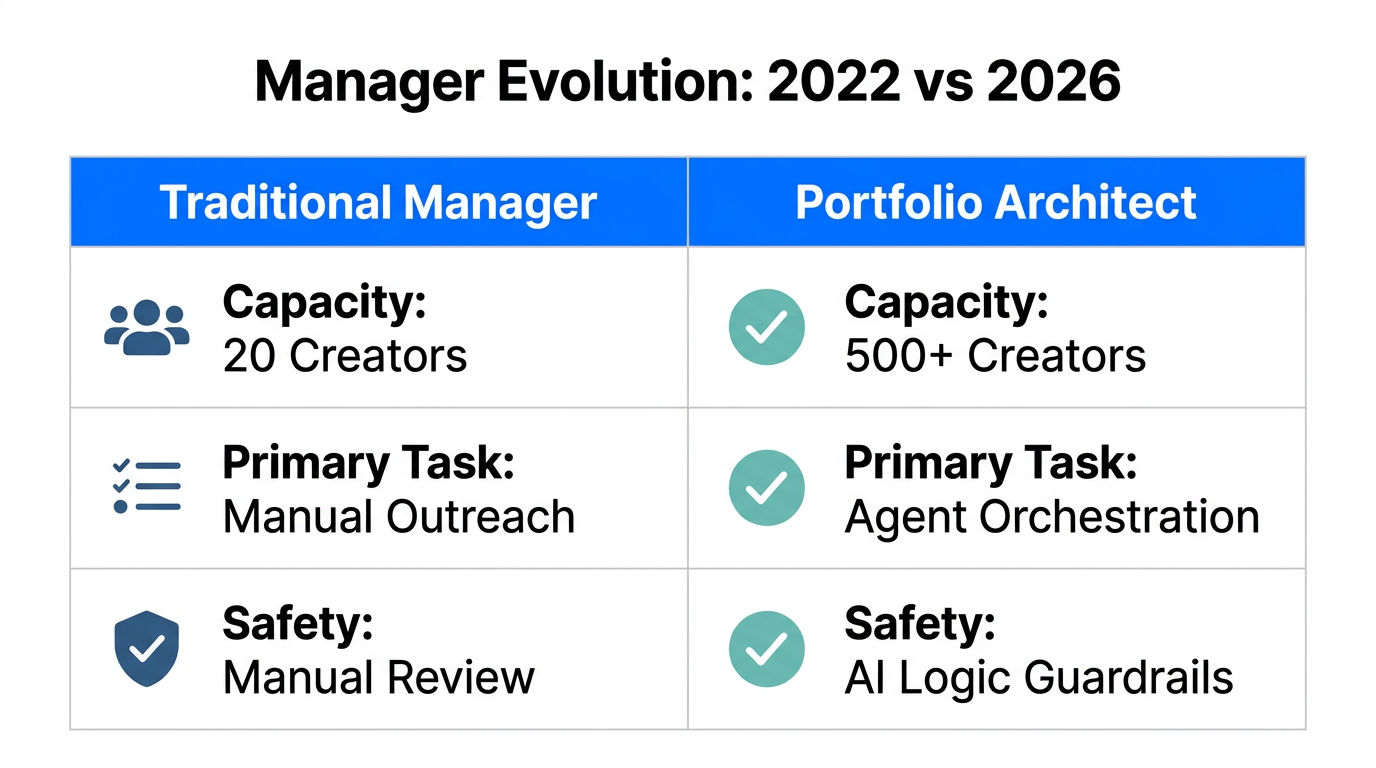
In 2025, an influencer manager’s day was consumed by the "boring 80%": scouring databases, drafting cold emails, and chasing down tracking links. In 2026, that role has split. The manual logistics are handled by autonomous agents, while the human talent transitions into high-level strategy. This new "Portfolio Architect" doesn't manage people; they manage systems that manage people.
According to research from industry analysts, this shift allows brands to maintain a "high-volume pipeline" that was previously impossible. Instead of vetting one creator at a time, Architects use Stormy AI to analyze thousands of profiles in seconds, filtering for audience authenticity and brand alignment. This move from static databases to execution-oriented agents is what bridges the "execution gap" that plagued previous marketing cycles.
"The shift from Influencer Manager to Portfolio Architect represents a move from manual labor to algorithmic orchestration. It's no longer about sending emails; it's about designing the engine that sends them."
Managing a Roster of Hundreds Using Stormy AI Autonomous Agents
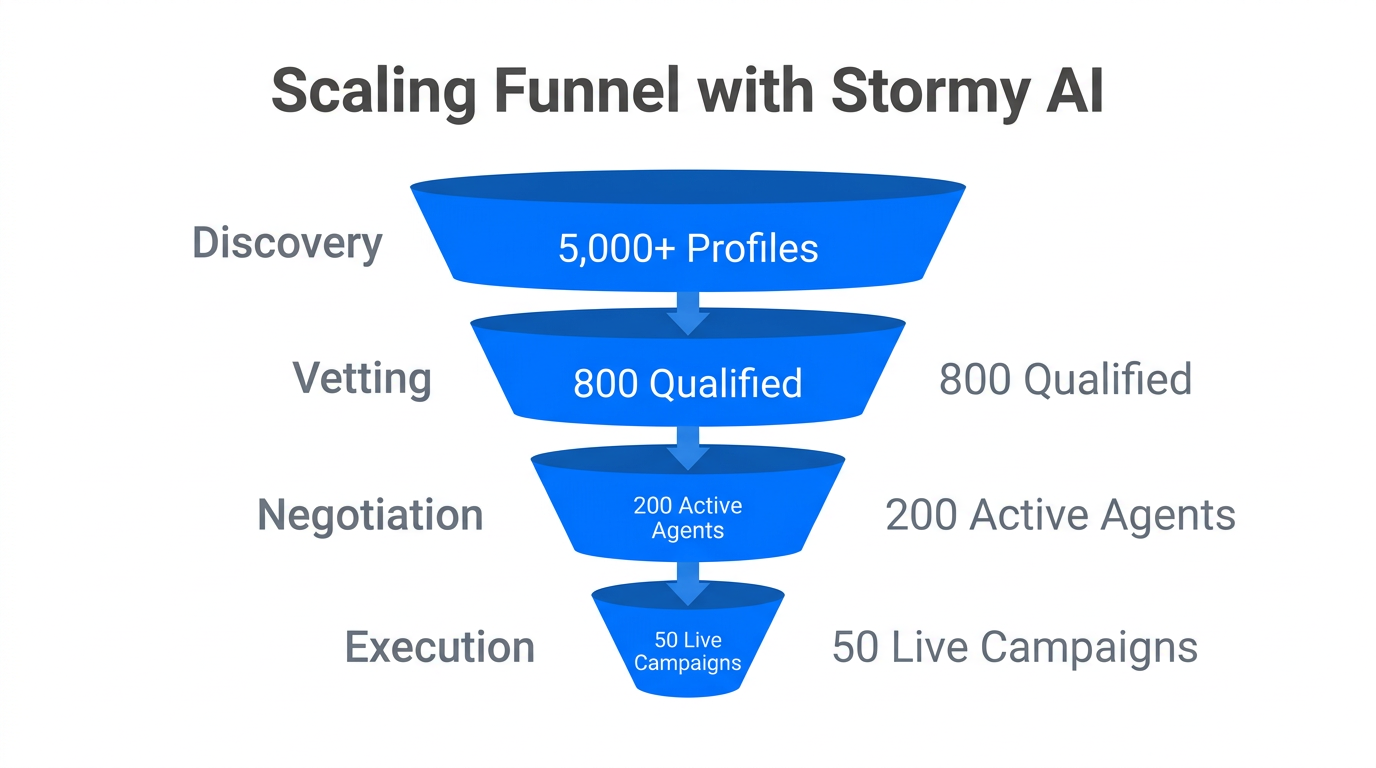
Scaling influencer marketing to hundreds of creators requires a fundamental change in how we view discovery. Legacy platforms provide the data, but they leave the execution to you. Modern Stormy AI management focuses on the autonomous SDR model: digital agents that act as your frontline sales development representatives.

Architects utilize Semantic "Vibe" Search across platforms like TikTok Shop and Instagram. Rather than searching for generic tags like "fitness," they prompt Stormy with natural language: "Find creators with a minimalist aesthetic who focus on HIIT and use sustainable yoga mats." This hyper-personalized matching ensures that even at scale, the partnerships feel bespoke. Once the creators are identified, the AI agent takes over. Specialized outreach tools like Instantly and Stormy AI can report up to an 80% reduction in manual labor by handling the first three to five touches of outreach autonomously.
The AI-Human Loop: Protecting Brand Safety and Relationships
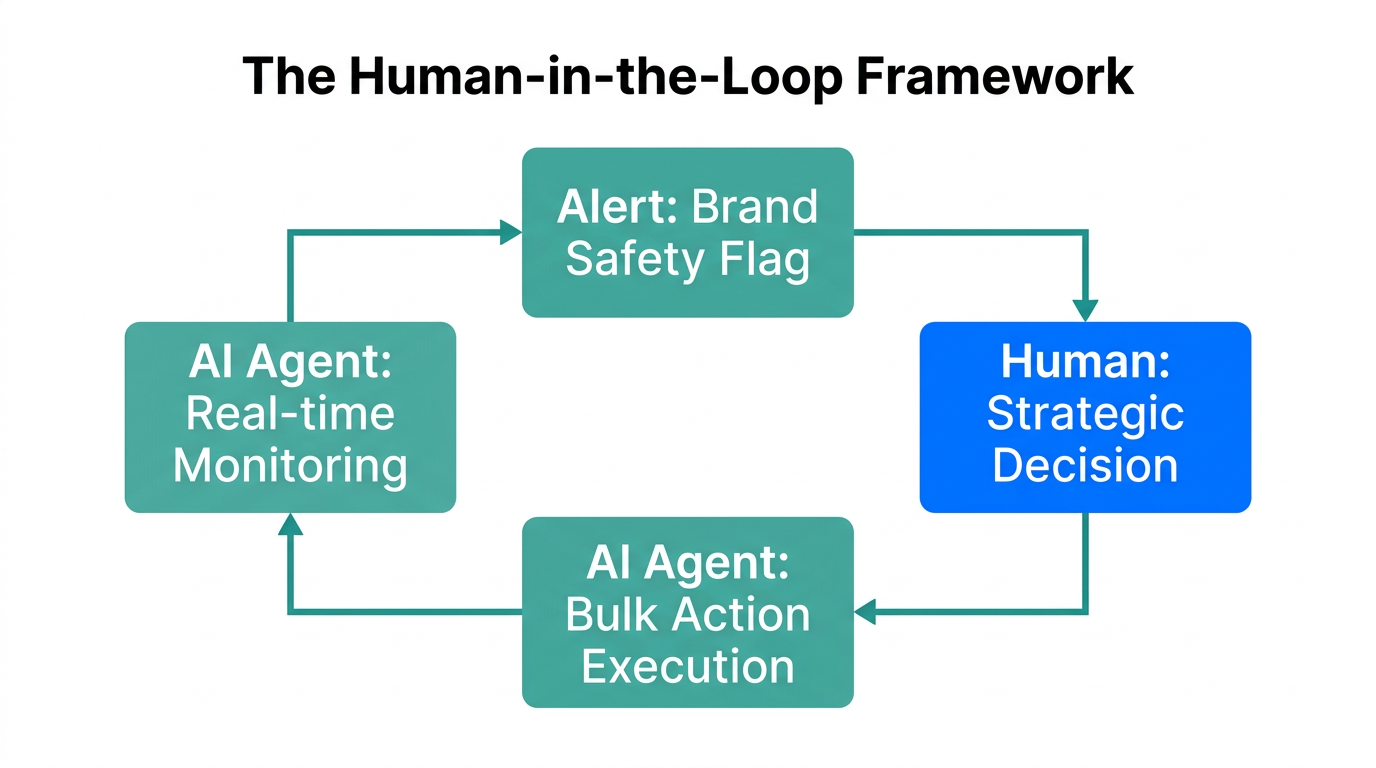
The biggest fear in 2026 is "robotic erosion." Experts from Gartner warn that over-automation can destroy the human touch that makes influencer marketing effective. The solution is the AI-Human Loop. In this model, the AI handles the logistics (the boring 80%), while the human manager handles the creative strategy (the critical 20%).
| Workflow Stage | Handled By | Primary Tool/Action |
|---|---|---|
| Discovery & Vetting | AI Agent | Semantic search & authenticity scoring |
| Initial Outreach | AI Agent | Hyper-personalized email sequences |
| Fee Negotiation | AI Agent | Economic guardrails (CPA/Flat fee) |
| Creative Briefing | Human Architect | Setting the brand vision and Canva aesthetics |