In 2026, the traditional mobile app growth engine is broken. Most founders spend months and thousands of dollars trying to crack Meta Ads Manager or Google Ads, only to find their CAC (Customer Acquisition Cost) exceeds their LTV. But Evan, the founder of the gamified fitness app Locked, took a different path. In just four months, he scaled his app to $14,000 per month in revenue without spending a dime on traditional paid advertising. His secret? A hyper-efficient, math-based influencer marketing strategy that prioritizes authenticity over algorithmic targeting.
Why Authenticity Outperforms Paid Ads in 2026
Evan explains why authentic influencer content performs significantly better than traditional paid advertising.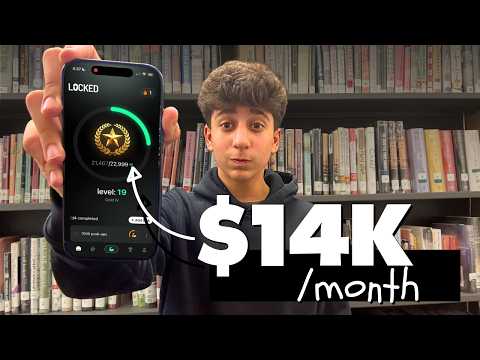
The 2026 app market is driven by trust. Users have become blind to standard ad formats on TikTok and Instagram. Evan found that when a creator recommends an app, it carries the weight of a personal endorsement. "The big advantage here is that it feels way more authentic," Evan explains. This authenticity translates directly into higher conversion rates on paywalls, especially when the app offers a clear value proposition like Locked's $40/year subscription.
"When an influencer recommends an app, it feels like a friend's advice, not a corporate pitch—and that trust is the most valuable currency in 2026."
Understanding the Math: RPM vs. CPM
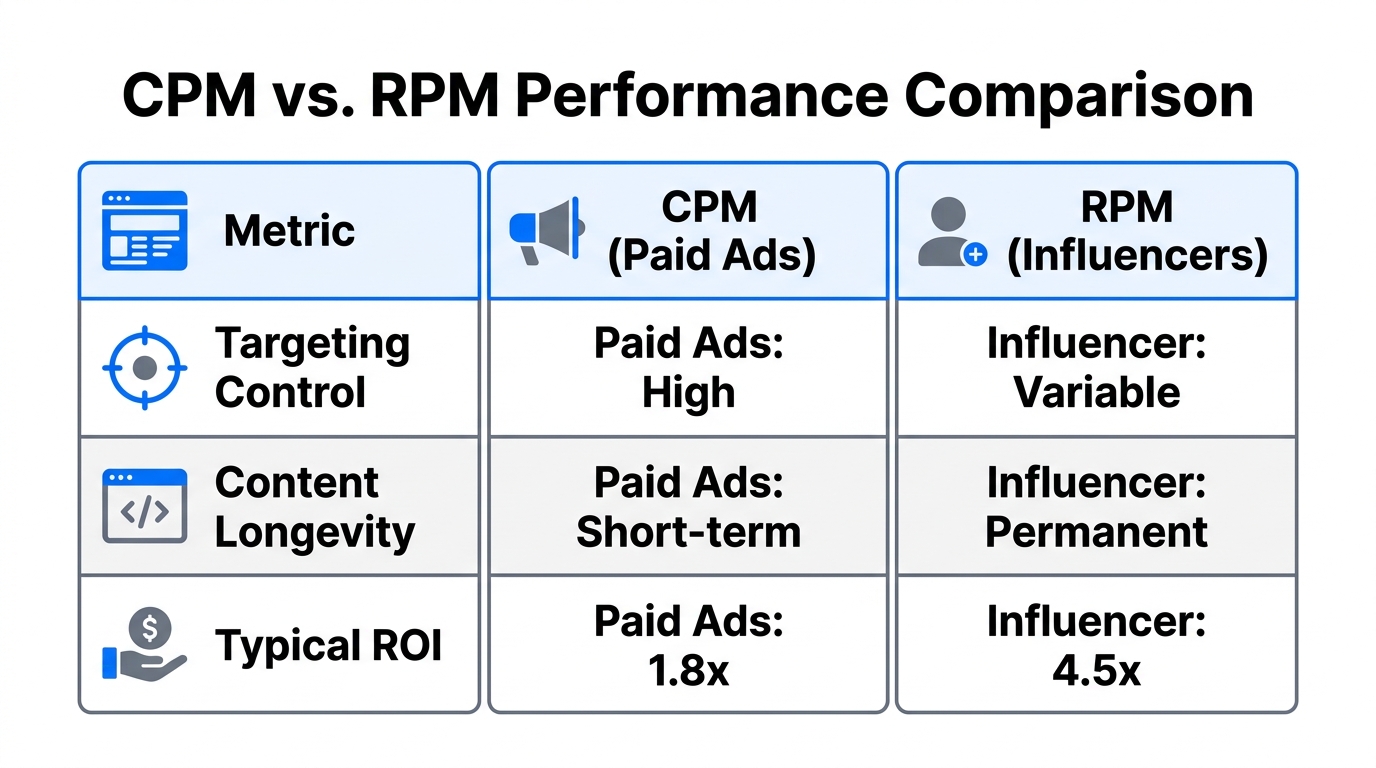
Before sending a single DM, you must understand your unit economics. Evan's strategy is built on a simple mathematical principle: your CPM (Cost Per Mille) must be lower than your RPM (Revenue Per Mille). For the Locked app, Evan identified that his RPM was approximately $2.00 to $3.00. To remain profitable, he aimed to close creator deals at a CPM between $1.00 and $1.50.
| Metric | Definition | Target for Locked |
|---|---|---|
| RPM | Revenue generated per 1,000 views | $2.00 - $3.00 |
| CPM | Cost paid to creator per 1,000 views | $1.00 - $1.50 |
| Profit Margin | The spread between RPM and CPM | 50% - 66% |
To find creators who can hit these benchmarks, tools like Stormy AI can be invaluable for analyzing creator engagement rates and audience quality before you commit to a budget.
The 'Paid Promo?' Outreach Method
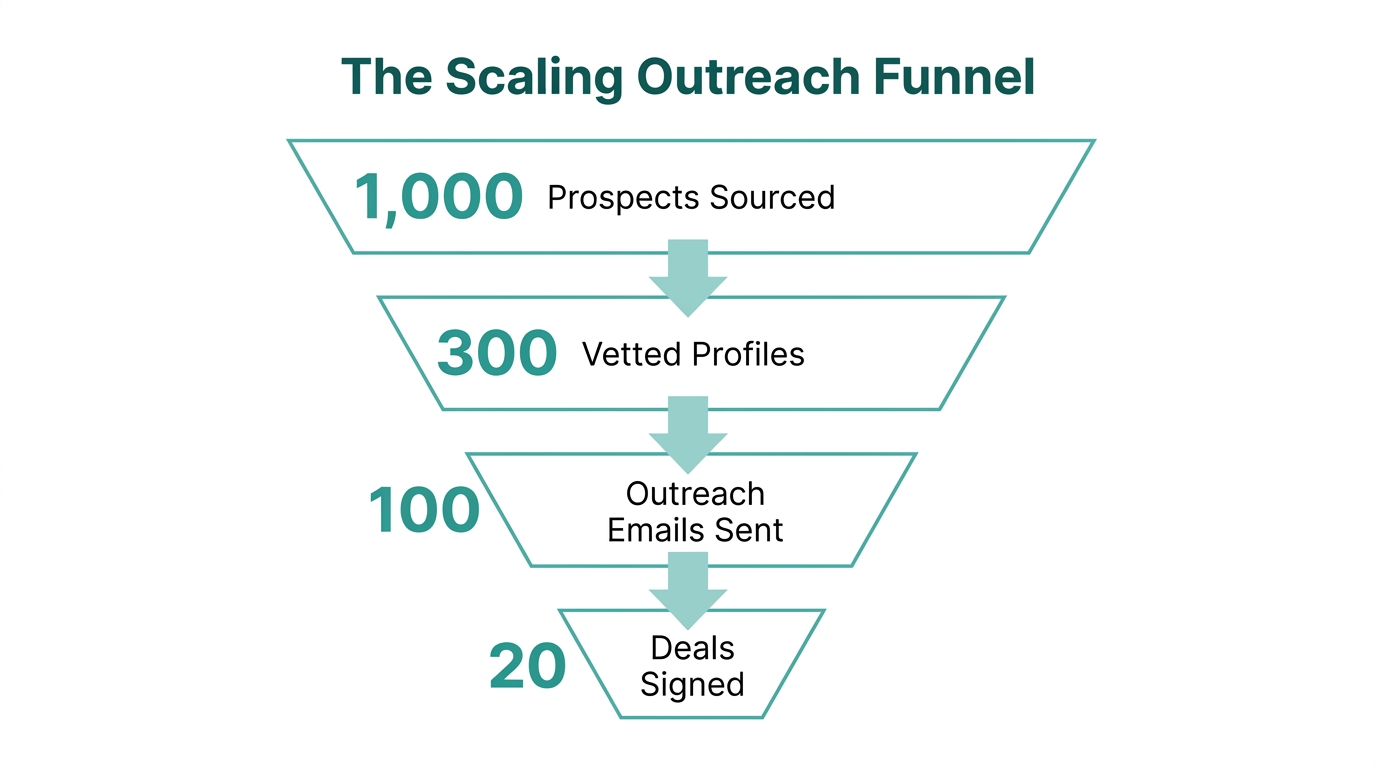
Evan's influencer outreach playbook is deceptively simple. He doesn't send long, corporate-sounding proposals. Instead, he uses a high-volume, low-friction approach to get creators on discovery calls quickly. This process is essential for any mobile app user acquisition strategy starting from scratch.
- Search by Niche: Look up keywords related to your app on YouTube Shorts or TikTok.
- The Hook Message: Send the creator a DM or email that simply says: "Paid promo?"
- The Discovery Call: Once they reply, get them on a call. This is where you vet their personality and negotiate the deal structure.
Managing this at scale can be difficult. Platforms like Stormy AI help automate this by finding creator contact info and managing the entire outreach sequence in one AI-powered inbox.
"The 'Paid Promo?' message is the ultimate filter. It instantly identifies creators who are open to business without wasting time on fluff."
The 4 Types of Influencer Deals
Learn how to structure influencer deals based on view minimums and flat fees.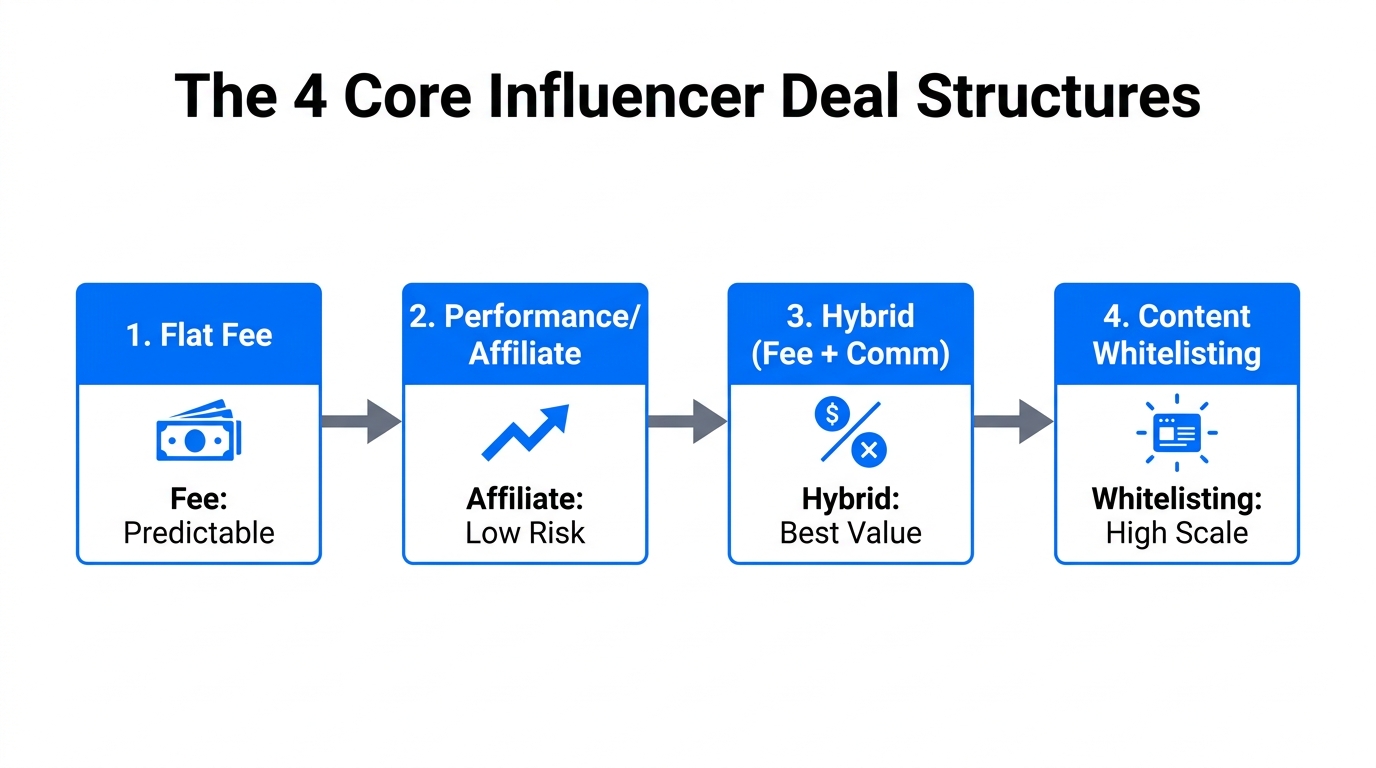
Not every creator should be paid the same way. In 2026, savvy founders use four distinct deal structures to mitigate risk and maximize scale app revenue goals.
1. Flat Rate
You pay a set fee (e.g., $500 for one reel). Use this only with creators who have highly consistent view counts and a proven track record of conversion.
2. CPM-Based Deal
You pay for performance, such as $1.00 per 1,000 views. Always include a payment cap (e.g., capped at $500) to protect your budget if a video goes mega-viral.
3. Minimum View Clause (MVC)
This is Evan's preferred method. You pay a fee (e.g., $800) but require the creator to hit a specific view count (e.g., 600,000 views). If the first video fails, the creator must post additional content until the MVC is met.
4. Performance Bonuses
A base pay plus a bonus for hitting milestones. For example: $500 for the video, plus an extra $500 if it exceeds 1 million views within 7 days.
Strict Video Requirements: The 15-Second Rule
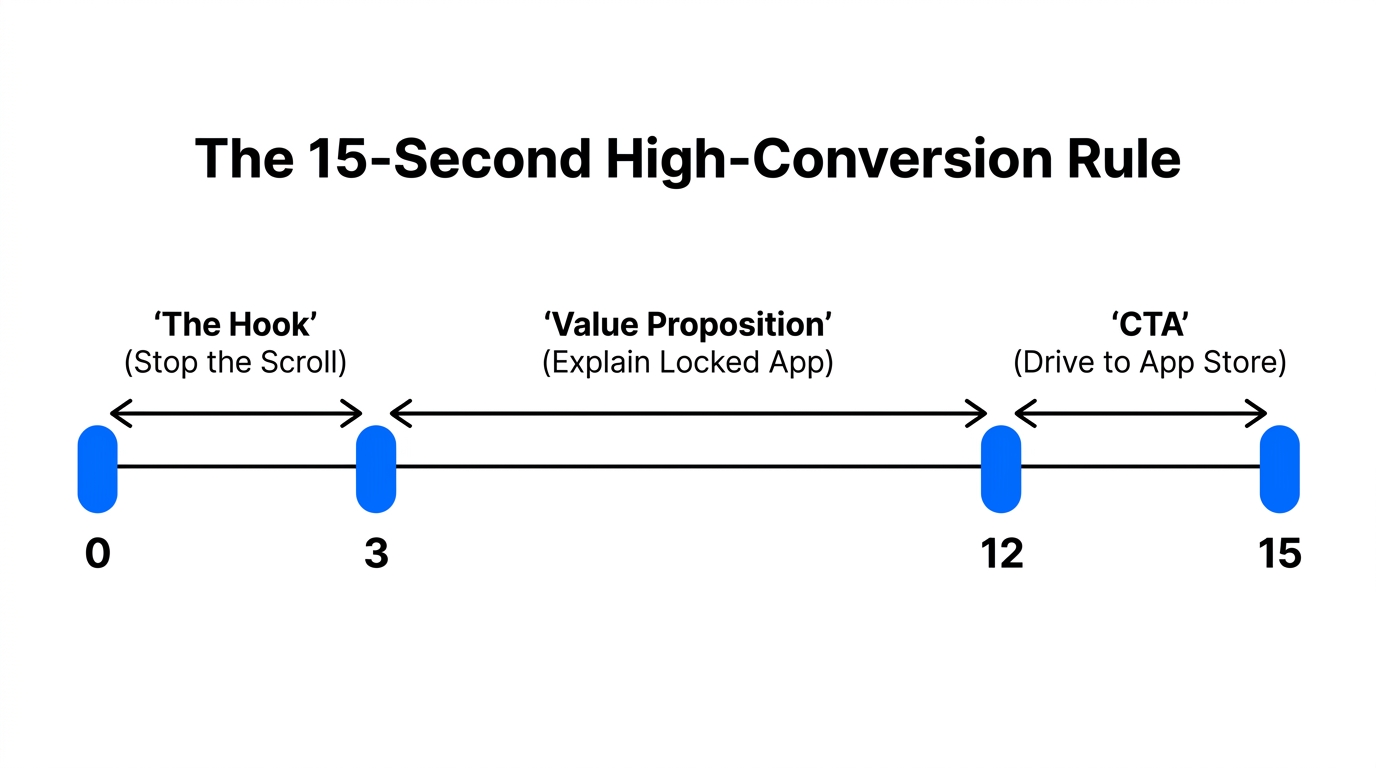
Even the best creator economy for founders strategies fail if the content isn't optimized for retention. Evan requires every influencer to show the app's core features within the first 15 seconds of the video. In short-form media, if the user doesn't see the product immediately, they likely never will.
For the Locked app, Evan's integrations are seamless. Creators like Jeremiah Jones show themselves staying "locked in" and motivated using the app's gamified interface. This high-quality alignment led to 1,800 downloads and $3,000 in revenue from a single video that hit 1 million views.
Building the 2026 Growth Tech Stack
Discover the specific development tools and subscriptions used to scale the app's infrastructure.To manage $14K/month in revenue, you need a lean but powerful stack. Evan's development and marketing workflow involves several key tools:
- Design: Figma for rapid prototyping and UI/UX design.
- Development: Cloud Code and Supabase for backend database management.
- Paywall Optimization: Superwall for A/B testing different subscription offers.
- Tracking: AppsFlyer or Adjust to attribute downloads to specific creators.
"You don't need a massive team; you just need the right AI tools and a data-driven approach to creator partnerships."
Conclusion: Your Path to $14K/Month
Scaling a mobile app in 2026 requires moving away from the "spray and pray" method of paid ads. By following Evan's influencer marketing strategy 2026 playbook—focusing on RPM math, the 'Paid Promo?' outreach method, and strict MVC deal structures—founders can build sustainable, profitable businesses. Start by finding creators in your niche, vet them for engagement quality, and ensure your product is front-and-center in every piece of content. The era of the creator-led growth engine is here; it’s time to start building yours.