
What if I told you there is a consumer app quietly pulling in $2 million in ARR that you have likely never heard of? While most mobile applications struggle to even hit $100,000 in annual revenue, founders like Dan from Massive have cracked the code using unconventional ugc marketing strategy and influencer distribution. The secret isn't just about reaching millions of people; it is about reaching the right people with creative formats that compel them to open their wallets. In the world of tiktok growth for mobile apps, the distance between a viral sensation and a failed startup is measured by conversion, not just view counts.
The Death of the Waitlist: Why You Should Sell First
Many founders make the mistake of building massive waitlists before launching their app. The logic seems sound: build hype, then release. However, real-world data from high-growth startups suggests that waitlists are often useless. In one case, a founder built a waitlist of 50,000 eager sign-ups via LinkedIn and early UGC efforts, only to find that less than 0.5% converted to paid subscriptions upon launch. The momentum of a "coming soon" page rarely translates into the friction of a hard paywall.
Instead of building a list, use your early marketing efforts to drive direct payments. Even if your product is in a beta stage, getting users to pay for a small version of your service is exponentially more valuable than a free sign-up. To validate a new idea, such as an AI-powered fitness coach, the most efficient path is to spend $1,000–$2,000 on a handful of influencers with a tight value proposition. By using Stormy AI to instantly find matching creators via natural-language AI search, you can see if a message resonates before you commit to months of product development. This AI-powered search across TikTok, Instagram, and YouTube makes the validation phase significantly faster.
The 'Career Dave' Format: Anatomy of a Viral Discovery

When you look at influencer marketing for apps that consistently hits 1 million+ views, a specific pattern emerges. One of the most successful formats in the current landscape is what experts call the "Career Dave" style. This format, pioneered by creators for platforms like Source, relies on a feeling of authentic discovery rather than a polished advertisement. It typically features a creator discovering a tool that solves a massive pain point, often using a specific camera setup that includes multiple faces or a "friend in the background" to make it feel organic.
The magic of this format lies in its psychological hook. It doesn't start with a sales pitch; it starts with a moment of surprise. For companies looking to scale, Stormy AI can help you vet creator profiles in seconds to detect fake followers and analyze content quality. The key is to coach your creators to replicate these "authentic" moments without making them feel scripted. When done correctly, this style of user-generated content bypasses the user's natural "ad filter" on social media.
The 80/20 Rule of Creative Iteration

A common trap for marketers is the desire to be constantly "innovative" with every piece of content. However, the most successful influencer roi for startups comes from a rigid 80/20 rule. You should spend 80% of your time iterating on proven viral formats and only 20% on net-new experiments. If a specific hook or visual style—like the "Discovery" shot—is already generating millions of views across different verticals, it is irresponsible not to replicate it for your own app.
Scaling requires a scientific approach to content. When you see a video getting 6,000 views when your median is 300, that is a signal to double down. You don't move on to the next idea; you iterate on that specific concept for the next four weeks. This iterative process is what allows apps to scale from five-figure monthly revenue to six and seven figures. While TikTok optimizes for engagement, you must optimize for the intersection of engagement and intent.
Vanity Views vs. Conversion Views: The LinkedIn Example
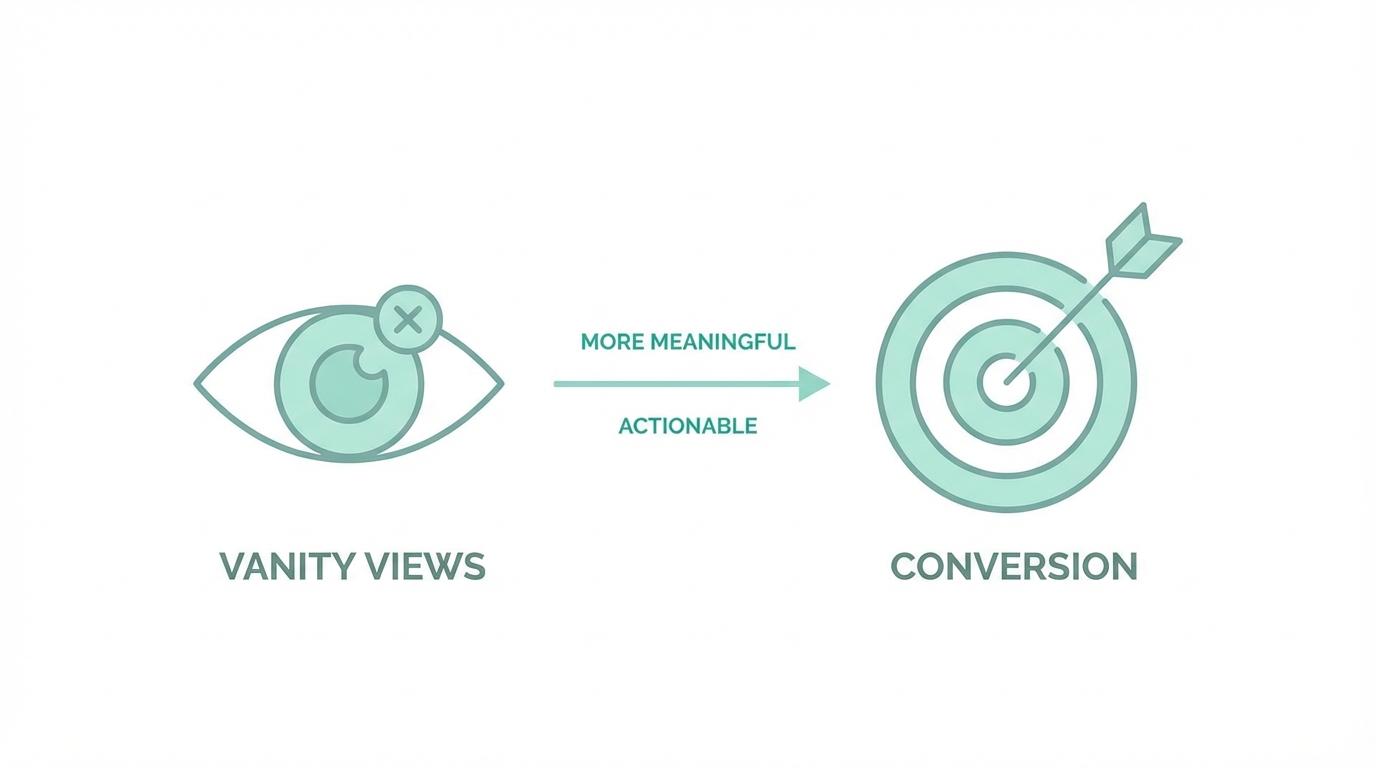
Not all viral videos are created equal. You might have a video that reaches 11 million views but generates almost no revenue. This happens when the targeting is misaligned with the product’s economic model. For example, an AI job application app might find that videos mentioning Indeed go viral because they hit a broad, blue-collar audience. However, that audience may be less willing to pay for a subscription than a white-collar audience on LinkedIn.
To ensure high influencer roi for startups, you must build the muscle of tracking conversions in real-time using tools like Stripe. By monitoring revenue spikes alongside viral peaks, you can identify which audiences are "problem-aware." A white-collar professional who has been laid off knows that job searching requires hundreds of applications; they are already problem-aware and willing to pay for a solution that automates the process. Always call out the specific characteristics of your audience in the first 3 seconds of the video.
Step-by-Step Playbook: Managing UGC for App Growth

Step 1: Define Your Problem-Aware Audience
Before hiring creators, identify exactly who has the most to gain (and the most to spend) on your app. Are you targeting "vibe coders" who want to build apps, or busy parents looking for 15-minute book summaries? Use Stormy AI for finding UGC creators and influencers who already speak to these specific demographics and reaching out to them instantly with hyper-personalized, AI-generated emails.
Step 2: Recruit for Nuance, Not Reach
Look for UGC creators who understand micro-expressions. The success of a high-conversion video often depends on a split-second look of genuine surprise or relief. Reach out to creators and provide them with examples of the "Discovery" format, asking them to replicate the emotional beats rather than just the script.
Step 3: Leverage Paid Media for Data
Organic tiktok growth for mobile apps is great, but it lacks consistent data feedback loops. Take your best-performing organic UGC and put spend behind it on Meta Ads Manager or Google Ads. This allows you to see exactly which creative converts at a granular level, while Stormy AI handles the post tracking and analytics across all platforms to monitor your overall campaign performance.
Ethical Scaling vs. Gray Hat Tactics
As you scaling with user generated content, you will see competitors using "gray hat" tactics—such as fake layoff videos or scripted job acceptance calls that pretend to be real life. While these might drive short-term clicks, they are often illegal under FTC guidelines and can lead to massive lawsuits. Furthermore, they erode the trust of the entire consumer subscription industry.
Focus on long-term brand building. If your product genuinely helps people—like landing them a new job or helping them learn a language—the truth is your best marketing asset. You don't need to lie about success stories when you can use AI-powered tools like Stormy AI to find real users and creators who genuinely believe in your mission. Authentic conviction is a distribution strategy in itself.
Conclusion: From 5-Figure to 7-Figure MRR
Scaling a consumer app is a game of aggressive iteration. Whether you are using Apple Search Ads to capture high-intent searchers or ugc marketing strategy to find new audiences on social, the goal remains the same: solve a painful problem for a specific group of people. Stop focusing on vanity metrics and start looking at how your creative connects with problem-aware users. By mastering the 80/20 rule of creative and leveraging the right influencer distribution, you can transform a simple mobile app into a multi-million dollar revenue engine.