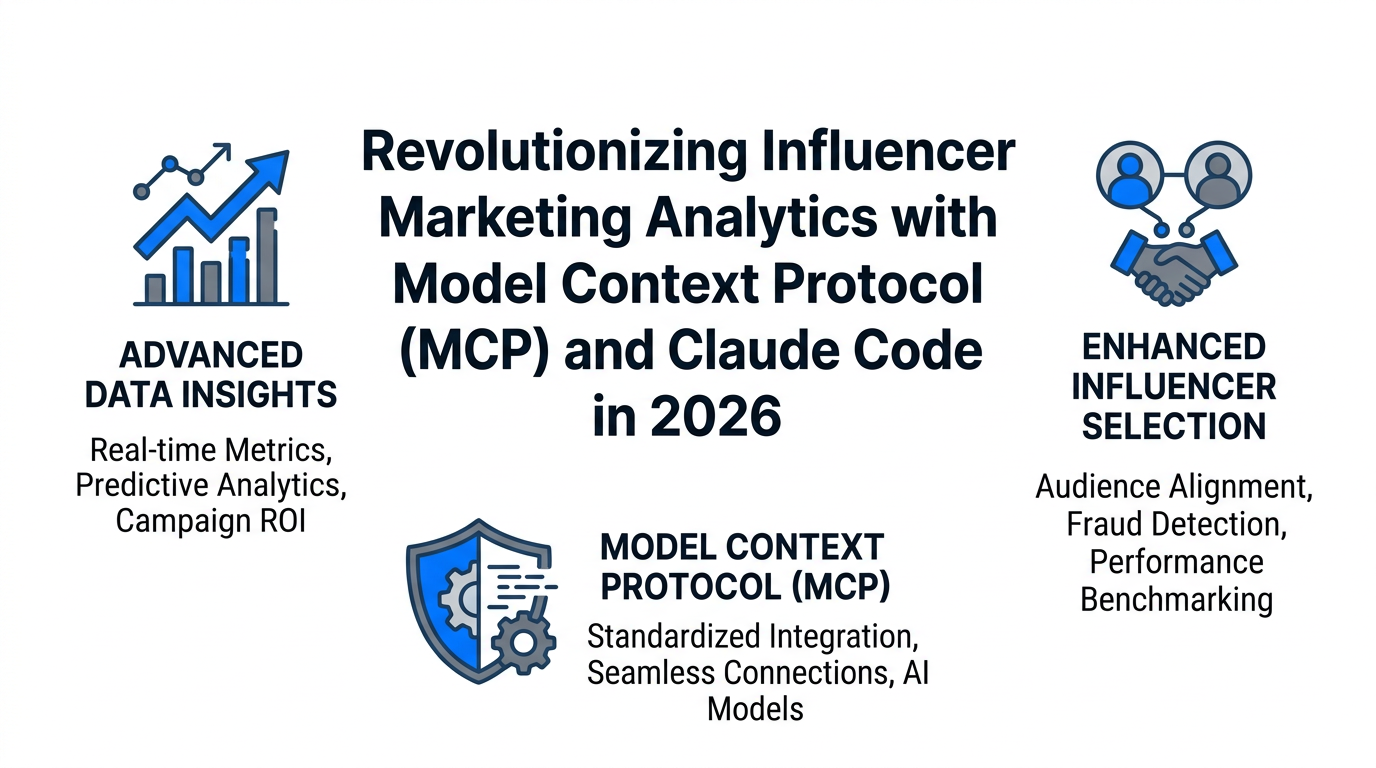
In the rapidly evolving landscape of 2026, the days of manually refreshing dashboards to track campaign performance are officially over. We have entered the era of agentic AI, where influencer marketing analytics 2026 is no longer defined by human effort, but by persistent, tool-augmented capabilities. The global market for agentic AI has surged to $9.14 billion this year, representing a massive shift in how brands manage creator relationships. At the heart of this revolution is the Model Context Protocol (MCP) and autonomous assistants like Claude Code, which allow marketing teams to move beyond simple prompts and toward sophisticated Skill Engineering.
The Shift from Prompting to Skill Engineering
For years, marketers relied on "Prompt Engineering"—the art of writing the perfect one-off instruction to get an AI to analyze a spreadsheet. In 2026, this has been replaced by Skill Engineering. Instead of re-explaining campaign goals in every new chat window, teams now build persistent "Skills" that live in their environment. These skills are powered by the MCP ecosystem, which has exploded from 1,000 servers in early 2025 to over 10,000 active servers today. This evolution allows AI agents to maintain a permanent memory of brand guides, creator contracts, and historical performance data.
By using Claude Code, a terminal-based agentic assistant, marketers can now scan entire monorepos of creator content, execute performance audits, and even handle code-level integrations with social APIs. Platforms like Stormy AI complement this by providing the raw discovery engine needed to feed these AI agents with high-quality creator leads across TikTok, Instagram, and YouTube.
"In 2026, the real test is no longer writing clever prompts, but guiding agentic systems with judgment and accountability." — Bernard Marr
Connecting Live Social Data: The Power of MCP Servers
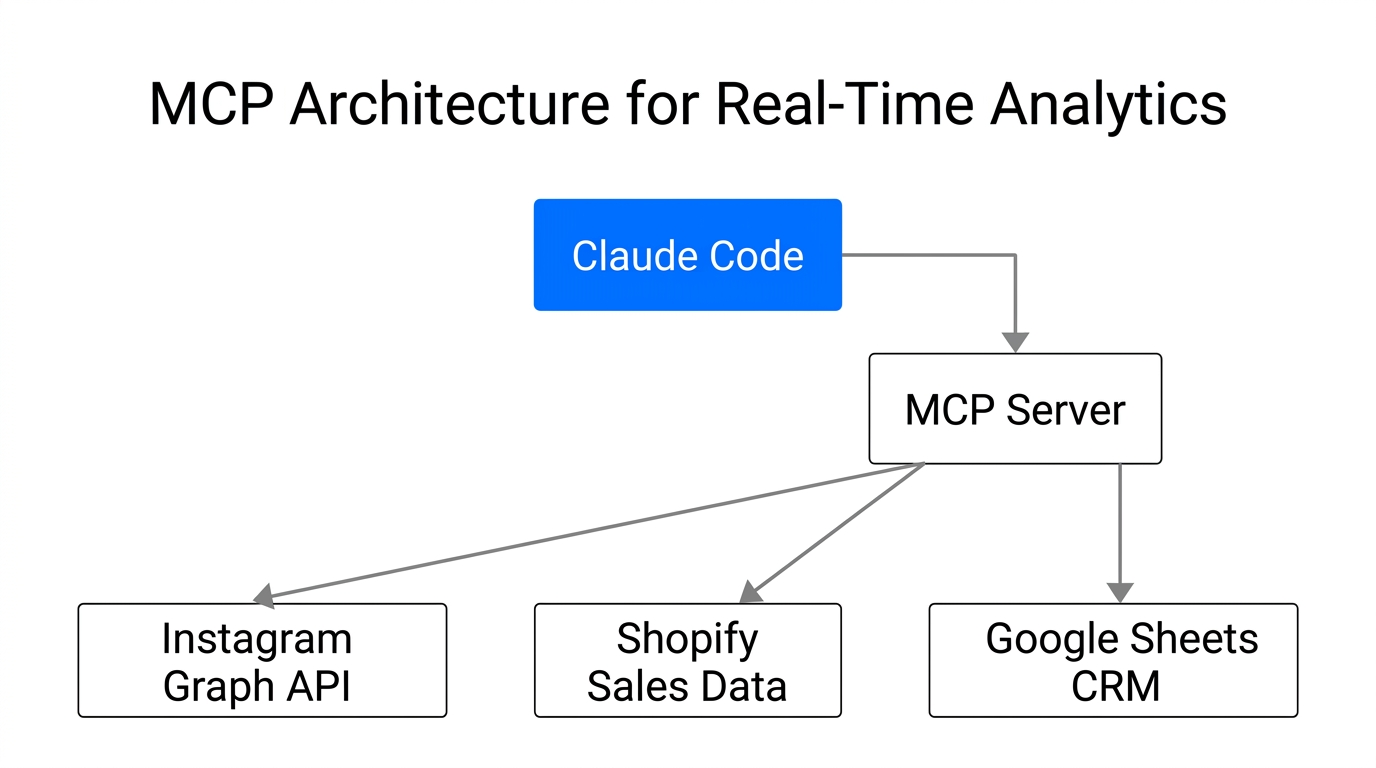
The true magic of Model Context Protocol social media integration lies in its ability to pull real-time data from disparate sources. In previous years, connecting a YouTube API to an AI was a multi-week engineering project. Today, using the AgentPatch MCP marketplace, marketers can instantly connect their AI agents to live YouTube metrics and Google Maps data. This is critical for automated influencer discovery, where location-based data and real-time engagement rates are the difference between a viral campaign and a wasted budget.
Mid-sized teams previously spent between $500K and $2M annually building custom AI integrations. With the standardization of MCP—now governed by the Agentic AI Foundation (AAIF)—those costs have plummeted. Agents can now "lazy load" context, meaning they only call expensive data tools when a specific task requires them, saving thousands in token costs.
Solving the 'Argument Drift' Problem in Long-Term Partnerships
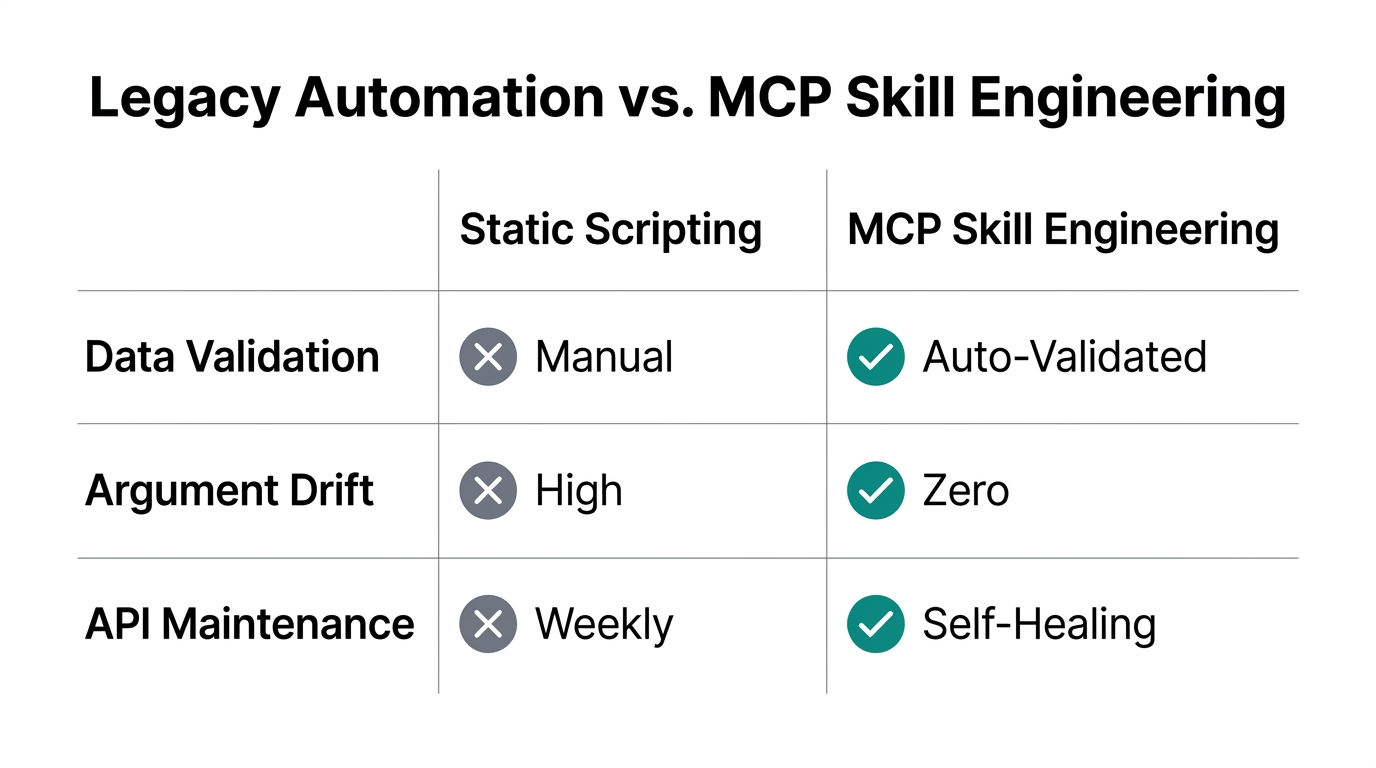
A major hurdle in Skill Engineering social media marketing has been "Argument Drift." In long, complex AI sessions, models can lose grounding on specific campaign invariants—like a creator's exclusivity clause or a specific brand safety requirement—and begin "rationalizing" hallucinations. This was highlighted in a 2026 audit showing that high-frequency tool-calling requires precise grounding to avoid costly errors.
To prevent this, sophisticated teams use AGENTS.md files—a universal markdown standard adopted by over 60,000 repositories—to store fixed campaign rules. When Claude Code or Goose (the open-source alternative) executes an ROI audit, they check these persistent rules first, ensuring the agent never deviates from the legal or financial constraints of the partnership. This is particularly important given the security vulnerabilities found in 82% of unmanaged MCP servers this year; keeping your logic persistent and audited is no longer optional.
| Feature | Prompt Engineering | Skill Engineering | MCP Infrastructure |
|---|---|---|---|
| Persistence | Ephemeral | Persistent Folders | Always Available |
| Context Loading | Manual (Eager) | Automatic (Lazy) | Tool-Driven |
| Primary Goal | One-off Tasks | Repeatable Expertise | External Data Access |
| ROI Impact | Low/Linear | High/Exponential | Cost Reduction |
Step-by-Step: Building an 'Influencer ROI Skill'
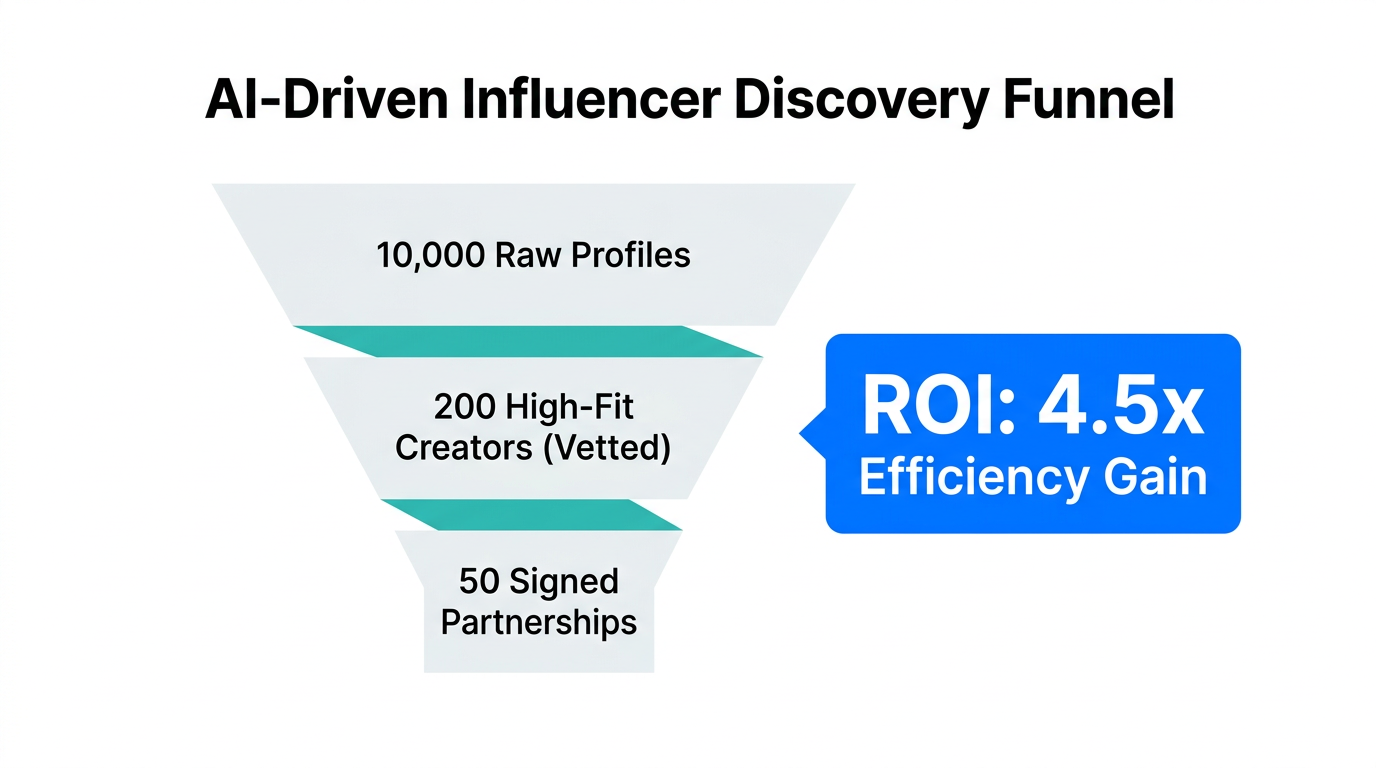
Building an autonomous ROI engine is the ultimate goal of Claude Code for creators. By following this playbook, you can move from manual tracking to a self-healing analytics system.
Step 1: Environment Setup
Initialize a dedicated directory for your campaign. Within this folder, you will create a SKILL.md file that outlines the reasoning logic for calculating ROI (e.g., "Always subtract production costs before calculating EMV").
Step 2: Connect the Data Servers
Configure your mcp-server.json to include connections to the Zapier MCP (for CRM data) and Supabase MCP (to store historical performance metrics). This ensures your agent has access to both live engagement and internal sales data.
Step 3: Define Execution Scripts
Add small Javascript helper files to your tools/ folder. These scripts allow Claude Code to fetch specific metrics—like TikTok comments or Instagram story views—and process them according to your brand's unique scoring algorithm. Claude 4.5 Opus currently holds an 80.9% score on SWE-bench Verified, making it the most capable model for executing these technical workflows.
Step 4: Autonomous Auditing
Use the "Remote Control" feature in Claude Code to initiate a performance audit from your mobile device. The agent will scan the content, pull the metrics via MCP, and generate a report that flags creators underperforming relative to their contractual benchmarks.
"The future of influencer marketing isn't just finding creators; it's building the autonomous infrastructure that vets, manages, and pays them while you sleep."
The Future of AI-Powered Marketing Analytics
As we look toward the remainder of 2026, the integration of MCP into operating systems like Windows 11 will make these agentic workflows the standard for every marketing department. While 79% of organizations have started adopting AI agents, the real competitive advantage lies with those who master Skill Engineering. Moving your influencer workflows into a persistent, protocol-driven framework reduces integration costs by up to 80% and eliminates the human error inherent in manual tracking.
To stay ahead, brands should leverage automated influencer discovery tools like Stormy AI to find the right talent, then deploy MCP-based skills to manage the relationship lifecycle. By treating AI as a skilled worker rather than a simple chatbot, you can achieve a level of scale that was previously impossible in the influencer space.
Conclusion
The transition to influencer marketing analytics 2026 is a shift from effort to infrastructure. By utilizing the Model Context Protocol and Claude Code, marketing teams can finally bridge the gap between creative content and hard ROI. Start by building your first Skill today—your future self (and your budget) will thank you.