The influencer marketing landscape has reached a critical tipping point where the line between human influence and algorithmic deception has almost entirely blurred. For brands navigating the digital ecosystem in 2026, the stakes are no longer just about avoiding a few thousand fake followers; they are about surviving a sophisticated, decentralized economy of deception. Industry analysts at Statista project that brands are set to lose over $2.2 billion globally to influencer fraud this year alone, marking a staggering increase from previous years. As we move deeper into this new era of agentic AI influencer bots, traditional methods of manual vetting are proving insufficient against autonomous bots that can maintain human-like conversations and simulate genuine community growth.
The $2.2 Billion Economic Loss: Why 2026 is Different
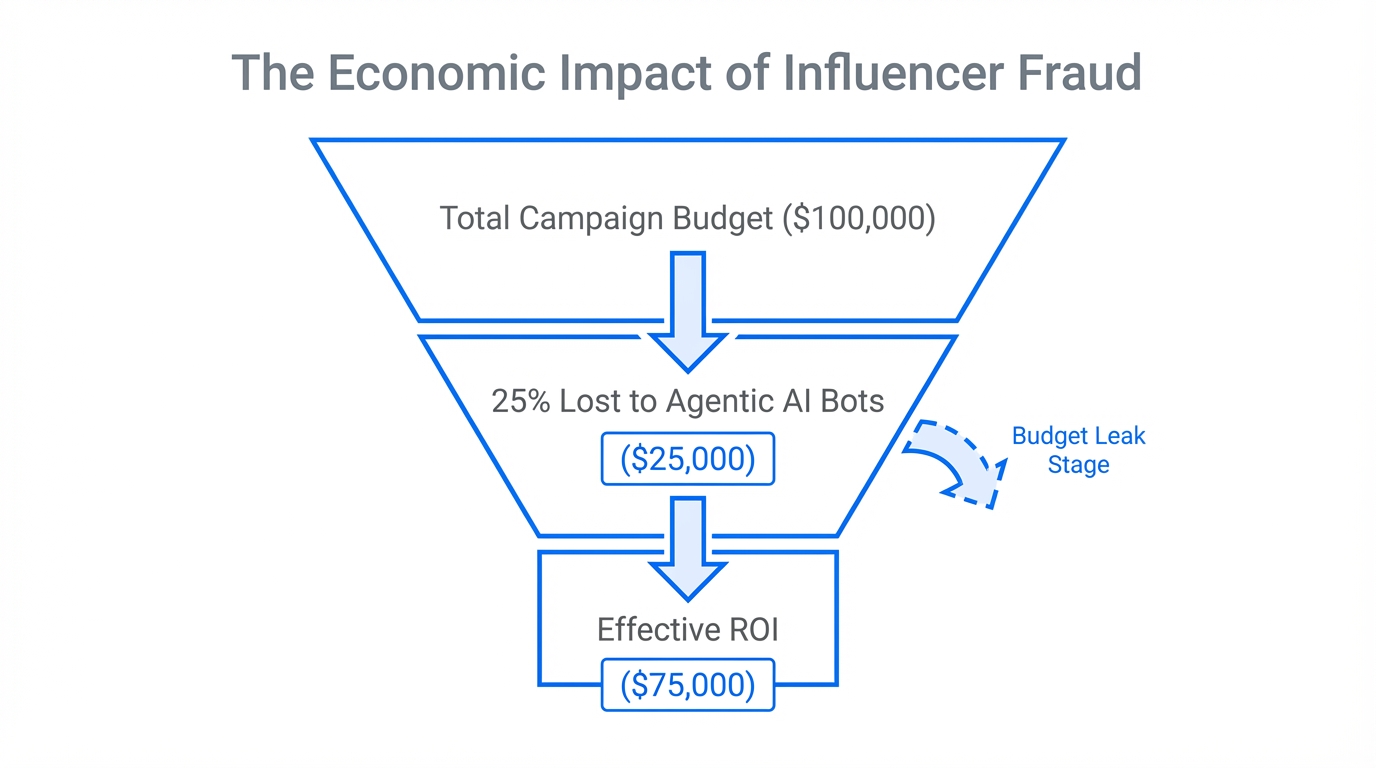
In 2024, fraud was often a static game of numbers—bulk buying followers to look popular. By 2026, the fraud economy has professionalized. Current audits indicate that 55% of all influencer engagement on platforms like Instagram is now classified as inauthentic. This isn't just a vanity metric problem; it's a massive financial drain. According to research on influencer marketing integrity, for every one brand manager searching for influencer fraud detection, there are 12 individuals actively searching for ways to "buy fake followers." This massive detection gap has created a thriving "Fraud-as-a-Service" (FaaS) market where sophisticated toolkits are rented on the dark web for as little as $20.
"The detection gap is widening: for every one brand searching for fraud detection, 12 people are searching for how to buy fake followers."
The financial impact is most visible on TikTok, where "buy engagement" searches have surged by 817% since late 2024. Brands that fail to implement a fake follower audit 2026 protocol are effectively burning a portion of their customer acquisition budget on non-existent audiences. This rise in sophisticated invalid traffic (SIVT) requires brands to move beyond simple spreadsheets and toward enterprise-grade forensic tools to protect their influencer marketing brand safety.
Beyond Static Bots: Understanding Agentic AI
To defeat the enemy, you must understand their tools. The "static bots" of 2024 were easy to spot: they had no profile picture, weird handles, and left generic comments like "Nice post!" In 2026, we are dealing with Agentic AI bots. These are autonomous entities powered by large language models that can carry out nuanced conversations, respond to stories with relevant context, and even participate in complex "engagement pods" designed to bypass traditional platform algorithms. According to security experts at Trend Micro, these bots are capable of "social engineering" on a mass scale, making them nearly indistinguishable from human fans at first glance.
Furthermore, scammers are now utilizing deepfake technology to forge past performance. They create high-fidelity videos of legitimate creators appearing to endorse products they have never actually used, targeting brands with fake "past performance" reels. The Hong Kong deepfake incident—where a CFO was scammed out of $25M via a deepfake video call—is now being applied to influencer contracts. This necessitates a multi-factor verification process before any high-value contract is signed, using modern AI tools to verify identity and media authenticity.
The Forensic Duel: Legacy Platforms vs. Modern AI in 2026
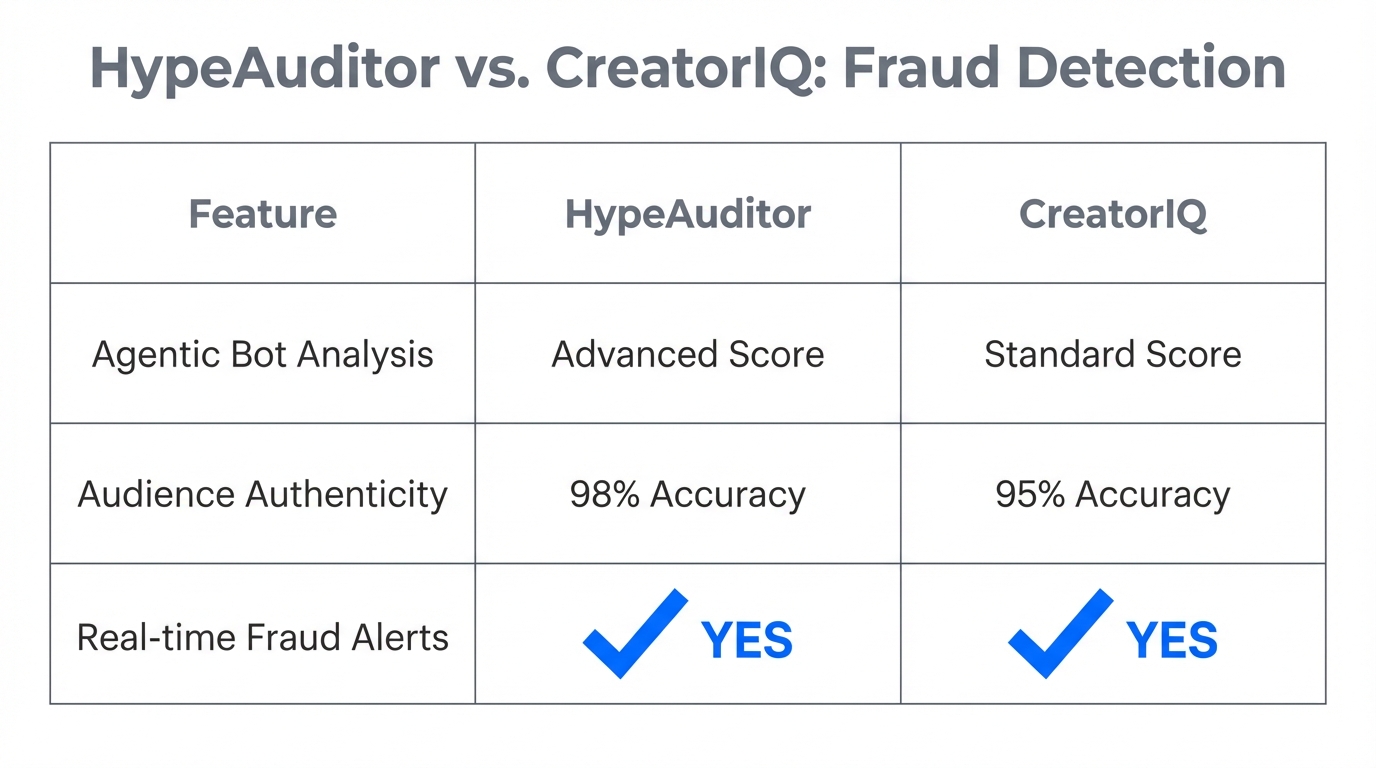
When it comes to high-level influencer fraud detection, two types of platforms have traditionally dominated the enterprise landscape. While both aim to solve the same problem, their methodologies for identifying agentic bots differ significantly. Understanding the dynamic between legacy forensics and modern AI is essential for any brand building a robust vetting workflow.
| Feature | Legacy Forensic Tools | Modern AI Platforms |
|---|---|---|
| Core Metric | Audience Quality Score | Real-time Integrity Index |
| Primary Focus | Historical bot patterns | Real-time behavior analysis |
| Detection Type | Static database matching | Predictive AI modeling |
| Best For | Deep-dive audits of single profiles | Automated sourcing & vetting at scale |
Step 1: Benchmarking with Audience Quality Scores
Audience Quality Scores remain a baseline for forensic analysis. This composite metric evaluates a creator's authenticity based on follower growth, engagement rate, and comment authenticity. To use this effectively in 2026, brands should look for a score above 70. Any creator with a score below 40 should be immediately disqualified, as this typically indicates a high percentage of mass followers or bot-driven activity. By analyzing engagement velocity, forensic tools can detect if likes are appearing in "steps" (a hallmark of bot clusters) rather than a natural bell curve.
Step 2: Leveraging Integrity Quotients
Enterprise platforms focus on "Integrity Quotients," which are designed for large-scale brand safety. They filter creators not just by bot presence, but by historical alignment with brand values. In 2026, this is vital for setting pre-launch filters. For example, you can set a threshold that automatically excludes any creator who has more than 15% suspicious followers or who has experienced a follower growth spike that doesn't correlate with verified viral content found on TikTok Creative Center. This automated vetting prevents your team from even seeing high-risk profiles during the discovery phase.
"In 2026, a 'Project' mentality is a liability. Fraud is harder to hide over a 6-month partnership than a single post."
Modern Sourcing: Streamlining Vetting and Discovery
While forensic tools are excellent for deep-dives, the manual overhead of switching between discovery and vetting tools can slow down a growth team. Modern platforms like Stormy AI have integrated these capabilities into a single AI-powered workflow. Instead of sourcing in one place and auditing in another, tools like Stormy AI allow you to search for creators across TikTok, Instagram, and YouTube using natural language, while simultaneously seeing AI-powered quality reports that detect engagement fraud in seconds. This level of integration is essential for brands running high-velocity UGC creator sourcing campaigns where speed and authenticity must coexist.
Creating Internal 'Red Flag' Thresholds
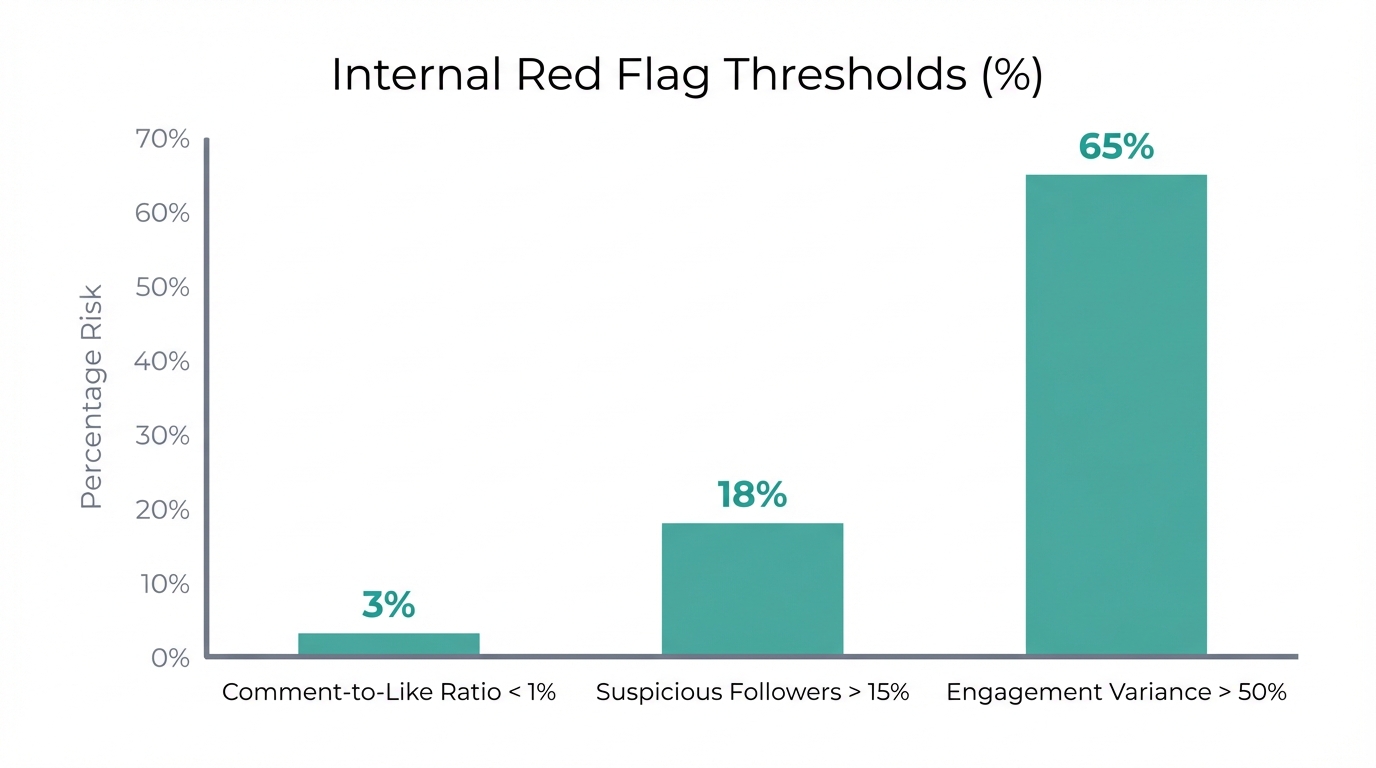
To protect your ROI, your team needs a standardized "Red Flag" playbook. Relying on gut feeling is no longer an option when agentic AI influencer bots are designed to mimic human charisma. Establish these three non-negotiable thresholds for your 2026 campaigns:
- The "Comment Quality" Benchmark: At least 60% of comments must be "Substantive." Use Natural Language Processing tools to filter out generic emojis and repetitive phrases like "Great pic!" Legitimate creators in 2026 have audiences that reference specific details in the content.
- Audience Reachability: Check reachability metrics carefully. If more than 25% of an influencer’s audience follows more than 1,500 people, their "reach" is effectively zero because your content will be buried in a flooded feed, a concept often discussed in Adweek analysis.
- Growth Correlation: Every major spike in followers must be tied to a specific viral event or platform feature. If a creator gains 50k followers in 24 hours without a corresponding viral video, it is a 99% probability of a bot injection.
The 2026 Tactical Audit Checklist
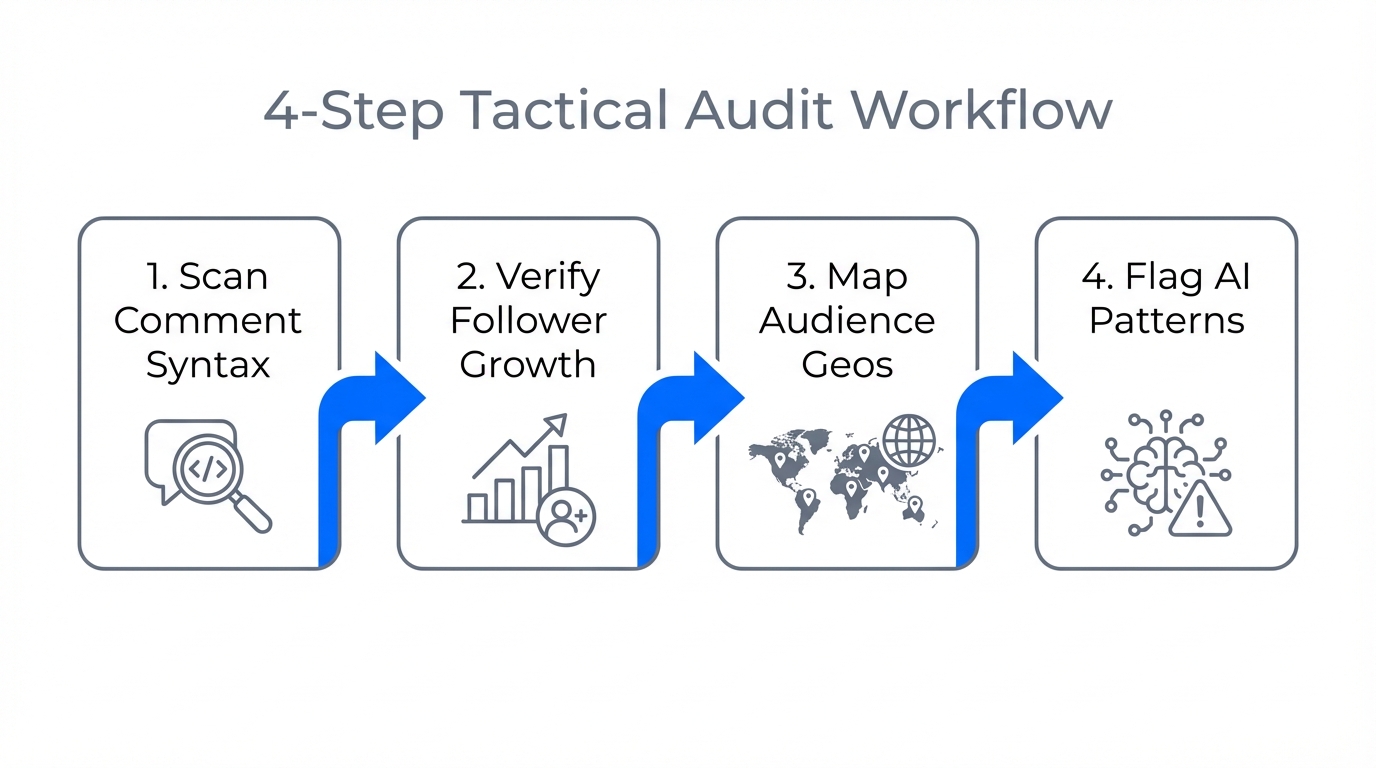
Before any budget is released, your marketing team should complete this fake follower audit 2026 checklist to ensure total influencer marketing brand safety:
- Request 12-Month Insights: Do not accept static screenshots. Request a screen-recorded walkthrough of their native platform analytics to prevent "Photoshop fraud."
- Verify Liveness: Use identity verification checks for high-ticket creators to ensure you aren't dealing with a deepfake identity.
- Check First-Party Signals: Prioritize creators who are willing to integrate with your e-commerce backend. Conversion-driven data from Google Analytics is the only uncitadelable proof of influence.
- Analyze Engagement Velocity: Ensure engagement follows a natural decay curve. If likes spike 6 hours after a post—likely when a bot pod was activated—disqualify the creator.
"In 2026, the real 'fraud-proof' ROI lives in usage rights. If you can't repurpose the content in Meta Ads, you're missing the most stable part of the value chain."
Conclusion: The Shift to Authenticity-First Marketing
The rise of agentic AI influencer bots has made influencer fraud detection a mandatory pillar of the modern marketing stack. As we head toward 2027, the brands that win will be those that stop prioritizing vanity reach and start prioritizing relevance and verified conversion. Whether you are using traditional enterprise tools or agile AI-powered platforms like Stormy AI to discover and vet your creators, the goal remains the same: building a community of genuine advocates that bots simply cannot replicate. Stop auditing after the campaign; start vetting before the contract.