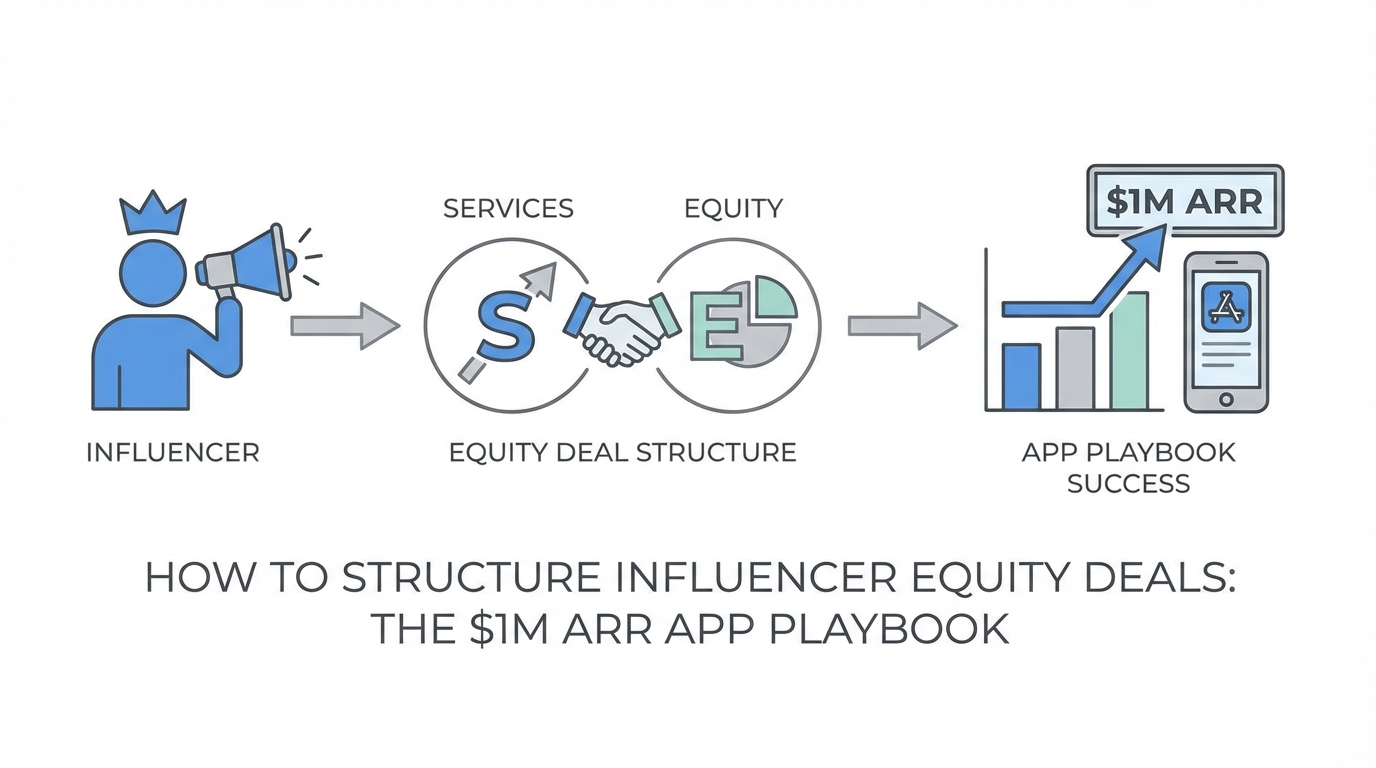
Most mobile app founders follow a predictable, albeit broken, sequence: build an app in a vacuum, ship it to the App Store, and then pray for organic discovery or blow a venture-backed budget on Meta ads. But as the cost per install (CPI) continues to climb, smart developers are flipping the script. Instead of viewing creators as mere billboard space for hire, top-tier founders are treating them as co-founders through sophisticated influencer equity deals. By moving away from the transactional nature of paid posts, developers can unlock 10x higher commitment levels and conversion rates that traditional advertising simply cannot touch.
The Problem with Traditional Brand Deals
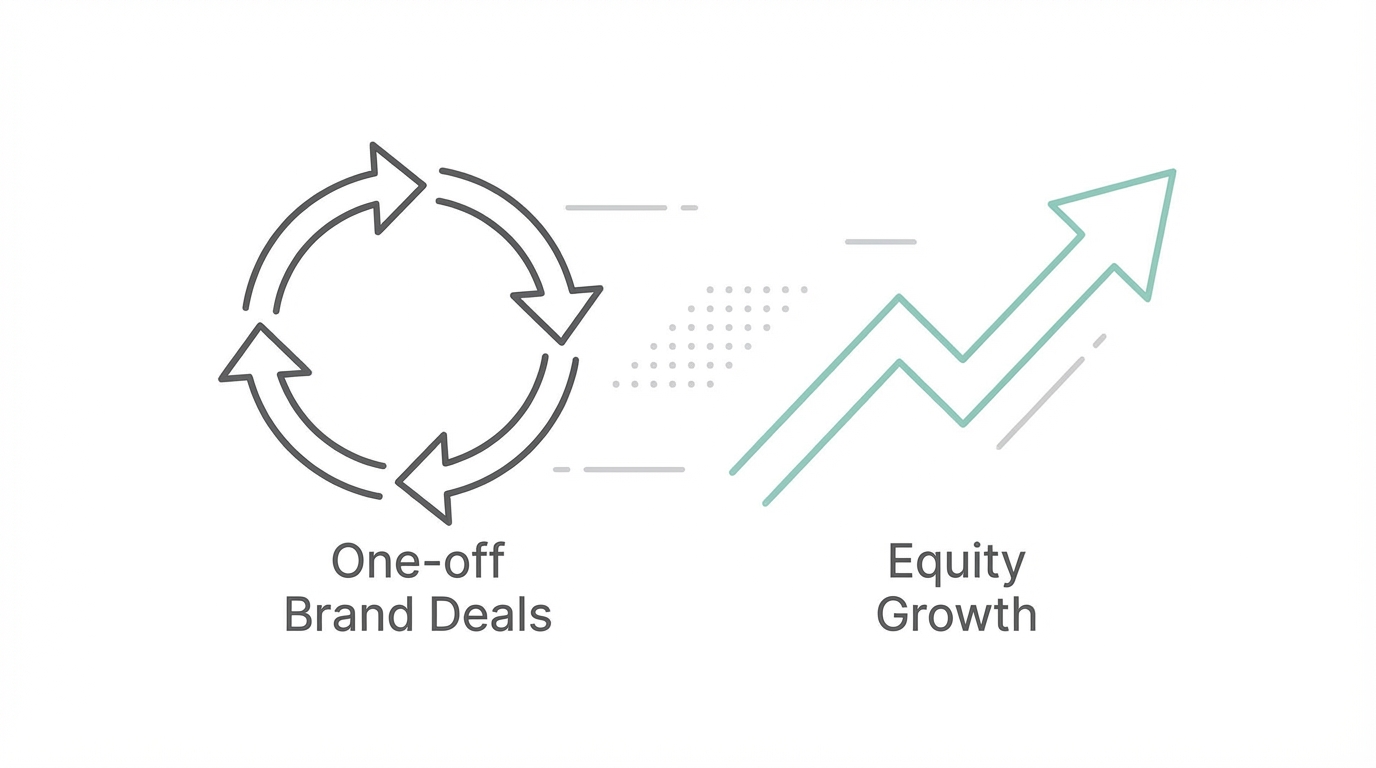
In the current creator economy, both developers and influencers are trapped on what industry insiders call the "hamster wheel." For the developer, a standard influencer marketing strategy usually involves paying for a single post or a short campaign. Once the cash is spent and the post slides down the feed, the traffic stops. This creates a high-risk environment where you are constantly chasing the next viral hit to keep your daily active users (DAU) afloat.
For creators, the hamster wheel is equally exhausting. They are constantly negotiating one-off deals, chasing payments, and promoting products they may not actually care about. This leads to "ad fatigue" among their followers and inconsistent income. As noted in recent discussions on the Superwall podcast, many influencers are actually "undermonetized" despite having millions of followers. They have the distribution, but they lack the stable app monetization models that provide long-term wealth. This is where an influencer equity agreement changes the game: it aligns incentives so that both the developer and the creator win only when the app wins.
Case Study: How the Payout App Reached $45,000/Month
To understand the power of this model, look at Connor, a 23-year-old developer who scaled his portfolio to over $1 million ARR by rethinking distribution. His flagship product, the Payout app—a tool for class action lawsuit discovery—currently generates roughly $45,000 per month. Remarkably, almost all of that revenue is driven by a single equity partnership with a creator named Casper.
Instead of paying Casper for a TikTok video, Connor brought him in as a partner. This shifted Casper’s role from a "promoter" to a "stakeholder." Because Casper owned a piece of the pie, he didn't just post once; he experimented with formats, responded to every comment, and integrated the app deeply into his content strategy. This partnership alone drove over 35,000 clicks to the website and a massive volume of organic installs. By using Stormy AI to vet creators and analyze audience demographics, developers can identify these high-leverage creators who possess the "entrepreneurial grit" needed to turn a simple utility app into a viral sensation.
Step 1: The 'Figma Mockup' Technique for Validation
One of the most common mistakes in app development is building the product before securing the audience. Connor’s playbook suggests the opposite. Before writing a single line of code, he approaches potential partners with Figma mockups of four or five different app ideas. He asks the creator: "Which one of these resonates most with your audience?"
This is the ultimate form of market validation. The creator knows their audience better than any data tool. If they believe a "financial life hack" app will convert better than a "daily quote" app, you build the former. By involving the creator in the ideation phase, you ensure that the product-market fit is baked in from day one. You aren't just building an app; you are building a customized monetization engine for a specific, pre-existing community.
Step 2: How to Calculate Equity for Influencers
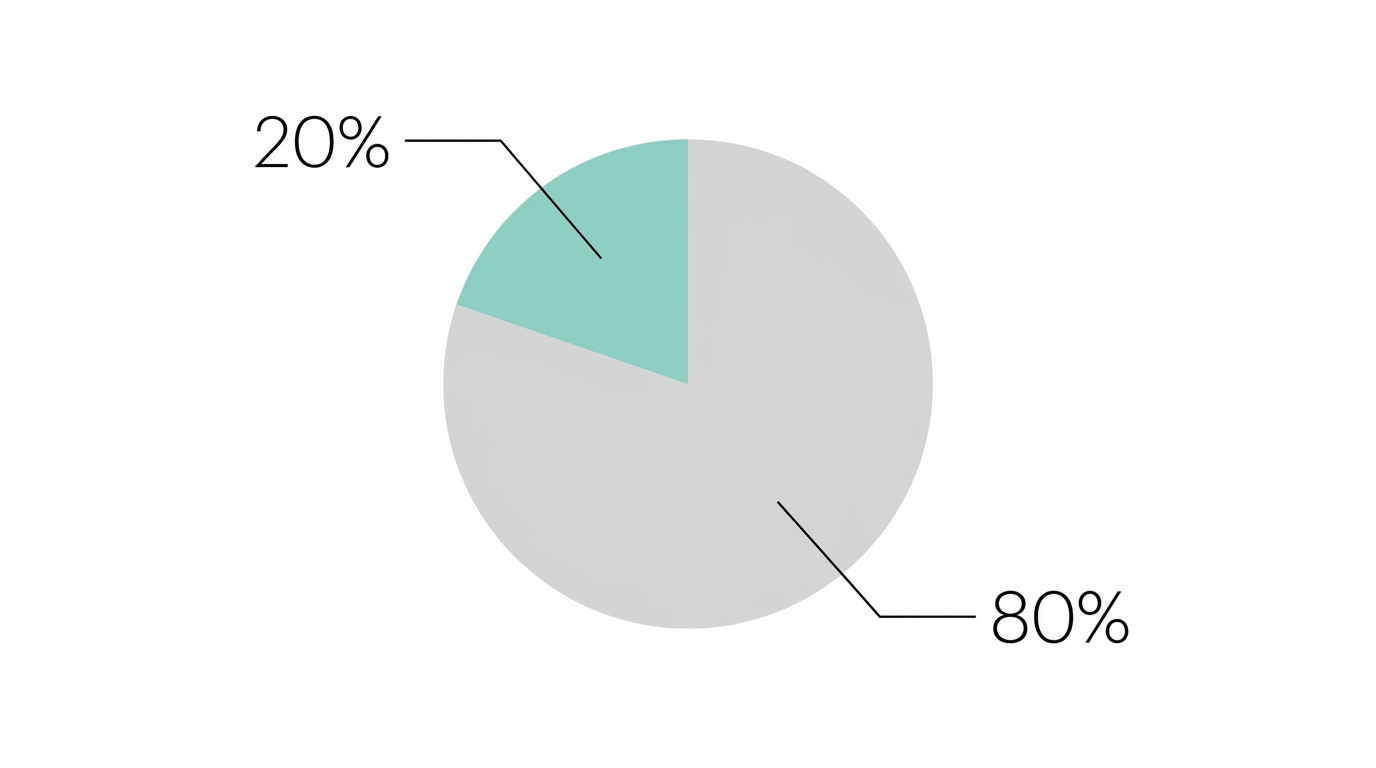
Determining the right split in an influencer partnership contract can be daunting. There is no one-size-fits-all percentage, but the calculation usually balances three factors: the creator's audience size, their historical conversion data, and the complexity of the app's development. For a simple utility app that takes two weeks to build, a developer might offer a larger equity stake (sometimes 50% or more) if the creator handles 100% of the distribution.
However, if you are building a complex platform with significant backend infrastructure, the developer’s equity share should remain higher. A common starting point for mid-sized creators (100k to 500k followers) is a rev-share or equity split that reflects their contribution to the "top of the funnel." Founders often use data from paywallexperiments.com to project potential earnings and justify the equity offer to the creator. Remember, the goal is to make the deal so appealing that the creator views it as their own business, not just another brand deal.
Step 3: Outreach Strategies for High-Value Creators
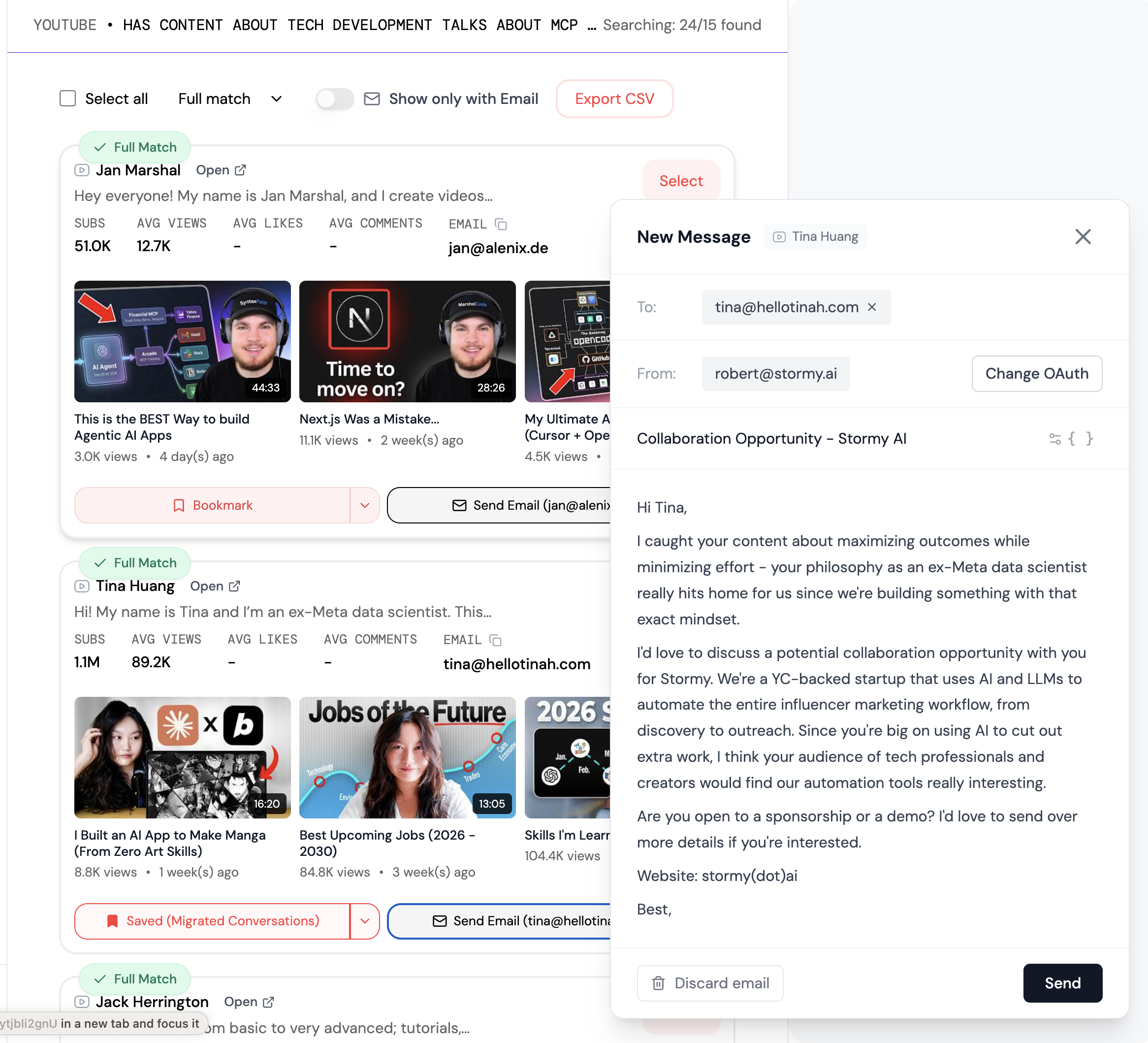
Sliding into DMs is a low-probability game. Large creators receive thousands of messages a day and often have notifications turned off. The $1M ARR playbook prioritizes email outreach over social media messages. To find these contact details, you can often look at their YouTube "About" section or use specialized tools like Stormy AI, which lets you find matching influencers using natural-language prompts and automatically enriches their profiles with verified email addresses.
When reaching out, focus on the equity for influencers angle immediately. A subject line like "Partnership Opportunity: Building a Custom App for Your Audience" is far more effective than "Want to promote my app?" Influencers are increasingly looking for ways to build long-term assets. Position yourself as the technical co-founder who can turn their influence into a recurring revenue stream. With Stormy AI, you can automate this entire process by setting up an AI agent that handles daily outreach and follow-ups on a schedule while you sleep.
Step 4: Using UGC and ManyChat for Maximum ROI
Once the partnership is signed, the distribution strategy must be tactical. High-performing creators often use a hybrid of storytelling and direct calls to action (CTAs). For example, Casper’s most successful videos for the Payout app weren't just tutorials; they were skits or "life hacks" that addressed a specific pain point—like getting money back from a company like Temu. This type of UGC for mobile app ads feels native to the platform and bypasses the user's "ad filter."
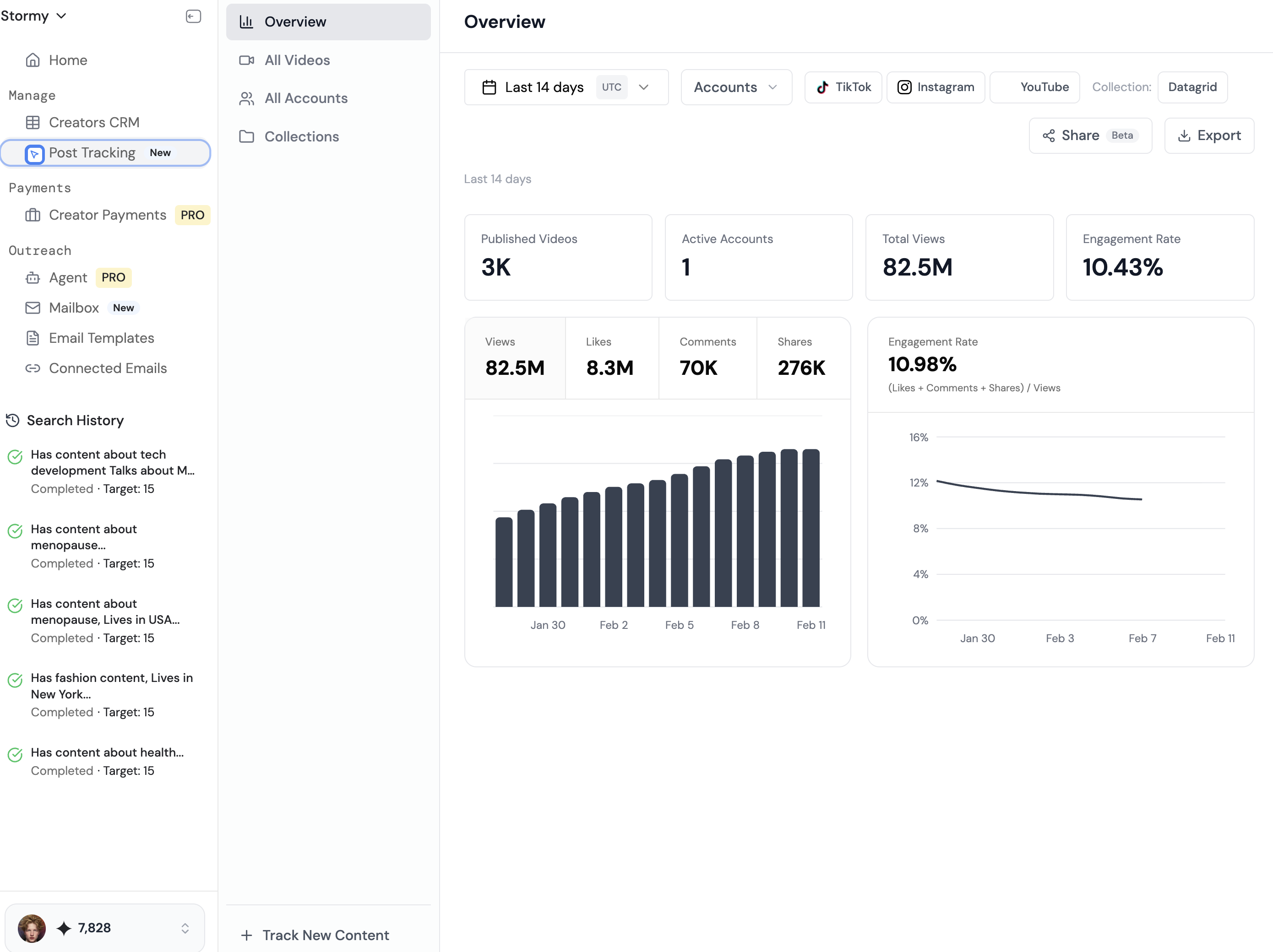
To capture this interest, top founders utilize automation tools. A common tactic is the "Comment Keyword" strategy. The creator tells the audience to "Comment 'CLAIM' for the link," and an integration with ManyChat automatically DMs the user the App Store link. Tracking the performance of these campaigns is critical; Stormy AI provides a built-in Post Tracking dashboard to monitor viral growth, views, and engagement metrics in real-time. You can then use SpyTok to analyze which video formats are currently going viral in your niche to refine your creative approach.
Transitioning from Equity to Cash Models
As your app scales and becomes capitalized, your strategy might evolve. While equity for influencers is a fantastic way to bootstrap growth with zero upfront cost, it can become expensive in the long run if the app reaches multi-million dollar valuations. Once you have a stable cash flow—for instance, reaching $30,000 to $50,000 in monthly revenue—you might transition to a high-ticket cash-per-post model for new influencers while maintaining the core equity deals with your founding partners.
At this stage, many founders move toward an "App Studio" model. Instead of managing one app, they hire engineers and distribution specialists to manage a portfolio of niche products. They might pay a creator with 1 million followers $1,500 to $5,000 per video, knowing exactly what their ROI will be based on historical data. By using Google Ads or Apple Search Ads to supplement the organic influencer traffic, you can create a diversified growth engine that doesn't rely on a single platform's algorithm.
Conclusion: Building a Sustainable Business
Structuring influencer equity deals is more than just a marketing tactic; it’s a fundamental business strategy for the modern app developer. By treating creators as partners, you solve the distribution problem before you even finish the product. You move away from the high-stress "hit or miss" world of paid advertising and into a collaborative model where growth is built on trust and shared success.
To start your journey, begin by identifying creators in mid-sized niches who have a dedicated, "high-quality" comment section. Use tools like Stormy AI to vet their audience and engagement. Then, come prepared with your Figma mockups, be ready to offer a fair influencer equity agreement, and focus on building a product that solves a genuine problem for their community. The path to $1M ARR isn't paved with better code—it's paved with better partnerships.