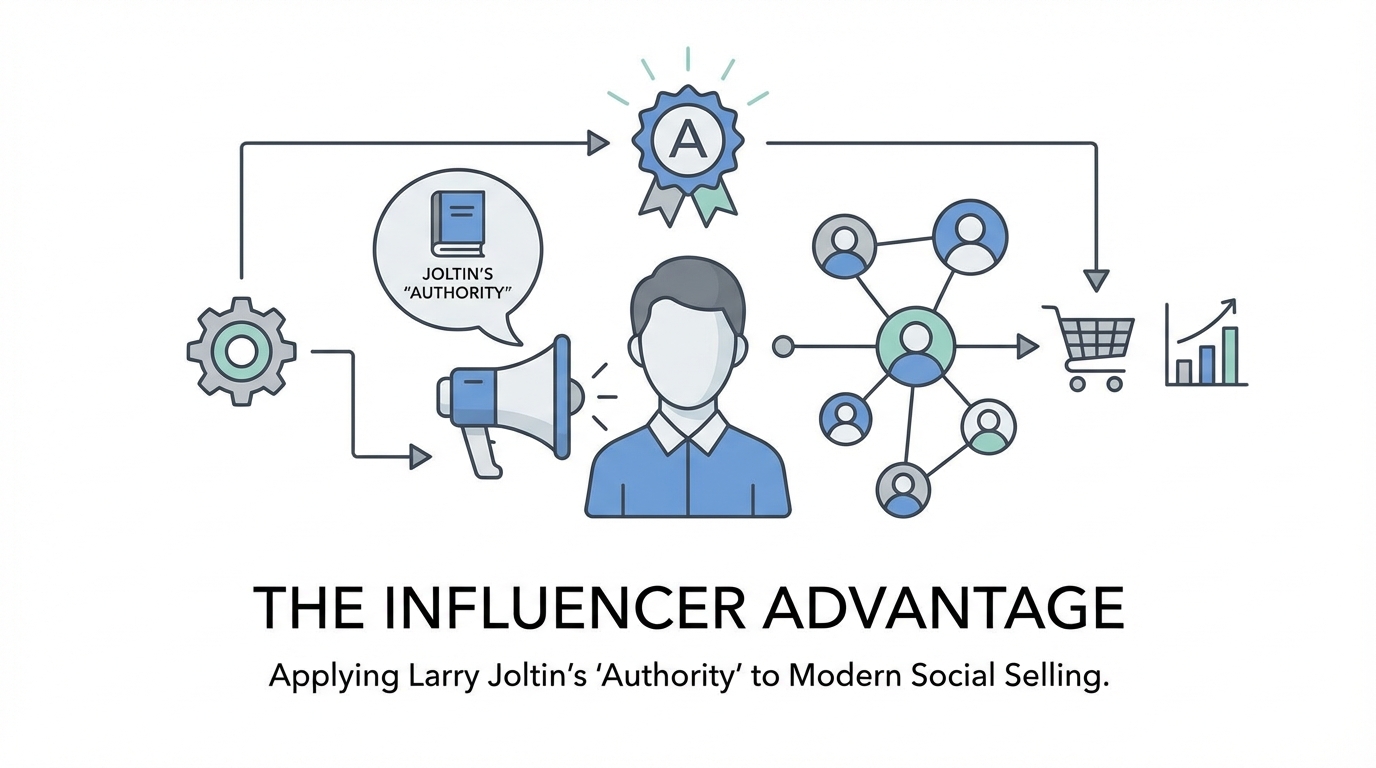
In the early 1980s, a 5'5" Brooklyn native named Larry Joltin became a national legend, not through a viral video or a digital storefront, but by selling shoes in Sharon, Pennsylvania. Working at Reyer’s Shoe Store, Joltin managed to move a staggering 9,000 pairs of shoes annually—averaging one sale every 15 minutes. At his peak, his annual sales volume hit $500,000, which translates to roughly $1.5 million in 2024 dollars. How did a single salesman in a town of 20,000 people attract customers from a 75-mile radius and win the National Shoe Retailers Association Salesman of the Year award three years in a row? The answer lies in the Authority Theory—a concept that is more relevant than ever for brands building a modern influencer marketing strategy.
The Authority Theory: Why the 'Salesman' Fails but the 'Expert' Wins
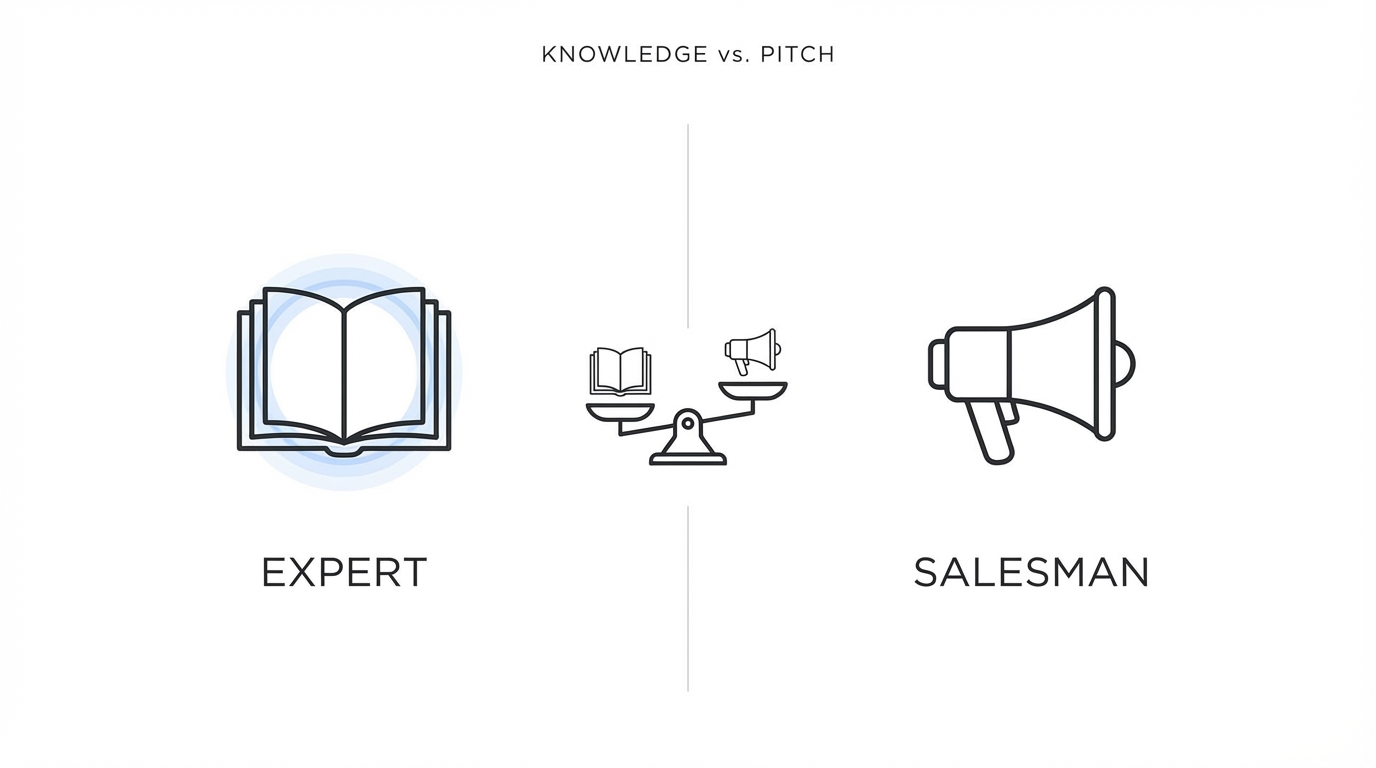
Larry Joltin’s core philosophy was simple: never let the customer take the lead. While modern marketing often stresses 'customer-centricity,' Joltin understood that true trust is built on expertise, not compliance. He famously ignored customers when they told him their shoe size. Why? Because, as he noted in a profile for Time Magazine, "people haven't been measured in 12 years." By insisting on using a Brannock Device to measure every foot himself, Joltin shifted his role from a vendor to an authority.
This is the cornerstone of successful authority marketing. In the digital age, consumers are exhausted by creators who merely 'promote' products. They are looking for 'Subject Matter Experts' (SMEs) who possess the specialized knowledge to tell them what they actually need. When a brand partners with an influencer who functions as an expert—rather than a billboard—they tap into the same psychology that allowed Joltin to command influencer conversion rates that would be the envy of any modern CMO. Top-performing specialty stores today still aim for a conversion rate of 80% or higher for visitors who sit down for a fitting, proving that the "Expert-Led" model remains the gold standard in social selling for brands.
Identifying Niche Influencers with High Attachment Rates

Joltin’s success wasn't just about the first pair of shoes; it was about the "attachment rate." He was a master of selling multiple pairs plus accessories like socks and waterproofing sprays. In modern niche influencer marketing, this translates to working with creators who don't just drive one-off clicks, but who build high-attachment lifestyles. These are creators whose followers buy the primary product and then come back to see which accessories or related items the creator recommends next.
To find these creators, brands must look beyond vanity metrics. A creator with 500,000 followers might have lower authority than a specialized 'boot enthusiast' with 20,000 followers who can explain the nuances of Goodyear welt construction. The global footwear market is projected to reach $588 billion by 2030, and the brands that will win are those that leverage these hyper-personalized 'Expert Picks.' Tools like Stormy AI can help source and manage these high-authority UGC creators by filtering for specific niche expertise and engagement quality rather than just follower count.
Social Selling 2.0: The 15-Second Hook Playbook
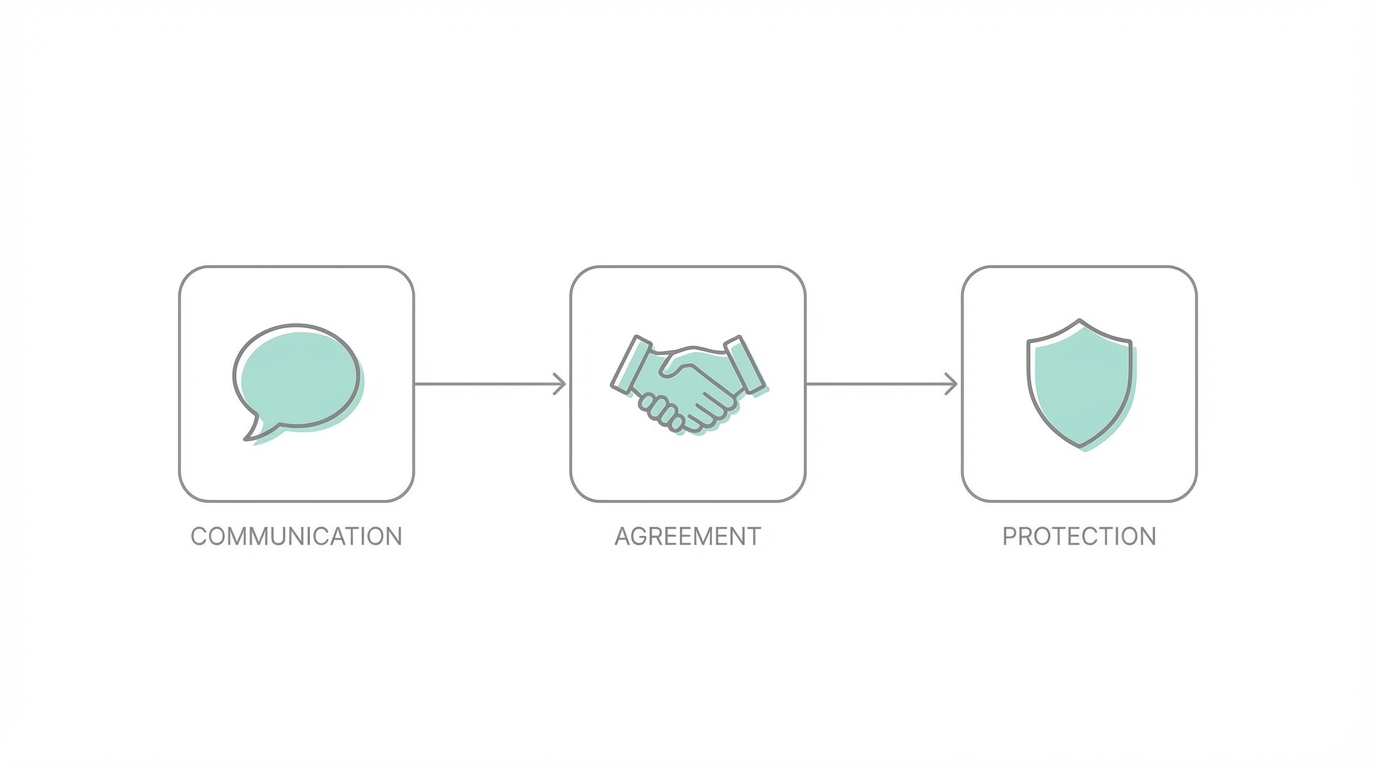
Modern retail experts like Bob Phibbs, also known as The Retail Doctor, emphasize that the first 30 seconds of a store greeting determine the entire transaction. In the world of Meta Ads and TikTok, that window has shrunk to 15 seconds or less. Here is how to translate the "Joltin Method" into a digital playbook for social selling:
Step 1: The Authority Hook
Don't start with "Hey guys, look at this cool product." Start with a measurement or a fact that challenges the viewer’s status quo. "90% of people are wearing the wrong size boot—here is how to tell if you are one of them." This establishes the creator as the authority immediately.
Step 2: The "Back Room" Play
Joltin famously brought out three pairs: the one the customer asked for, the one they needed, and a "surprise." In a social video, have your influencer showcase a variety—a comparison between a standard model and a premium alternative. This uses the "Selection Pillar" popularized by Reyer’s to drive higher Average Order Value (AOV).
Step 3: The Call to Action (The Fitting)
Instead of a generic link, the CTA should focus on the "Fit-First" experience. Whether it's a sizing quiz or an AR fitting tool like Volumental, the goal is to reduce the 30-40% return rate common in online footwear by emphasizing precision.
The Small Town Advantage: Scaling Niche Loyalty Globally
Larry Joltin proved that you don’t need a New York City population to hit New York City numbers. Sharon, PA was a small town, but Joltin’s reputation made it a destination for anyone within a 75-mile radius, including customers from Pittsburgh and Cleveland. This is exactly how niche influencer marketing works in 2024. A creator might exist in a "small town" niche (like ultra-marathon runners or high-end horology), but their reach is global.
When brands identify these "local heroes" of specific digital subcultures, they aren't just buying impressions; they are buying regional dominance within a vertical. This strategy is highly effective for Apple Search Ads campaigns where UGC creators can provide the social proof needed to drive high-intent app installs. By using platforms like Stormy AI, marketers can discover these high-authority creators across TikTok, YouTube, and Instagram, and then use AI-personalized outreach to secure partnerships that feel as personal as a phone call from Larry himself.
Measuring Authority: Looking Beyond Vanity Metrics

In Joltin's era, success was measured by the number of boxes on the floor. In 2024, brands often get distracted by 'likes' and 'shares.' To truly measure authority marketing success, you must look at deeper data points. Are your influencers driving a high attachment rate? Is the AOV for influencer-driven sales higher than your baseline? Modern tech allows us to track this with precision. Platforms like Bluecore can track real-time inventory triggers, while Yotpo allows brands to display "Expert Picks" directly on the product page to mirror Joltin's floor presence.
Furthermore, consider the retention rate. Joltin was known for following up with customers personally on his off-hours. Brands can replicate this by implementing automated SMS or loyalty platforms like Klaviyo to continue the conversation after the initial social sale. If an influencer’s audience has a high Lifetime Value (LTV), it is a sign that the influencer is acting as a true authority, not just a temporary traffic source.
Conclusion: Becoming the Authority in Your Space
The legacy of Larry Joltin teaches us that in any sales environment—whether it's a carpeted shoe store in 1983 or a smartphone screen in 2025—authority is the ultimate currency. By shifting your influencer marketing strategy away from "salesy" creators and toward "expert" authorities, you build a foundation of trust that survives market fluctuations. Stop asking your customers what they want and start telling them what they need through the voices they already trust. Whether you are selling footwear or software, the goal is the same: measure the foot, bring out the surprise third pair, and never stand still while there is a sale to be made.