In the rapidly evolving world of software, billion-dollar incumbents often suffer from a hidden vulnerability: their own success. As these giants grow, they frequently fall into the trap of over-complexity, prioritizing enterprise feature-bloat over the needs of the modern, agile user. This creates a massive opening for a disruptive business model focused on transparency, simplicity, and community. The rise of the open source alternative is not just a technical trend; it is a strategic maneuver that allows lean startups to capture significant market share from 'sleeping' giants who have stopped innovating.
Identifying 'Boring' Software Categories Ripe for Disruption

The first step in any successful competitive analysis for startups is looking where others aren't. While most founders chase the 'next big thing' in emerging tech, there is a goldmine in 'boring' software categories like CRMs, document sharing, and project management. These industries are often dominated by legacy players who haven't updated their core user experience in a decade. For example, Marc and Julia, co-founders of Papermark, identified that the document analytics space was ripe for a shake-up because existing leaders like DocSend were increasingly focused solely on enterprise customers and had largely stopped innovating.
When finding startup ideas, look for markets where the incumbent's pricing is opaque and the software has become a 'black box.' In these segments, customers often feel trapped by high costs and a lack of control. By introducing an open source alternative, you immediately offer a level of trust and flexibility that a proprietary giant cannot match. If you find a category where users are constantly complaining about 'feature bloat' or 'enterprise-only support,' you have found your target.
This approach to saas product strategy relies on the fact that software itself is rarely the only differentiator anymore. In a world where GitHub allows anyone to see how modern tools are built, the real value lies in the user experience, the distribution model, and the trust you build with your community. Identifying these 'sleeping' incumbents requires monitoring where innovation has stalled while market demand remains high.
The Open Source Moat: Defensibility Through Transparency
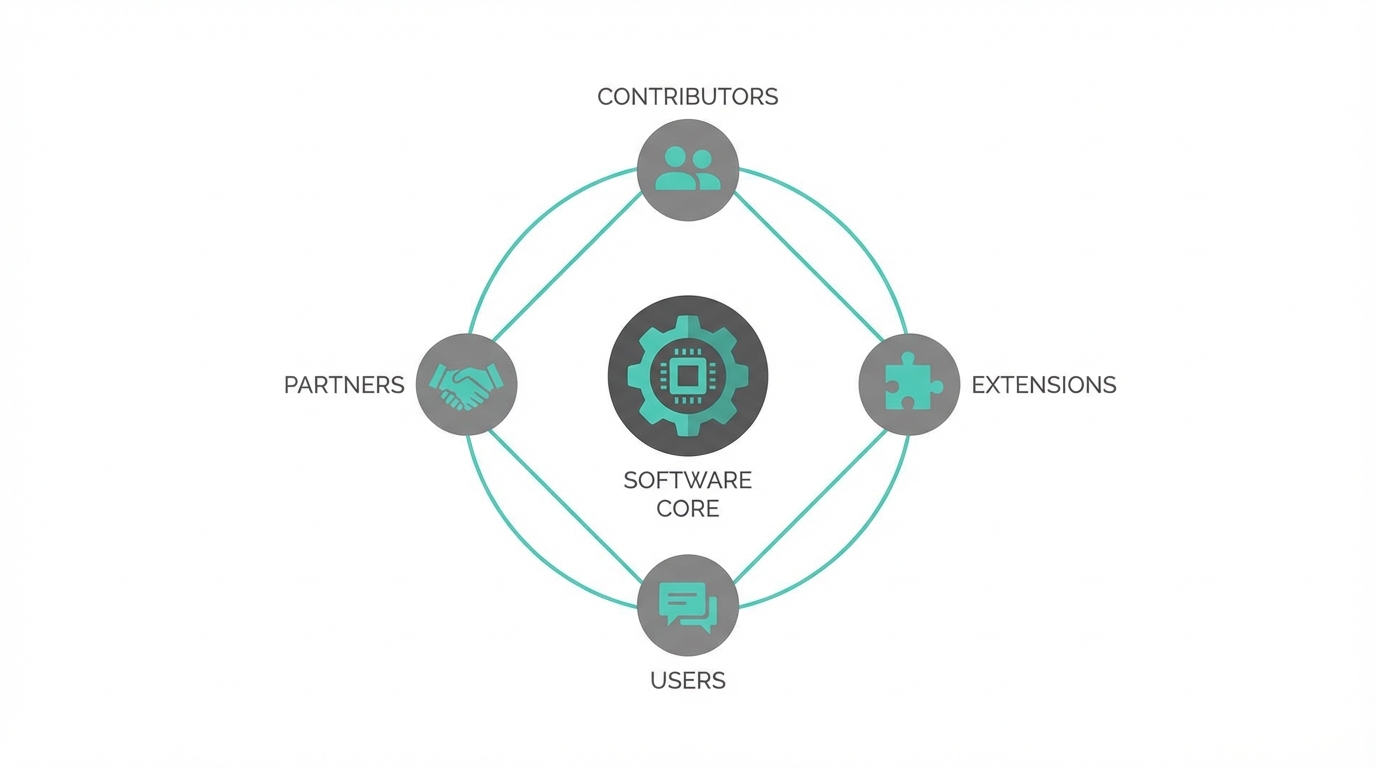
Many founders fear that going open source means giving away their intellectual property. However, the Starter Story interview with the Papermark team reveals that being open source is actually highly defensible. When your core product is free and publicly available, there is zero incentive for a competitor to build the same tool and charge for it. You essentially set the 'floor' for the market price, forcing competitors to justify why their proprietary solution is worth the premium.
Furthermore, open source provides a level of security and auditability that proprietary software cannot offer. For highly regulated industries or security-conscious users, the ability to audit code is a massive selling point. Instead of asking customers to trust a marketing slide, you invite them to look at the Next.js and TypeScript code themselves. This transparency builds a 'trust moat' that is incredibly difficult for an incumbent to replicate without overhaul.
To accelerate this trust-building, many modern startups utilize platforms like Stormy AI for influencer vetting and fake follower detection to find and vet creators who can vouch for their tool's transparency. By partnering with developers and tech influencers who value open-source ethics, you can build a credible brand far faster than through traditional advertising. This community-driven R&D velocity means you aren't just shipping features; you are building a movement.
Targeting 'Micro-Niches' Within Large Markets
In the AI era, the cost of building software has plummeted, allowing founders to target much smaller niches that were previously ignored by billion-dollar companies. Instead of trying to build a 'Salesforce for everyone,' a more effective saas product strategy is to build a highly targeted CRM for a specific vertical, such as veterinarians or office building managers. By focusing on a micro-niche, you can strip away 90% of the complexity of the incumbent tool and provide a solution that feels 'purpose-built.'
This is where finding startup ideas becomes an exercise in subtraction rather than addition. Ask yourself: 'What is the most basic version of this tool that provides 80% of the value for a specific group of people?' This reduction in complexity is your ultimate differentiator. For many users, a tool that does one thing perfectly is far more valuable than a tool that does fifty things poorly. This strategy is perfectly complemented by Stormy's AI search, which allows you to discover micro-niche creators on TikTok, Instagram, and LinkedIn who are already talking to your specific target audience.
Once you've identified these creators, you can use disruptive business models like the 'open core' model. You offer the core software for free (or self-hosted) and charge for the convenience of a hosted version or advanced enterprise features. This allows you to scale with zero barrier to entry while still maintaining a clear path to $75k MRR and beyond, much like the path taken by Papermark during their growth to a million-dollar ARR.
The Roadmap to Feature Parity: Out-Shipping the Giants

Building an open source alternative doesn't mean building an inferior product. To successfully disrupt an incumbent, you must reach feature parity on the 'must-have' capabilities of the legacy tool. However, parity is just the starting line. The real disruption happens when you out-ship the established competitors. Because you are lean and community-driven, you can implement feedback in days while the incumbent takes months to move a project through several layers of management.
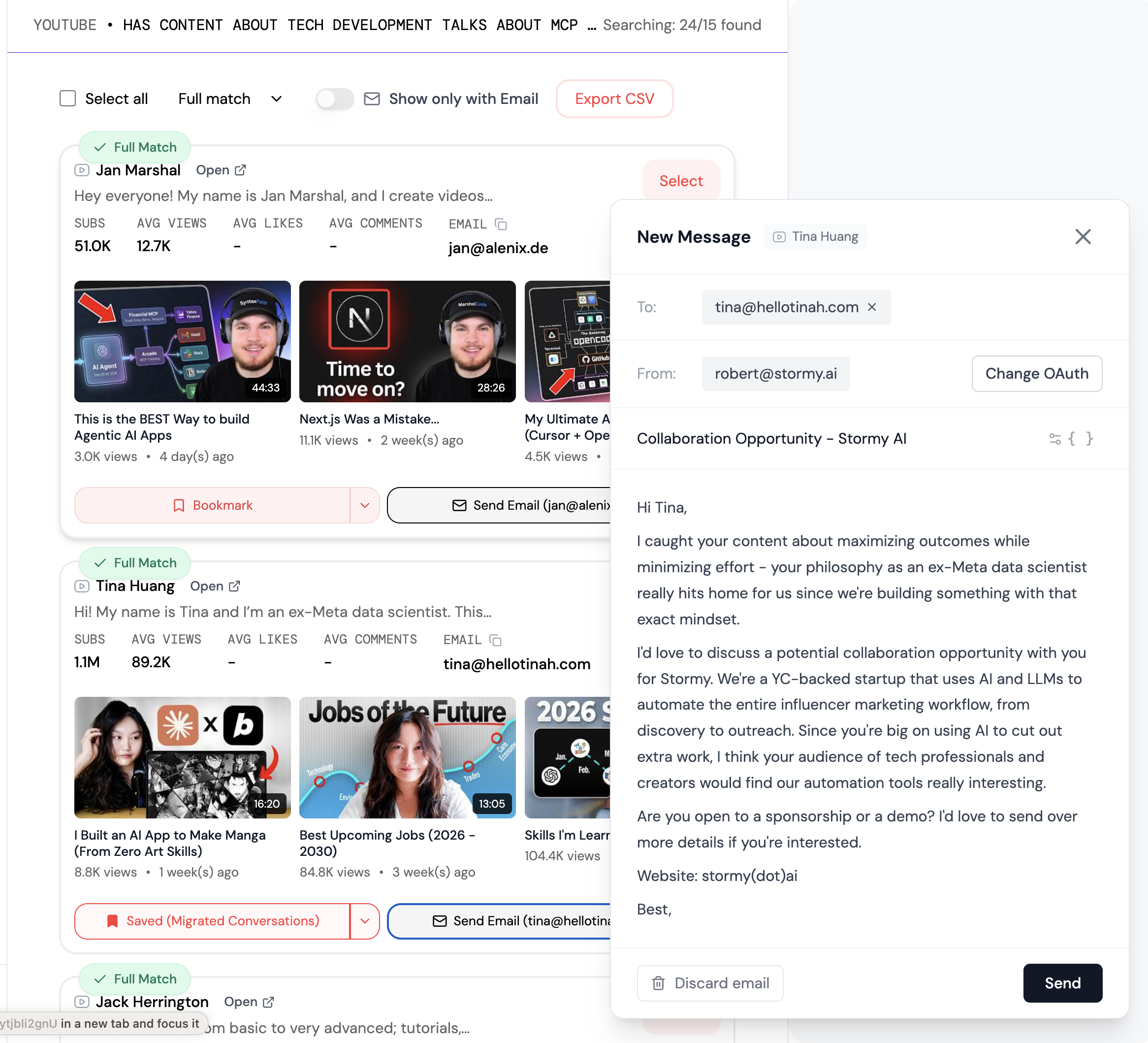
To maintain this velocity, your tech stack should be modern and automated. Tools like Cursor for AI-powered coding and Vanta for automated security compliance help small teams perform like enterprise giants. When it comes to growth, you need an outreach engine that matches your shipping speed. Using Stormy's AI outreach and email capabilities, you can set up an autonomous agent that discovers and contacts potential users and contributors every day while you sleep, ensuring your community continues to grow as fast as your codebase.
A critical part of the saas product strategy is turning excitement into product momentum. Participating in events like Hacktoberfest can generate hundreds of contributions and thousands of stars, which serve as social proof for potential customers. By shipping in public and sharing your progress on social media, you invite users to be part of the journey, turning them from mere customers into brand advocates.
The 'Successor' Mindset: Positioning as the Natural Evolution
The most successful disruptors don't just position themselves as 'another alternative'; they position themselves as the natural successor to the old way of doing things. This mindset shift is vital for your competitive analysis for startups. You aren't just fighting for a piece of the pie; you are claiming that the old pie is stale and you are the fresh replacement. Papermark explicitly branded itself as the 'open source successor to DocSend,' which immediately told the market exactly what they were and why they mattered.
To reinforce this positioning, you must provide a seamless transition for users. This includes offering 'one-click' migrations or integrations with the tools they already use, like Stripe for payments or Vercel for hosting. Your goal is to make switching to your open source alternative feel like an upgrade in every sense—better performance, lower complexity, and higher trust.
Managing these growing relationships requires a modern approach to communication. Using Stormy's creator CRM, you can track every interaction with early adopters and influencers who are helping you spread the word. This ensures that as you scale toward your first million in ARR, your relationship management remains as organized and high-quality as your code. The successor mindset is about professionalizing your disruption so that enterprise customers feel as comfortable with your startup as they do with a legacy vendor.
Conclusion: Building Your Disruptive Playbook
Building a successful startup in the shadow of billion-dollar giants is no longer about having the biggest marketing budget; it's about having the best saas product strategy. By identifying sleeping incumbents, leveraging the transparency of the open source alternative model, and relentlessly focusing on reducing complexity for micro-niches, you can build a highly profitable and defensible business.
Remember these key steps for your disruption playbook: First, identify a category where innovation has stalled. Second, build an open core that invites community trust and R&D velocity. Third, reach feature parity quickly using AI-powered tools and then out-ship the competition. Finally, position yourself not as an alternative, but as the inevitable successor. With the right tools and a commitment to building in public, you can turn a weekend project into a million-dollar business that reshapes an entire industry.