In 2026, the era of the bloated, venture-backed software giant is being dismantled by lean, AI-powered specialized agents. We are currently living through the greatest time in history to build a software business because the cost of execution has plummeted while global spending power has reached an all-time high. According to recent Gartner research on agentic AI, the old playbook—raising millions to build a generic tool for a massive market—is being replaced by a more surgical SaaS GTM strategy 2026. Today, the winners are those who identify underserved sub-niches and build the "execution layer" for specific, high-value workflows.
Whether you are a solo founder or a small team, the goal is no longer just "building an app." It is about documenting where money changes hands and using tools like Claude Code to automate the mechanical friction that bogs down traditional businesses. This article outlines a 30-step framework to transition from a broad idea to a cash-flowing startup generating $100k+ in monthly recurring revenue.
"SaaS isn't dying; it's evolving. The venture-backed model is being replaced by cash-flowing AI startups that focus on dominating the sub-niche execution layer."
Step 1: Identify Your Sub-Niche Within a Giant Market
Learn how to use AI tools like Idea Browser to identify profitable niches.
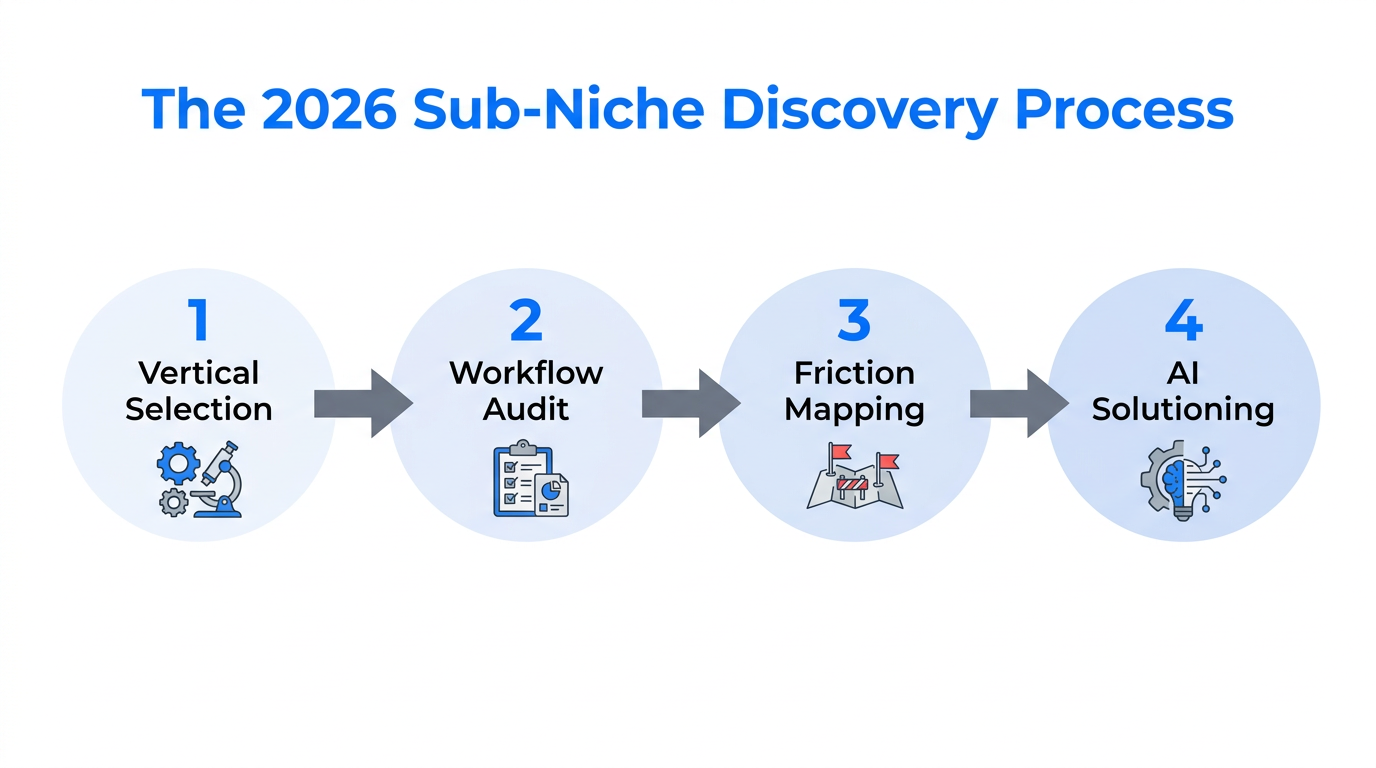
The biggest mistake first-time founders make is trying to build for a "huge market" like Finance, Real Estate, or Healthcare. These markets are already saturated with venture-backed players. To win in 2026, you must drill down into a sub-niche. For example, instead of "Finance," you might target the FIRE (Financial Independence, Retire Early) movement specifically for Gen Z professionals. Instead of "Construction," you might target local roofing companies in high-growth suburban areas.
You can use specialized niche market research tools like ideabrowser.com to find these underserved segments. The goal is to build a cash-flowing startup first. You can always check current SaaS market valuations and raise venture capital later to scale, but your foundation should be built on immediate utility and profitability.
Step 2: Map the End-to-End Customer Workflow
The essential guide to mapping your sub-niche's workflow from end to end.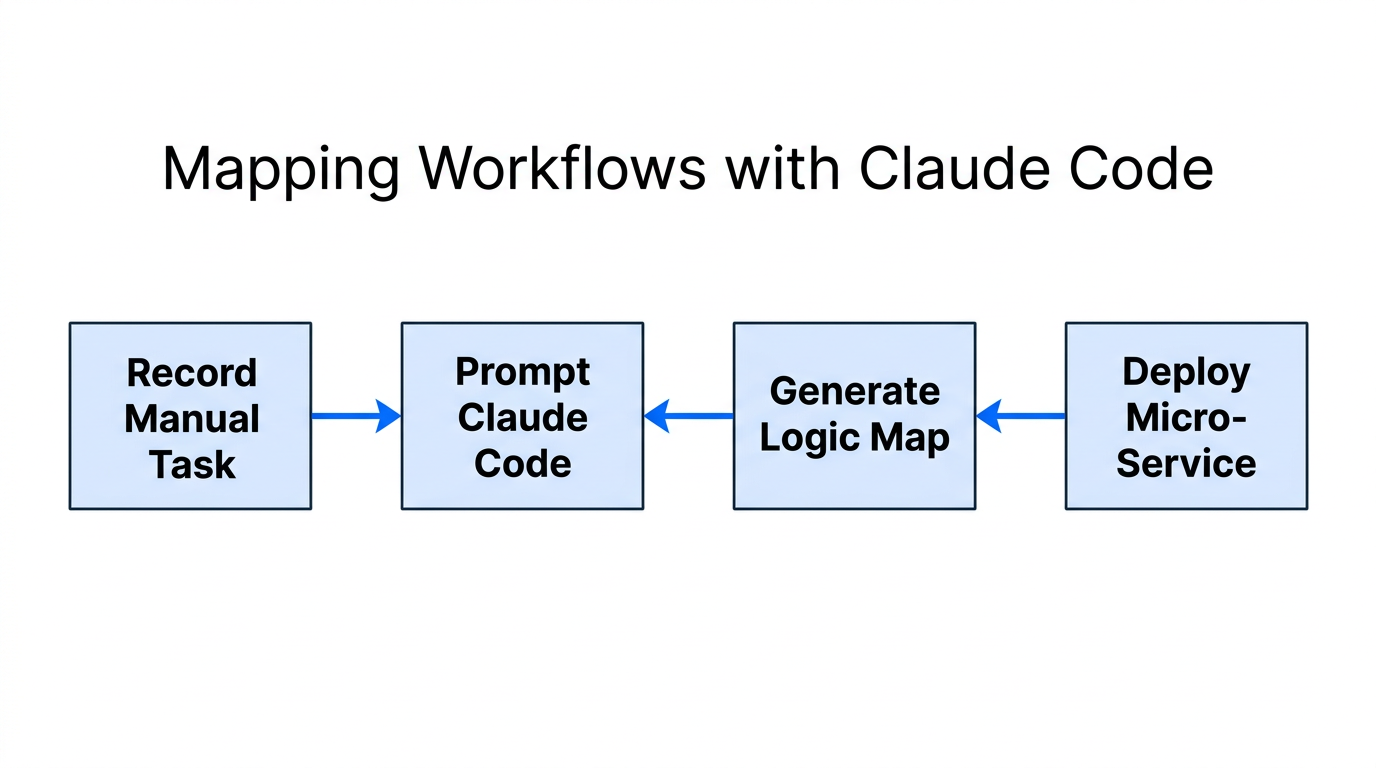
Once you have your sub-niche, you must map their daily workflow with obsessive detail. Take the example of a roofing company owner. Their day looks like this:
- Check new leads (website, Facebook, Google Ads).
- Qualify the homeowner and the job scope.
- Schedule a site visit and drive to the location.
- Estimate materials and write a quote.
- Negotiate price, collect a deposit, and order supplies.
You can use Claude Code workflow automation to simulate these processes or use tools like FigJam to visualize them. The deeper your understanding of these steps, the easier it is to spot where software creates the most leverage. If you don't know the workflow, you can't build the solution. Call 10 business owners in your niche and ask them exactly what they do from 8 AM to 5 PM.
Step 3: The 'Money Hand-Off' Framework
Discover where money changes hands to find high-value automation opportunities.In every business workflow, there are specific points where money changes hands. This might be when a quote is signed, a deposit is collected via Stripe, or materials are ordered from a supplier. These are your high-value wedges. If your software facilitates the actual transaction or the negotiation that leads to the transaction, your churn will be significantly lower.
Identify the repetitive mechanical steps that precede these money hand-offs. Does the owner spend 30 minutes every day manually responding to leads from Meta Ads Manager? That is a mechanical task. If the owner’s time is worth $400 an hour, saving them 50 hours a year is worth $20,000 in pure reclaimed value. Quantifying this cost is the secret to profitable AI business ideas.
| Workflow Step | Type of Task | AI Potential | Value Creation |
|---|---|---|---|
| Lead Qualification | Mechanical | High (AI Agent) | High (Time Saved) |
| Site Visit Negotiation | Judgment | Low (Human-in-loop) | Medium (Conversion) |
| Material Estimation | Calculation | High (Automation) | High (Accuracy) |
| Contract Signing | Administrative | Medium (Orchestration) | Critical (Revenue) |
Step 4: Market Validation Using Low-Cost Google Ads
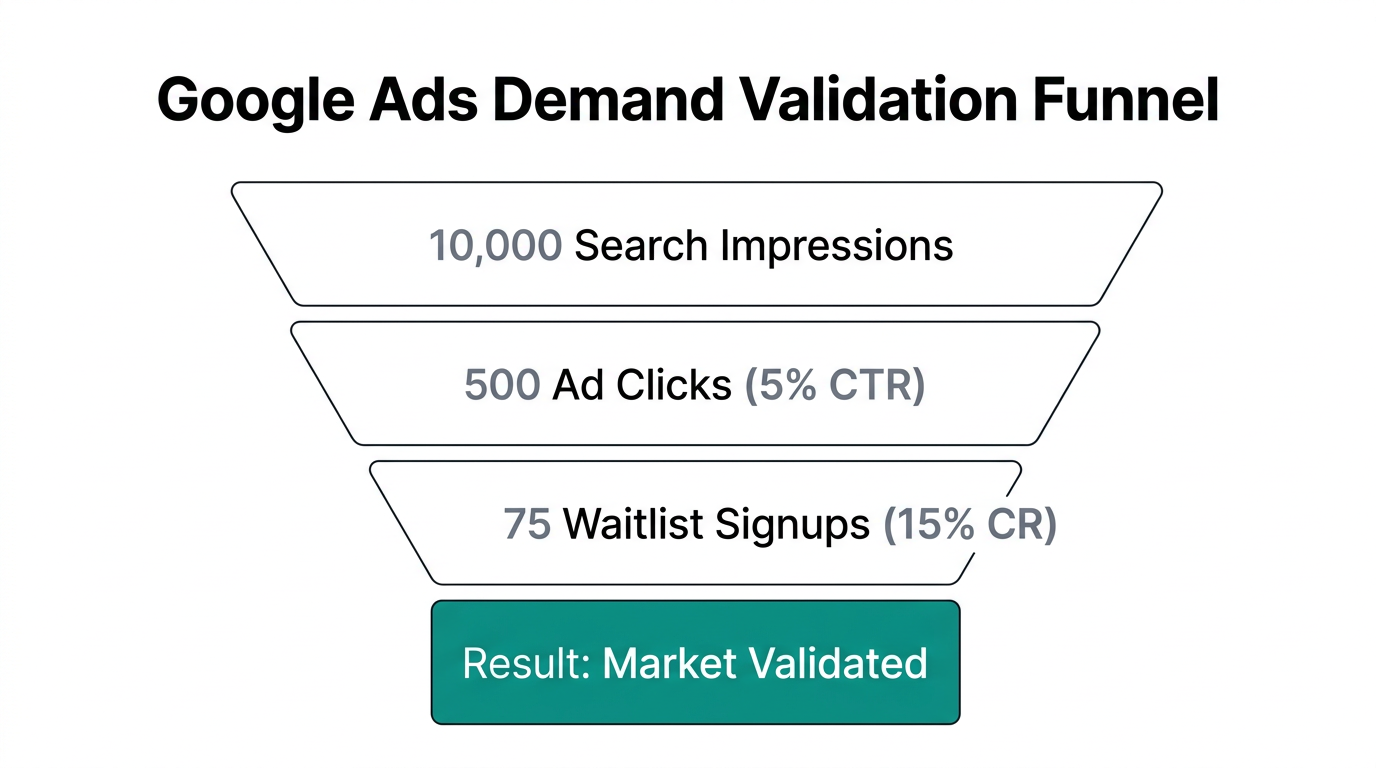
Don't spend six months building a product that nobody wants. Instead, use Google Ads market validation to test your hook. Create a simple landing page on Framer or Carrd and run $500 worth of targeted traffic to it. If you can't get people to click and enter their email address for a "coming soon" or "beta" waitlist, your niche isn't profitable enough.
Capture emails from day one. Your email list is your insurance policy. If social algorithms change or ad costs spike, your list allows you to generate revenue on demand. Use Klaviyo or Beehiiv to nurture these leads while you build the first version of your execution layer.
"Market validation isn't about asking people if they like your idea; it's about seeing if they will part with their attention or their email address before the product even exists."
Step 5: Build a Media Moat with Influencers and Content
Strategies for reinvesting profits into product depth and your distribution engine.In 2026, every SaaS is also a media company. You need to create scroll-stopping content around the workflow you are automating. Study the posts that get the most saves and DMs in your niche. Are people struggling with material costs? Are they complaining about lead quality? Double down on organic angles that convert, then run paid ads on the winners.
To accelerate this, you should leverage the power of creators who already have the attention of your sub-niche. Platforms like Stormy AI allow you to instantly discover influencers who specialize in niche B2B or specialized service markets. Instead of manually searching TikTok or LinkedIn, you can use AI discovery to find the exact voices your potential customers trust, helping you build a distribution moat that is impossible for competitors to copy.
Step 6: Moving from Service to Scalable Agentic Software
The most successful AI startups in 2026 start as service businesses. Perform the workflow manually first. Document every precise step and separate the judgment-based tasks (which require a human) from the mechanical tasks (which can be handled by an AI agent). Once you have a manual process that works, use Claude Code workflow automation to turn those steps into agentic workflows.
Design your agents to complete full tasks, not just provide suggestions. Connect them to real tools using the Model Context Protocol (MCP) so they can access CRMs like HubSpot, send emails via Instantly, or track payments in real-time. This is what we call the orchestration layer—the layer that coordinates multiple agents to deliver a final outcome.
Step 7: Compounding Value and Dominating the Market
As you gather more data and user preferences, your SaaS develops long-term memory. This creates massive switching costs for your customers. To dominate the niche, you must:
- Publish measurable proof: Show exactly how many hours your agents saved or how much extra revenue they generated.
- Turn power users into case studies: Use high-production video content to showcase real-world success.
- Hire operators from inside the niche: Bring in people who speak the language of your customers to handle support and sales.
- Orchestrate multiple agents: Move from automating one task to automating the entire lifecycle of the customer's business.
By the time you reach this stage, you are no longer just a "tool." You are the default execution layer for that sub-niche. You own the workflow, you own the data, and you own the distribution through a mix of high-quality content and targeted influencer partnerships managed via tools like Stormy AI.
Conclusion: Your Playbook for 2026
The future of software is not broad; it is deep and agentic. By focusing on a profitable sub-niche, mapping the workflow with tools like Claude, and validating demand with Google Ads, you can build a highly profitable, cash-flowing business in a fraction of the time it took just two years ago. Stop looking for the "billion-dollar idea" and start looking for the thousand-hour problem. When you automate that problem, you don't just have a product; you have a lifestyle-changing asset.