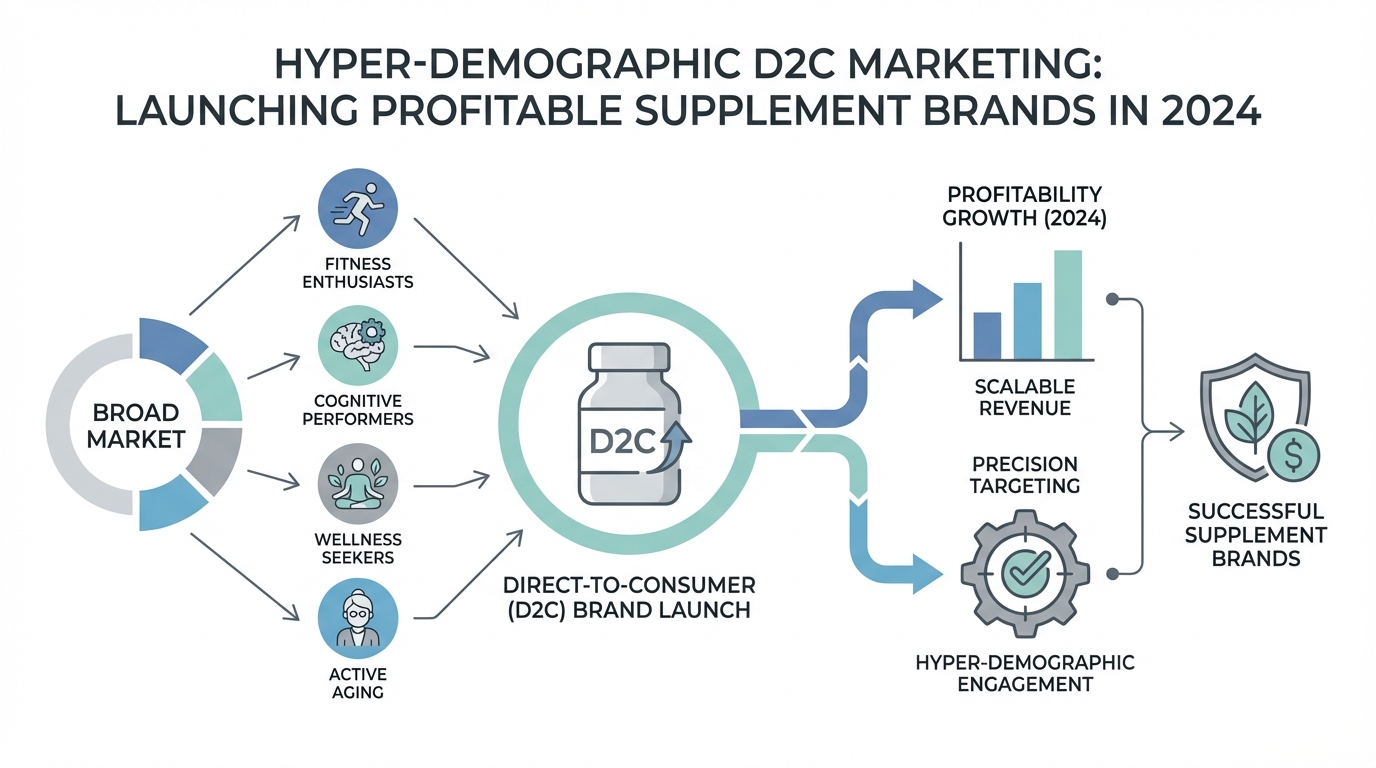
In the early days of direct-to-consumer (D2C) marketing, the goal was mass appeal. Brands aimed for the widest possible net, hoping that a generic product at a competitive price would capture the market. But in 2024, that model is fundamentally broken. High customer acquisition costs and market saturation have made generic products a race to the bottom. The future of profitable ecommerce lies in hyper-demographic marketing—the art of building products so specific to a single group's genetic, cultural, or lifestyle profile that the marketing becomes effortless. By identifying profitable supplement niches and executing a precise customer acquisition strategy, entrepreneurs can build high-margin brands that ignore the generic competition entirely.
The Centrum Silver Lesson: The Power of Specificity
To understand the current shift in D2C brand strategy, we must look at the legacy success of the pharmaceutical giant Centrum. For years, Centrum was just a daily multivitamin. Then they launched Centrum Silver. It wasn't a revolutionary new chemical discovery; it was a demographic pivot. By labeling a product specifically for the "over 50" crowd, they didn't just capture a segment—they gained massive pricing power. People are inherently willing to pay a premium for a product that says, "This is specifically for you."
When a product is hyper-targeted, it moves from being a commodity to a solution. In the supplement and skincare world, demographic-specific products often command 100% higher price points than their generic counterparts. This is the foundation of niche ecommerce ideas that actually scale: you aren't selling a vitamin; you are selling a personalized biological optimization tool. As experts at Bootstrap Giants often point out, the most underserved founders are often those who haven't yet looked at the unique problems within their own specific communities.
Identifying Lipid Profiles and Genetic Niches

One of the most compelling case studies for hyper-targeted marketing in 2024 is the South Asian multivitamin. If you examine the genetic lipid profiles of South Asian men, research shows consistent trends: low Vitamin D3, high LDL (the "bad" cholesterol), and specific heart-health vulnerabilities. These aren't just medical data points; they are a D2C brand strategy waiting to happen.
South Asians represent one of the highest diaspora income groups in the United States, yet most are still buying generic multivitamins that aren't formulated for their specific glucose or heart health needs. By creating a brand like "Masthee"—a hypothetical supplement specifically for this demographic—you create an immediate emotional and biological connection. You aren't competing with the generic bottle at the grocery store; you are providing the only product on the market designed for their specific genetic profile. This same logic applies to dozens of other groups, from specific skincare needs for East African women—utilizing traditional ingredients like Qasil—to digestive aids tailored for specific ethnic diets.
The 1-Week MVP: Speed Over Perfection

Many entrepreneurs stall because they believe they need a custom-formulated product and a laboratory before they can launch. This is a mistake. To validate niche ecommerce ideas, you need to test the market first. Here is the playbook for launching a 1-week MVP:
Step 1: White-Labeling
Don't spend months on a proprietary formula. Find a third-party manufacturer, such as NutraScience Labs, that offers high-quality white-label supplements. Slap your demographic-focused brand on a proven, safe formula to test the customer acquisition strategy first.
Step 2: The Landing Page
Build a simple, mobile-optimized landing page using platforms like Shopify. In the world of supplements, desktop traffic is negligible. Focus 100% on the mobile experience, highlighting the specific biological benefits for your target demographic.
Step 3: Rapid Testing
Launch small-scale ads on Meta Ads Manager. Your goal isn't to build a brand yet; it's to see if your target audience clicks and buys. If you can't get traction with a white-label version, a custom formula won't save you.
The Seasoned Pixel Strategy: Why 'Bad' Creative Wins
One of the most counter-intuitive aspects of modern hyper-targeted marketing is what seasoned media buyers call "seasoning the pixel." When you first launch ads on Facebook Ads, the algorithm doesn't know who your customer is. If you start with high-production video or "perfect" creative, you might get clicks from people who just like the video, rather than people who want the product.
The strategy is to use basic, static, even "bad" creative for the first 30 days. You want a very clear, benefit-driven image that only your specific demographic would care about. If an ad looks like a polished commercial, everyone might click it. If it looks like a specific health warning or a targeted solution for South Asian heart health, only the right people will click. This sends a high-quality signal to the Meta Pixel, training the algorithm to find more people exactly like your buyers. Once the pixel is "seasoned" with at least 100 conversions, you can then scale up with high-quality video and User Generated Content (UGC).
The Math of Scaling: Achieving First-Order Profitability
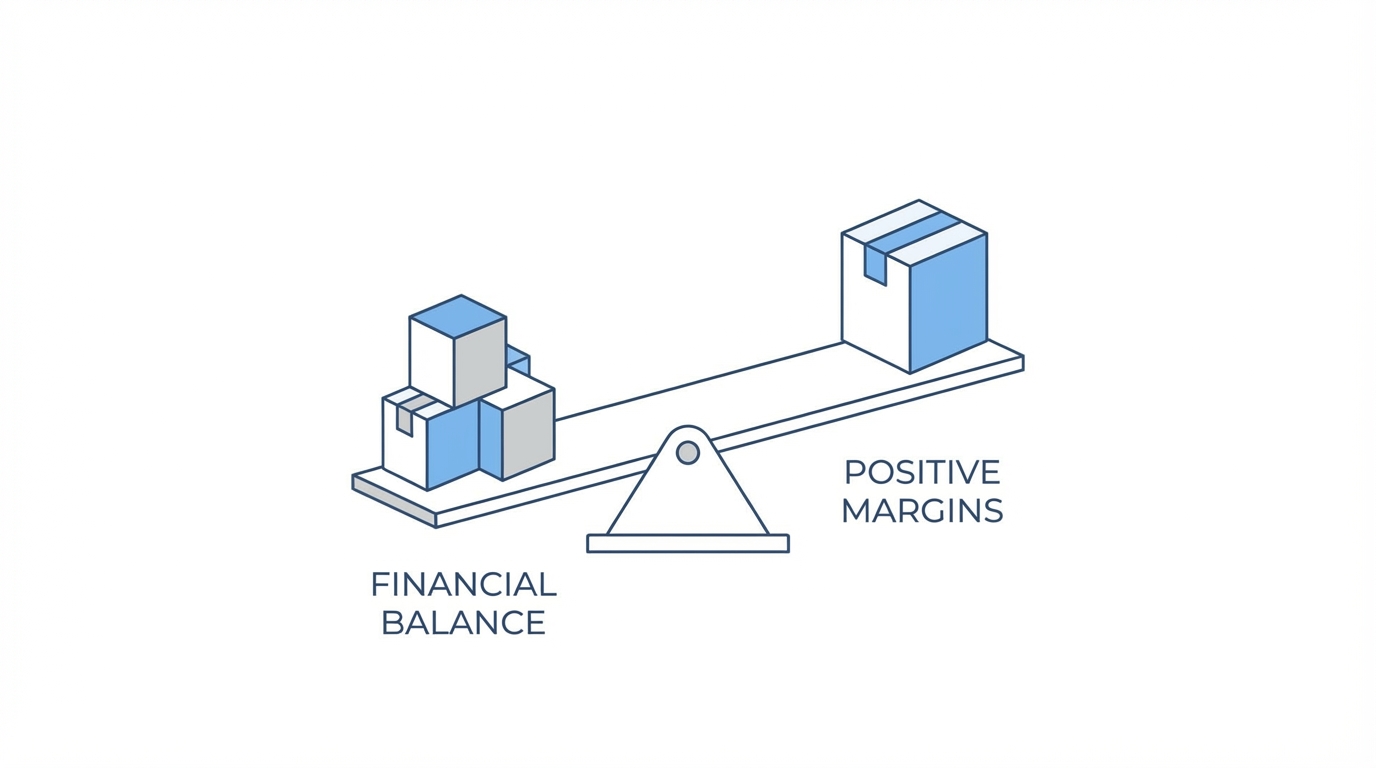
In the profitable supplement niches of 2024, you cannot rely on "lifetime value" (LTV) to save a bad business model. You must aim for first-order profitability. This requires disciplined math and a high-margin product. If you are selling a premium, hyper-targeted supplement for $100, your gross margins should be around 70%, leaving you $70 in profit before marketing costs.
To scale sustainably, your Cost Per Acquisition (CPA) target should be around $50. This gives you a 2x Return on Ad Spend (ROAS) and keeps $20 in your pocket for every single new customer. According to industry benchmarks, maintaining this efficiency is the key to scaling. If you can't hit these numbers at a small scale ($50-$100/day in spend), you should not scale. Use tools like Boring Marketing to refine your SEO and organic reach while you tweak your creative hooks to bring that CPA down.
Scaling with AI-Powered Creator Discovery


Once you have seasoned your pixel and validated your niche ecommerce ideas, the next lever for growth is User Generated Content. People trust other people who look and live like them. Finding these specific creators manually is the bottleneck that kills most D2C brands. This is where modern tools change the game. Instead of browsing hashtags for hours, D2C brand strategy now involves using AI-powered engines to find the perfect match.
For example, platforms like Stormy AI allow you to search for creators across TikTok, YouTube, and Instagram using natural language. You can search for "South Asian health influencers in London with high engagement" and instantly get a vetted list. This allows you to source authentic UGC that speaks directly to your hyper-niche audience, further driving down your CPA and reinforcing the demographic-specific nature of your brand.
Building a Long-Term Moat in Niche Ecommerce
Launching is just the beginning. To build a lasting brand, you must move from white-labeling to proprietary formulations. Work with medical professionals to create a blend that truly serves the unique needs you've identified. Use platforms like The Org to research competitors and team structures that have successfully navigated the transition from a small D2C shop to a major category player.
The ultimate moat in the supplement world isn't just the formula; it's the community and the trust you build with an underserved demographic. When you provide a solution that the "Centrums" of the world have ignored, you earn a level of customer loyalty that generic brands can never buy. By combining hyper-targeted marketing with a disciplined customer acquisition strategy, you aren't just launching a product—you're owning a niche.
Conclusion: Your Launch Checklist
The road to a profitable supplement brand in 2024 is paved with specificity. Don't be afraid to be "too small" in your targeting; the internet is vast, and a dedicated niche of 100,000 people is a nine-figure opportunity. Focus on identifying a genetic or cultural lipid profile that needs a solution, validate it with a 1-week white-label MVP, and season your pixel with disciplined, targeted ads. Once the math works, double down on UGC and proprietary blends. The tools for discovery, from Google Ads to influencer discovery platforms like Stormy AI, are more powerful than ever. It's time to stop marketing to everyone and start solving for someone.