Howard Marks and the Creator Economy: A Risk-First Approach to Influencer Marketing in 2026
Learn how Howard Marks' risk-first investment framework can stabilize influencer marketing risk management and drive predictable creator ROI in 2026's economy.
In the high-stakes world of digital growth, 2026 has become the year of clinical precision. The era of "spraying and praying" budget at viral sensations is dead, replaced by a sophisticated influencer marketing risk management framework. To navigate this landscape, we look not to social media gurus, but to Howard Marks, the legendary co-founder of Oaktree Capital. Marks built a multi-billion dollar empire by focusing on what others ignore: risk rather than just return. As the creator economy matures, his "risk-first" philosophy provides the ultimate playbook for brands looking to turn volatile social experiments into predictable performance engines.
The Riskiest Thing: The Belief That There Is No Risk
Howard Marks explains how to detect market risks by observing reckless human behavior.
Marks famously noted that "the riskiest thing in the world is the belief that there is no risk." In the context of the creator economy 2026, this manifests as the assumption that a creator with 5 million followers is a "safe bet." History, and Marks’ memos, tell a different story. When every brand is chasing the same top-tier talent, prices are bid up to precarious levels, and the potential for a downward correction in ROI becomes a mathematical certainty. [Source: Market Correction Dynamics]
In 2026, the real danger isn't a campaign that fails; it's a campaign that feels too certain to succeed. When a creator's fees are based on "fame" rather than "function," you are buying into a bubble. Much like the tech bubble of 2000 that Marks predicted, brand building with influencers often falls into the trap of "credulousness over skepticism." Brands often ignore the underlying health of an influencer’s audience in favor of the "shiny object" of high follower counts.
"The risk in the markets comes from the behavior of people. When others are carefree, you should be terrified; when others are terrified, you should be aggressive."
The High-Yield Bond Equivalent: Micro-Creators Over Moonshots
Howard Marks shares his early professional experience transitioning into high-yield bond investing.In the late 1970s, Marks was "banished" to the bond department, where he discovered the power of high-yield debt. While others chased the prestige of blue-chip stocks (the celebrity influencers of their day), Marks found that smaller, "lower-grade" credits were actually safer because they were governed by contracts and predictable yields. This is exactly how smart marketers are approaching TikTok Ads Manager and Meta Ads Manager in 2026.
Instead of betting the entire Q3 budget on a single celebrity "moonshot," modern growth leads are building portfolios of micro-creators. These are the "high-yield bonds" of influencer marketing. They offer contractual, predictable conversion rates and higher engagement because their relationship with their audience is based on utility, not just celebrity status. Research from HubSpot suggests micro-influencers often drive significantly higher engagement than their celebrity counterparts.
| Feature | Celebrity "S&P 500" Creator | Micro "High-Yield" Creator |
|---|---|---|
| Risk Profile | Aggressive / High Volatility | Defensive / Predictable |
| Pricing Basis | Speculative / Fame-based | Performance / Data-based |
| Conversion Rate | Variable (0.5% - 2%) | Stable (3% - 7%) |
| Contractual Yield | Low (High upfront cost) | High (Repeatable ROI) |
By spreading risk across twenty micro-creators instead of one celebrity, you achieve what Marks calls "prudent diversification." If one creator’s content flops, it’s a minor ripple. If your one celebrity partner gets embroiled in a scandal, your entire 2026 strategy burns to the ground.
Building a Clinical, Emotionless Vetting Process
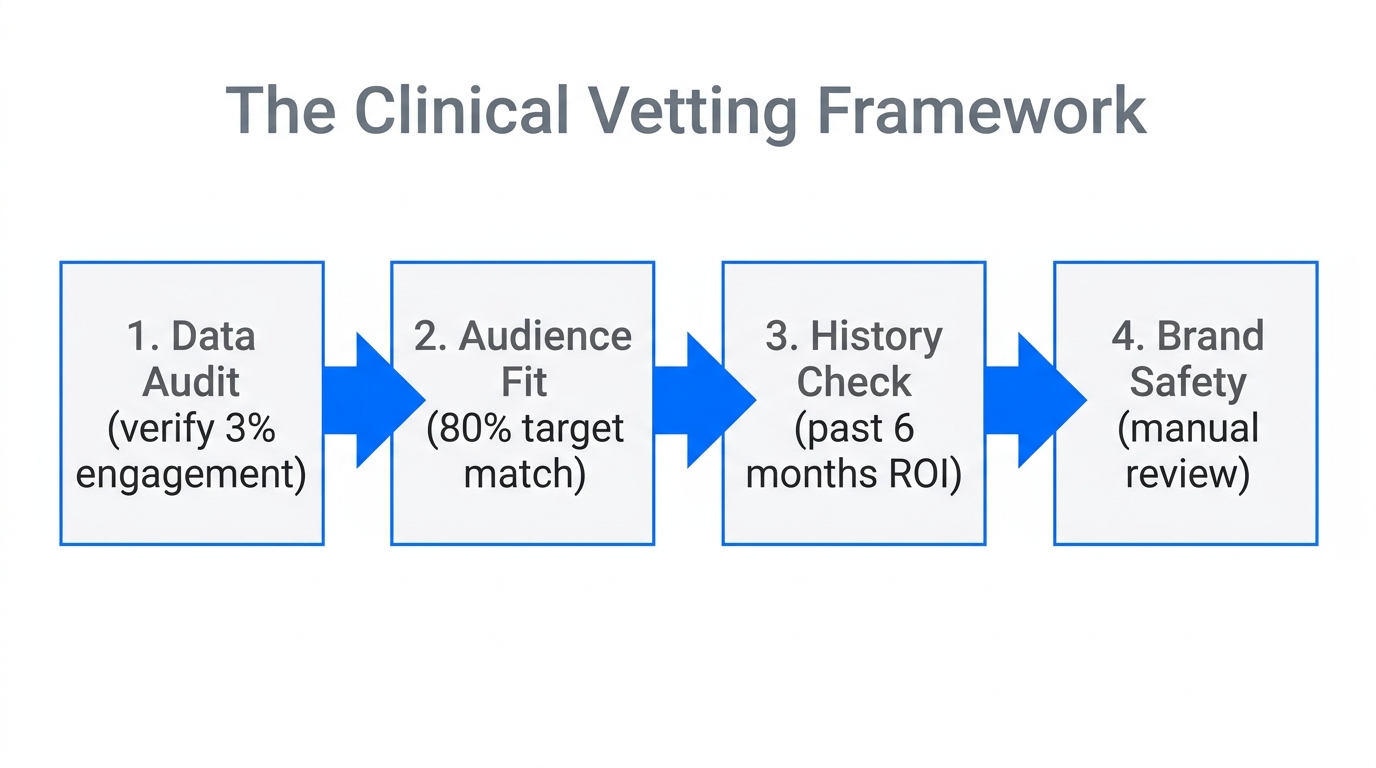
One of Marks’ greatest strengths is his ability to remain unemotional in a heated market. He advocates for being "clinical"—observing the market without succumbing to the "greed and fear" that drives everyone else. In the world of social media analytics 2026, this means ignoring the aesthetic of a creator's profile and looking at the hard data.
To avoid "fame-based" marketing bubbles, brands must implement a vetting process that treats every creator like a potential debt investment. Does the borrower (the creator) have the "collateral" (audience quality) to pay back the "loan" (your marketing spend)? Using data-driven platforms like Stormy AI allows brands to strip away the emotion of a "cool" profile and look at engagement fraud, audience demographics, and historical performance benchmarks.
"You have to be clinical. If you succumb to human nature, it tends to get you to do the wrong thing at the wrong time."
A 2026 Playbook: Rebalancing Your Creator Portfolio
Learn how common sense and portfolio rebalancing help investors navigate changing market conditions.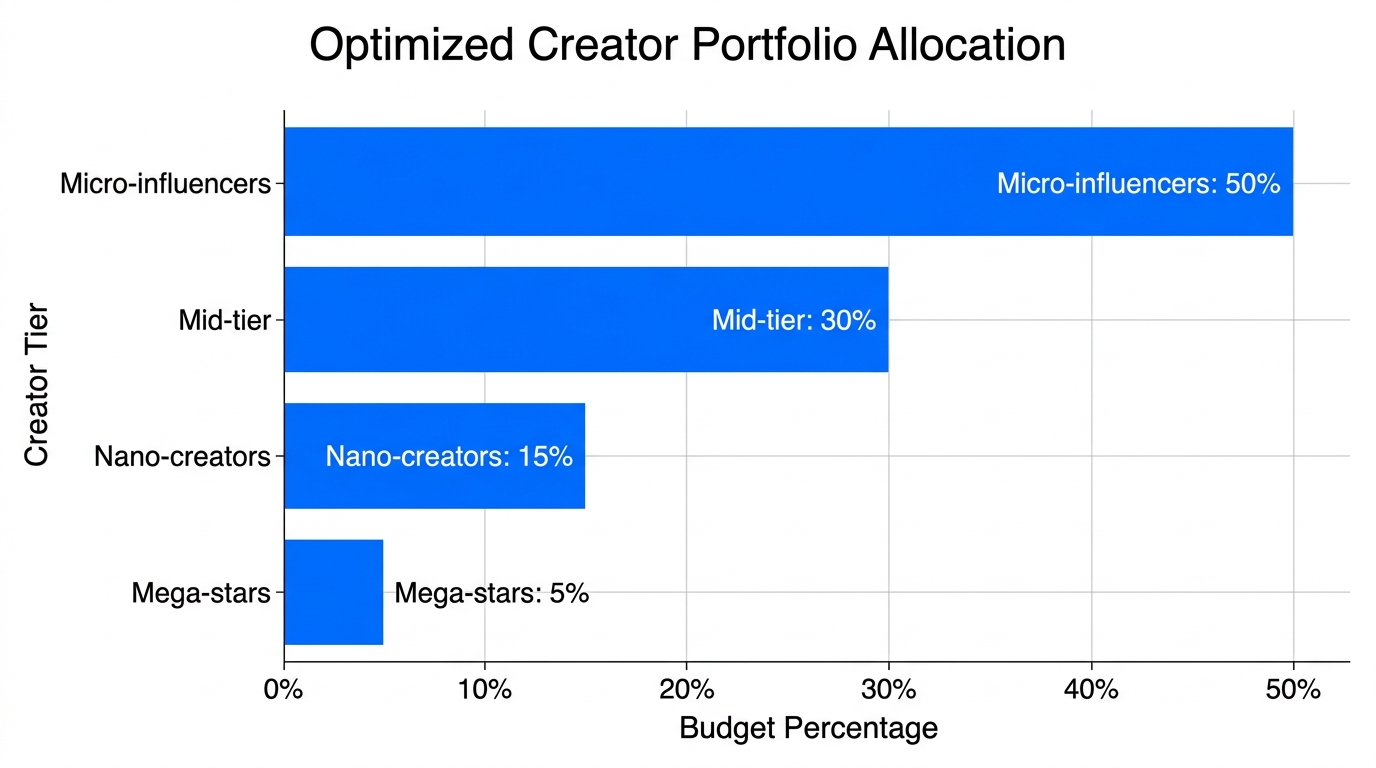
Marks suggests that investors should have an "algorithm to rebalance your position based on relative price." In influencer marketing, this means you shouldn't set your creator roster in stone. You need to constantly move capital away from "expensive" creators whose ROI is dipping and toward "undervalued" creators who are just beginning to see a surge in engagement.
Step 1: Determine Your Risk Posture
Just like a speedometer, identify your aggressive-to-defensive ratio. For a startup in 2026, a 70/30 split between proven performers and experimental "high-upside" creators is often the sweet spot for sustainable growth.
Step 2: Automate the Outreach
Consistency is the enemy of risk. You cannot wait for a crisis to find new creators. Use tools like Stormy AI to set up autonomous agents that source and outreach to creators daily, ensuring your pipeline of new talent is always full, even while you sleep.
Step 3: Analyze the Yield
Connect your campaign data to tools like Google Analytics or Adjust for app-based campaigns. If a creator's CAC (Customer Acquisition Cost) rises 20% above your benchmark for two consecutive months, rebalance that budget immediately into your top 10% performers.
"History does not repeat, but it does rhyme. Patterns of greed and fear recur in every cycle—even the creator economy."
Winning the "Loser’s Game" in Influencer Marketing
Discover why avoiding major mistakes is more important than chasing top-tier performance.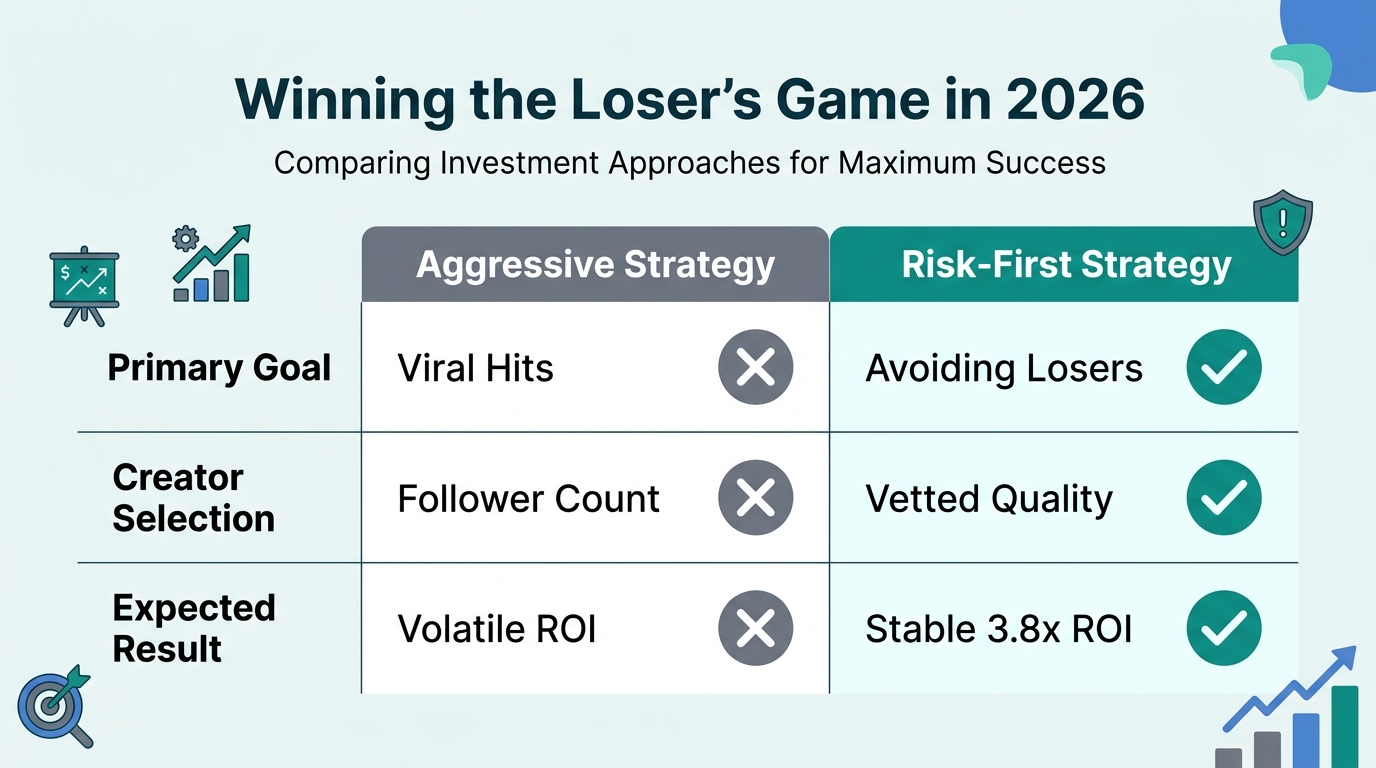
Marks often references the idea that in certain fields, you win not by hitting the most winners, but by avoiding the most losers. This is profoundly true for influencer ROI strategy. A single disastrous, high-budget partnership can wipe out the gains from five successful micro-campaigns. By adopting a defensive mindset—aiming to be "consistently above average" rather than "occasionally great"—you build a brand that survives the volatility of 2026.
When you use a platform like Stormy AI, you are essentially building a "Poor Man’s Guide to Market Assessment" for every influencer you contact. You can see if a creator is "over-subscribed" (working with too many competitors) or if their audience is "frigid" (unresponsive to ads). This clinical approach is how you keep the ball in play and compound your results over the long term, utilizing industry-standard social media benchmarks to guide your decisions.
Conclusion: Investing in Authenticity, Managing for Risk
As we move through 2026, the creator economy is no longer a wild west; it is a mature market that Goldman Sachs predicts will approach half a trillion dollars. This scale demands professional-grade analysis. By adopting Howard Marks' risk-first approach, you can stop gambling on virality and start building a clinical, data-driven engine. Focus on the high-yield bonds of micro-influencers, maintain an emotionless vetting process, and always be ready to rebalance based on real-time performance data. The goal isn't just to go viral—it's to build a sustainable legacy that grows year after year, regardless of market cycles.