In the high-stakes world of 2026 digital growth, the most dangerous place a brand can be is exactly where everyone else is. As we navigate a landscape dominated by AI-generated content and saturated ad auctions, the traditional playbooks for growth marketing strategy are yielding diminishing returns. To survive, we must look beyond the marketing silo and adopt the mindset of one of the world’s most successful distressed debt investors: Howard Marks.
Howard Marks, the co-founder of Oaktree Capital, built a multi-billion dollar empire by mastering the art of the "contrarian" move. His philosophy is deceptively simple: you cannot perform better than the market if you are doing exactly what the market is doing. In 2026, where every brand is chasing the same viral TikTok trends and bidding on the same keywords in Google Ads, the true alpha lies in identifying mispriced attention. This guide applies Marks' legendary investment principles to marketing budget allocation and distribution, helping you find the "high-yield bonds" of the marketing world.
The Market Cycle: Why Most 2026 Strategies Fail
 9:30
9:30Marks famously noted that "history does not repeat, but it does rhyme." In marketing, cycles move faster than in finance, but the mechanics are identical. A new channel emerges (think LinkedIn in 2022 or TikTok Shop in 2024), early adopters see massive ROI, the "consensus" realizes the opportunity, and suddenly, the customer acquisition cost trends skyrocket. By the time a strategy becomes "best practice," it is often already in a bubble.
To implement a contrarian marketing strategy, you must first recognize where we are in the cycle. Marks argues that risk doesn't come from the assets themselves, but from the behavior of the people trading them. In a marketing context, the risk isn't "TikTok" or "Meta Ads Manager"; the risk is the collective behavior of thousands of competitors driving up the bid prices to levels that defy unit economics. If your CAC exceeds your long-term value (LTV), you aren't growing—you're just funding the ad platforms' record profits.
"The riskiest thing in the world is the belief that there's no risk. When other marketers are carefree, you should be terrified."
Applying the 'P/E Ratio' Logic to Social Media Platforms
3:51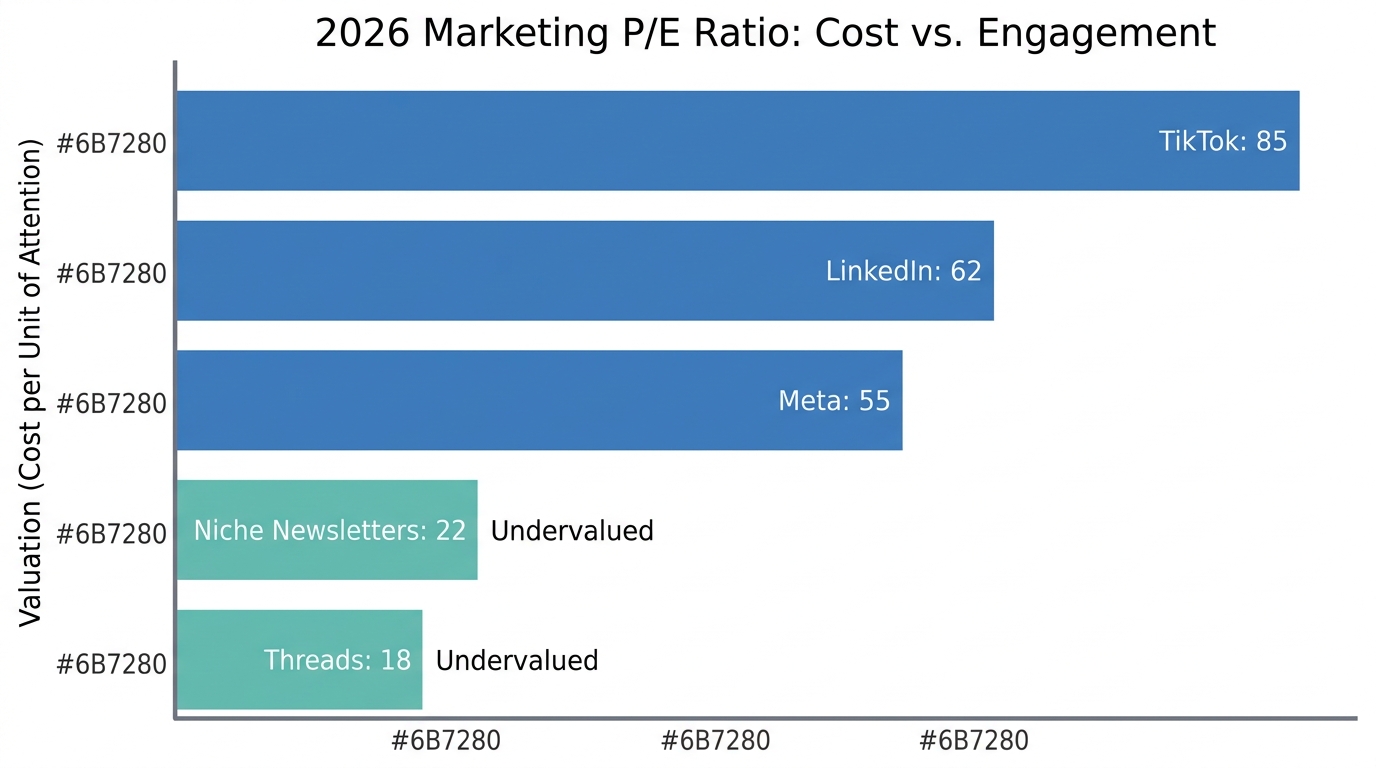
In finance, the Price-to-Earnings (P/E) ratio tells you how much you are paying for every dollar of profit. If the P/E of the S&P 500 is 24, but the historical average is 16, you are likely overpaying for future returns. We can apply this same logic to marketing distribution 2026. Think of your "Price" as the CPM (cost per mille) and your "Earnings" as the conversion intent of that specific audience.
When a platform like Meta Ads Manager or TikTok becomes the default for every startup, the "P/E ratio" of that attention expands. You are paying a premium for the safety and ease of the platform. A contrarian marketer looks for "low P/E" channels—places where the audience is underserved, and the cost to reach them hasn't yet caught up to their potential value.
| Platform Type | Current 'P/E' (2026) | Market Sentiment | Contrarian Move |
|---|---|---|---|
| Mainstream Video (TikTok/Reels) | High | Max Greed / Consensus | Focus on UGC depth over high-frequency spend. |
| Professional Networks (LinkedIn) | Moderate-High | Overcrowded | Niche newsletters or targeted direct outreach. |
| Niche Creator Communities | Low | Underestimated | Scale with AI-powered discovery tools. |
| Legacy Search (Keywords) | Extremely High | Default / Safety | Pivot to ASO and influencer-led search. |
The 'Fewer Losers' Approach to Marketing
30:01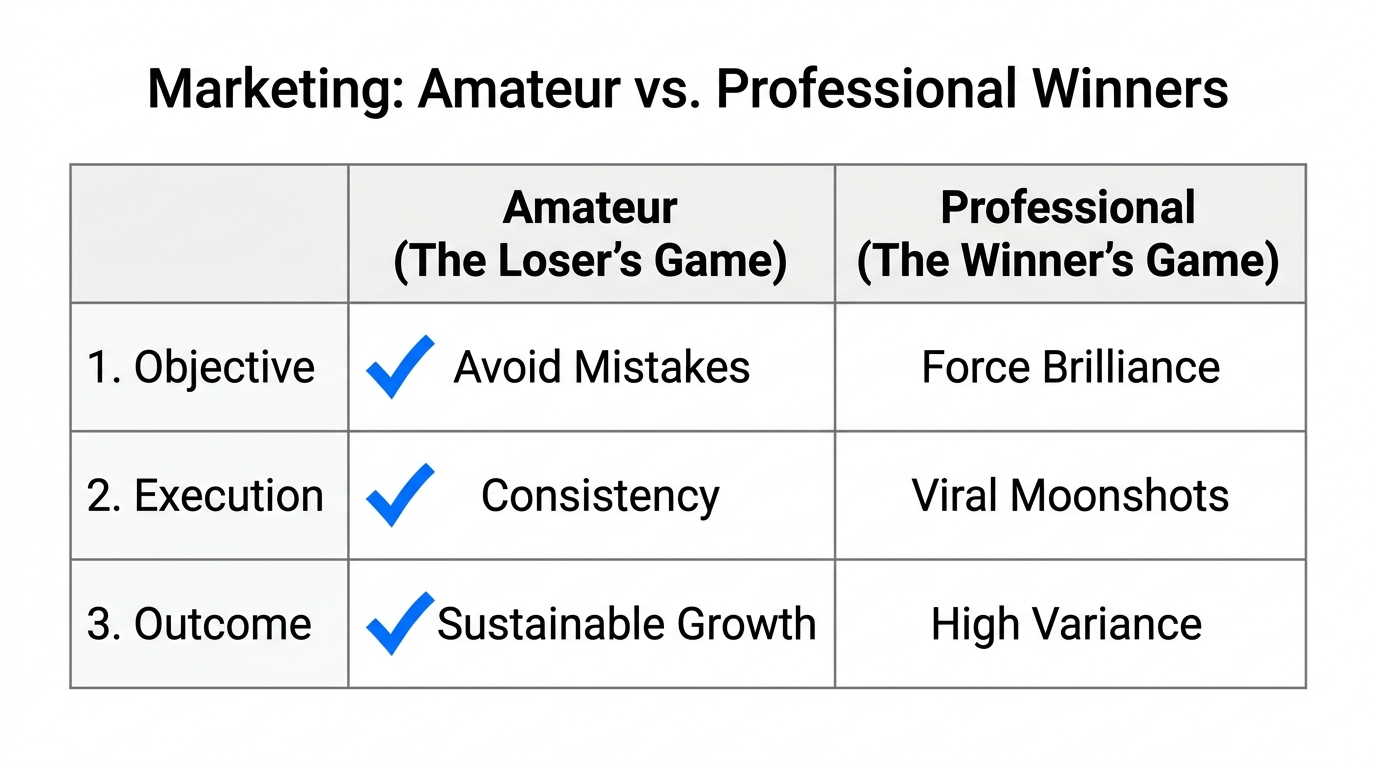
One of Marks' most profound insights comes from an essay by Charlie Ellis titled "Winning the Loser's Game." In amateur tennis, points aren't won; they are lost by the player who makes the most unforced errors. Marks applied this to Oaktree by focusing on "avoiding losers" rather than "hitting winners."
In growth marketing strategy, we are often obsessed with finding the one "viral outlier" that will skyrocket our brand. We spend 80% of our time and budget on high-risk experiments. Marks would argue the opposite: the most profitable marketing strategy is the one that avoids the most failed campaigns. By eliminating wasteful spend on "me-too" strategies that don't fit your brand, you naturally rise to the top of your industry's performance rankings.
For example, if you manage creator relationships manually in Notion or spreadsheets, you are prone to "unforced errors": missing follow-ups, overpaying for fake followers, or failing to track post-performance. Using an AI-powered system acts as your risk management layer, vetting creators for fraud before you spend a single dollar. It’s not about finding the next MrBeast; it’s about ensuring you don't hire ten creators who have 50% bot audiences.
"If you can do well for 14 years in a row and avoid the tendency to shoot yourself in the foot in a bad year, you can pop up to the top."
Finding Undervalued Assets: The Creator 'High-Yield Bond'
15:53Marks describes bonds as a contract where the borrower is incentivized to pay you back. In 2026, the closest thing to a "high-yield bond" in marketing is UGC (User-Generated Content) from mid-tier, specialized creators. Unlike celebrity influencers (the "blue-chip stocks" with high P/E and low growth), mid-tier creators have a contractual obligation to deliver specific content that drives app install campaigns and e-commerce conversions.
Because these creators are often mispriced—many brands still value them based on follower count rather than engagement quality—there is an opportunity for a high-yield return. By using an AI-powered search engine to discover creators on Stormy AI, brands can find those who have high engagement but haven't been "discovered" by the mass market yet. This is the equivalent of buying a bond with an 8% yield while the rest of the market is fighting over a 2% return on the S&P 500 of marketing (generic Facebook ads).
Playbook: Auditing Your 2026 Distribution Mix
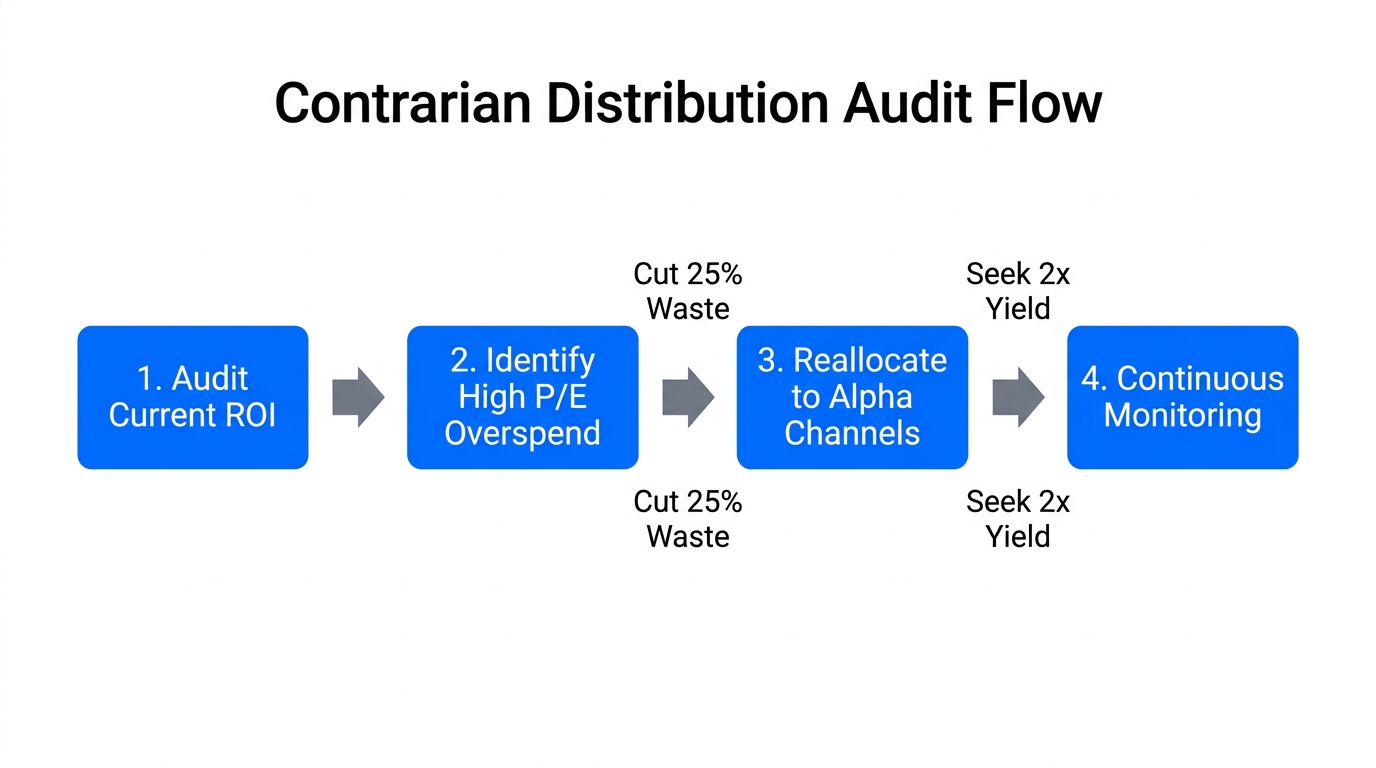
To avoid "chasing the S&P" of marketing trends, you must perform a clinical audit of your marketing budget allocation. Howard Marks suggests that we never know where we are going, but we should know where we are. Follow these steps to audit your 2026 strategy:
Step 1: Calculate Your Channel P/E
Look at your top three acquisition channels. What is the current CPM compared to 12 months ago? If the cost has risen by 30% but your conversion rate has stayed flat, you are in a crowded trade. It may be time to "rebalance" your portfolio by moving budget into emerging areas like TikTok Shop or LinkedIn newsletters via Beehiiv.
Step 2: Identify Unforced Errors
Where are you losing money due to poor execution? If your UGC creator sourcing is manual, your "cost of operations" is likely eating your margin. Automate the discovery and outreach process. Platforms like Stormy AI allow you to set up autonomous AI agents that handle the "grunt work" of influencer marketing while you sleep, reducing the risk of human error.
Step 3: Measure 'Popularity vs. Frigidity'
Marks uses a "Poor Man's Guide to Market Assessment" to see if a market is overheated. Apply this to your niche: are all your competitors running the exact same ad creative? Are the same five influencers being tagged by everyone in your category? If so, that "asset" is too popular. Look for the "frigid" areas—perhaps older demographics on YouTube or hyper-niche professional communities on X/Twitter.
Risk Management: The Defensive Marketing Posture
Marks emphasizes that being aggressive is only half the battle; a defensive posture is what ensures long-term survival. In marketing, a defensive posture means diversifying your marketing distribution 2026 so that a single algorithm update (like an Apple iOS change or a TikTok ban) doesn't wipe out your entire business.
Instead of putting 100% of your budget into "aggressive" growth channels, allocate a portion to "defensive" assets. This includes building an owned email list using tools like Klaviyo and investing in App Store Optimization (ASO) using data from Sensor Tower. Following official Apple documentation for optimization ensures these assets provide a baseline of consistent traffic that protects you when the paid markets get volatile.
"Investing is a lot like life. You have to be able to act without emotion, or at least act as if you don't have a lot of emotion."
Conclusion: The Contrarian Advantage
In 2026, the most successful marketers won't be the ones with the biggest budgets, but the ones with the most disciplined marketing budget allocation. By applying Howard Marks' logic—zigging when others zag, focusing on "fewer losers," and identifying low P/E attention—you can achieve outsized growth while your competitors are stuck fighting for scraps in overvalued auctions.
The key to this strategy is leverage. You cannot be a contrarian if you are bogged down by manual tasks. AI-powered leverage is needed to discover, vet, and outreach to creators at scale, allowing you to move faster than the market can adjust. Stop chasing the S&P of marketing; start building a high-yield distribution machine that wins by not losing.