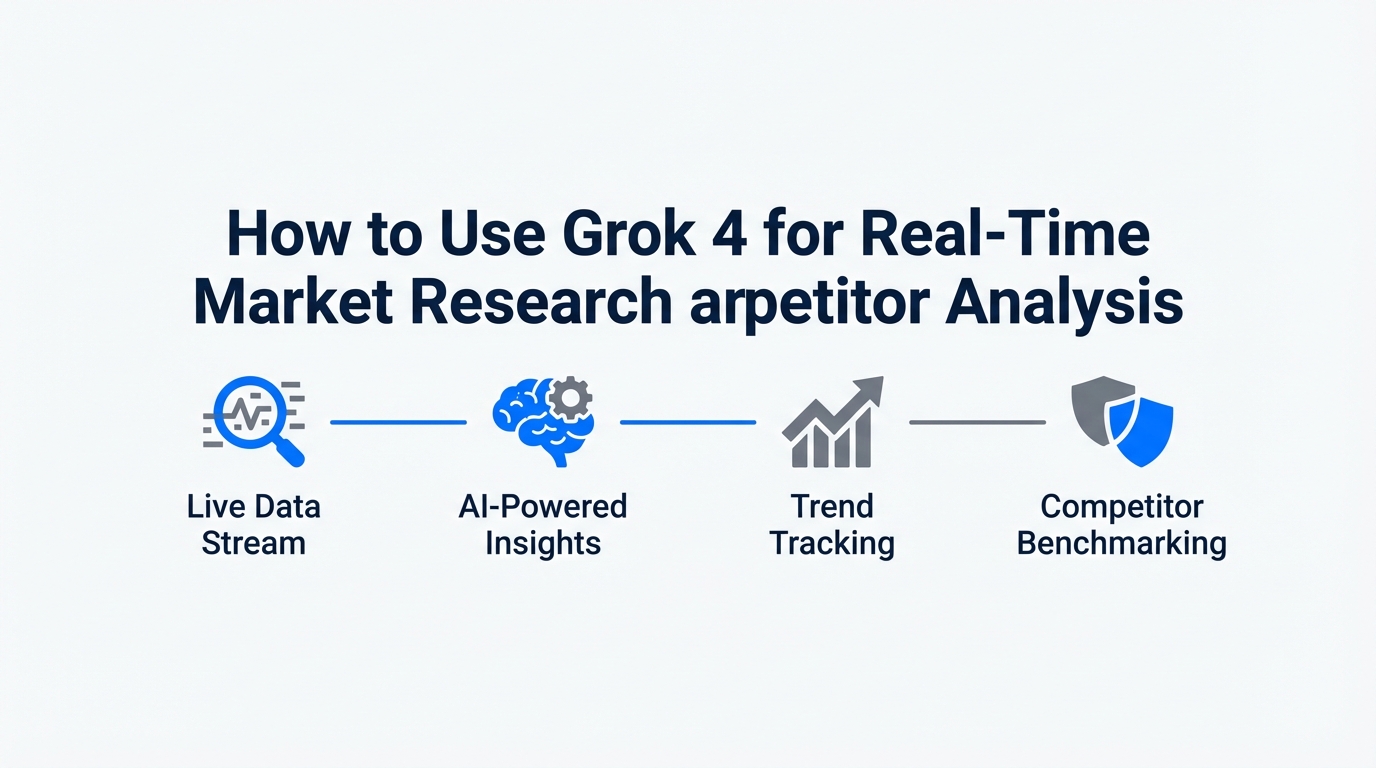
The Grok 4 Edge: Real-Time X Data vs. Static Analysis
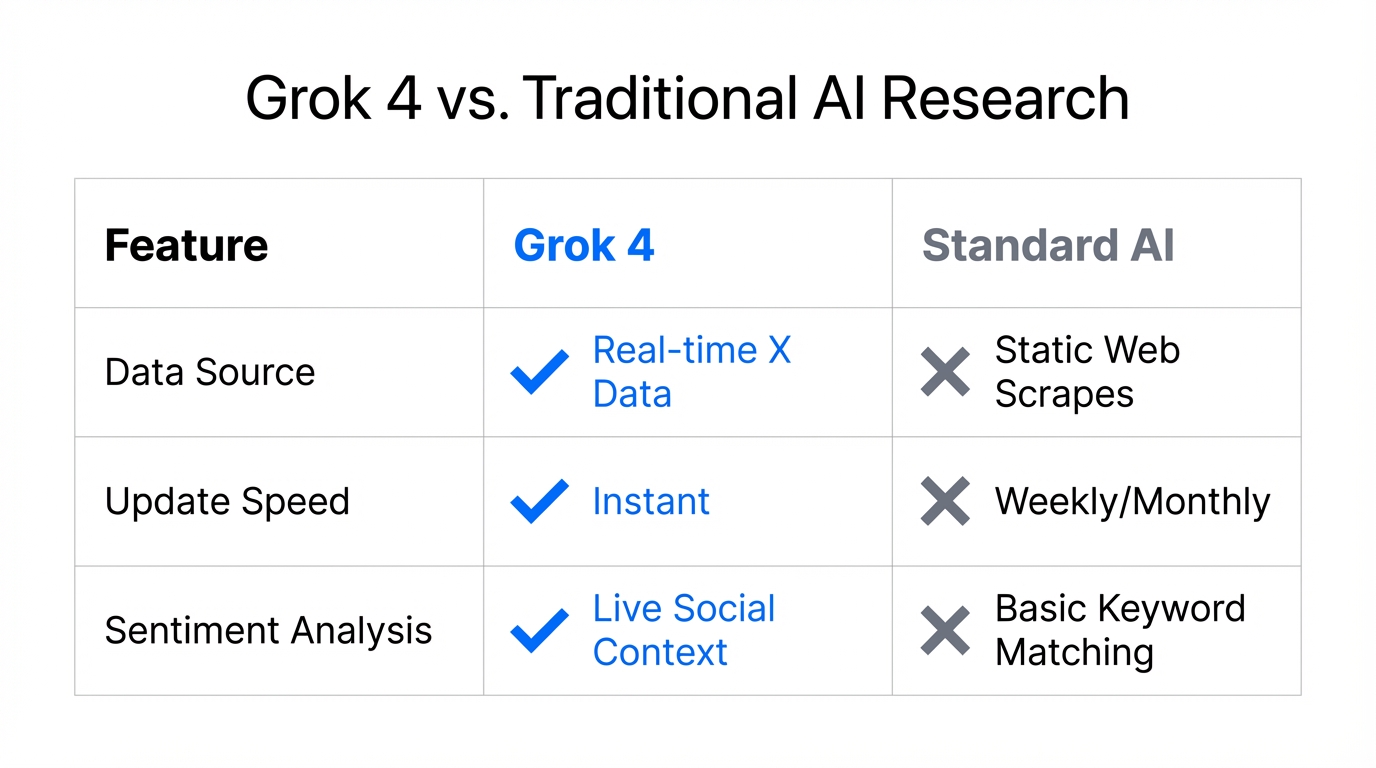
Most AI models, while capable, are restricted by their training cutoff dates or limited web browsing capabilities. Grok 4 changes the competitor analysis framework by allowing you to tap into the world’s most active public conversation. Whether it is a viral complaint about a competitor’s latest update or a sudden surge in interest for a niche productivity hack, Grok 4 captures the sentiment before it ever hits a formal case study. For startups looking to build a startup growth strategy based on reality rather than assumptions, this is a game-changer.
Setting Up Grok 4 as Your Dedicated Market Research Agent
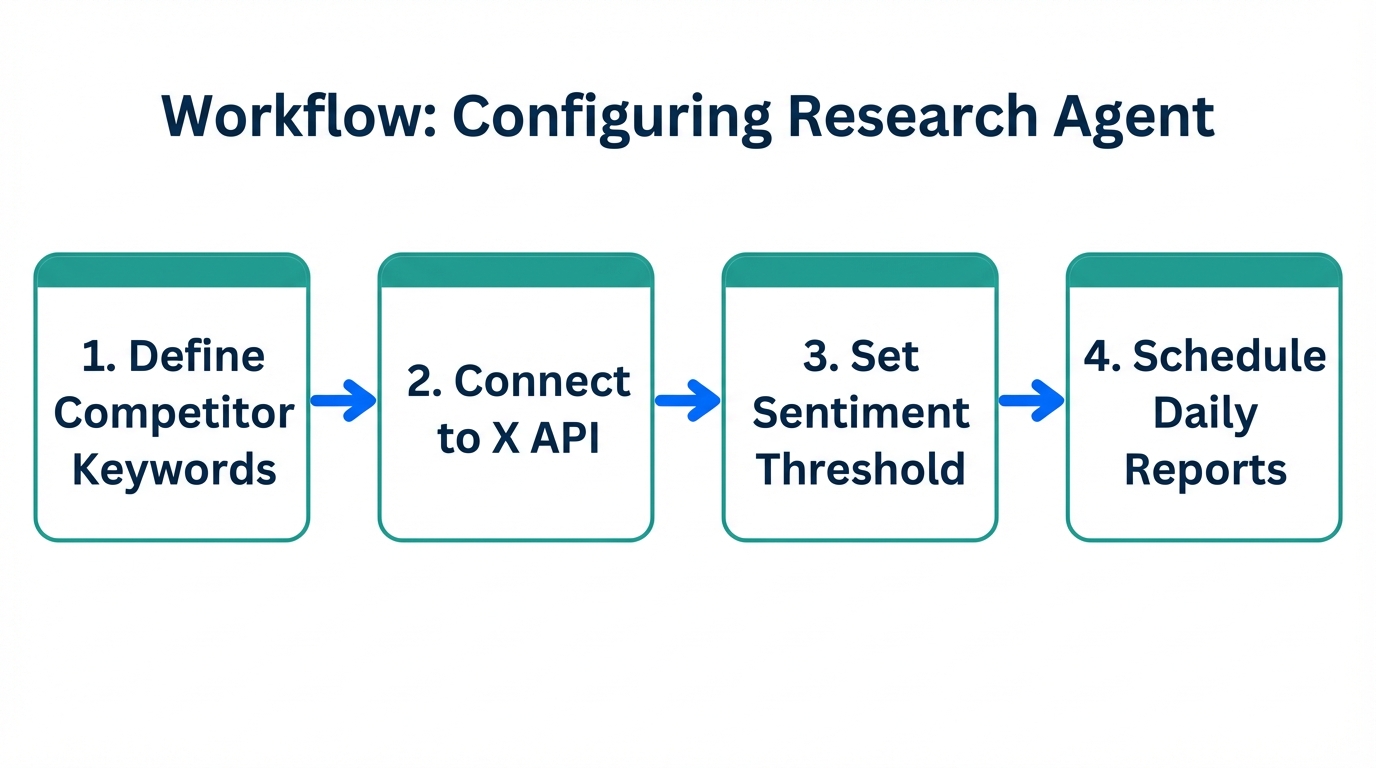
To get the most out of Grok 4, you cannot treat it like a basic chatbot. You must frame it as a market research agent. This involves using specific prompt architectures that trigger its search capabilities and multi-agent reasoning. Start by defining the role and the specific data sources you want it to prioritize. For instance, when analyzing a niche like productivity software, your prompt should explicitly command the model to "Search X and the web" to ensure it captures both formal articles and informal social sentiment.
"The biggest hack for Grok 4 is simple: explicitly ask it to pull data from X. This is where its unique power lies compared to every other LLM on the market."When you ask Grok to act as an agent, it doesn't just return a paragraph of text; it browses, evaluates, and synthesizes. It can look at millions of posts to find specific complaints about tools like Notion or Todoist. In recent tests, Grok identified "Notion slowness" as a recurring viral pain point, suggesting that a streamlined, lightweight interface is a major market gap. By using this AI for market gap analysis, you can design features that solve the exact problems your target audience is screaming about today.
Generating a Competitive Landscape Table
A strategic competitor analysis framework requires structured data. Grok 4 excels at transforming unstructured social noise into clean, actionable comparison tables. By asking for a breakdown of the top players, their pricing, and their weaknesses, you can quickly visualize where your startup can win. Below is an example of the output Grok 4 provides when tasked with analyzing the productivity app market:
| Competitor | Pricing Model | Primary User Pain Points | Untapped Opportunity |
|---|---|---|---|
| Notion | Freemium / Per User | Performance lag, bloat, steep learning curve. | Lightweight, high-speed speed interface. |
| Todoist | Subscription | Lack of visual clarity, overwhelming task lists. | Advanced visual/drag-and-drop planning tools. |
| Linear | Tiered SaaS | Too developer-focused, high barrier for non-tech. | User-friendly project management for creatives. |
This level of detail, generated in under 40 seconds, allows you to bypass the manual labor of scrolling through reviews on G2 or Capterra. Instead, you can focus on the startup growth strategy that matters: building the solution to these documented frustrations.
The 10% Market Share Capture Strategy
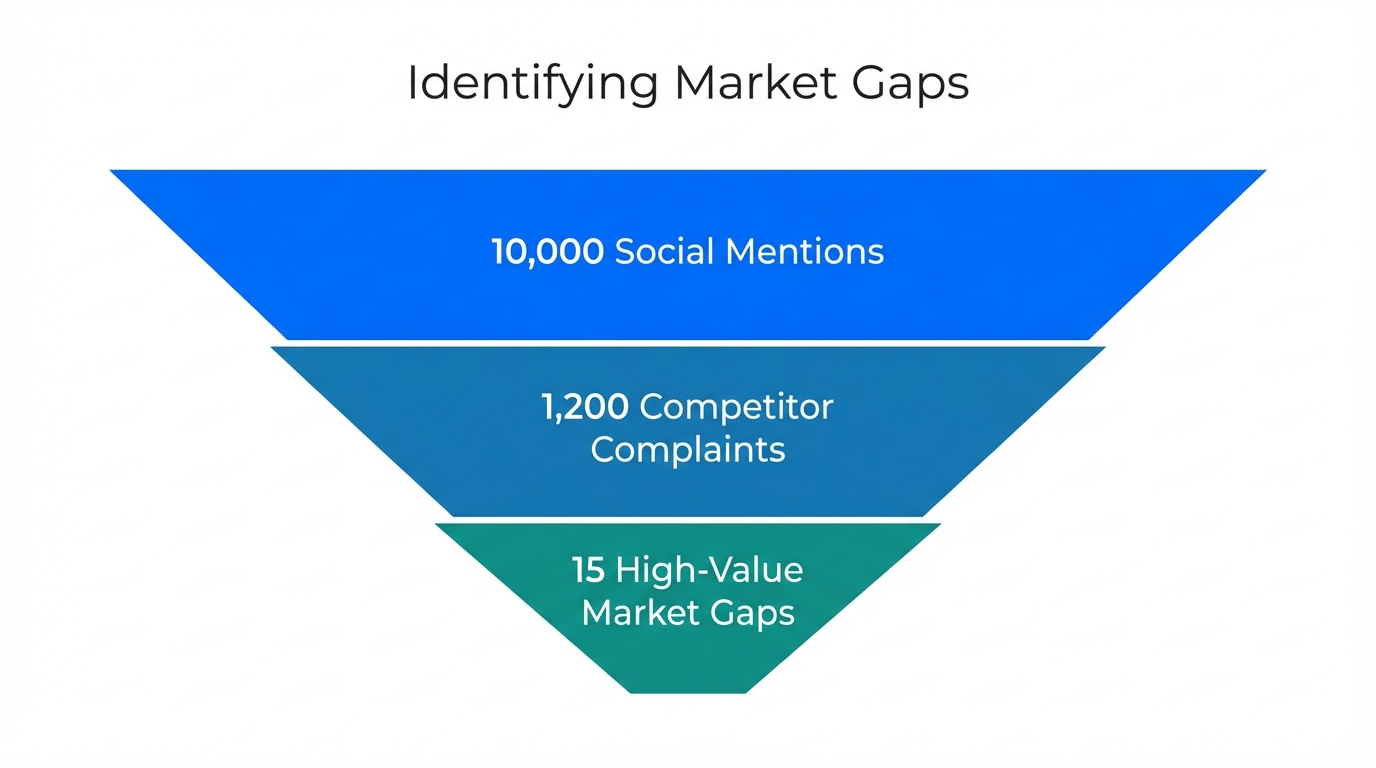
Capturing market share isn't about being 100% better than everyone; it’s about being 10% better in a specific, high-friction area. Using Grok 4’s real-time AI market intelligence, you can implement a step-by-step playbook to identify these winnable battles. First, use sentiment analysis to quantify the Net Promoter Score (NPS) of your competitors. Grok can analyze thousands of mentions to give you a rough NPS, highlighting exactly where loyalty is brittle.
Step 1: Identify the 'Bloat' Gap
Analyze if the market leaders have become too complex. As platforms grow, they often suffer from "feature creep." Grok 4 can identify users who are looking for "the simpler version" of a popular tool. If users are complaining about a tool being too slow, your AI for market gap analysis should point you toward speed as your primary value proposition.
Step 2: Social Listening for Product Pivots
Use Grok to track mentions of "I wish [Competitor] had [Feature]." These aren't just suggestions; they are unmet demands. If a significant percentage of X users are asking for a specific integration, that is your roadmap. You can even use tools like TikTok Ads Manager or Meta Ads Manager to validate these gaps with small-scale testing once Grok identifies them.
"Don't just compete on features; compete on frustrations. The best startups are built in the comments section of their competitors' failures."While identifying these gaps is critical, managing the resulting growth requires a robust tech stack. For instance, brands looking to capitalize on these trends through user-generated content (UGC) can find creators who are already discussing these niche pain points. Modern platforms like Stormy AI allow you to discover and vet influencers across TikTok and Instagram who are already leading the conversations Grok 4 identifies, ensuring your outreach is as data-driven as your product development.
Tracking Emerging Trends Before They Go Mainstream
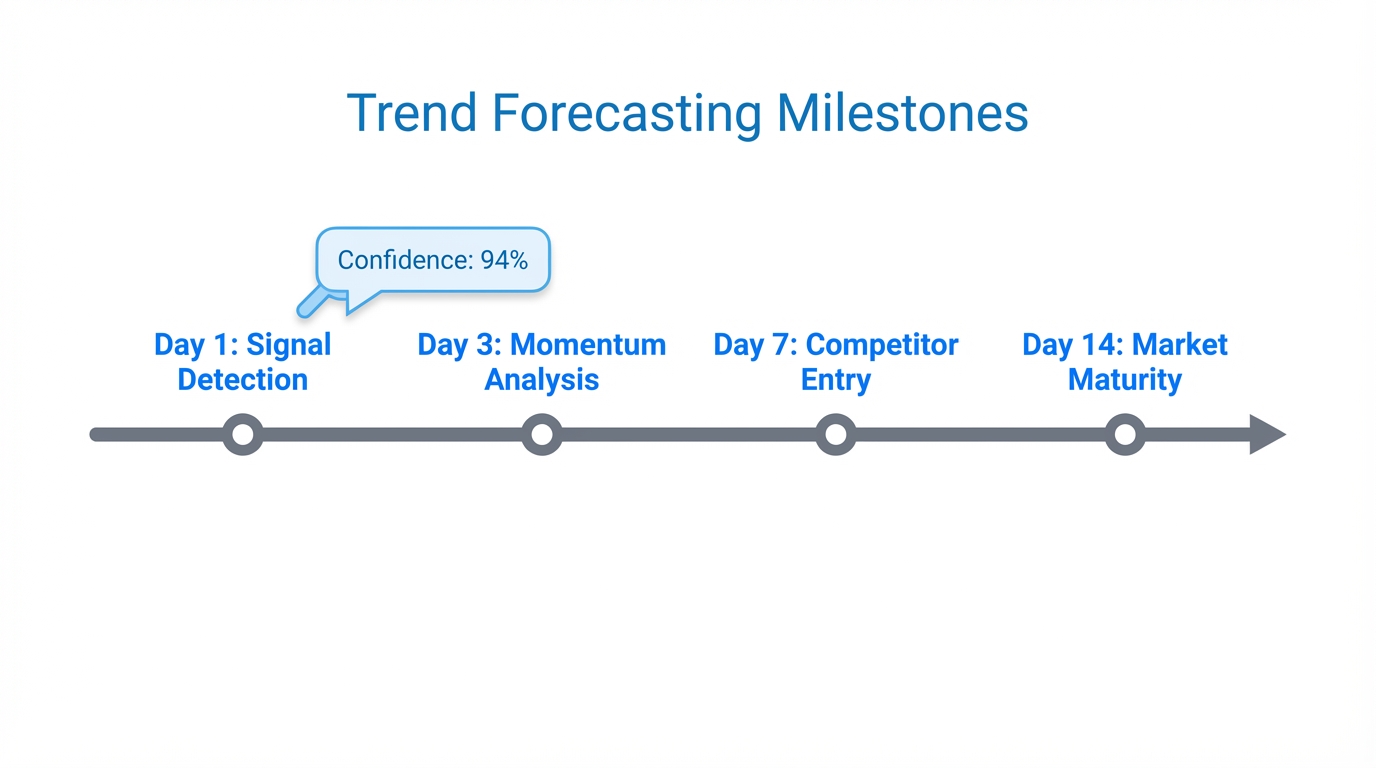
The most successful founders are those who see the wave before it breaks. Grok 4’s "Innovation Agent" mode is designed for exactly this. By analyzing real-time data from early adopters, developers, and industry experts on X, Grok can forecast trends 6–12 months ahead of traditional reports. In the productivity space, for example, Grok 4 has identified a shift from rigid UIs to canvas-based and node-based designs as a major upcoming movement.
To stay competitive, your startup growth strategy should involve weekly trend checks. Ask Grok to analyze the most shared productivity workflows on X and suggest three features your startup could build to capitalize on them. This ensures your product roadmap is always aligned with the real-time AI market intelligence that drives user behavior. You can further streamline this by integrating your findings into a CRM like Salesforce or Pipedrive to track how these trends impact your sales pipeline.
Your Grok 4 Market Intelligence Action Plan
Leveraging Grok 4 for market research is not about replacing human intuition—it’s about augmenting it with unprecedented speed and data access. By shifting from static analysis to real-time social listening, you can build products that people actually want, rather than products you *think* they want. To begin, start with these three steps:
- Define Your Agent: Use high-intent prompts that specify the role, the industry, and the requirement for real-time X data.
- Analyze the Friction: Look specifically for competitor complaints to find your 10% market share capture strategy.
- Automate the Feedback: Use Grok to summarize customer reviews and X mentions into a prioritized product roadmap.
As you scale, remember that data is only half the battle. Executing on these insights requires the right partners and tools. Whether you are using Canva to design your visual strategy or Stormy AI to source creators for your UGC campaigns, ensure every part of your growth stack is optimized for the speed of the modern market. The era of the 'idea guy' is back, but only if that guy has the best data at his fingertips.