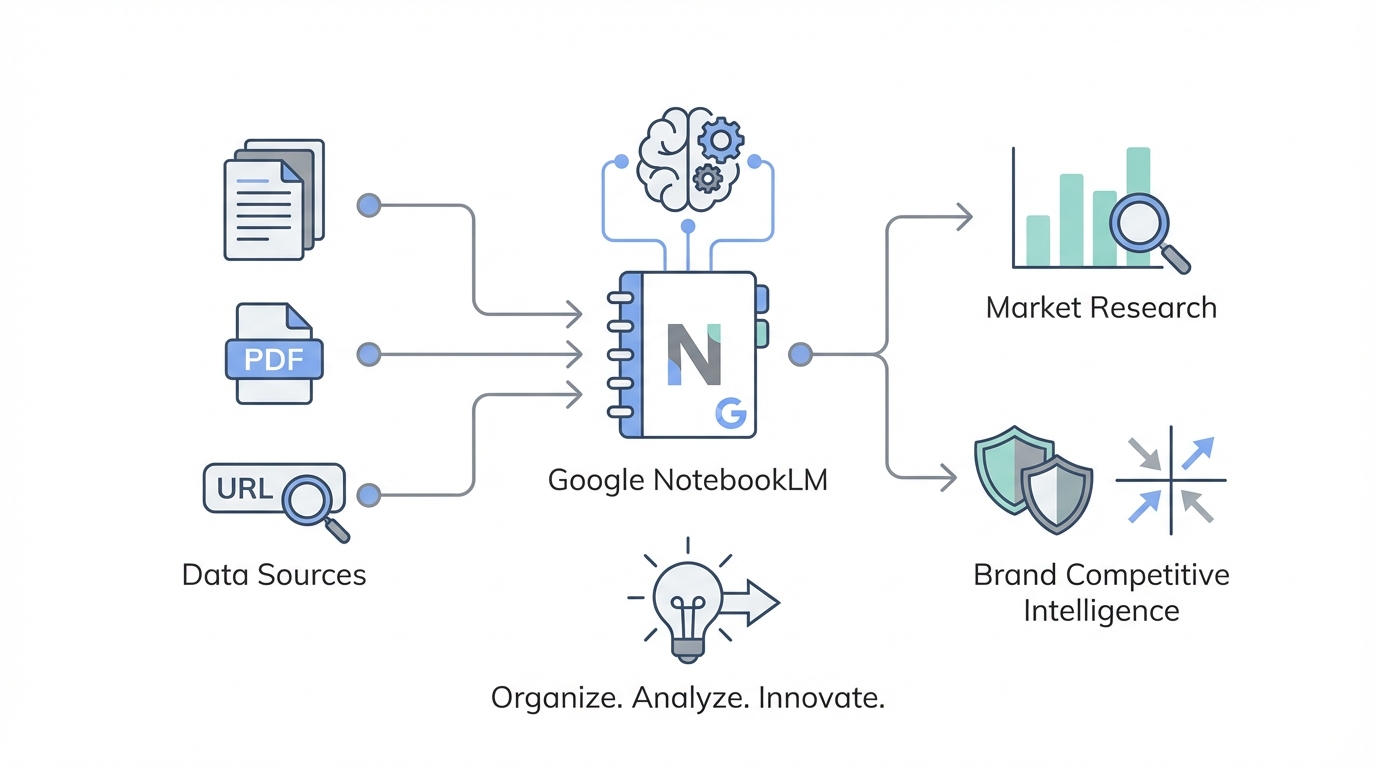
In what many tech leaders are calling the “era of the idea guy,” the bottleneck for business growth is no longer the ability to execute, but the ability to synthesize information fast enough to stay ahead of the curve. As Sam Altman recently noted, startup founders and marketers now have access to a level of intelligence that was previously reserved for massive corporations with deep research budgets. However, having access to information isn't the same as having insights. Most marketers are drowning in PDFs, YouTube transcripts, and competitor whitepapers, struggling to find the signal in the noise. This is where a Google NotebookLM tutorial becomes essential for any modern brand builder.
Google’s NotebookLM is not just another chatbot; it is a grounded AI research assistant that allows you to build a private knowledge base. Unlike standard AI models that pull from the general internet, NotebookLM focuses strictly on the sources you provide, making it a powerhouse for AI for market research. By anchoring the AI in your specific documents, you eliminate hallucinations and create a specialized brain for your brand's competitive intelligence.
The Shift to Grounded AI Research
The biggest challenge with using generic AI tools for AI knowledge management is trust. When you ask a standard LLM about a competitor's market share, you might get an answer that sounds confident but is factually incorrect. NotebookLM solves this through a process called “grounding.” By uploading your own data—ranging from SEC filings to 10-minute YouTube reviews—you ensure that every response the AI generates is backed by a verifiable source.
For business owners, this means you can summarize documents with AI while maintaining total oversight. When the tool generates a report on market trends, it provides inline citations. Clicking these citations takes you directly to the exact paragraph or timestamp in your source material, allowing for instant verification. This level of transparency is critical when making high-stakes decisions about product-market fit or investment opportunities.
Step 1: Setting Up Your Knowledge Base
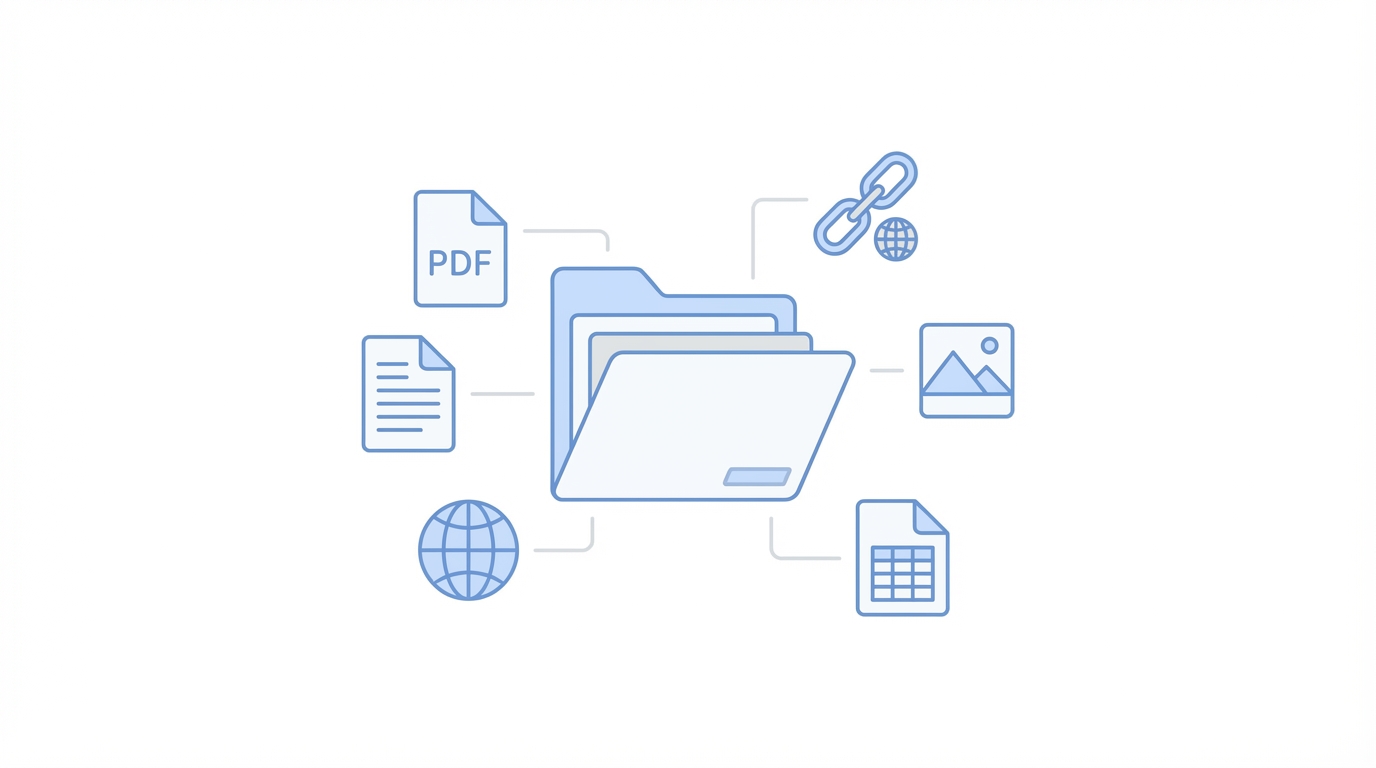

To start using NotebookLM for business, you must first construct your “Source Library.” Think of this as the raw material for your brand intelligence. On the Google Labs platform, you can create a new notebook and begin importing files. The beauty of this tool is its versatility in handling different media types.
You can currently import:
- Google Docs and PDFs: Upload whitepapers, internal strategy memos, or competitor case studies via Google Docs.
- Websites: Paste URLs of industry news sites or competitor blogs to keep your research current.
- YouTube Transcripts: This is a “killer feature” for marketers. You can drop in links to podcasts or product reviews, and the AI will analyze the spoken content as if it were a text document.
By aggregating these diverse sources into a single notebook, you create a centralized “source of truth.” This allows you to ask cross-document questions like, “How does the sentiment in these YouTube reviews compare to the technical claims in our competitor’s PDF?”
Step 2: Leveraging 'Discover Sources' for Economic Data
One of the most powerful new additions to the platform is the “Discover Sources” feature. Often, when conducting AI for market research, you don’t know what you don’t know. You might have your internal data, but you lack the broader economic context to make sense of it. The Discover Sources tool allows you to describe the missing piece of your research—for example, “Find me academic data on consumer spending habits in the fitness niche”—and the AI will suggest relevant external documents.
What makes this feature a “power user” trick is the byline that accompanies each suggested source. Google AI doesn’t just give you a list of links; it explains why each source is relevant to your specific notebook. This saves hours of manual vetting, as you can instantly see if a document focuses on banking, labor markets, or consumer demographics before you even click to add it to your project.
Step 3: Visualizing Brand Strategy with Mind Maps
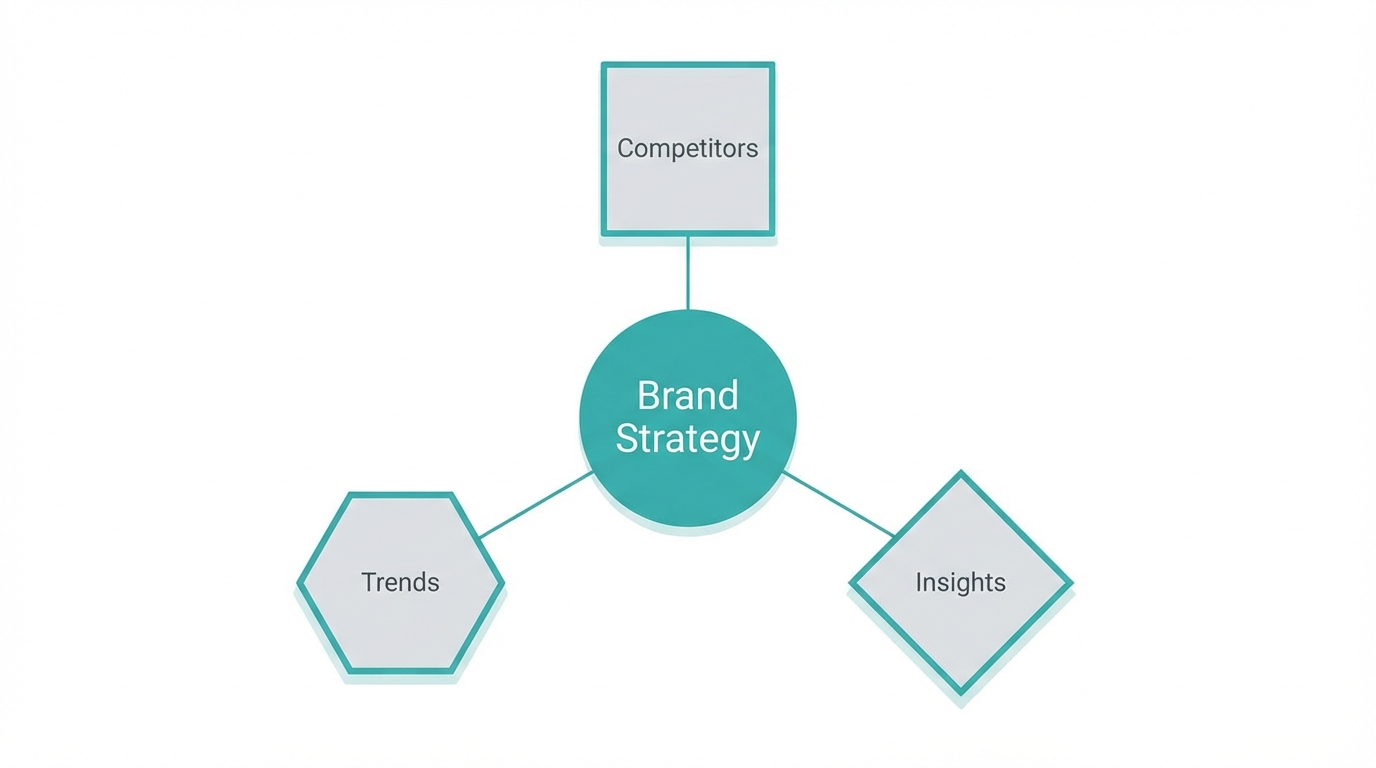
Data visualization is often the hardest part of market research. You might have the facts, but seeing the connections between those facts is where the “aha!” moments happen. NotebookLM’s Mind Map feature allows you to take your entire source library and transform it into a branching visual diagram.
For a marketer, this could mean mapping out a competitor’s ecosystem. You might find a hidden link between their customer service complaints on Reddit and a specific feature mentioned in their technical manual. These “hidden trails” of information are often the key to finding a competitive advantage. As you click through the mind map nodes, the tool brings you back to the specific sources, ensuring your visual strategy is always grounded in reality.
Step 4: Transforming Research into Audio Briefings

We are living in a world where people increasingly prefer to consume content via audio and video. If you are an entrepreneur trying to get your team up to speed on a new market trend, sending a 50-page research brief is often ineffective. The “Deep Dive” podcast feature in NotebookLM is a game-changer for AI knowledge management.
With one click, the AI generates a synthetic podcast where two hosts discuss the contents of your notebook. This isn't just a dry reading of the text; the AI adds nuance, banter, and emphasis to the most critical points. You can even use an “interactive mode” where you can “call in” to the podcast, asking questions like, “Wait, what were the specific economic implications of that trend?” and the AI hosts will answer you in real-time based on your uploaded documents. This makes it incredibly easy for busy executives to level up their knowledge during a morning commute or a gym session.
Step 5: Collaborative Research and the Shared Brain
Market research should never happen in a vacuum. Recent updates to NotebookLM have enabled robust sharing capabilities, allowing you to turn a personal notebook into a team-wide resource. By sharing a notebook with colleagues, you create a centralized AI-powered source of truth.
In a team environment, this prevents “knowledge silo” issues. Instead of different departments working off different sets of data, everyone can chat with the same grounded notebook. A product manager can ask about technical limitations, while a marketing lead asks about brand positioning—both getting answers from the same vetted pool of information. This collaborative approach ensures that the entire organization is aligned on the most current competitive intelligence.
Connecting Research to Actionable Marketing
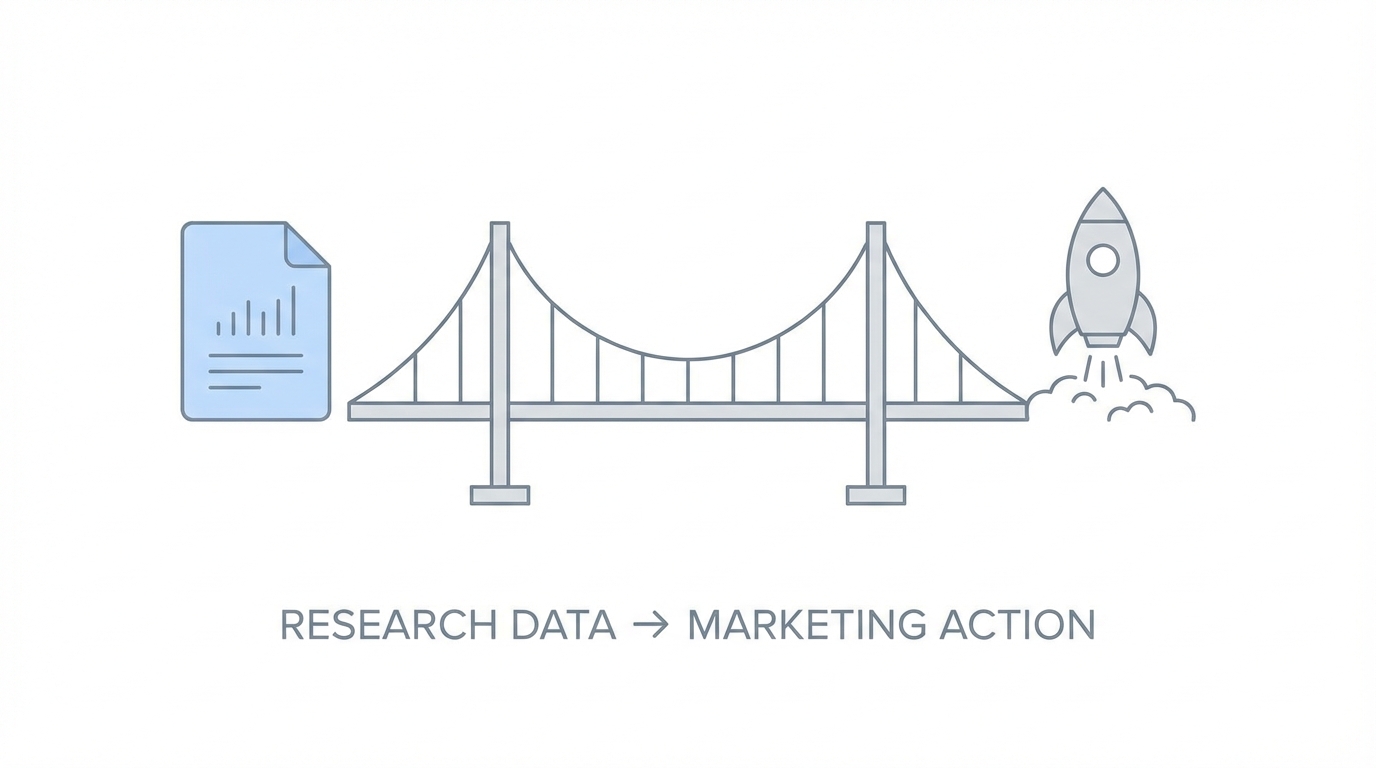
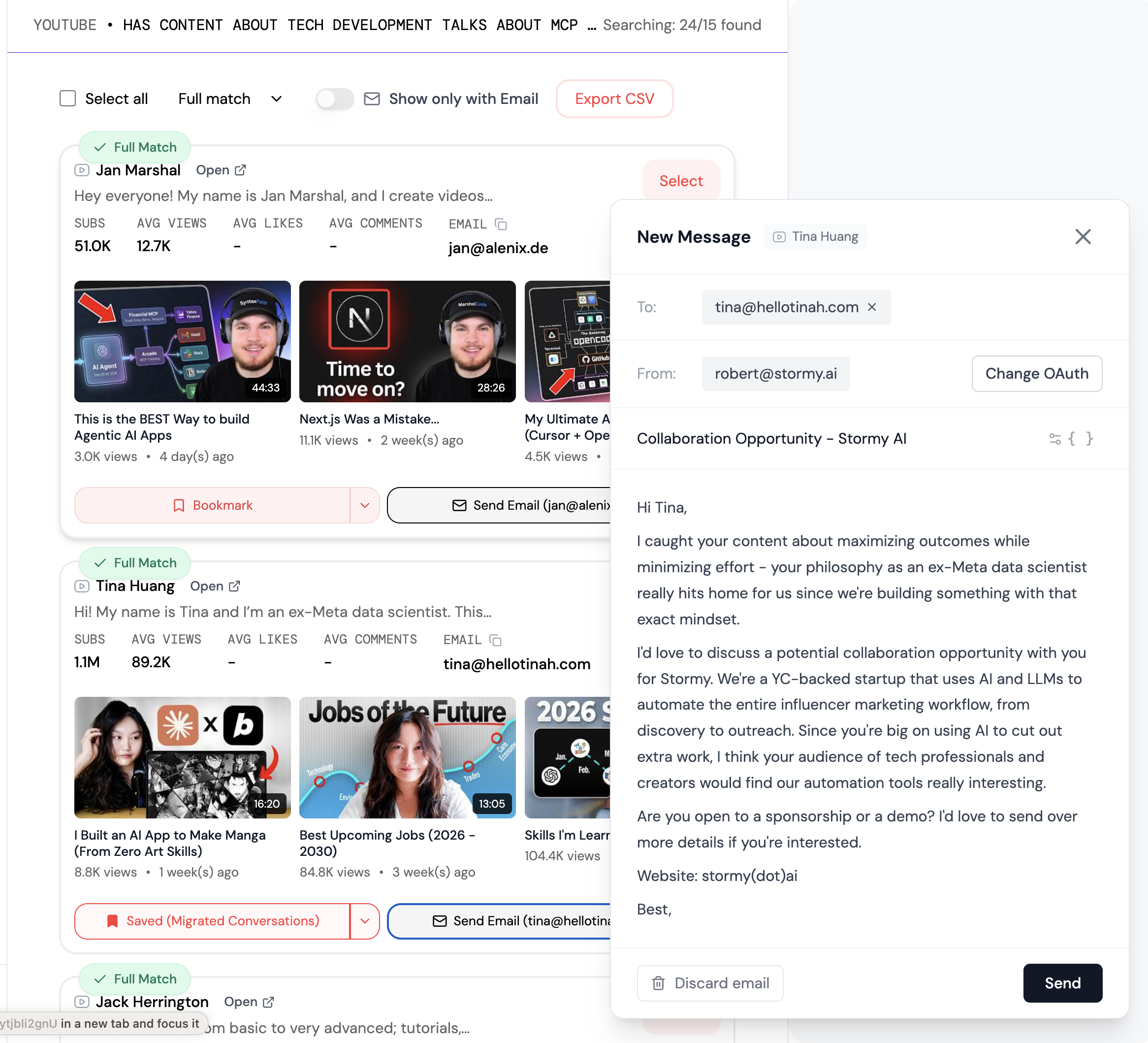
Once you have used these tools to identify your market niche and understand your competitor’s weaknesses, the next logical step is reaching your audience. Deep research often reveals exactly which types of creators your target customers trust. When you reach this stage, tools like Stormy AI can help source and manage UGC creators at scale, taking the insights you gathered in NotebookLM and turning them into active campaigns.
For example, if your AI for market research shows that customers are frustrated with the complexity of a competitor's app, you can use the AI search engine on Stormy to find creators who specialize in “simple tech tutorials” or “productivity hacks.” By combining the deep synthesis of NotebookLM with the high-velocity outreach of a modern creator CRM, brands can move from insight to execution in a fraction of the time it used to take.
Conclusion: The Future of AI Business Intelligence
The Google NotebookLM tutorial outlined here represents a fundamental shift in how we interact with information. We are moving away from “searching for answers” and toward “conversing with knowledge.” For marketers and business owners, the ability to summarize documents with AI, visualize connections with Mind Maps, and generate audio briefings provides a massive “unfair advantage.”
To stay ahead, you must stop treating AI as a toy and start treating it as a structured knowledge partner. Start by building a notebook for your primary competitor, upload their last three months of content, and ask the AI to find the gaps in their strategy. The best way to learn these tools is simply to play with them. Head over to Google Labs, fire up a session, and start building your brand's second brain today.