How to Use Amazon Vine in 2026: The Definitive Seller Launch Playbook
Master Amazon Vine in 2026 with our step-by-step tutorial. Learn updated fees, Day-One review strategies, and how to automate inventory with Stormy AI.
Launching a product on Amazon in 2026 is no longer just about having a great item; it is about winning the trust of the algorithm and the customer before you even spend your first dollar on advertising. With Amazon advertising revenue hitting $68.5 billion this year, the competition for visibility is at an all-time high. The "cold start" problem—having zero reviews while trying to scale—is the number one killer of new brands. That is where Amazon Vine comes in. As an official, Amazon-sanctioned review program, it remains the most powerful lever for generating high-quality social proof. But in 2026, the rules have changed, from updated fee structures to the aggressive decoupling of variation reviews. This guide will walk you through the exact playbook to leverage Vine for a "Day-One" launch strategy, ensuring your Stormy AI employee is keeping your inventory levels in check while the reviews roll in.
The High Stakes of Reviews in 2026
Data from early 2026 shows that the "Review Gap" is widening. Products that move from zero to 15+ reviews see an average 18% increase in conversion rates, while high-ticket items ($150+) can see a massive 24% lift. However, Amazon's AI shopping assistant, Rufus, has become more discerning. It now prioritizes long-form reviews that mention specific use cases, which is exactly what "Vine Voices" are trained to provide. In a world where Amazon's total revenue has topped $717 billion, you cannot afford to wait for organic reviews to trickle in.
"Vine is no longer a 'nice-to-have'; it's a profit lever. Properly executed campaigns reduce time-to-profitability by 40–60% on new launches." — Dan Ashburn, Titan Network
As of 2026, approximately 62% of all units sold on Amazon come from 3P (third-party) sellers, most of whom utilize Vine as their primary launch tool. To survive, you need a system. While you focus on product development, an AI ecommerce employee like Stormy AI handles the messy back office, monitoring your FBA shipments to ensure your Vine units are received before the enrollment window closes.
Who Qualifies for Amazon Vine in 2026?
Amazon has maintained strict gatekeeping for the Vine program to prevent abuse. Before you can see the Vine dashboard, your account must meet four non-negotiable criteria:
- Brand Registry: You must be the brand owner and have an active Amazon Brand Registry account.
- Professional Seller Account: Individual seller plans are ineligible.
- FBA Status: Your items must be fulfilled by Amazon. Vine does not support Merchant Fulfilled (FBM) listings.
- The 30-Review Limit: The ASIN must have fewer than 30 reviews at the time of enrollment.
The 2026 Vine Pricing Tiers
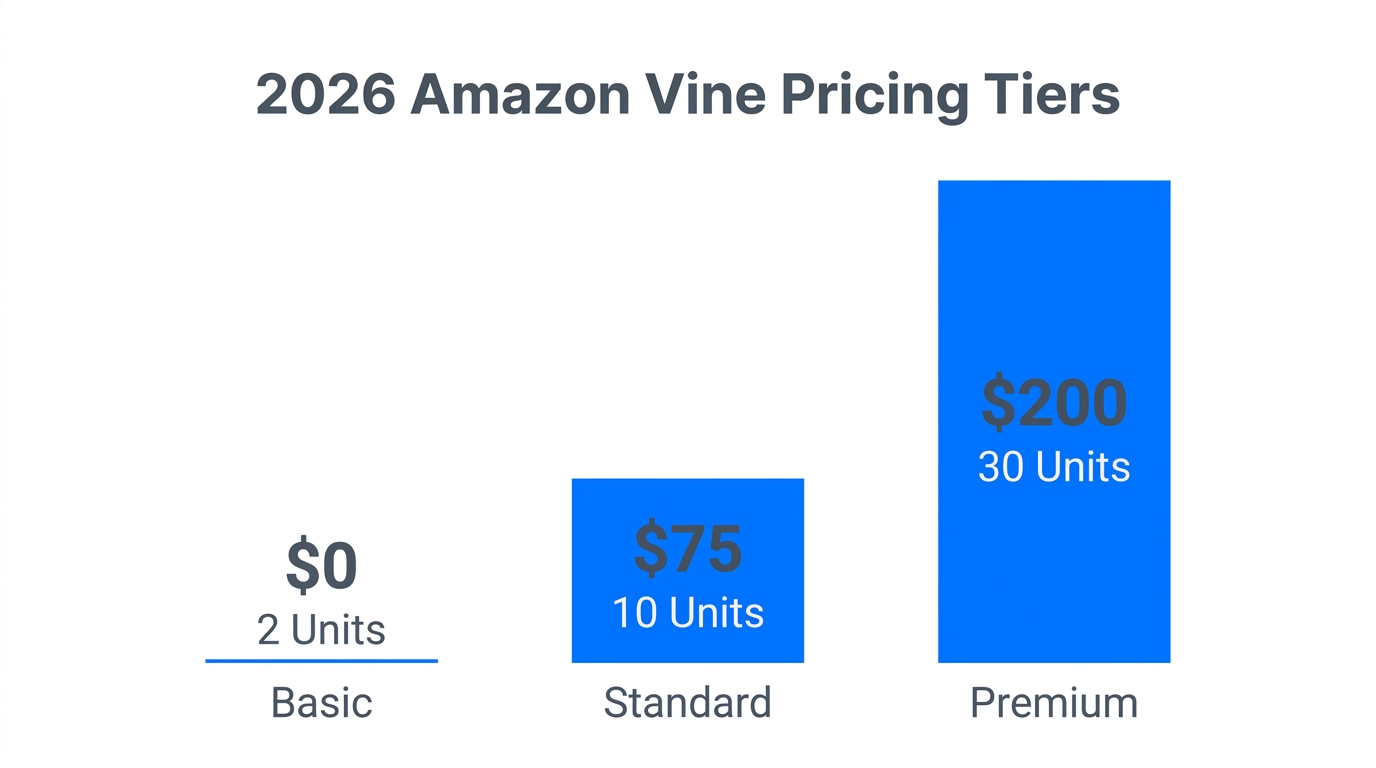
Gone are the days of a flat $200 fee for every product. Amazon now uses a three-tier pricing model designed to help smaller sellers test the waters before committing high-value inventory. It is often recommended to use the "Free Tier" to see if your product is "Vine-ready" before scaling up.
| Tier Level | Unit Count | Enrollment Fee (USD) | Best Use Case |
|---|---|---|---|
| Free Tier | 1-2 Units | $0 | Proof of concept / Testing feedback |
| Starter Tier | 3-10 Units | $75 | Niche products with low competition |
| Standard Tier | 11-30 Units | $200 | Competitive launches / Day-One social proof |
Remember that the enrollment fee is only charged after the first review is published. However, you are still responsible for the Cost of Goods Sold (COGS) and the standard FBA referral and fulfillment fees for every unit claimed by a Vine Voice.
Step-by-Step: How to Enroll Your Product
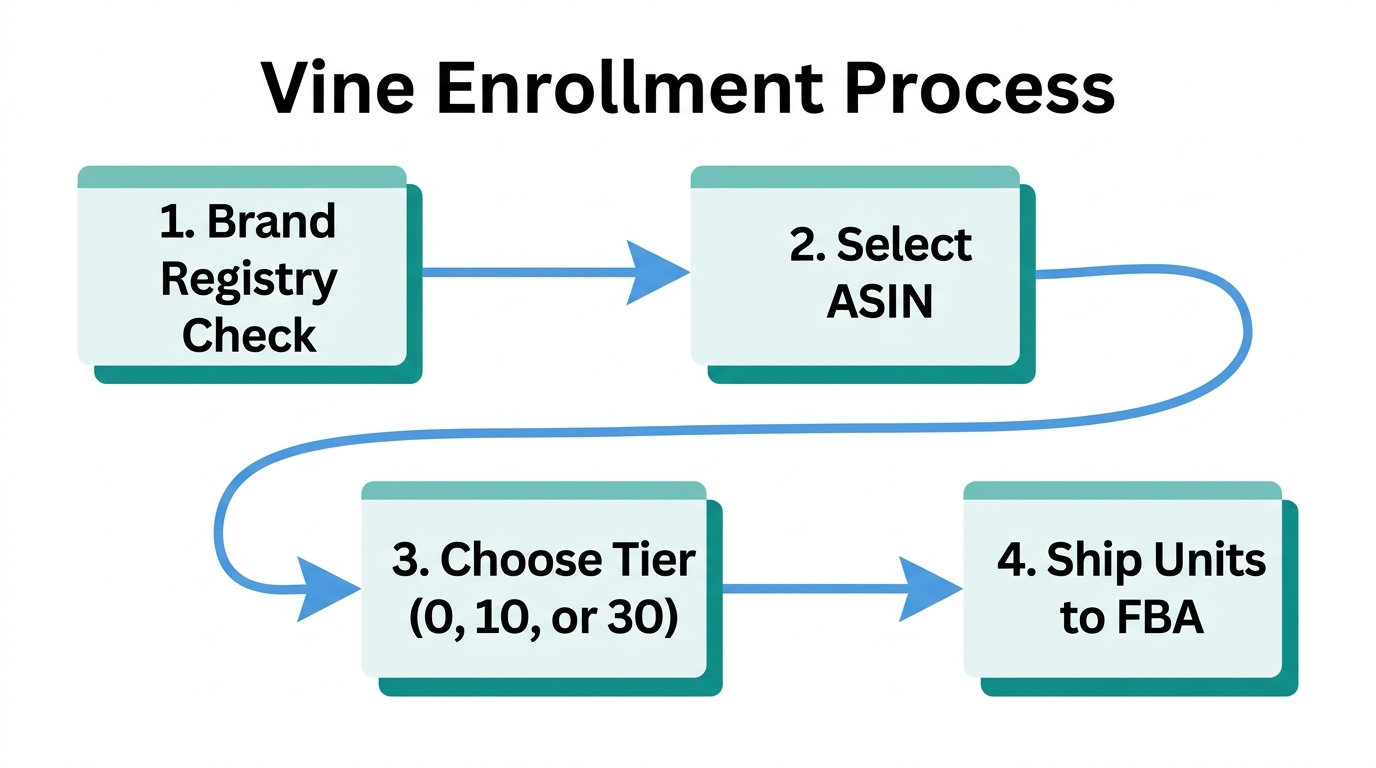
Enrolling your product is a straightforward process within Seller Central. Follow these steps to get your first 30 reviews in motion:
- Navigate to Advertising: Log in to your Seller Central account and hover over the Advertising tab, then select Vine.
- Enter Your ASIN: In the search bar at the top right, enter the ASIN you wish to enroll.
- Select Unit Count: Choose how many units you want to give away (up to 30). Note that if you have variations, you can distribute these across the family, but keep in mind the 2026 variation-splitting rules.
- Verify Inventory: Ensure your FBA inventory is either at the warehouse or in transit. An AI agent like Stormy AI can monitor your Amazon Seller Central shipments and flag any "suppressed listing" issues that might prevent Vine Voices from claiming your product.
- Confirm Enrollment: Review the terms and click Enroll. The status will change to "Enrolled," and Amazon will begin showing your product to relevant Vine Voices.
"The value of Vine is in the 'Review Depth.' These reviews are 2–3x longer and feed better keyword data back into Amazon's A9 algorithm." — Russ Dieringer, Tambo
The 'Day-One' Review Strategy
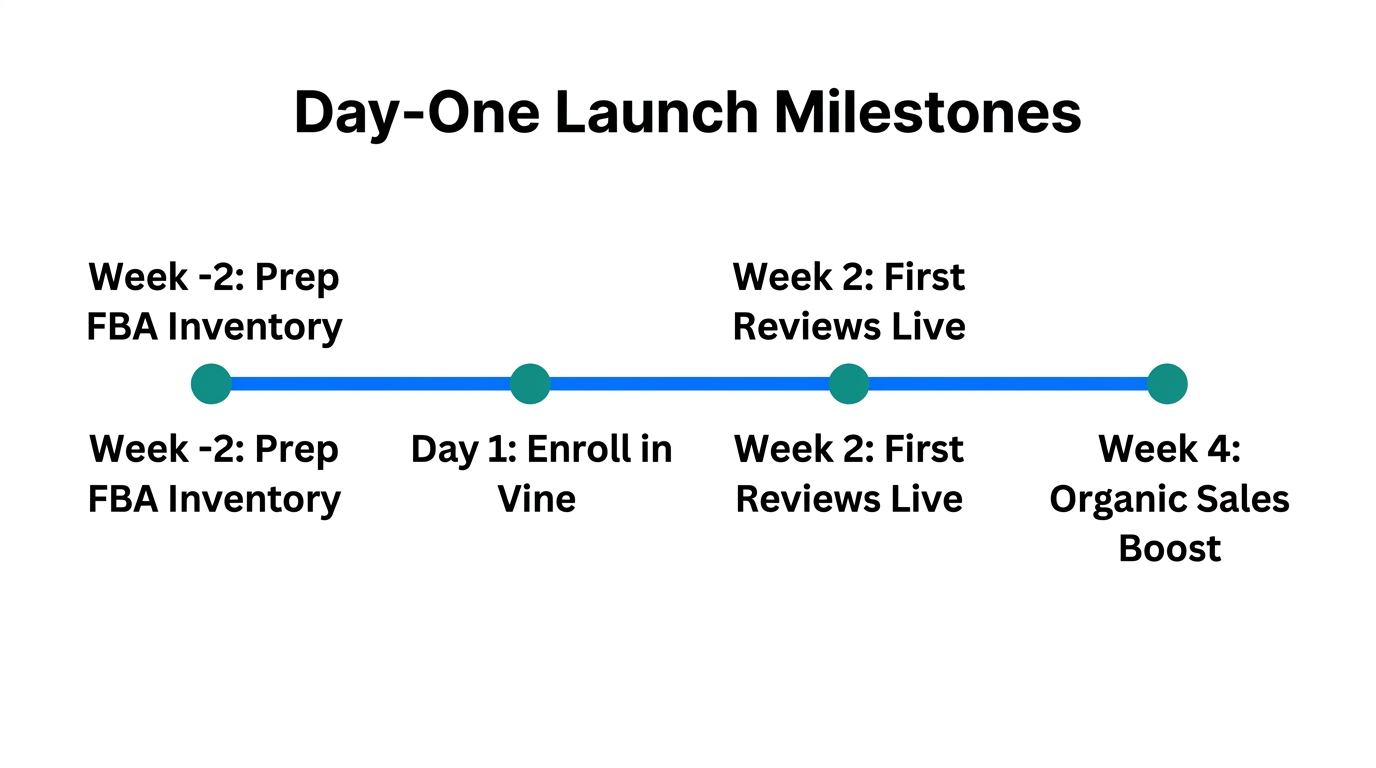
One of the most significant updates in late 2025/early 2026 is the ability to generate reviews before your listing is live for public sale. This allows you to launch with 30 reviews already on the page, significantly reducing the wasted spend of starting PPC (Pay-Per-Click) on a zero-review listing.
To execute this, set your "Offer Start Date" in the future. Enroll the ASIN in Vine the moment the inventory is checked in at FBA. Because Vine Voices do not pay for the product (though they pay taxes on the Fair Market Value), they can receive and review the item while the general public still sees it as "Coming Soon." By the time you toggle your listing to active, you will have a 4.0+ star rating, providing the necessary social proof for tools like Google Ads or Meta Ads to drive traffic effectively.
Managing the Risks: The "Vine Death Spiral"
While Vine is powerful, it is not without risk. Vine reviews are unbiased, and Amazon forbids any attempt to contact reviewers or influence their ratings. If your product has a technical flaw, Vine Voices will find it. In 2026, sellers have reported a "Vine Penalty" where Vine reviews average 4.1 stars compared to an organic average of 4.3. This is because Vine Voices are required to be critical and thorough to maintain their status.
Another risk is the low completion rate. Historically, only 70-85% of claimed units result in a review. The remaining 15-30% are lost inventory costs. Additionally, the IRS reporting threshold for 1099-NEC forms for reviewers was raised to $2,000 in 2026, leading to a surge in reviewers claiming items but also becoming more "selective" about technical quality to justify their tax liability. If your COGS is over $100, a negative Vine review can be a financially devastating blow.
How Stormy AI Automates the Boring Parts
Running a successful Amazon launch involves juggling spreadsheets, monitoring PPC, and keeping an eye on your inventory. Stormy AI acts as your AI ecommerce employee to handle the heavy lifting:
- Inventory Pulse: Stormy checks your Amazon Seller Central dashboard daily to ensure Vine units are being claimed and shipped.
- Stockout Risk: If your Vine units are moving fast and your first shipment is running low, Stormy flags the stockout risk before it kills your BSR (Best Sellers Rank).
- Review Monitoring: Stormy can pull data from Helium 10 or Jungle Scout, dropping new review summaries into a shared workbook so you can fix product issues immediately.
- Supplier Follow-up: If you need a reorder to sustain the post-Vine sales velocity, Stormy drafts the email to your supplier based on your lead times.
Comparison: Vine vs. The 2026 Alternatives
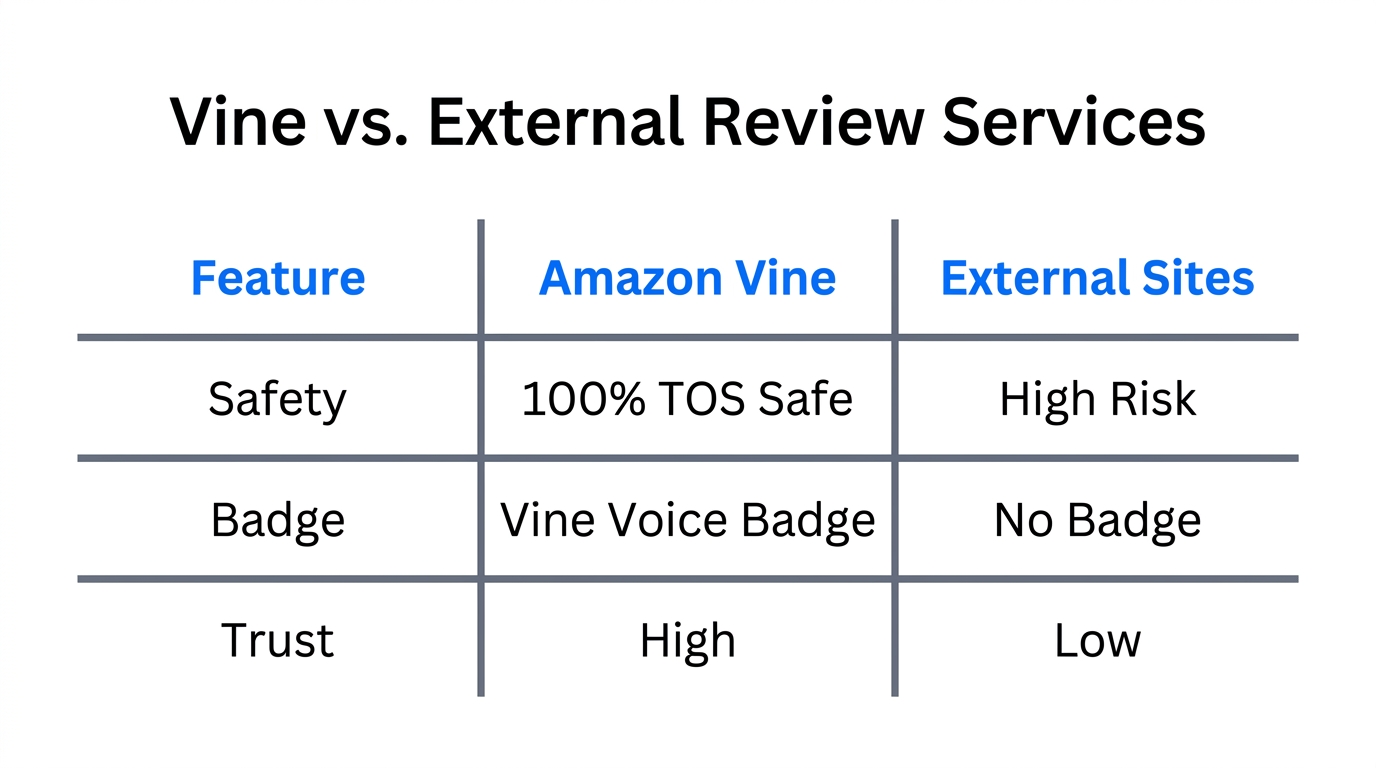
| Feature | Amazon Vine | Stack Influence | Billo (UGC) |
|---|---|---|---|
| Trust Signal | Green "Vine Voice" Badge | Micro-influencer post | Video Content |
| Cost | $0–$200 + Product | $39/post | $60–$150/video |
| Speed | 4–8 weeks | 1–2 weeks | 2–3 weeks |
| Risk | High (Brutal honesty) | Low (Happy creators) | Controlled (You own rights) |
While platforms like Stack Influence or Billo are excellent for external traffic, they do not carry the same conversion weight as an on-platform Vine badge. The best 2026 strategy is to use Vine for your first 30 reviews, then transition to FeedbackFive to maintain organic velocity.
Conclusion: Making Vine Work for You
Amazon Vine in 2026 remains the gold standard for ecommerce product launches. By leveraging the tiered pricing and the Day-One strategy, you can overcome the "zero-review" barrier and achieve a 15%+ conversion rate within your first 60 days. However, success requires operational excellence. You cannot let your inventory dip or your listings become suppressed during the critical enrollment phase. This is why thousands of lean brands are turning to AI ecommerce employees. Let Stormy AI handle the monitoring, the spreadsheets, and the supplier follow-ups while you focus on building the next big brand on Amazon. Ready to automate your back office? Start your journey with Stormy AI today.