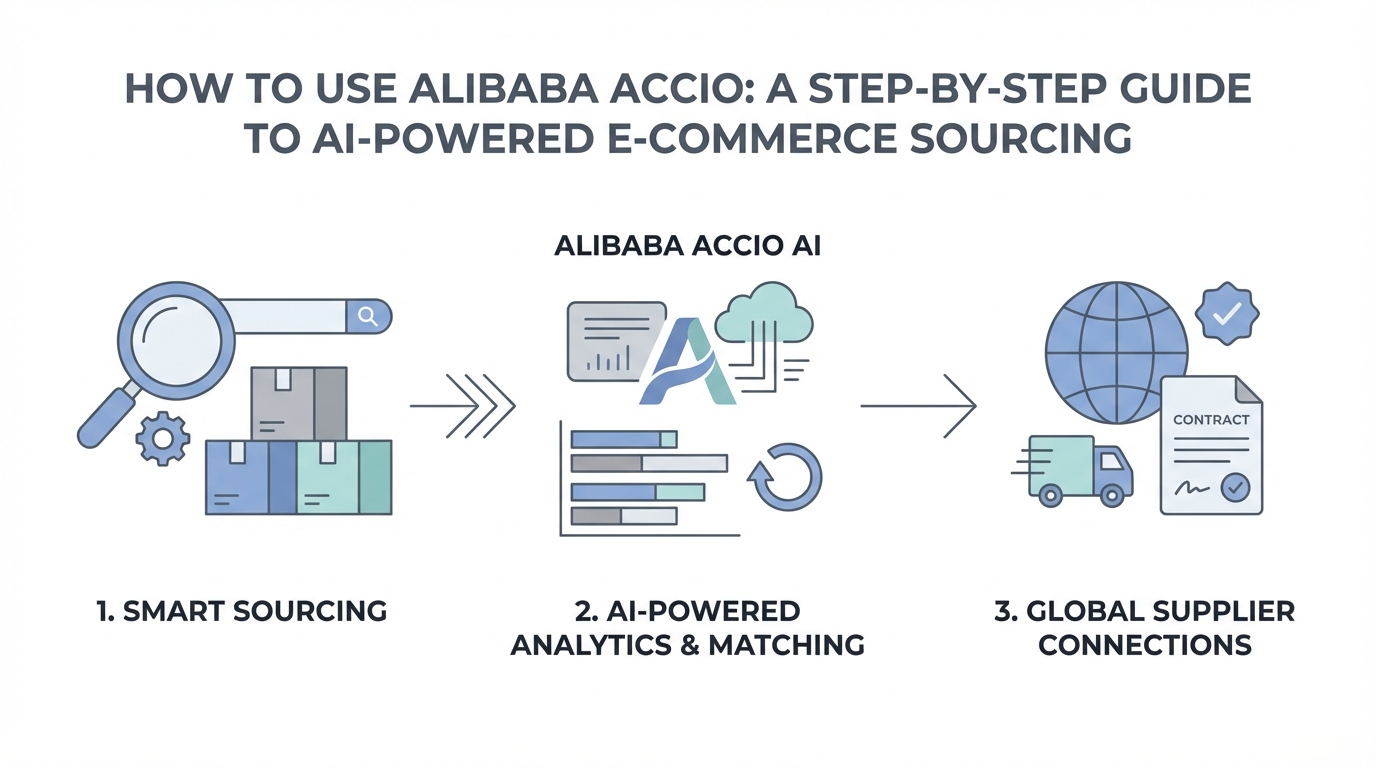
For years, the barrier to entry for a multimillion-dollar e-commerce business wasn't just capital—it was the sheer complexity of the sourcing lifecycle. Entrepreneurs spent months manually scouring marketplaces, vetting suppliers via awkward email chains, and guessing at market demand based on fragmented data. However, we have entered the era of the idea person, where the distance between a concept and a physical product has been collapsed by agentic AI. Alibaba’s latest innovation, Alibaba Accio, is at the forefront of this shift. This AI-powered sourcing agent doesn't just search a database; it thinks, analyzes, and executes sourcing tasks that previously required a full procurement team. In this Alibaba Accio guide, we will walk through how to leverage this unfair advantage to identify trends, design products, and secure manufacturing partners with surgical precision.
The Agentic Shift: Why Accio Changes Everything
In the traditional e-commerce model, sourcing was a linear, high-friction process. You would visit Alibaba.com, type in a keyword, and hope the 500 nearly identical results contained one trustworthy partner. Accio represents a fundamental shift toward agentic AI, meaning the platform acts as an autonomous assistant that understands context. It integrates directly with global data streams, including Amazon sales data and search volumes, to provide a holistic view of the market. Whether you are a seasoned software entrepreneur looking for a new revenue stream or a brand owner trying to pivot, these AI e-commerce tools provide the insights necessary to avoid the expensive mistakes of the past.
Step 1: Identifying Rising Trends with Data-Backed Certainty

The first step in any successful AI product sourcing strategy is validation. Accio allows users to "spot rising trends" by analyzing current market movements. For instance, when analyzing the baby products niche, the tool doesn't just say "baby gear is popular." It identifies hyper-specific sub-categories like convertible cribs with Greenguard Gold certification or multifunctional cribs with smart features. By looking at the search volume (often highlighted in blue) against the actual sales count (highlighted in pink), entrepreneurs can see the margin potential of a niche before spending a single dollar.
Consider the electric nasal aspirator market. Accio’s analysis might show stable demand despite fluctuating search volumes, suggesting a need for product improvements rather than a brand-new invention. By identifying pain points—such as suction power or ease of cleaning—you can use tools like Idea Browser to further refine the concept based on what customers are "screaming for" in reviews. This data-driven approach ensures you are solving a problem that exists on Amazon today, rather than launching a product into a vacuum.
Step 2: Moving from Trend to Visual Product Concepts

Once a trend is identified, the next phase is visualization. This is where Alibaba Accio guide users find the most creative value. For example, if you notice a spike in interest for a specific pop-culture phenomenon like a hit series on Netflix, you can prompt the AI to generate design concepts. If you prompt Accio to "design products based on Squid Game," the agent performs a market analysis of existing costumes and jackets and then generates high-fidelity product design images.
While these images aren't always ready for the factory floor, they serve as essential fodder for iteration. You might see a mockup of a high-end mechanical keyboard for the "cozy gaming" aesthetic, featuring tactile materials like ceramic coatings and "thocky" acoustics. These visualizations allow you to see the aesthetic potential of your brand before you ever commit to a sample. By using these AI-generated mockups, you can even begin testing interest on social media platforms or through newsletters to gauge the willingness to pay for specific aesthetics.
Step 3: Finding and Vetting Verified Manufacturers

The core power of the Alibaba AI agent lies in its deep integration with the Alibaba manufacturing ecosystem. Finding a supplier used to be a manual vetting nightmare. With Accio, you can simply ask the agent to "find manufacturers that offer a high-quality facial cleansing brush with OEM service and private label availability." The agent will then return a curated list of verified suppliers, ranked by their match quality.
For a specific project like a mechanical keyboard for Gen Z women, the agent might identify a partner like Shenzhen Damolin Electronic Technology. It doesn't just give you a name; it explains *why* they are a match—perhaps because they already supply major brands or have specific certifications in screen printing and embroidery. This level of transparency includes reorder rates and customer satisfaction scores, allowing you to bypass the "overwhelming" nature of the standard Alibaba interface. When you are learning how to start e-commerce with AI, this automated vetting is your biggest safeguard against fraud and low-quality production.
Step 4: Analyzing Margins and MOQ Requirements
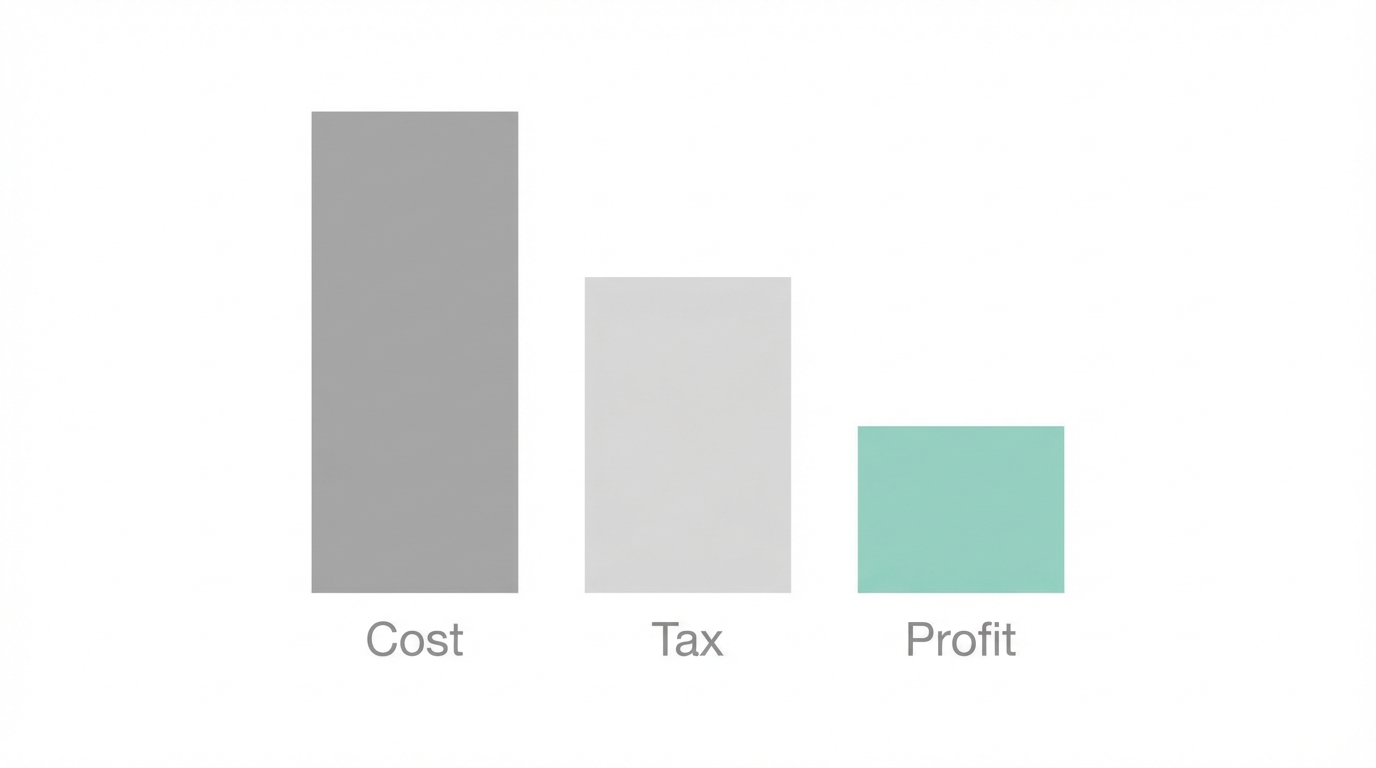
Before moving to outreach, you must understand the unit economics. Accio provides detailed margin analysis directly in the interface. For a typical product like a custom hoodie, the agent might show a wholesale price of $6.71 with a target retail price that yields a 200% to 300% margin. It also outlines the Minimum Order Quantity (MOQ) range, which is vital for new entrepreneurs who want to start small.
For more complex products, such as senior dog orthopedic beds, the agent can analyze the average rating of competitors on Amazon. If the average rating is a mediocre 3.88, the agent identifies why: perhaps the covers aren't truly washable or the memory foam is too thin. By calculating the cost to fix these specific issues—like adding a cooling gel integration—you can determine if the retail price spread still supports a profitable business. This ensures your AI product sourcing is grounded in financial reality, not just creative optimism.
Step 5: Executing the Outreach and Sampling Process
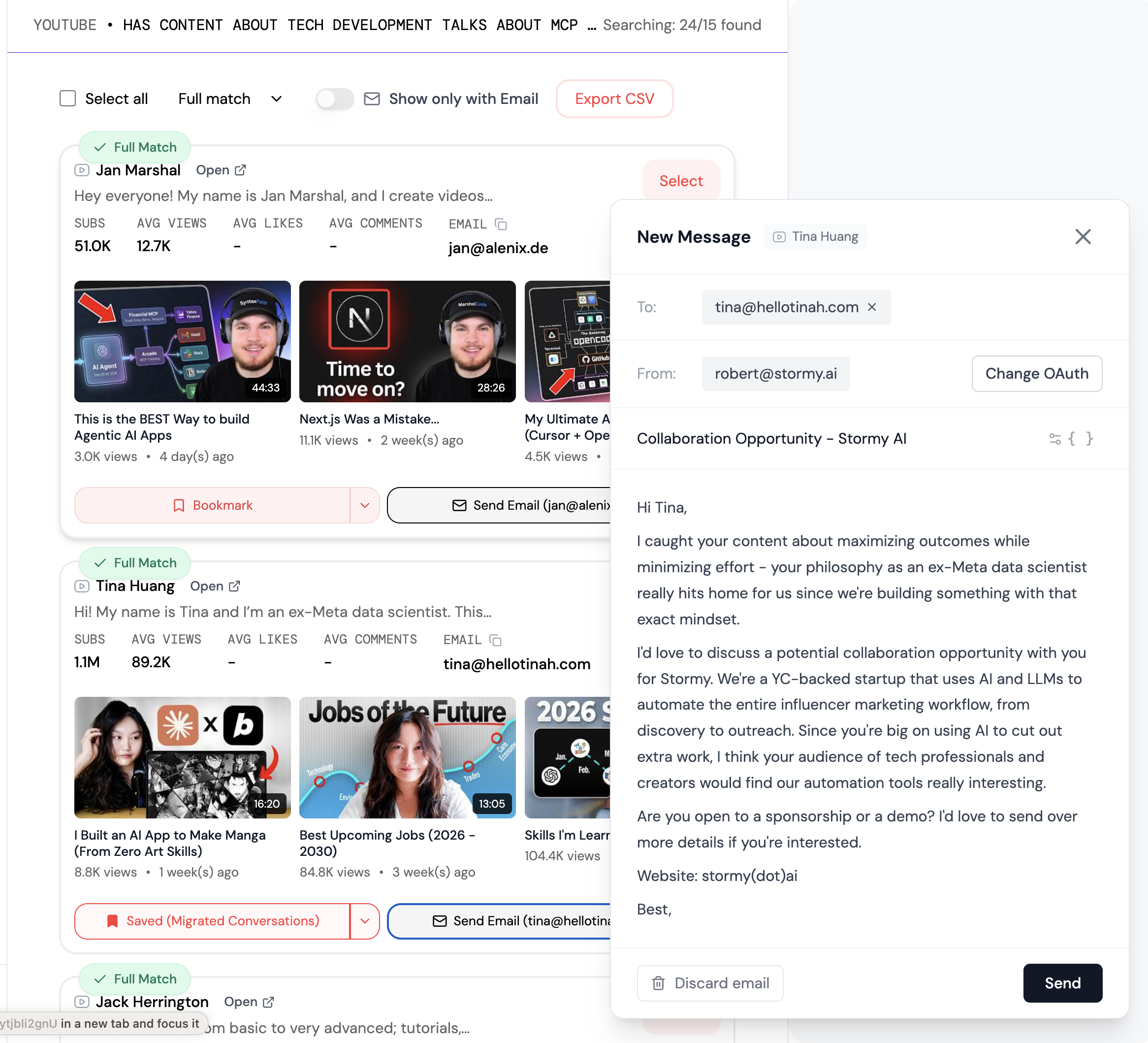
The final step in the Accio workflow is the communication. Instead of drafting a generic message, you can ask the agent to create a professional inquiry email. The AI understands the technical nuances required for different industries. For a mechanical keyboard, it might suggest asking for e-coating rather than matte paint to ensure a premium finish, or verifying a five-layer internal dampening structure to achieve a specific sound profile.
This level of technical detail prevents you from being "rinsed" by suppliers who can tell when a buyer is inexperienced. Once the draft is ready, tools like Stormy AI can eventually assist in the broader marketing lifecycle, but for the initial sourcing, Accio allows you to send inquiries directly from the platform. You can manage these conversations in a centralized dashboard, tracking which suppliers are most responsive to your technical requirements. Once you have your product sourced and your brand identity established, using Stormy AI can help you discover and manage the UGC creators needed to launch your product on TikTok and Instagram, ensuring your distribution is as automated as your sourcing.
Conclusion: Your 2025 E-commerce Roadmap
The combination of Alibaba Accio and a data-driven mindset has lowered the barrier to entry for e-commerce to an all-time low. By following this playbook—spotting trends, visualizing products, vetting suppliers with AI, and analyzing margins—you can build a brand that is backed by data rather than guesswork. Whether you are targeting the "cozy gaming" niche or the "senior dog" market, the unfair advantage of 2025 is no longer about who has the biggest warehouse, but who has the best insights. Platforms like Stormy AI can further streamline your growth by handling creator outreach and campaign tracking, allowing you to remain the "idea person" while AI handles the heavy lifting of discovery and management. It is time to stop searching endlessly and start building with the precision of an AI agent.