In the high-stakes world of performance marketing, 2026 has officially marked the transition from the "Chatbot Era" to the Age of Execution Agents. It is no longer enough for an AI to simply suggest headlines or summarize reports; today's winners are deploying autonomous systems that actually do the work. Leading this charge is OpenClaw, an open-source framework that has skyrocketed to over 247,000 GitHub stars by providing marketers with the tools to manage complex accounts without human intervention. If you are still manually adjusting bids every Tuesday morning, you aren't just behind—you are actively leaking budget to competitors who have automated their entire funnel.
The Performance Auditor: Plucking Budget Leaks Before They Sink Your Ship
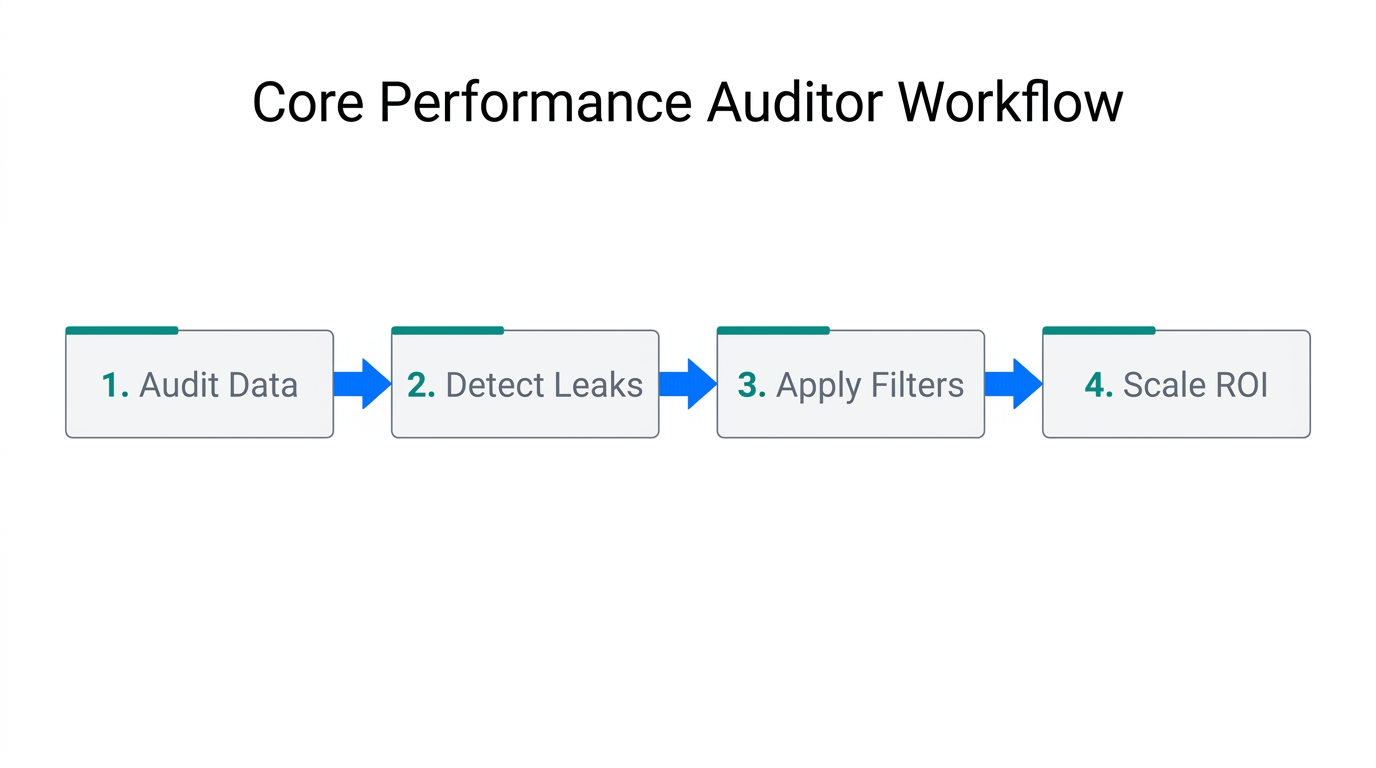
The first and perhaps most critical skill in the OpenClaw arsenal is the Performance Auditor. This agent acts as a 24/7 security guard for your Google Ads account, scanning for technical failures and "bleeding" keywords that typically go unnoticed for days. By implementing a weekly "Monday 2 AM" cron job, the auditor generates a comprehensive revenue-impact report that ranks ad groups by wasted spend.
"Accounts using automated auditing see a 2.5–4% higher conversion rate due to the constant, ruthless pruning of low-intent traffic."
However, the secret to mastering this skill lies in Setting ROI Thresholds within the agent's memory. A common mistake among junior performance marketers is failing to account for assisted conversions. Without these thresholds, an over-aggressive agent might pause a high-spend keyword that serves as a vital first touchpoint in a multi-channel funnel. By calibrating the agent to recognize these high-value assisted paths, you ensure that you are trimming the fat without cutting the muscle. Data suggests this level of precision is why automated auditing leads to such a significant lift in conversion rates.
Bid & Budget Manager: Real-Time Reallocation for 2026 ROAS Optimization
The Bid & Budget Manager skill is where OpenClaw's true power as an AI bidding agent shines. Traditional SaaS tools often rely on static rules, but OpenClaw adjusts bids dynamically based on real-time performance against your Target CPA (tCPA). It doesn't just lower bids on losers; it reallocates that remaining daily budget to the "winners" that are currently converting under your target cost.
As AI marketing researcher Rithik Motupalli notes, the industry has shifted toward "Agent-Led Models" where 24/7 adjustments are the standard. This replaces the antiquated manual weekly check of traditional agencies. For brands scaling rapidly, this agility is the difference between a successful product launch and a massive overspend on a high-CPM audience that isn't buying.
| Metric | Impact of OpenClaw (2026 Data) |
|---|---|
| Time Saved | ~13 hours per week per manager |
| Conversion Lift | 2.5% – 4% (average) |
| ROAS Improvement | Up to 22% |
| Adoption Trend | 88% of marketers by EOY 2026 |
When you combine this with the Budget Pacing Monitor, you eliminate the risk of "budget exhaustion" by early afternoon. The agent tracks your actual versus planned daily spend, ensuring you have enough fuel to capture high-intent searches during the evening peak hours. For those managing multiple accounts, platforms like Stormy AI can further assist by identifying the right influencers and creators to fuel your top-of-funnel traffic, which OpenClaw then optimizes at the conversion stage.
Case Study: Maintaining 1.8x ROAS While Off-the-Grid
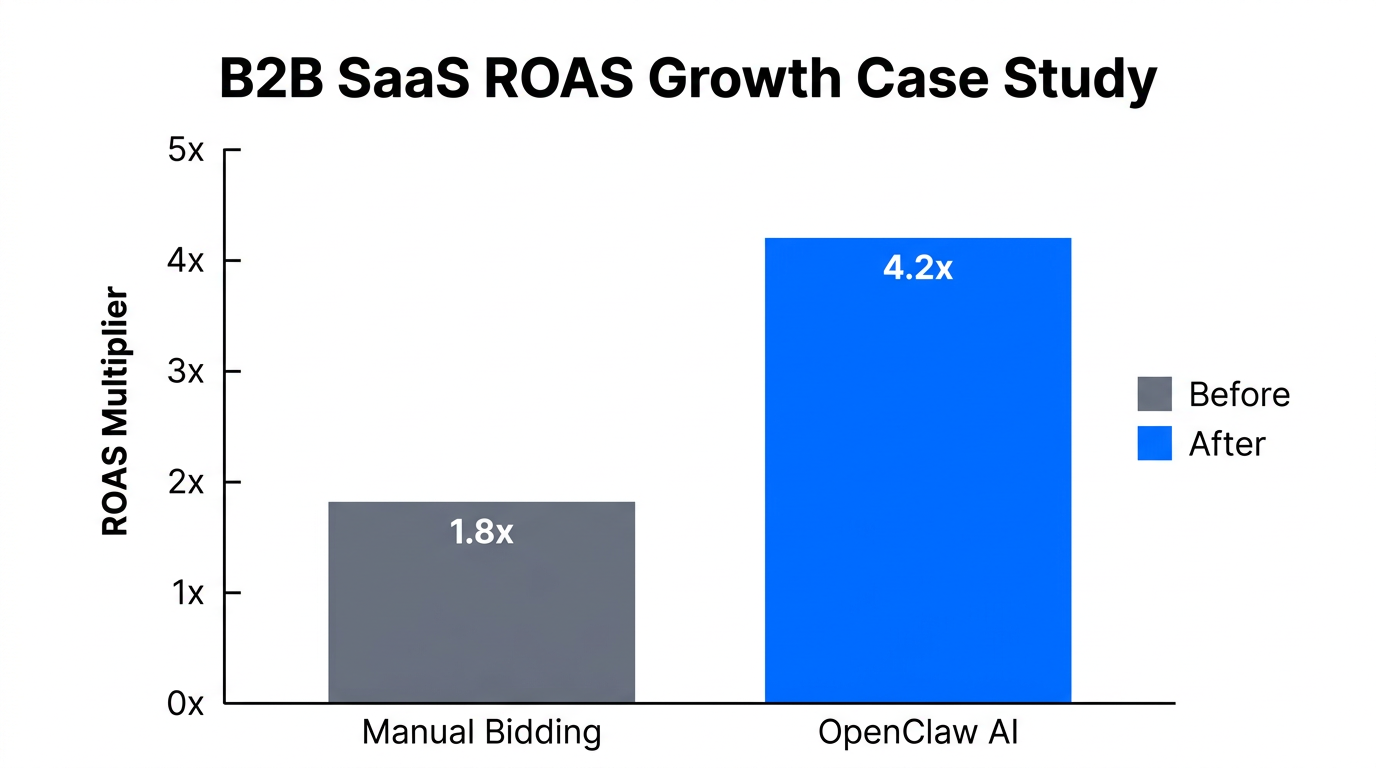
One of the most compelling proofs of the agent-led model comes from a B2B SaaS founder who utilized Ryze AI to deploy a remote OpenClaw agent. While traveling for several weeks with limited internet access, the founder delegated all budget management to the agent, which communicated updates via a dedicated Telegram bot.
The agent was programmed to monitor tCPA and pause any campaign that spiked more than 30% above the benchmark. By the time the founder returned, the account had maintained a steady 1.8x ROAS without a single human adjustment. This was made possible by the agent's ability to scan search term reports and autonomously add high-intent queries—specifically those emerging from Google's AI Overviews—as exact-match keywords. This proactive discovery led to a 22% boost in ROAS by capturing "long-tail" trends before competitors even noticed the shift in search volume.
"If your marketing stack isn't executing autonomously in 2026, you're already behind."
Implementing the 'Zero-Conversion Filter' Strategy
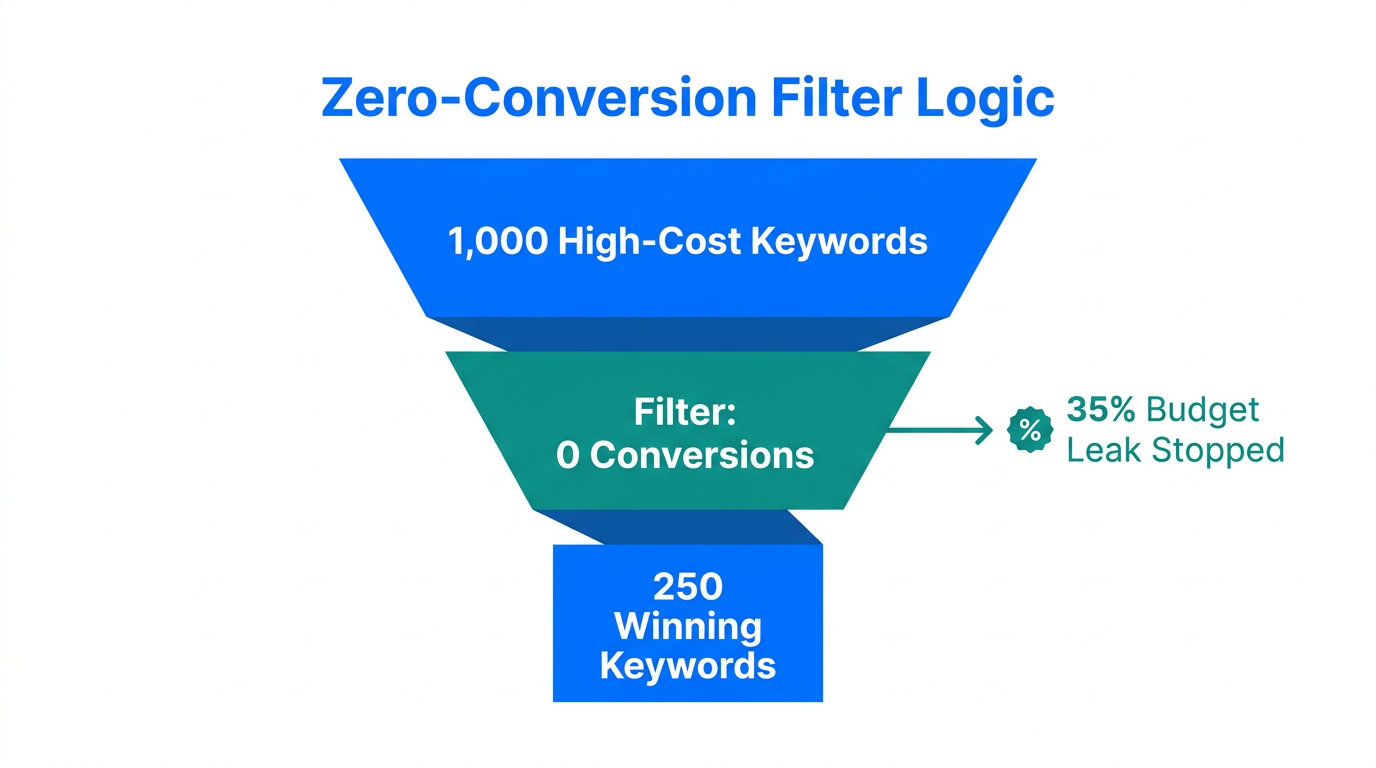
The fastest way to achieve ROAS optimization in 2026 is to stop paying for what doesn't work. The Search Term Analyzer skill allows you to implement a "Zero-Conversion Filter." This is a rigorous automated rule that scans for keywords consuming budget without intent.
Step 1: Define Your Threshold
Set a threshold based on your conversion data. A common best practice is 2x your Target CPA. If a keyword has spent $200 and your target is $100, and it has zero conversions over 30 days, it is a budget leak.
Step 2: Automate the Negative Match
Configure OpenClaw to automatically move these terms to a negative keyword list. Unlike the standard Google Ads recommendations—which often prioritize volume over profitability—the agent uses your specific CRM data to make the call. You can find pre-built skills for this logic on the LobeHub Skill Registry.
Step 3: Monitor for Internal Competition
The agent also functions as an Audience Architect, identifying segments where your CPMs are being driven up by internal competition. By cleaning these audience exclusion gaps, you can reduce wasted reach by up to 15%, particularly in high-competition sectors like e-commerce or mobile app marketing.
Infrastructure and Security: Why Your Local Machine Isn't Enough
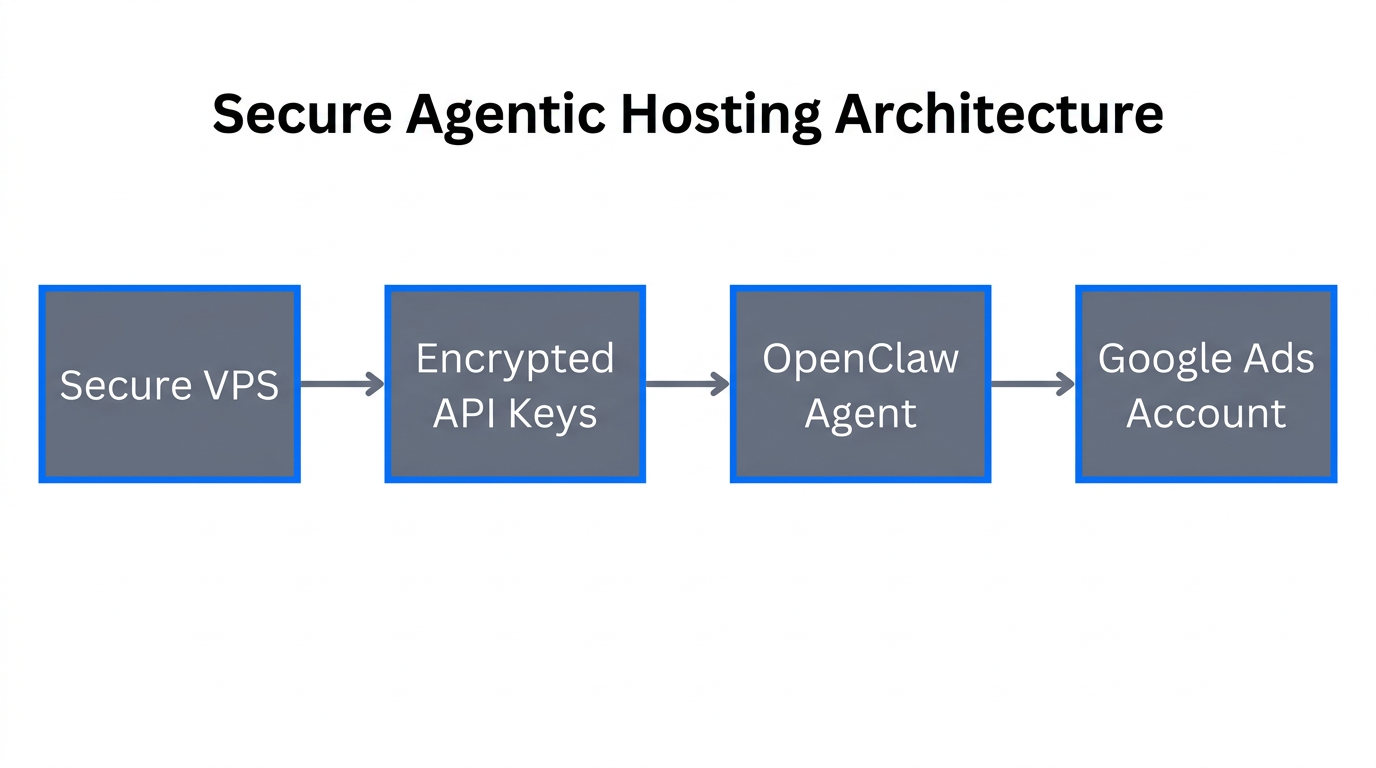
Because OpenClaw requires high-frequency browser automation to interact with the Google Ads API, security is paramount. Running these agents on a personal laptop is a recipe for disaster. Not only can it lead to credential leaks, but your automations will fail if your computer sleeps or loses connection.
To ensure 24/7 execution and high-level security, you must host OpenClaw on a dedicated VPS. Providers like DigitalOcean offer stable environments where your agents can run in isolation. This setup protects your API keys and ensures that the OpenClaw performance auditor never misses a scheduled scan. For agencies managing multiple clients, this infrastructure is non-negotiable for maintaining data integrity and client trust in the agentic era.
The Bottom Line: Automate or Evaporate
The Google Ads budget automation landscape has reached a point where manual management is a liability. By mastering the seven core skills of OpenClaw—from the Performance Auditor to the Creative Analyst—marketers can reclaim their time and significantly improve their bottom line. Whether it is diagnosing creative fatigue or capturing new search trends through agentic discovery, the goal is the same: maximize efficiency through execution.
As you build your 2026 growth stack, remember to pair these backend optimization tools with top-tier creator discovery. Using Stormy AI to find the right UGC creators ensures that the traffic your agents are optimizing is high-quality and high-intent from the start. Start small by automating your weekly audits, and once the budget leaks are plugged, unleash the full power of autonomous bidding agents.