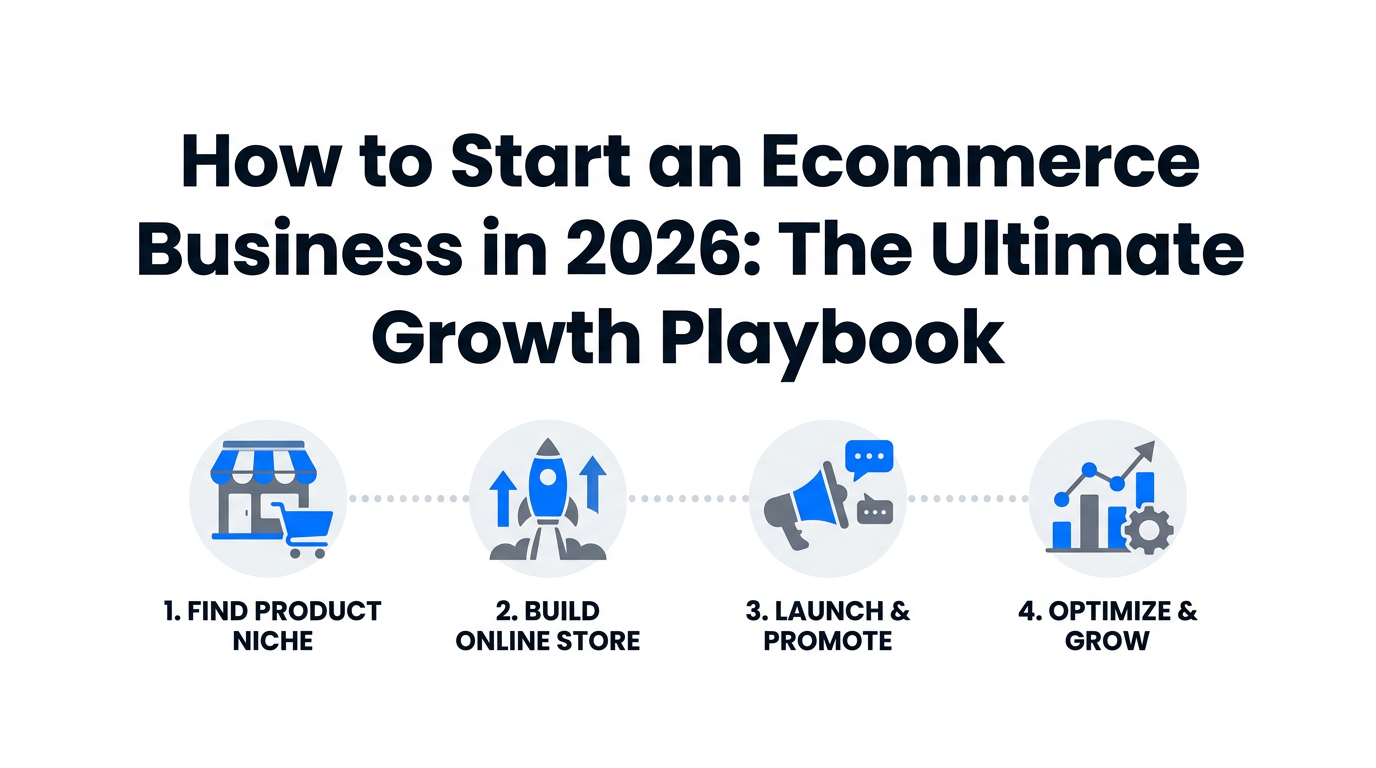
In 2026, the digital marketplace is no longer a gold rush; it is a sophisticated arena where success is reserved for those who prioritize execution, hyper-personalization, and machine-readability. The days of "experimental" digital transformation are over. Today, building a scalable ecommerce business model means constructing a data-rich ecosystem that serves both human consumers and the AI agents that shop on their behalf. With the global ecommerce market projected to reach $8.1 trillion by the end of this year according to Statista, the opportunity is massive, but the margin for error is razor-thin.
The 2026 Ecommerce Landscape: From Experimental to Execution
Starting an ecommerce business this year requires a fundamental shift in mindset. We have moved past the era of "throwing spaghetti at the wall." In 2026, commerce is unified. According to Mollie, unified commerce creates a single source of truth for inventory and customer data across every platform, from TikTok Shop to your physical experiential centers.
Furthermore, the rise of Agentic Commerce means your store must be optimized for AI-powered buyers. Agentforce by Salesforce and other AI agents now research, negotiate, and complete purchases for users autonomously. If your site isn't machine-readable and data-optimized, you’re invisible to 25% of shoppers who now use AI assistants as their primary shopping tool, as predicted by Forrester.
"The key to 2026 isn't just selling to humans; it's about building a brand architecture that AI agents can trust and verify in milliseconds."
Step 1: Hyper-Targeted Market Validation for Online Stores
Roughly 80% of ecommerce businesses fail within their first two years, often because they skip the most critical step: rigorous market validation. According to eDesk, a lack of real demand research is the leading cause of brand death. In 2026, you cannot rely on intuition; you must rely on hard data from tools like Semrush and Helium 10.
Your validation process should follow this 2026 playbook:
- Keyword Gap Analysis: Use Semrush to find terms where competitors are bidding heavily but underperforming on organic content.
- Sentiment Mining: Analyze competitor reviews on Amazon and TikTok to find what customers hate. Build your product to solve those specific pain points.
- Search-to-Volume Ratio: Use Google Trends to ensure your niche is on an upward trajectory, not a seasonal fad.
Step 2: Selecting High-Margin Scalable Niche Models
While the broader market is growing, the most profitable models in 2026 are Niche Subscription Boxes and Digital-Physical Hybrids. High-margin niches like "AI-powered fitness plans" or "eco-friendly baby tech" allow you to absorb the rising costs of customer acquisition (CAC).
For those looking at B2B opportunities, the market is even larger. Trade.gov reports that the global B2B ecommerce market will hit $36 trillion this year, growing at a 14.5% CAGR. This indicates a massive shift where traditional wholesalers are moving to self-service digital platforms.
| Niche Category | Avg. Margin (2026) | Growth Potential | Primary Acquisition Channel |
|---|---|---|---|
| Subscription Boxes | 45-60% | High | Email/SMS (Klaviyo) |
| Eco-Tech Gadgets | 30-40% | Medium | UGC & Influencers |
| B2B Industrial | 20-35% | Very High | LinkedIn & SEO |
| Digital Products | 85-95% | High | Community Platforms |
Step 3: Setting Up a Shopify Store for Mobile Conversion
Mobile devices drive over 40% of all ecommerce sales in 2026, according to Insider Intelligence. If your site isn't optimized for "thumb-scrolling," you are leaving 70% of your revenue on the table. Mobile optimization leaders like Tapcart highlight that mobile users will abandon a purchase instantly if the checkout flow is clunky.
To build a high-converting store, Shopify remains the gold standard for rapid launch and scalability. However, your setup must include:
- One-Click Checkouts: Eliminate forced account creation to lower the 70% cart abandonment rate cited by Baymard Institute.
- AI Personalization: Integrate Klaviyo for behavior-triggered SMS and email sequences.
- Performance Tracking: Use RedTrack.io for precise ad attribution across TikTok Ads and Meta Ads.
"The best checkout experience in 2026 is the one the customer doesn't even notice—it should be invisible, fast, and secure."
Step 4: Operational Excellence and Protecting Your Margins
Rick Watson, CEO of RMW Commerce, argues that success this year depends on operational excellence rather than chasing growth at any cost. In a world of rising shipping rates and ad costs, your backend efficiency is your greatest competitive advantage.
To protect your margins, you must automate the "boring" parts of the business. Use Tidio (Lyro AI) or Fin AI to handle up to 70% of your customer support tickets automatically. This reduces overhead and allows your team to focus on high-impact growth strategies.
Step 5: Leveraging AI Agents and Community-Led Growth
Traditional search is dying. Jason Goldberg of Publicis Groupe predicts that "Zero-Click Search" will force brands to optimize for voice and visual discovery. To combat this, you need to build a "brand home" that AI can't replicate: a community.
Successful brands like Liquid Death and Glamnetic have won by treating their products as identities. Use platforms like Whop or Circle.so to host customer communities. This creates a feedback loop that drives product development and organic loyalty.
For your social commerce strategy—which will exceed $100 billion in US sales this year according to Triple Whale—lean heavily into UGC (User Generated Content). When sourcing these influencers, AI-powered discovery tools like Stormy AI allow you to find hyper-relevant creators who align with your brand's niche and values instantly, bypassing the manual slog of old-school outreach.
Step 6: The 2026 Sustainability and Logistics Checklist
Modern consumers, particularly Gen Z and Alpha, demand radical transparency. Sarah Carroll, founder of Grow Global, emphasizes that a "digital-first" internationalization strategy must include localized sustainability efforts to survive economic fluctuations.
Use this 2026 logistics checklist to stay competitive:
- Carbon Neutrality: Offer carbon-neutral shipping at checkout using EcoCart.
- Unified Inventory: Ensure your Shopify store syncs in real-time with physical warehouses to prevent overselling.
- Local Fulfillment: Use regional hubs to reduce the shipping distance, lowering both costs and your carbon footprint.
- Validate demand on Semrush.
- Build a mobile-first Shopify store.
- Automate support with Gorgias or Fin AI.
- Incentivize sustainability via EcoCart.
- Scale via Stormy AI for creator discovery.
Conclusion: Your Roadmap to $8.1 Trillion
Starting an ecommerce business in 2026 is no longer about just having a website; it’s about mastering the intersection of AI, community, and operational efficiency. By moving from the "experimental" phase to a disciplined phase of execution, you can build a brand that is resilient, scalable, and highly profitable. The tools are here, the data is available, and the market is hungry. Now, it's time to execute. Ready to find the creators that will launch your brand to the next level? Discover the future of influencer marketing with Stormy AI today.