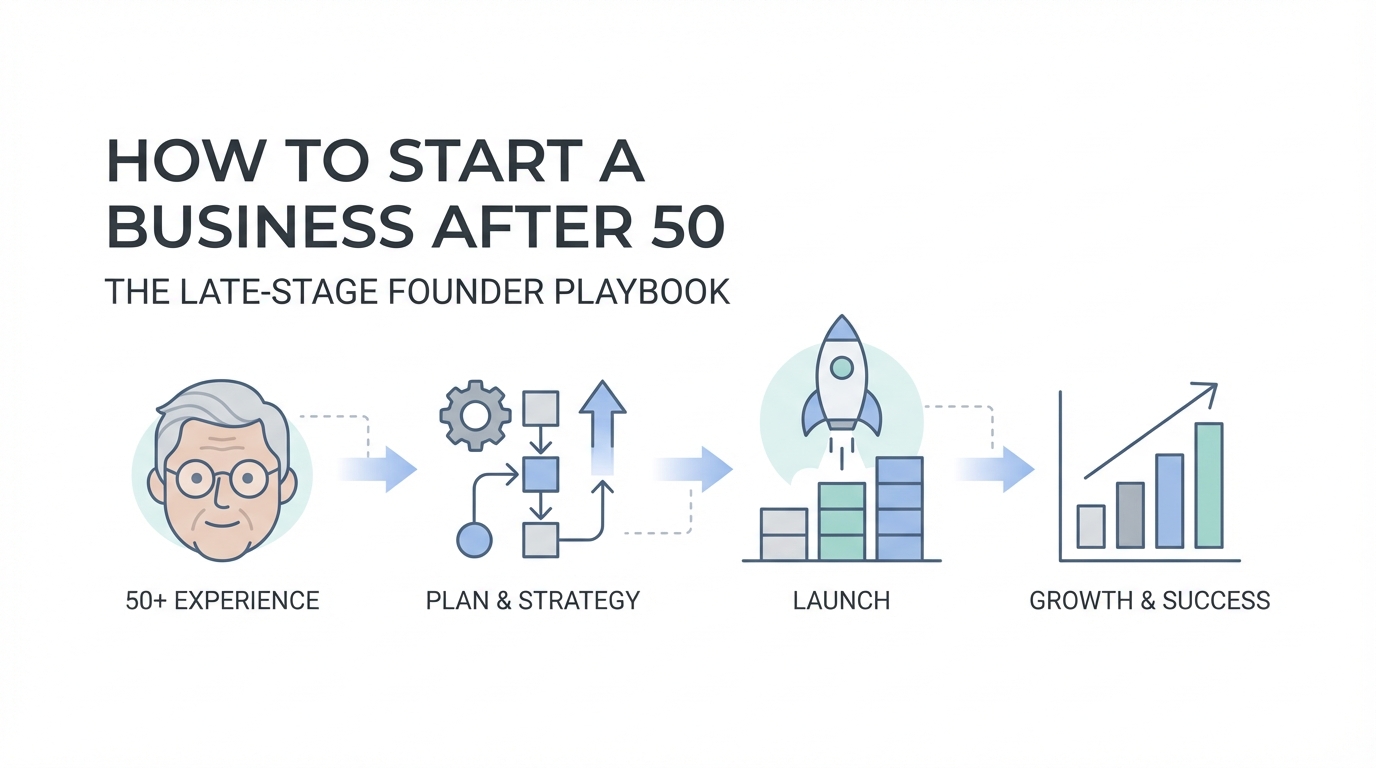
The narrative of the tech-savvy twenty-something dropout starting a business in a garage has dominated the entrepreneurial landscape for decades. However, a quiet revolution is taking place in the boardrooms and home offices of professionals over 50. Starting a business at 50 isn't just a viable path; it is often a more strategic one, backed by decades of operational reliability, financial stability, and life experience. Midlife entrepreneurship allows you to pivot from a traditional career into a high-revenue venture that leverages the skills you have already perfected, transforming a lifelong passion into a multimillion-dollar reality.
The Myth of the Young Founder and the Power of the Pivot

While society often celebrates youth in entrepreneurship, the data suggests that late-stage founders have a significant edge. According to recent industry observations, older entrepreneurs often possess the emotional intelligence and patience required to navigate the volatile early years of a startup. Take the story of Smithy Sodine, the founder of Smithy Home Couture. After decades as a teacher and stay-at-home mother, Smithy decided to launch her own business in her early 50s. She didn't have a deep background in e-commerce or digital marketing, but she had a master’s degree in linguistics and a lifelong passion for sewing.
Her journey proves that midlife entrepreneurship isn't about knowing everything on day one; it's about the willingness to learn and the grit to execute. Smithy started her luxury pillow business with an initial investment of just $10,000 and zero market research. Within five years, she built a seven-figure revenue business that outperformed many high-growth startups led by much younger founders. The key wasn't a complex algorithm but a simple, high-quality product backed by relentless work ethic.
Identifying Your 'Monetizable Passion'
For many professionals considering second career ideas, the biggest hurdle is deciding what to build. The secret often lies in what you have been doing for free for years. Smithy had been sewing for her family and neighbors for decades, making vests and decorative items. When her husband's business began to wind down, she realized she was "too young to retire" and looked at her closet full of high-quality textiles. She identified a gap in the market for high-end, made-to-order decorative pillows.
When searching for your own monetizable passion, ask yourself three questions:
- What do people constantly ask for your help with?
- What product or service do you find yourself critiquing in your daily life?
- What could you spend hours researching without getting bored?
Many founders find success by looking at platforms like Wayfair or Etsy to see where consumer demand is high but personalization is low. Smithy’s approach was straightforward: she loved textiles, she had an eye for interior design, and she knew women loved transforming their homes with simple decor changes. By focusing on a niche—decorative throw pillows—she was able to build a brand with a 4.9 out of 5-star rating and over 17,000 orders.
The Technical Bridge: Learning Digital Tools from Scratch


The most common fear for founders over 50 is the "technical gap." However, in the modern era, the barrier to entry has never been lower. To launch an online store, you no longer need to know how to code; you simply need to know how to use the right tools. Platforms like Stormy AI are revolutionizing how brands find creators, using an AI-powered search engine to find influencers across TikTok, Instagram, and YouTube with simple natural-language prompts.
Smithy had to learn the "internet from scratch." This meant understanding e-commerce lingo like SEO, conversion rates, and digital ad spend. She broke her learning down into manageable chunks, using tools that offer intuitive interfaces for non-technical users. For visual branding, she utilized Canva to create social media posts and learned the basics of Adobe Photoshop to edit her product photography. For her storefront, she evaluated platforms like Shopify and Etsy, ultimately utilizing both to capture different segments of the market.
The technical bridge isn't a wall; it's a staircase. You don't need to be a master of all trades on day one. Start by setting up a simple store, then learn how to run Meta Ads or Google Ads as you scale. The goal is momentum, not perfection. As Smithy notes, she learned "a little bit every day," and by the end of the month, she was proficient in tools that once seemed intimidating.
The Step-by-Step Transition: A Playbook for $60k+ in Year One
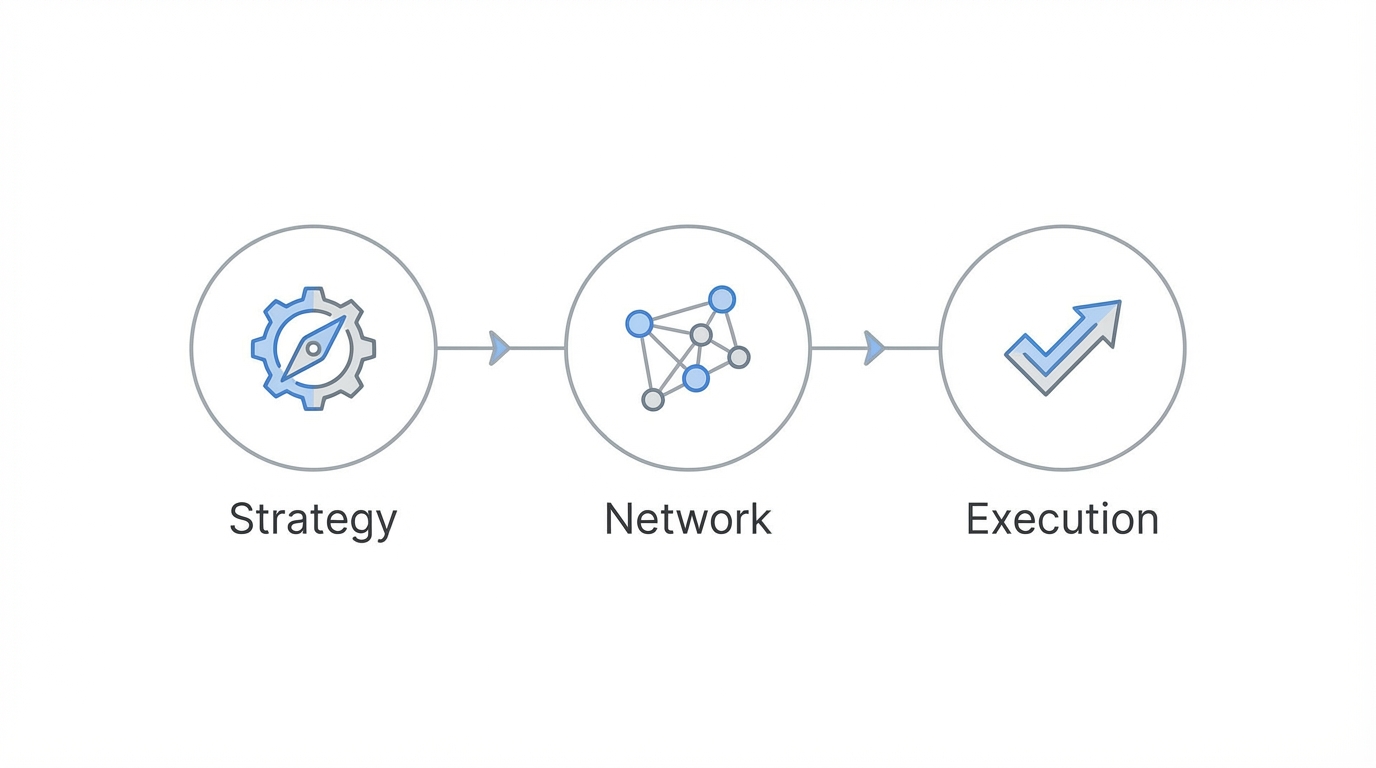
Moving from a 9-5 or a teaching position to a profitable business requires a clear roadmap. The following playbook is based on the successful transition of the Smithy Home Couture model, which allowed a former teacher to match her $67,000 salary in just one year.
Step 1: The "Caveman" Launch
Avoid the trap of the six-month business plan. Instead, aim for momentum to your first dollar. Smithy launched her store within two weeks of deciding on her business name. She didn't overthink the market research; she bought fabric, made a few pillows, and put them online. Use your existing network to get those critical first five reviews. This provides the social proof necessary to attract strangers to your brand.
Step 2: Inventory Without the Risk
One of the biggest mistakes new entrepreneurs make is over-investing in stock. The made-to-order model is a safer bet for midlife entrepreneurs. Smithy stocks 400 different rolls of fabric but zero finished pillow covers. When an order comes in through Shopify, her team makes the pillow that day and ships it within 3-5 days. This keeps overhead low and ensures you are never stuck with "dead stock." [source: Just-in-Time Inventory Management]
Step 3: Mastering Customer Service as a Moat
In a world of automated bots, human connection is a premium. Leverage your life experience to provide superior customer service. Smithy acts as a consultant for her clients, helping them select fabrics and even recommending competitors if she can't fulfill a specific request. This builds immense trust and results in crazy high review scores, which are the lifeblood of platforms like Etsy and Wayfair.
Leveraging Life Experience and Operational Reliability


Being an older founder provides an advantage that twenty-somethings often lack: operational reliability. You have likely managed a household, a classroom, or a corporate department. These skills translate directly into managing supply chains and subcontractors. In her New Jersey workroom, Smithy manages five to six subcontractors who handle the sewing while she focuses on the creative side and procurement.
Furthermore, older founders often have a better sense of work-life balance. While a younger founder might chase growth at any cost, a late-stage founder often builds a business with intentionality. Smithy has the flexibility to watch her grandchildren while still managing a seven-figure business. This balance prevents burnout and ensures the business remains a source of joy rather than a "prison" of one's own making. For those looking to scale their digital presence further, using tools like Stormy AI can help find the right UGC creators and automate the outreach process with personalized AI-generated emails.
Growth Mindset: Overcoming the "It's Too Late" Barrier
The mental barrier is often more significant than the financial one. Many people in their 50s feel that they have missed the window for how to start an online store. However, Smithy's story highlights that the growth mindset is available at any age. She went from selling $300 worth of pillows in January 2020 to multiple thousands by April 2020. Even during the global shutdown, she saw an opportunity as people shifted their spending toward home improvement.
Scaling doesn't always mean becoming a massive corporation. It means growing to a level that satisfies your financial and personal goals. Smithy is currently considering a wholesale program that would allow her to sell to national retailers like Bloomingdale's. However, she evaluates every opportunity against her own values. She even pulled her products from major retailers when their business model didn't align with her standards of quality and service.
If you are looking for side hustles for seniors or a full-scale second career, consider that your biggest asset is your ability to take action. As the Smithy Home Couture case study shows, you can start with a simple idea, learn the tools like Apple Search Ads for app-based visibility or Stormy AI to vet creators for quality and detect fake followers automatically.
Conclusion: Your Second Act Starts Now
Starting a business after 50 is not about competing with the tech giants of Silicon Valley; it's about reclaiming your creativity and building a legacy of your own design. Whether you are moving from a 9-5 or transitioning from stay-at-home parenting, the Late-Stage Founder Playbook is the same: find a monetizable passion, bridge the technical gap with modern tools, and lead with the customer service excellence that only life experience can provide.
Key Takeaways:
- Start Small: You don't need millions to start; $10,000 can be enough to launch a seven-figure brand.
- Learn as You Go: Tools like Canva, Shopify, and Photoshop are accessible to everyone willing to learn.
- Stay Intentional: Build a business that fits your lifestyle, not one that consumes it.
- Use AI to Your Advantage: When you're ready to grow, use Stormy AI to manage all your creator relationships and track campaign analytics in one place.
It is never too late to take action. The opportunities are there for those who are "smart enough to be simple" and brave enough to take the first step. Your second career could be your most successful one yet.