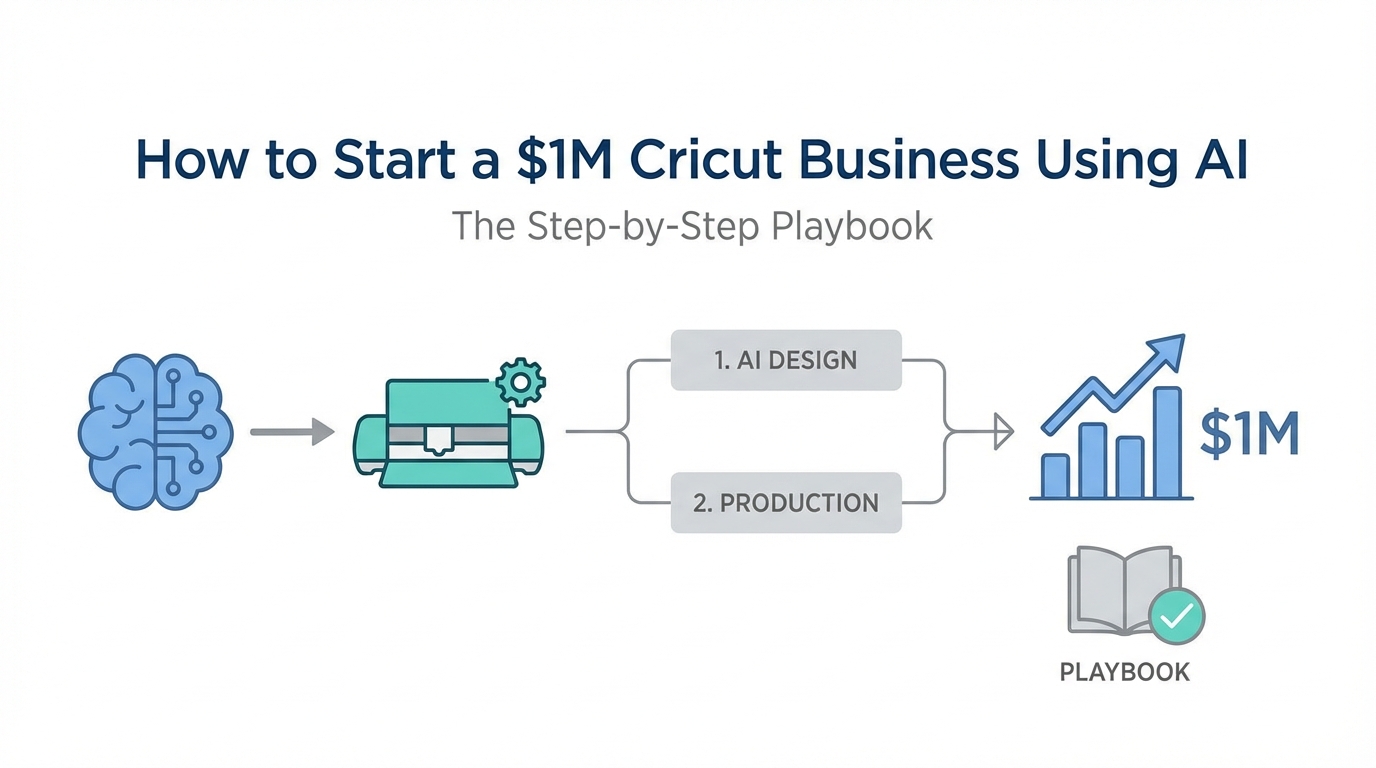
While the tech world focuses on the latest LLM updates and Silicon Valley hardware, a multi-billion dollar economy has been quietly thriving in suburban living rooms and craft studios. Cricut, a company that produces tabletop CNC machines for crafters, has built a massive market share that rivals major printer manufacturers, reporting hundreds of millions in annual revenue. For the uninitiated, these machines allow users to cut intricate designs out of paper, vinyl, and fabric. However, the real goldmine isn't just the hardware; it’s the digital assets for crafters known as SVGs (Scalable Vector Graphics). By combining these high-demand files with modern automation, entrepreneurs can build a highly scalable, recurring revenue business that generates $1M or more in annual revenue.
The Billion-Dollar Opportunity in Digital Crafting
To understand how to make money with Cricut, you first have to understand the "razor and blade" business model. Much like HP or Epson sell printers at a low margin to profit from ink, Cricut sells a high-ticket machine and then creates a constant demand for materials and designs. The users—predominantly moms and DIY hobbyists—are constantly searching for new patterns to use on custom tumblers, t-shirts, and home decor. This demand has fueled a massive ecosystem where users frequently sell SVGs on Etsy, often generating thousands of dollars in passive income from single designs.
However, the traditional way of building an SVG shop is slow. It involves hiring graphic designers or spending hours in Adobe Illustrator. Today, AI business ideas 2024 are pivoting toward automation. By leveraging generative AI, you can produce high-quality, cut-ready designs at a scale that was impossible five years ago. Instead of a small Etsy shop, the goal is to build a digital asset marketplace similar to Creative Fabrica, a company currently generating an estimated $30 million per year by offering unlimited design subscriptions to this exact demographic.
Step 1: Building Your Automated AI Design Factory
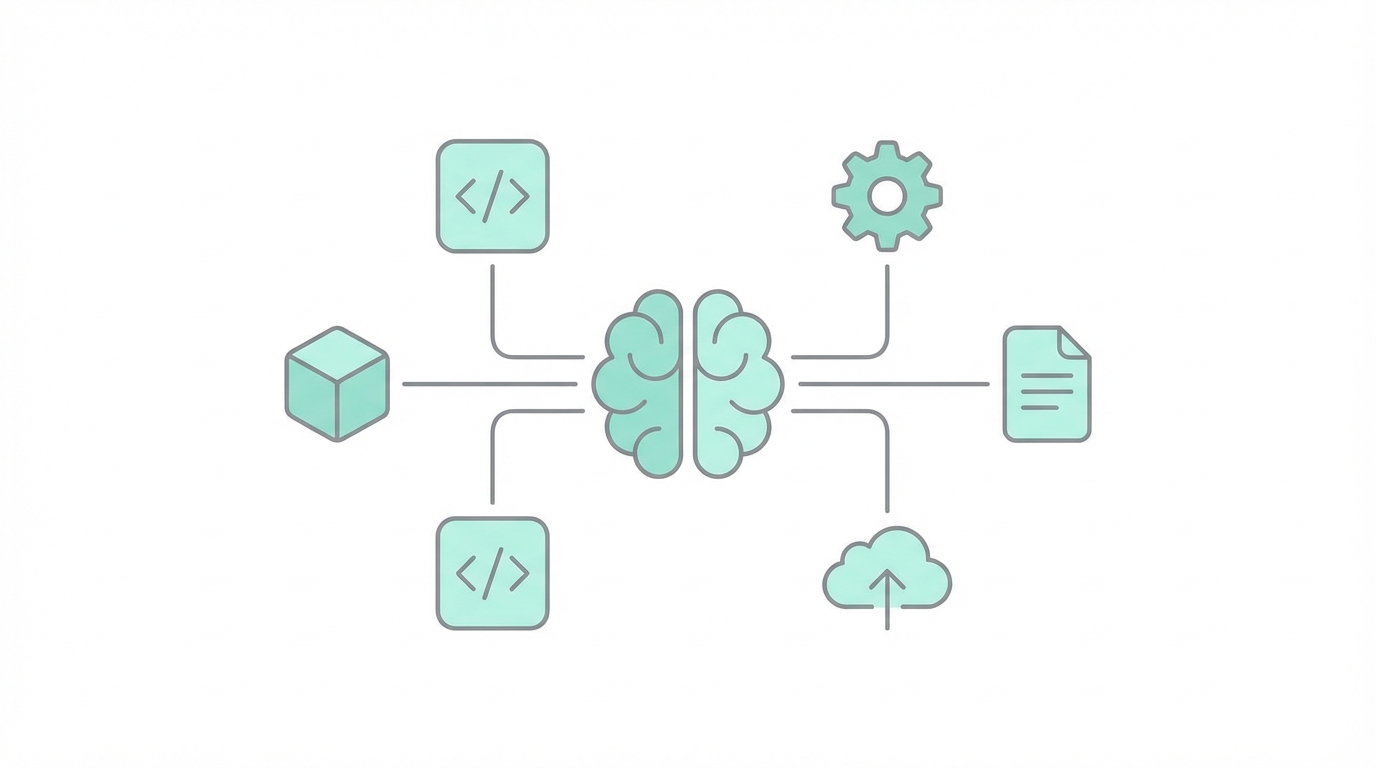
The core of this cricut business idea is the ability to generate "cut-ready" files without human intervention. A standard image (like a JPG) isn't useful for a Cricut machine; it needs an SVG, which provides the machine with specific paths to follow. You can build a completely automated pipeline to handle this using common APIs. Here is the technical playbook for your MVP:
- Generation: Use Midjourney via a Discord bot to generate high-contrast, black-and-white graphics based on trending keywords (e.g., "floral horse head silhouette").
- Upscaling: Connect a GitHub repository or an API-based upscaler to ensure the lines are crisp and high-resolution.
- Background Removal: Use a tool like Remove.bg to strip away the canvas, leaving only the vector-ready subject.
- Vectorization: Hit a vectorization API to convert the raster image into a true SVG file.
By providing a simple Python script with a list of target keywords, you can "yeet" thousands of unique, high-quality designs into existence overnight. This allows you to bypass the need for an offshore team of designers and move straight to the market validation phase.
Step 2: Setting Up Your Shopify Store for Recurring Revenue
While Etsy is great for testing individual products, a million-dollar business requires a platform you own. You should set up a Shopify store to house your collection. The key to hitting seven-figure valuations is not selling $2 files one at a time, but rather a subscription-based revenue model. Customers pay a monthly fee (e.g., $9.99 to $19.99) for unlimited access to your entire library of SVGs.
Shopify now offers native subscription features and a robust API. For founders looking to scale, the technical challenge is often managing thousands of landing pages. Advanced users can use Cloudflare to manage subfolders and bulk-create collection pages that bypass traditional Shopify rate limits. This allows you to create millions of long-tail keyword landing pages (e.g., "Personalized Mom Life SVG for 30oz Tumblers") that rank organically in search engines by targeting high-intent search terms, driving massive amounts of traffic without a proportional increase in ad spend.
Step 3: The 'Lead Magnet' Facebook Ad Strategy
You don't need a massive budget to start. You can validate this business with roughly $10,000—$5,000 for development and $5,000 for initial ad spend. The strategy is to use Meta Ads Manager to target people with interests in "Cricut," "Silhouette Cameo," and "Hobby Lobby."
Instead of trying to sell a subscription cold, use a Lead Magnet strategy. Offer a "Mega Bundle" of 20-50 high-quality SVGs for free in exchange for an email address. Tests have shown that in this niche, you can acquire subscribers for less than $1.00 each. Imagine spending $5,000 to instantly build an email list of 5,000 to 7,000 hyper-targeted potential customers. Once they are on your list, you use an automated email drip to nurture them, showcasing new arrivals and eventually upselling them to your unlimited subscription plan.
Step 4: Scaling Through UGC and Influencer Outreach
In the world of crafting, trust is everything. The most effective way to rank for cricut business ideas and build authority is through User-Generated Content (UGC). When a "mommy blogger" or a TikTok creator shows themselves using your specific SVG to make a beautiful gift, the conversion rate sky-rockets. According to recent marketing statistics, UGC can increase conversions by over 20% compared to brand-led content.
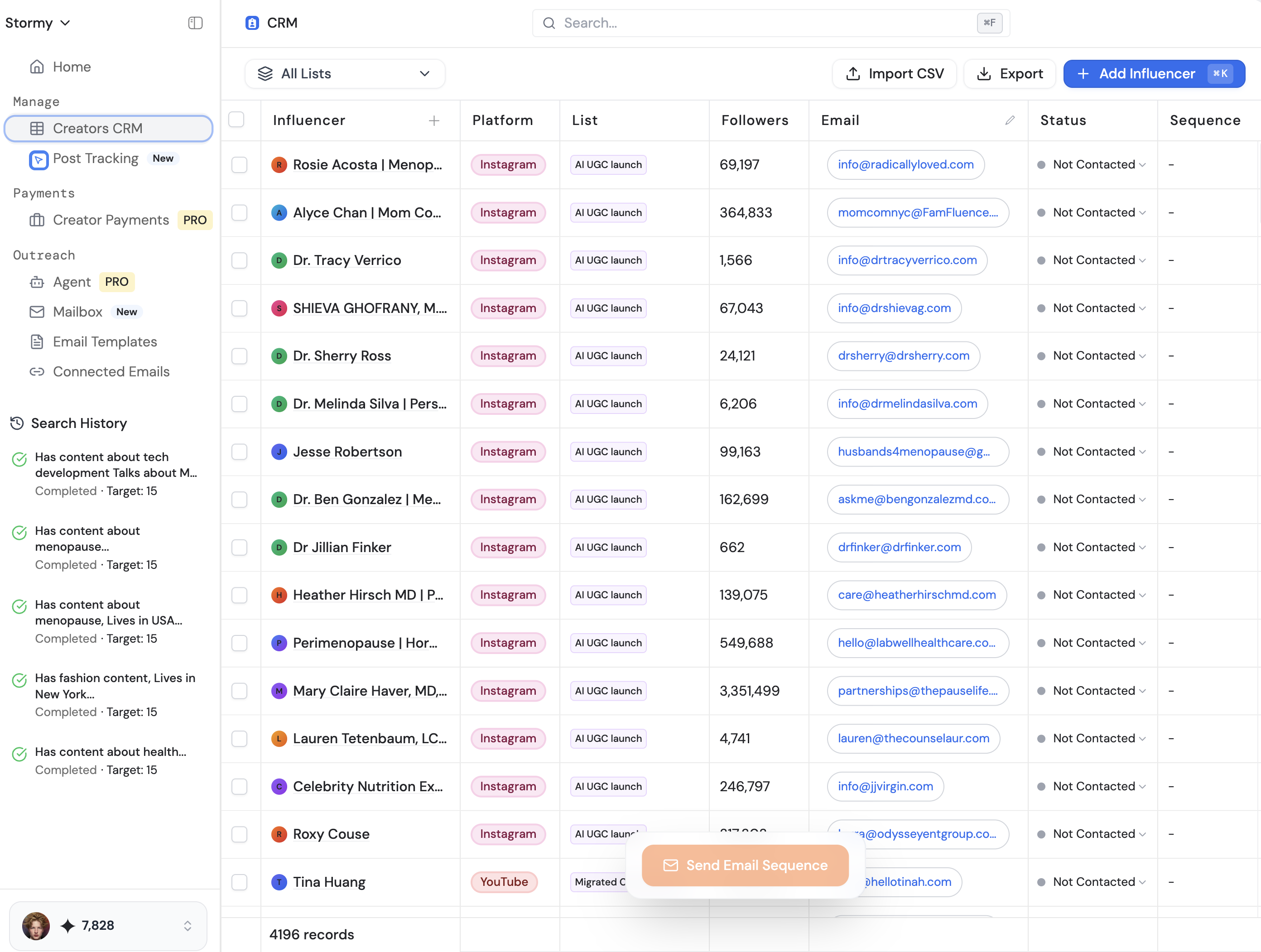
To scale this, you can't just reach out to one or two people; you need a system. While legacy tools like Impact.com or Tagger were built for manual PR workflows, modern platforms like Stormy AI can help source and manage UGC creators at scale by allowing you to search for niche crafting influencers and automate the outreach process. By sending a free product or a free lifetime subscription to 100 relevant creators, you can generate a flood of video content and social proof for the cost of a few clicks. This level of automation is what separates a hobbyist from a seven-figure founder.

Step 5: Dominating the SERPs with Programmatic SEO
The final stage of the playbook is Programmatic SEO. Most people use AI to write generic blog posts. The real winners use AI to generate product landing pages. If you have 100,000 AI-generated SVGs, you can use LLMs to write unique, SEO-optimized descriptions and meta-data for every single one of them. By indexing these pages on Google Search Console, you create a massive net that catches thousands of long-tail searches every day.
If you want to move even faster, you can use an AI agent to discover new trending keywords on TikTok or Pinterest Trends, feed them into your AI design pipeline, and have a new collection live on your site before the trend even peaks. This level of speed was previously only possible for companies with massive engineering teams, but in 2024, a solo founder can execute this entire workflow with the right stack of APIs.
Conclusion: Your Path to a $1M Digital Asset Empire
Starting a Cricut business with AI is no longer about being the best artist; it's about being the best orchestrator. By building an automated pipeline to generate digital assets for crafters, using Shopify to manage recurring revenue, and leveraging low-cost Facebook Ads to build a massive audience, you are building a business with high margins and incredible defensibility. The crafting market is vast, underserved by modern tech, and ready for disruption. Whether you are looking for how to make money with Cricut as a side hustle or aiming to build the next $30M marketplace, the tools are now in your hands. Start by building your first AI-generated SVG bundle today and watch how quickly the crafting community responds to high-quality, automated design.