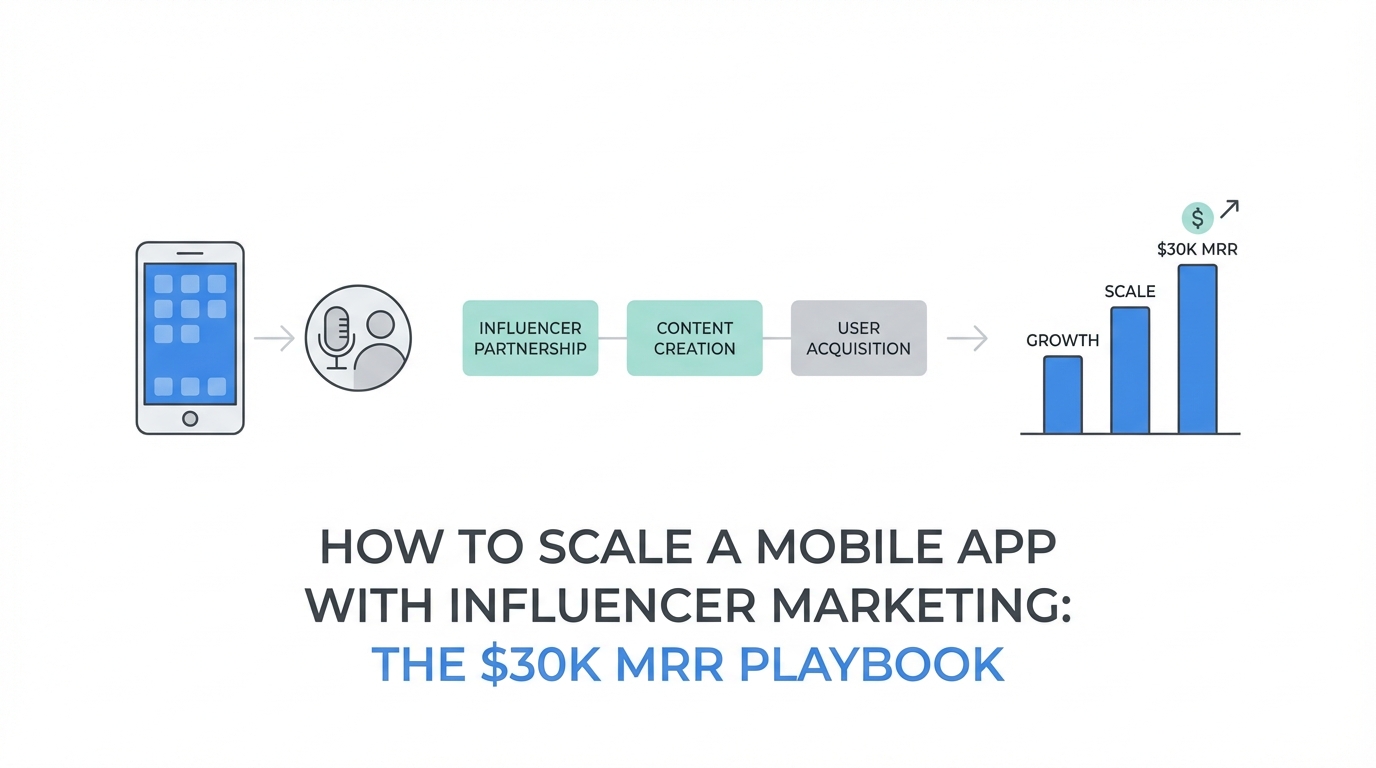
In the high-stakes world of mobile app development, the line between a viral sensation and a forgotten download is razor-thin. Many founders believe that a great product will naturally find its audience, but as the landscape of app growth strategies 2025 evolves, distribution has become the ultimate differentiator. Imagine waking up to find your annual recurring revenue (ARR) has jumped from $8,000 to $38,000 in just seventy-two hours. This isn't a pipe dream; it is the reality for founders who master the intersection of high-quality product design and aggressive influencer-led distribution. By leveraging the right creators, brands are no longer just buying impressions—they are buying trust, community, and immediate scalability.
The 2025 Shift: Why Influencer Marketing Dominates App Growth

The traditional playbook for scaling mobile apps used to rely heavily on programmatic display ads and search engine optimization. However, as user acquisition costs rise on platforms like Meta Ads Manager, savvy developers are pivoting toward more organic, human-centric channels. Influencer marketing for mobile apps has emerged as the most effective distribution channel because it bypasses the "ad fatigue" that plagues modern users. Using a platform like Stormy AI allows founders to find creators across TikTok and Instagram with natural-language prompts, making distribution a repeatable science. When a creator shares an app with their audience, they aren't just presenting a tool; they are providing a testimonial that carries significant social weight.
As highlighted in recent case studies on Starter Story, the modern user journey begins with social proof. Founders Eyal and Yali, the creators of the sports analytics app PropGPT, discovered that while paid ads can drive clicks, they often fail to drive long-term retention if the initial trust isn't established. By focusing on organic social media and influencer partnerships, they were able to reach over 40,000 downloads and 3,000 paying customers. This shift toward creator-led growth allows apps to achieve a viral marketing for apps effect that paid channels simply cannot replicate at the same price point.
The Viral Threshold: Why Consistency is the Key to Scaling Revenue
One of the biggest misconceptions about viral marketing for apps is that it happens by accident. In reality, virality is a numbers game. For PropGPT, the breakthrough didn't happen with their first, tenth, or even fiftieth video. It was their 70th video that finally hit the "viral threshold," garnering 600,000 views and triggering a massive revenue spike. This consistency is what separates successful app growth strategies 2025 from those that fizzle out after a week of effort. You have to be willing to produce content at scale until the algorithm identifies your target audience.
By using Stormy AI to vet creators and detect fake followers automatically, developers can identify the specific creators who have the highest probability of hitting this threshold within their specific niche. By analyzing deep audience demographics and engagement patterns, developers can move away from the "spray and pray" method and toward a data-backed outreach strategy. When that one video finally takes off, the impact on scaling mobile app revenue is instantaneous. Moving from $8,000 to $38,000 ARR in three days is only possible when you have the infrastructure to handle the sudden influx of users that a viral moment provides.
The Distribution Trap: Why a Great App Needs More Than Just Views
While distribution is vital, it cannot save a fundamentally flawed product. Eyal and Yali initially faced a major hurdle: they were getting downloads, but their conversion from trial to paid was abysmal. They were stuck at $2,000 monthly recurring revenue (MRR) because, despite the traffic, the user experience didn't match the promise. This is a critical lesson for anyone looking to improve influencer ROI for SaaS or mobile apps. If your product doesn't solve the user's pain point immediately, the traffic you gain from influencers will simply leak out of your funnel.
Using analytics tools like PostHog, the PropGPT team realized that while they had a 45% conversion to trial rate, only 13% of those users were staying. This data signal was clear: the users loved the idea, but the execution was lacking. They spent four months rebuilding the app from scratch before relaunching. This "back to the cave" approach is often necessary to ensure that when you do engage in influencer marketing for mobile apps, you are maximizing every single dollar spent on marketing.
The 2025 Mobile App Scaling Playbook
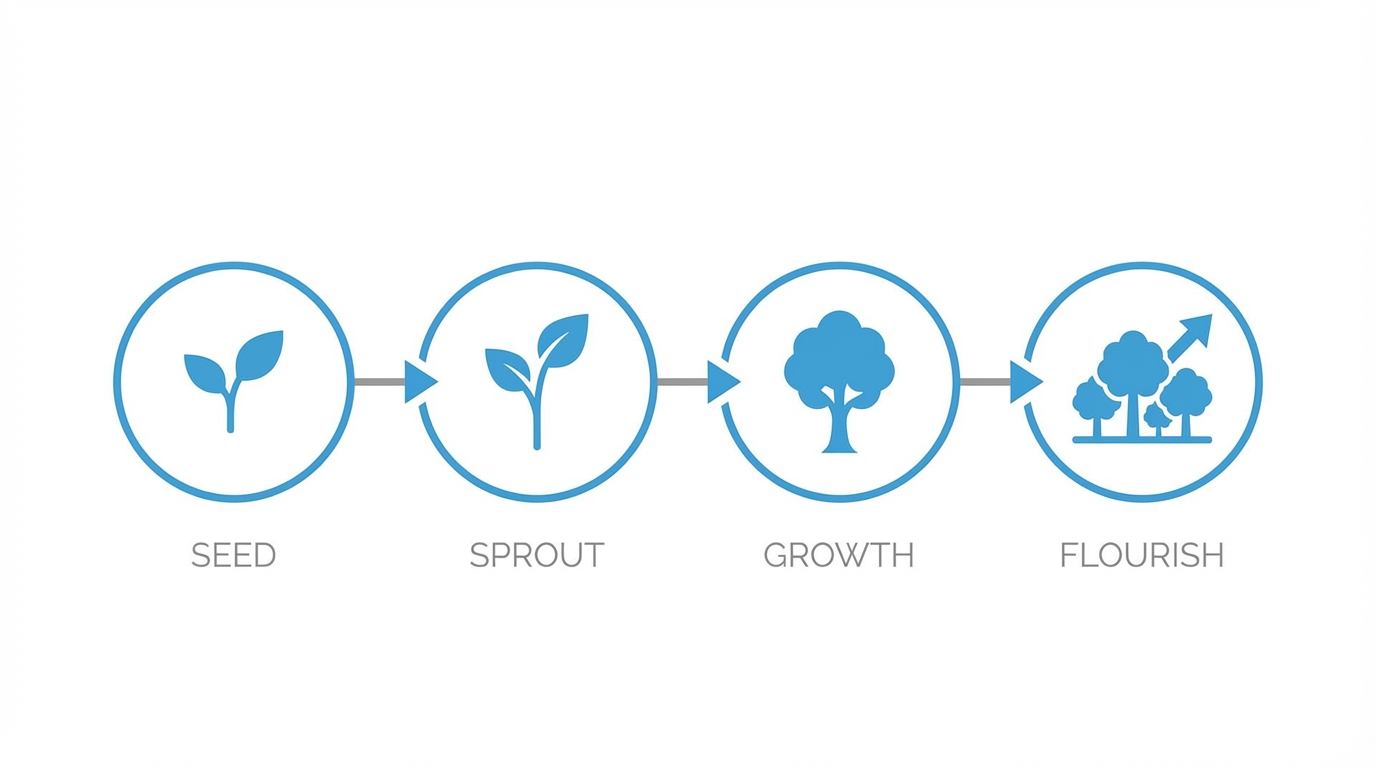
Scaling to $30,000 MRR requires a systematic approach. Below is the exact step-by-step playbook derived from successful app launches this year. This framework focuses on combining product excellence with high-leverage distribution.
Step 1: Deeply Understand User Pain Points
Before writing a single line of code or contacting an influencer, you must identify exactly who you are building for. For PropGPT, the pain point was the complexity of sports betting analytics. Users wanted a machine learning algorithm that could scan thousands of bets to find the best picks. If you don't have a clear value proposition, your marketing will fail. Research your competitors and identify the gaps in their user experience.
Step 2: Implement a Data-Driven Feedback Loop
Become obsessed with your numbers. You should be tracking every screen in your onboarding process. If you notice users dropping off on a specific screen, that is where your marketing message is breaking down. Tools like SuperWall allow you to A/B test your paywalls in real-time, which is essential for optimizing the influencer ROI for SaaS. In the case of PropGPT, optimizing their paywall and onboarding led to a 48% conversion to trial rate and an average revenue of $3.30 per download.
Step 3: Leverage AI-Powered Influencer Discovery
Once the product is stable, it's time to scale. Finding the right creators is the most time-consuming part of the process. You can use Stormy AI to set up an AI agent that outreaches to creators every day on a schedule while you sleep, ensuring you are consistently finding and contacting influencers who align with your app's niche. The goal is to find creators whose followers "engage deeply and convert faster." Don't just look at follower counts; look at the comments and the shared values between the creator and your brand.
Step 4: Scale Content Production to the Viral Threshold
As mentioned, you need to produce a high volume of content. This includes both your own organic brand accounts and partnerships with external influencers. The goal is to flood the niche with your app's presence. When a user sees your app on their feed three or four times from different trusted sources, the friction to download almost disappears. This is how you achieve scaling mobile app revenue without relying solely on the Apple Search Ads auction.
The Tech Stack of a High-Growth App
A robust app needs a scalable tech stack. The PropGPT team utilized a React Native repository, allowing them to deploy to both iOS and Android efficiently. By using TypeScript and Python for their machine learning algorithms, they maintained a high level of performance. Their data infrastructure was built on Neon, a serverless Postgres database that provides the bandwidth needed for real-time data fetching.
On the business side, managing subscriptions and revenue is best handled by specialized tools. Using RevenueCat for subscription management ensures that your revenue dashboards are accurate and that you can easily manage cross-platform entitlements. When your marketing budget hits $10,000 a month, you cannot afford to have manual errors in your revenue tracking. For 2025, a lean stack with 50% profit margins is the goal for most independent app developers.
Measuring Influencer ROI for SaaS and Mobile
How do you know if your influencer marketing for mobile apps is actually working? You must look beyond vanity metrics like likes and shares. The only numbers that matter are Cost Per Install (CPI) and Customer Acquisition Cost (CAC) relative to your Lifetime Value (LTV). In the PropGPT example, they achieved an LTV of $3.30 per download. If their influencer partnerships bring in users at a lower cost than that, the campaign is a success.
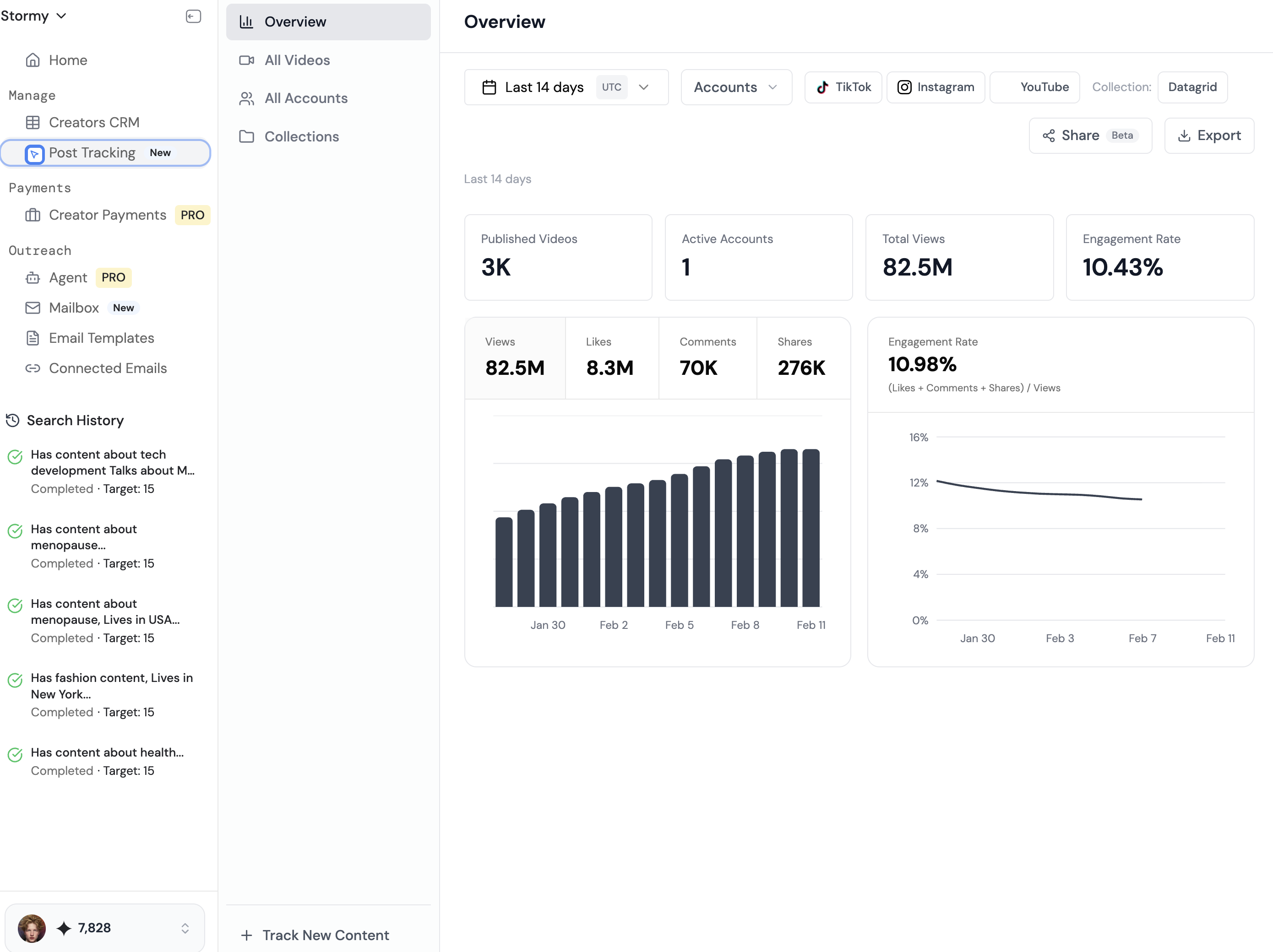
Furthermore, you should monitor the "halo effect" of your influencer campaigns. Often, a viral video on TikTok or Reels will lead to a spike in organic searches on the App Store. This improves your visibility in Google Ads and other search-based platforms, creating a virtuous cycle of growth. By using Stormy AI to track accounts and monitor campaign performance across all platforms in the Post Tracking section, you can track which creators are driving the most high-value users and double down on those partnerships.
Conclusion: Building for the Long Term
Scaling a mobile app to $30,000 MRR is not a matter of luck; it is a matter of discipline. By combining a product that actually solves a problem with a consistent, influencer-led distribution strategy, you can achieve growth that was previously reserved for venture-backed giants. The key takeaways from the PropGPT playbook are clear: be humble about your product, obsess over your analytics, and don't stop creating content until you hit that viral threshold. As you refine your app growth strategies 2025, remember that the most successful apps are those that build a community around their utility. Start finding your creators, refine your onboarding, and prepare for the revenue spike that follows a perfectly executed viral campaign.