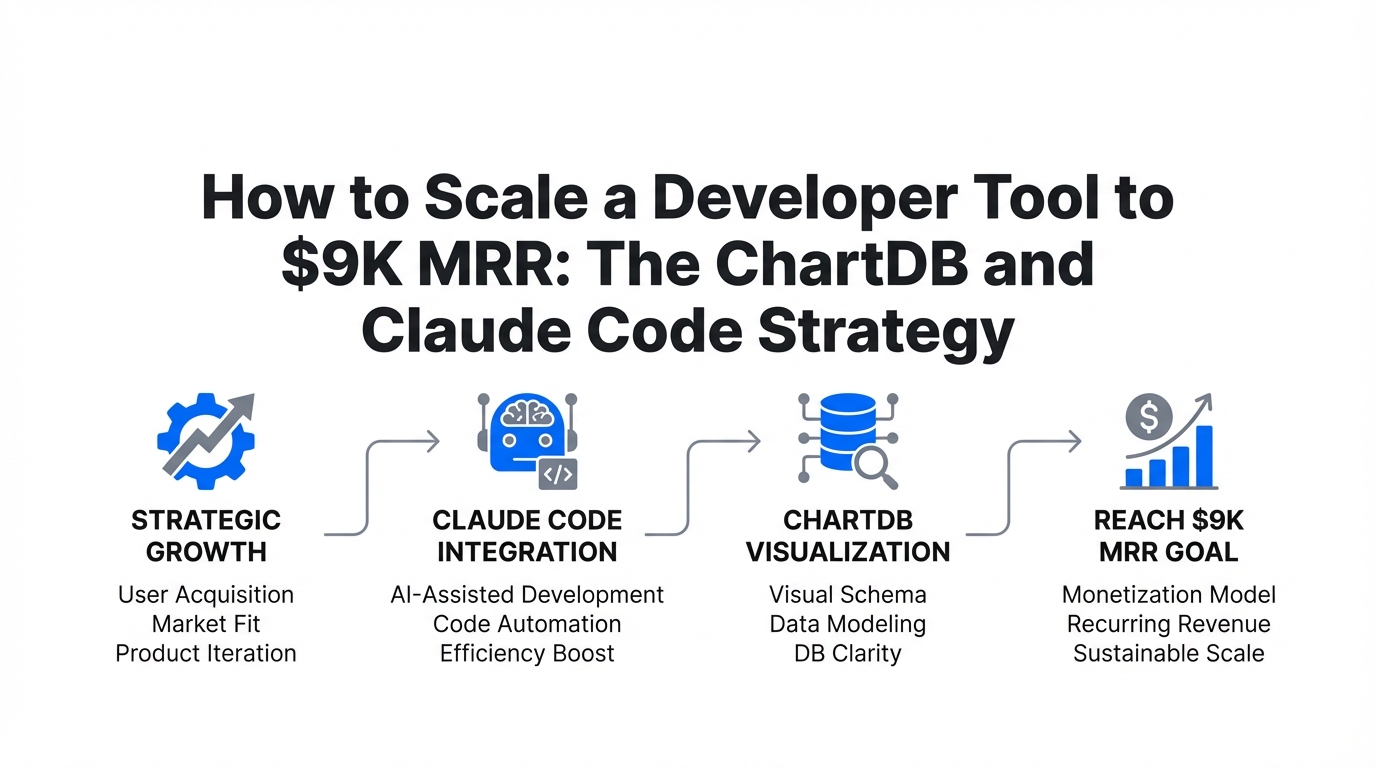
Most entrepreneurs believe that building a successful business requires a massive, world-changing idea. They spend months, or even years, chasing a grand vision that eventually collapses under its own weight. However, the most successful micro-SaaS growth stories often start with the exact opposite approach: finding a tiny, hyper-niche problem and solving it better than anyone else. Jonathan Fishner, the co-founder of ChartDB, proved this by scaling an open-source database visualization tool to over $9,400 in Monthly Recurring Revenue (MRR) in just 16 months.
By moving away from the trend of generic "AI wrappers" and focusing on visual utility for developers, Fishner created a product that resonated with over 250,000 engineers. This article provides a comprehensive business-building blueprint for those looking into entrepreneurship for developers, moving from a free utility to a profitable, scalable SaaS model.
The Wedge: Finding a Niche Problem Hiding in Plain Sight
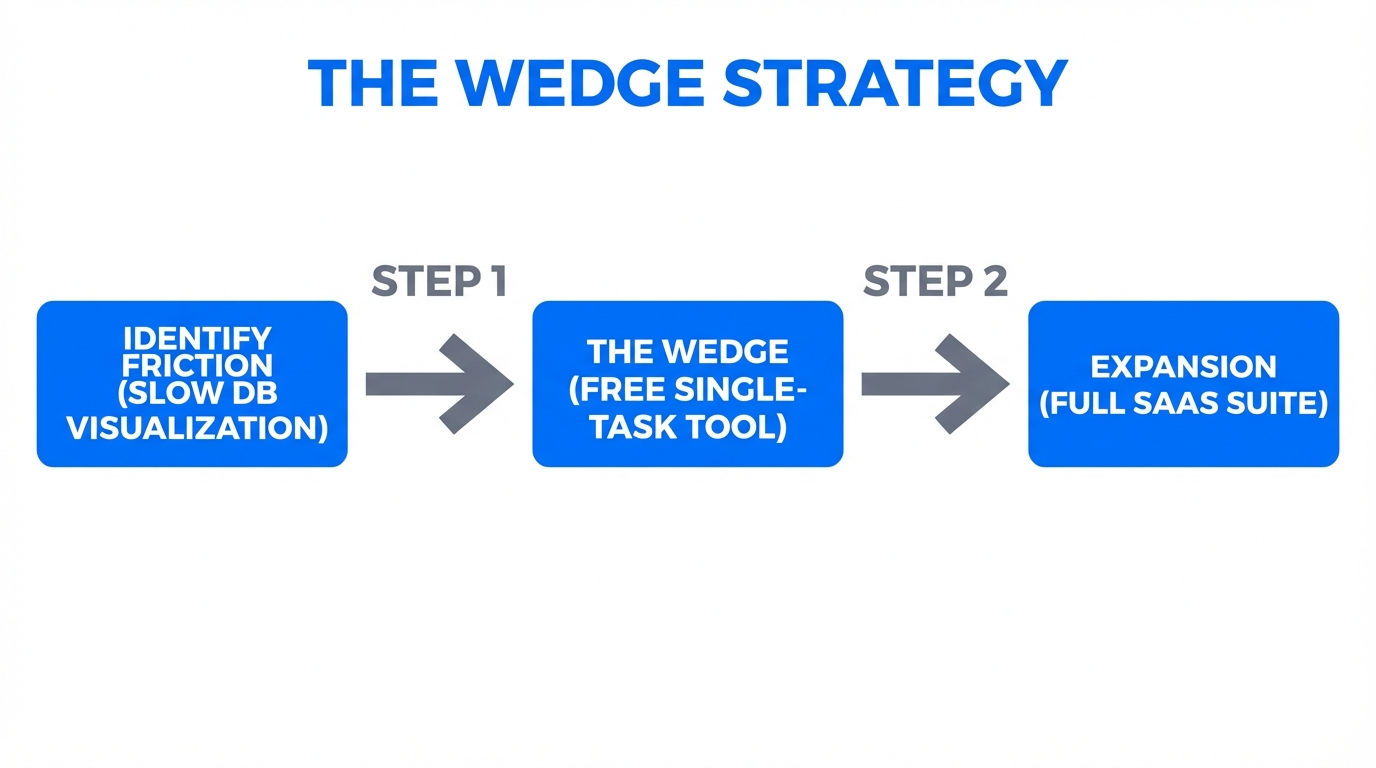
The core philosophy behind ChartDB’s success is the "wedge" strategy. Instead of trying to build a platform that does everything for everyone, Fishner focused on one specific persona: the developer who needs to visualize a database schema quickly and without friction. When considering how to scale a SaaS, the first step is often narrowing your focus until the value proposition becomes undeniable.
Many developers fail because they build tools that require too much trust or too much setup. Initially, the ChartDB team tried to build an AI-powered database client. It failed. Why? Because developers are naturally skeptical of sharing their database credentials with unverified third-party tools. By pivoting to a simple visualization tool—where users run a "smart query" locally and paste the results—they eliminated the trust barrier entirely. This is a masterclass in profitable niche apps: identify the friction and remove it aggressively.
"Everything started working when we doubled down on making database visualization obvious and ignored everything else."
The Pivot: From AI Wrappers to Visual Utility
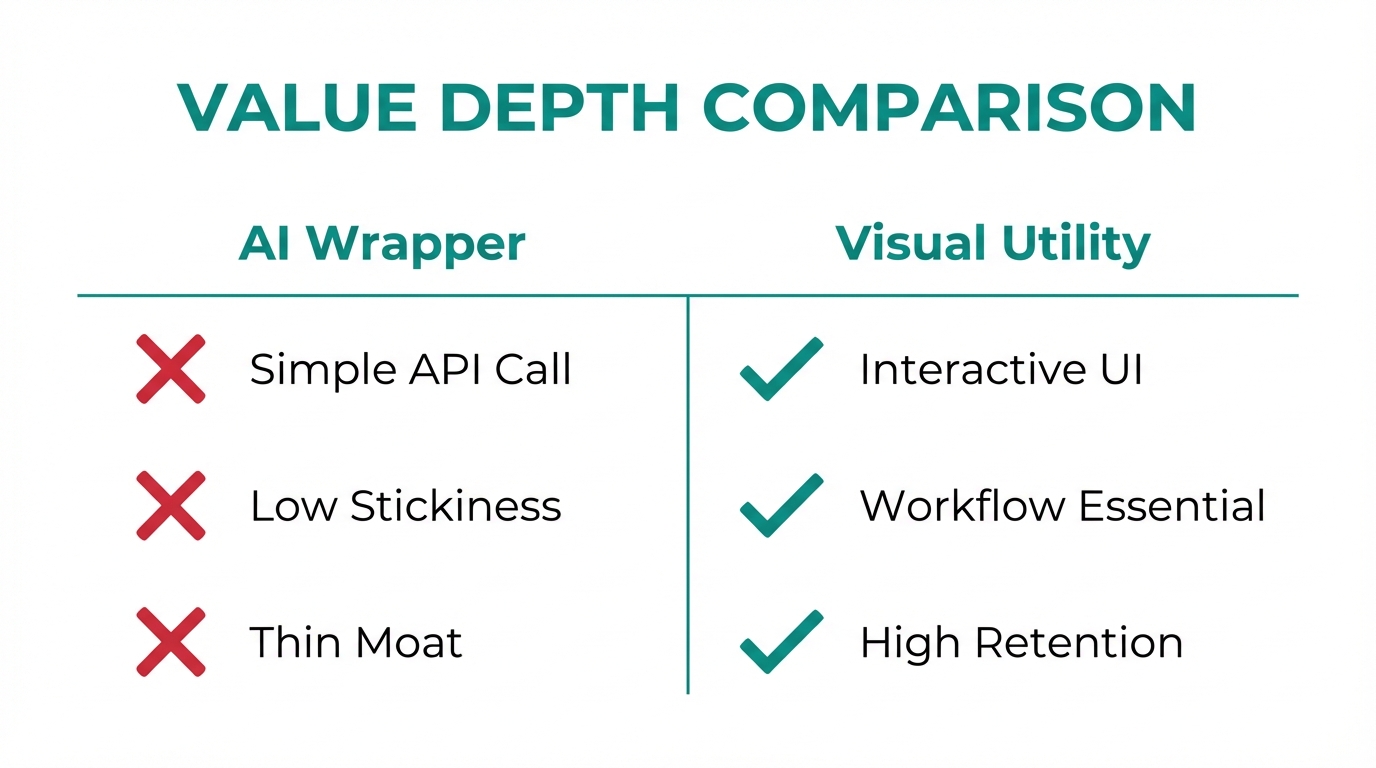
In the current market, many developers are tempted to build simple wrappers around LLMs. While tools like Claude and ChatGPT are powerful, a standalone wrapper rarely offers enough long-term value to sustain a business. The ChartDB team realized that while AI is a great feature, it isn't always the product. They shifted their focus to the visual canvas, using React Flow to create an interactive experience that feels like a professional design tool.
This pivot was essential for micro-SaaS growth. By prioritizing the "wow effect" of a visual chart over a text-based AI chat, they made the product's value instantly shareable. Developers could see the result immediately, which fueled organic growth on platforms like Hacker News and Reddit.
| Strategy Phase | Old Approach (AI Wrapper) | New Approach (Visual Utility) |
|---|---|---|
| Value Prop | Run AI queries on your DB | Instant Database Visualization |
| User Trust | Requires DB Credentials (High) | No Access Needed (Low) |
| Time to Value | Minutes (Setup) | Seconds (Paste JSON) |
| Monetization | API Call Margins | Team Collaboration & Cloud Hosting |
Distribution: Hacking Growth Where Developers Live
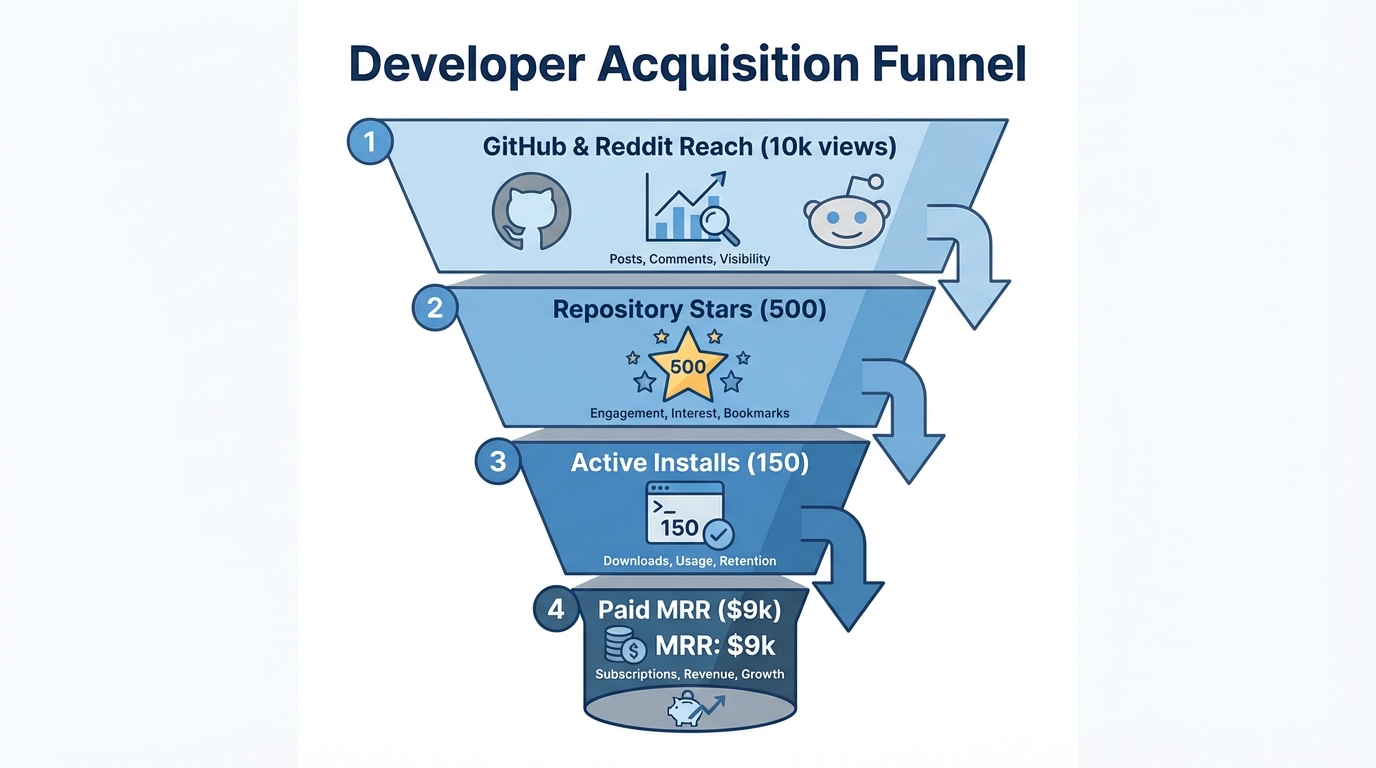
One of the most critical SaaS monetization strategies is actually a distribution strategy: market where your ICP (Ideal Customer Profile) lives. For developer tools, this means GitHub, Hacker News, and technical subreddits. A single post on Hacker News catapulted ChartDB to thousands of users in a single day. This wasn't luck; it was the result of building an open-source product that allowed users to test the utility without a sign-up wall.
Developers value transparency. By hosting the project on GitHub, the team built credibility. When users saw the tool had thousands of stars, they felt safe using the paid cloud version. This "Open Core" model—where the basic tool is free and open-source, but the collaborative and hosted features are paid—is one of the most effective ways to scale in the 2026 tech landscape.
Monetization Through Usage: The Behavior-Driven Paywall
A common mistake in entrepreneurship for developers is guessing what people will pay for. ChartDB took a different route: they let user behavior dictate the paywall. For months, the tool was entirely free. They watched how people used it and waited for the patterns to emerge. When users started asking for ways to share diagrams with their coworkers and save projects in the cloud, the team knew exactly what to charge for.
Their current $9,400 MRR comes from a hosted cloud version that provides real-time collaboration. This transition from a single-player utility to a multi-player platform is a classic move for scaling a SaaS. It allows you to maintain a massive free user base (which acts as your marketing engine) while converting high-intent power users into paying customers.
"Monetization should not be a guess; it should be a response to user behavior. Watch the patterns and charge for the complexity."
To identify these high-intent users, companies often look toward modern analytics. While ChartDB uses tools like Plausible for privacy-focused tracking, growth teams also need to see who is talking about them. For those scaling beyond simple tools into broader markets, platforms like Stormy AI can help discover technical influencers and UGC creators who can demo your tool to a wider audience of engineers on TikTok or YouTube, further fueling that top-of-funnel growth.
Tech Stack Efficiency: Managing Margins While Scaling
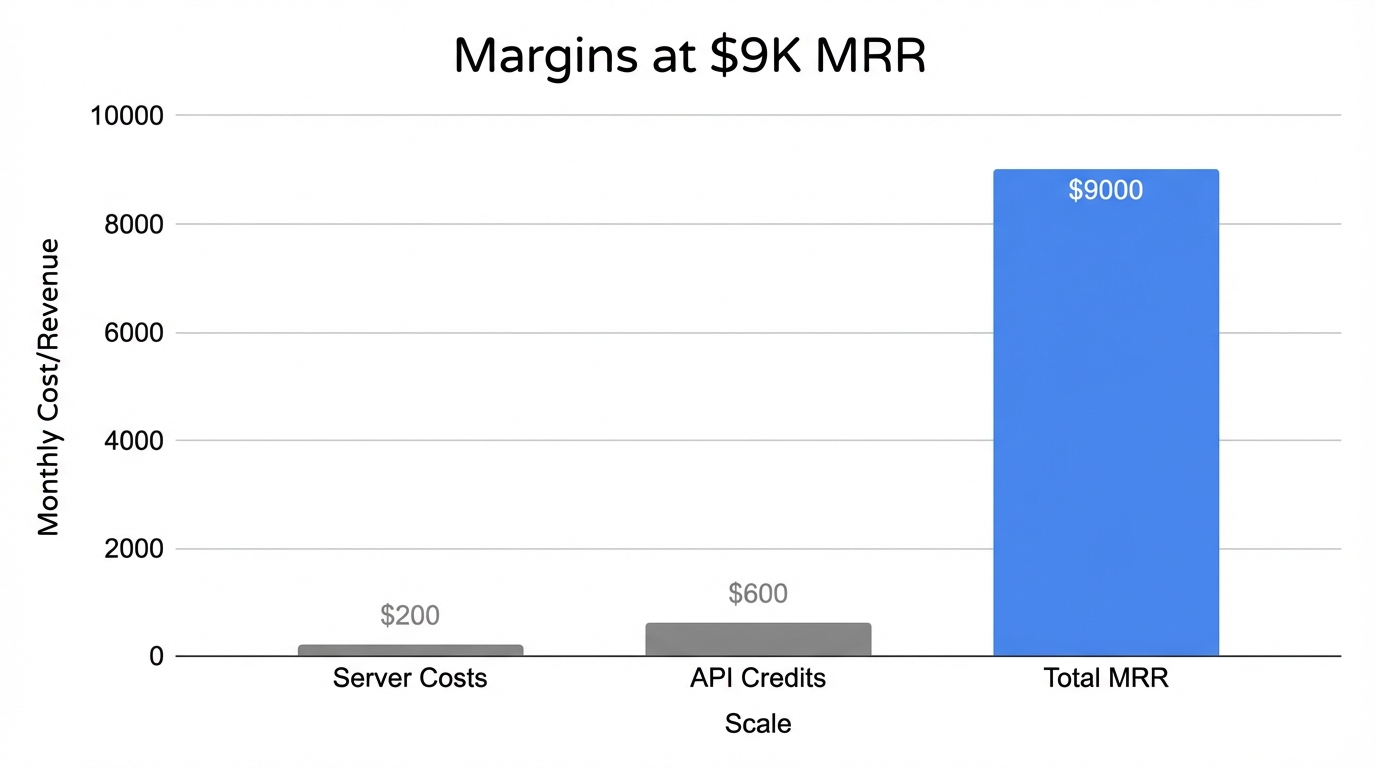
Scaling a profitable niche app requires keeping your overhead low. Jonathan Fishner manages $9K+ in MRR with a remarkably lean tech stack. By using modern tools and managed services, the team can focus on feature development rather than server maintenance.
The stack is built on React and Vite for the frontend, with NodeJS and Tailwind powering the backend and styling. For hosting, they rely on AWS, which costs roughly $600 per month—a manageable expense given their revenue. They also use Stripe for handling all SaaS monetization strategies, ensuring that global payments and subscriptions are handled with minimal custom code.
| Tool | Purpose | Estimated Monthly Cost |
|---|---|---|
| AWS | Cloud Hosting | $600 |
| Ahrefs | SEO & Keywords | $99+ |
| Claude / OpenAI | AI Assistant API | $70 |
| Framer | Marketing Site | $30 |
| Postmark / Resend | Transactional Emails | $20 |
The 5-Step Playbook for Developers in 2026
If you are looking to enter the world of entrepreneurship for developers and launch your own profitable niche app, follow this five-step sequence derived from the ChartDB success story:
- Be the User: Build something you actually need. If you understand the pain point personally, you'll understand the solution intuitively.
- Design for Constraints: Don't design for an "ideal" world. Design for the reality of your user. For developers, that means self-hosted options and no sign-up walls.
- Start with a Wedge: Pick one tiny feature—like a smart SQL query that generates a JSON schema—and make it the best in the world.
- Watch the Patterns: Don't rush into monetization. Launch for free, watch how users try to "break" or extend the tool, and then build your paid features around those behaviors.
- Aggressive Friction Removal: Every click you remove from the user journey increases your conversion rate. If they can use your tool without an account, they are much more likely to eventually create one.
Conclusion: The Power of the Tiny Idea
The story of scaling a developer tool to $9,400 MRR is a testament to the fact that you don't need a massive team or a revolutionary AI to build a successful business. By focusing on micro-SaaS growth through visual utility and open-source credibility, you can create a sustainable income stream that grows with its community.
Whether you are using SaaS monetization strategies like usage-based paywalls or distribution methods like GitHub trending, the core lesson remains: pick one core value and defend it aggressively. Once you have the utility, tools like Stormy AI can help you manage the creator relationships needed to scale that utility into a household name within your niche. Stop looking for the "billion-dollar idea" and start looking for the problem hiding in plain sight on your own local machine.