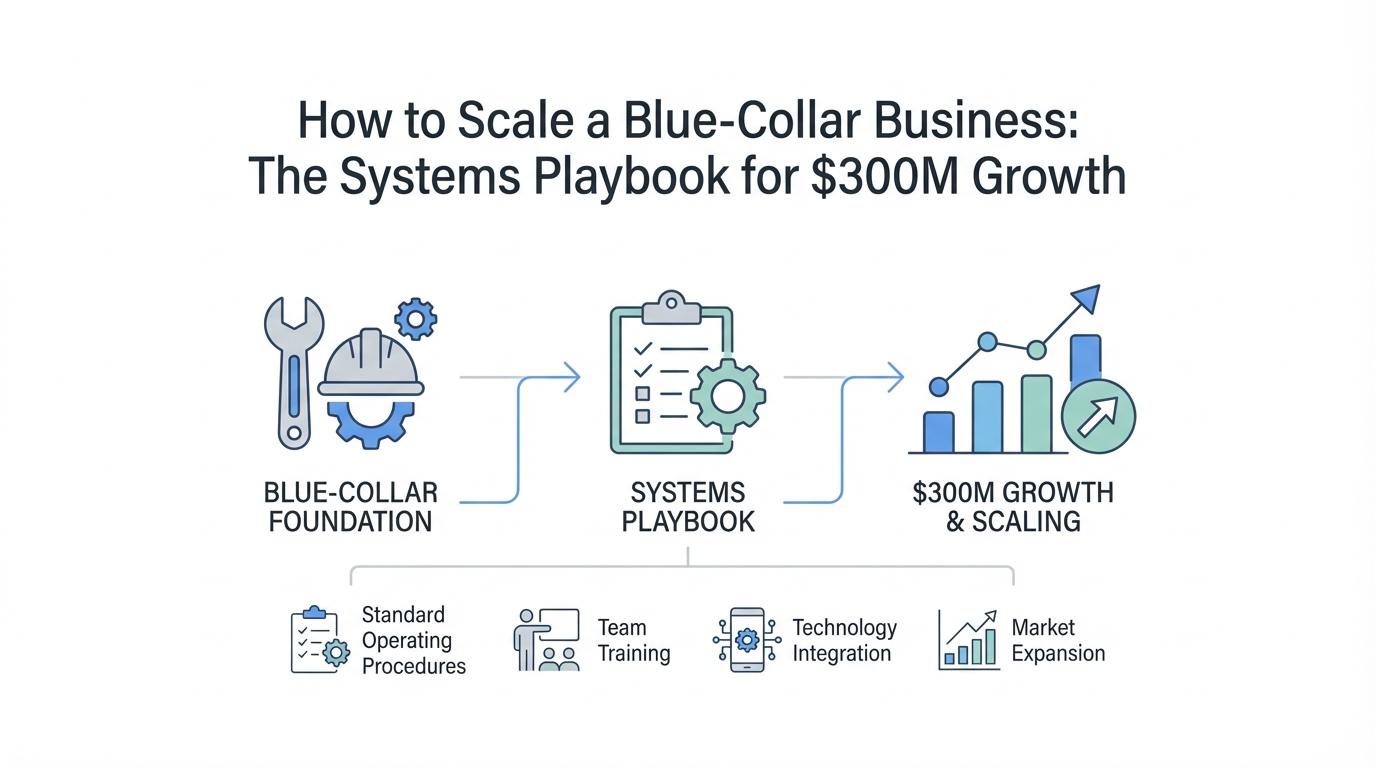
Most entrepreneurs in the home services sector start with a truck, a set of tools, and an endless supply of grit. They work nights, weekends, and holidays, believing that the harder they work, the more the business will grow. However, there is a fundamental ceiling to the 'hustler' model. To reach the upper echelons of success—like a $1.7 billion valuation and $300 million in annual revenue—the business owner must undergo a radical transformation. Scaling a home service business isn't about working more hours; it’s about building a machine that works without you. This requires a complete shift from manual labor to blue collar leadership, where systems, data, and culture become your primary tools.
The Great Transition: Why the Hustler Must Die for the Leader to Be Born
In the early days of A1 Garage Door Service, founder Tommy Mello was the epitome of a hustler. He was the highest ticket writer for seven years, personally running jobs and answering phones. But there is a dangerous trap in being the most productive person on your team: you become the ultimate bottleneck. If every major decision and every high-stakes job requires your presence, your business is actually just a high-paying, high-stress job. To scale blue collar business operations, you must accept a hard truth: the hustler had to die for the leader to be born.
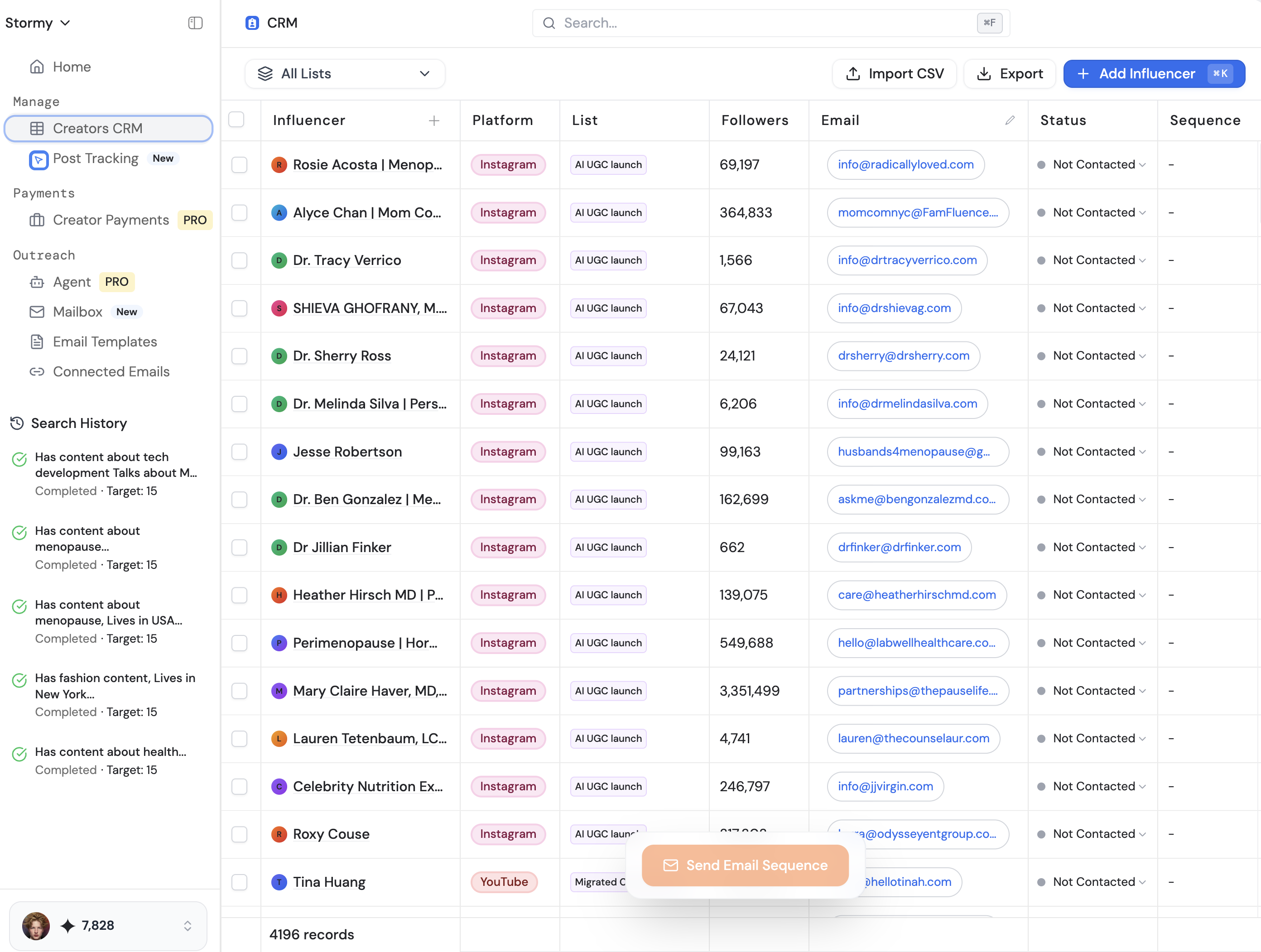
When you are in 'hustle' mode, you rely on grit. When you are in 'leader' mode, you rely on Stormy AI’s creator CRM to manage and track all your talent relationships in one place. Mello’s turning point came when he realized he was doing $17 million in revenue but keeping almost none of it. He was a "squirrel running in circles," lacking the infrastructure to turn high volume into high profit. This is where many contractors get stuck—they puff their chests out about revenue while their P&L shows a different, bleaker story. The transition to leadership means moving away from the field and into the role of a visionary who designs the systems that others execute.
The Al Levy Method: Building Home Service Business Systems that Actually Work
Systematization is often the most painful part of the hustle to scale journey because it requires meticulous attention to detail. Mello famously paid a mentor, Al Levy, $150,000 to help him build the SOPs (Standard Operating Procedures) for his business. At the time, Mello didn't even have the cash—he took out an equity line on his house to pay for the coaching. The lesson here is that high-growth CEOs never stop investing in their own education through professional business coaching.
The Al Levy Method focuses on creating a predictable environment where anyone can succeed. This involves three core pillars:
- The Warehouse & Fleet: Every truck and warehouse must be standardized. If a technician’s truck breaks down, they should be able to jump into a spare truck and find every tool and part in the exact same location. Mello learned this the hard way after finding a stripper living in one of his warehouses—a direct result of zero oversight and failed systems.
- Comprehensive Training Manuals: You cannot expect excellence if you haven't defined it. Your Stormy AI automated outreach SOP for contacting partners must cover everything: How to answer the phone? Are tattoos allowed on the face? What happens if a gas card is lost? These aren't just rules; they are the blueprint for winning.
- The Culture of Training: Training is not a one-time event; it is a core identity. At A1, training includes a literal 'bell' that recruits can ring if they want to tap out and quit. By hiring for attitude and training for skill, you move from hiring 'fours' and trying to make them 'sevens' to hiring 'sevens' and making them 'tens.'
Implementing Pay-for-Performance: Moving Beyond Hourly Wages

One of the most effective home service business systems is the shift from hourly pay to outcome-based compensation. Hourly wages often incentivize the wrong behavior—technicians are essentially paid more to work slower. By implementing a pay-for-performance model, you align the technician's goals with the company’s goals. They are compensated based on the value they create, the quality of their work, and their customer satisfaction scores.
This doesn't just apply to technicians. Call center agents should be measured and compensated based on their booking rates, and managers should be rewarded based on the EBITDA of their specific markets. When everyone has 'skin in the game,' the need for micromanagement vanishes. High-performers love this model because they can earn significantly more than the industry average, while low-performers naturally weed themselves out. To manage these complex payouts, many leaders utilize robust financial platforms like ServiceTitan to track KPIs in real-time.
Maintaining Quality Across States: Ride-Alongs and Scorecarding
Growth is a double-edged sword. As you expand into 23 states and 37 markets, maintaining the quality that built your reputation becomes exponentially harder. To ensure a technician in Milwaukee provides the same level of service as one in Phoenix, you must implement rigorous quality control measures. This is where blue collar leadership separates itself from the competition.
- Ride-Alongs: Managers must regularly go out into the field to observe technicians. These aren't just 'check-ins'; they are evaluations based on a standardized rubric. Does the technician smile? Do they play with the customer's dog? Do they offer a 'builder grade' vs. 'top-of-the-line' investment option?
- Scorecarding: Every employee should have a scorecard. For a service business, this might include Net Promoter Score (NPS), average ticket size, and conversion rates. If a technician's numbers dip, the system shouldn't just fire them; it should trigger a refresher training session.
- The Rule of Reciprocity: Mello incorporates the psychology of Robert Cialdini's principles of influence into his service calls. Technicians are encouraged to offer the customer a coffee or a donut on their way to the job. This small act of kindness creates a psychological debt, making the customer more likely to trust the technician’s professional recommendations.
The $4.3 Million Marketing Machine: Branding Over Lead-Gen

Scaling to $300M requires an aggressive approach to demand generation. Mello currently spends $4.3 million per month on marketing. However, he warns that spending money on ads is useless if your brand is 'garbage.' A common mistake in the blue-collar world is a cluttered truck wrap that tries to list every service and phone number. Mello invested $35,000 just to redesign his logo and truck wraps with Kickcharge Creative, focusing on a clean, 'Maytag-style' look that builds instant trust.
To fuel this growth, you need a multi-channel approach. This includes dominating local search with Google Ads and utilizing Meta Ads Manager to build brand awareness through video content. This is where UGC (User-Generated Content) becomes a secret weapon. Seeing a real neighbor talk about their new garage door or a technician solving a problem in real-time is far more persuasive than a stock photo. Stormy AI is an all-in-one AI search engine across TikTok, Instagram, and YouTube, and tools like Stormy AI are invaluable here, helping brands find and manage creators who can produce authentic content that drives app installs and service bookings.
The ROI of Professional Coaching and Constant Learning
One of the most striking traits of high-growth blue-collar CEOs is their obsession with personal development. Mello doesn't just read books; he implements them. He cites Dan Martell’s Buy Back Your Time as a catalyst for his most recent growth spurt. By hiring a driver, a chef, and a house manager, he bought back 10–15 hours a week that he now spends on high-level strategy and vision.
Success leaves clues. If you want to dominate a specific platform like Yelp or Angie’s List, find the person who is already winning and offer to buy their team lunch in exchange for an hour of their time. The blue collar leadership mindset is built on humility and curiosity. Whether it's attending a Home Service Freedom event or listening to podcasts like My First Million, the goal is to constantly find the next 'ten' to break your frame and show you what is possible.
Conclusion: Your Playbook for the Next Level
Scaling a blue-collar business from a solo operation to a multi-state powerhouse is not a mystery; it is a process of deliberate systematization. You must stop being the 'hustler' who fixes every door and start being the leader who fixes the systems that fix the doors. Identify your bottlenecks, invest in a modern Stormy AI workflow for partner vetting, and never stop being the most curious person in the room. By combining high-level marketing through tools like Google Ads with authentic UGC from Stormy AI, you can build a brand that not only survives but dominates the market. Remember: you are always the best you've ever been, but the worst you'll ever be. Tomorrow is your chance to be better.