Protecting your influencer marketing budget is no longer just about choosing the right creator with a pretty aesthetic; it’s about defending against a $1.3 billion global fraud epidemic. As we head into 2025, the industry is witnessing a seismic shift from "Chat AI"—where we use models to brainstorm captions—to "Action AI" (autonomous execution). Growth leads and CMOs are increasingly moving away from manual spreadsheets and into the terminal. Using Claude Code, Anthropic’s agentic command-line interface (CLI), modern marketing teams are now building their own "fraud-detection sub-agents" to audit thousands of creators in minutes—a task that previously took entire agencies weeks to complete.
The State of Influencer Fraud in 2025: A $2 Billion Threat
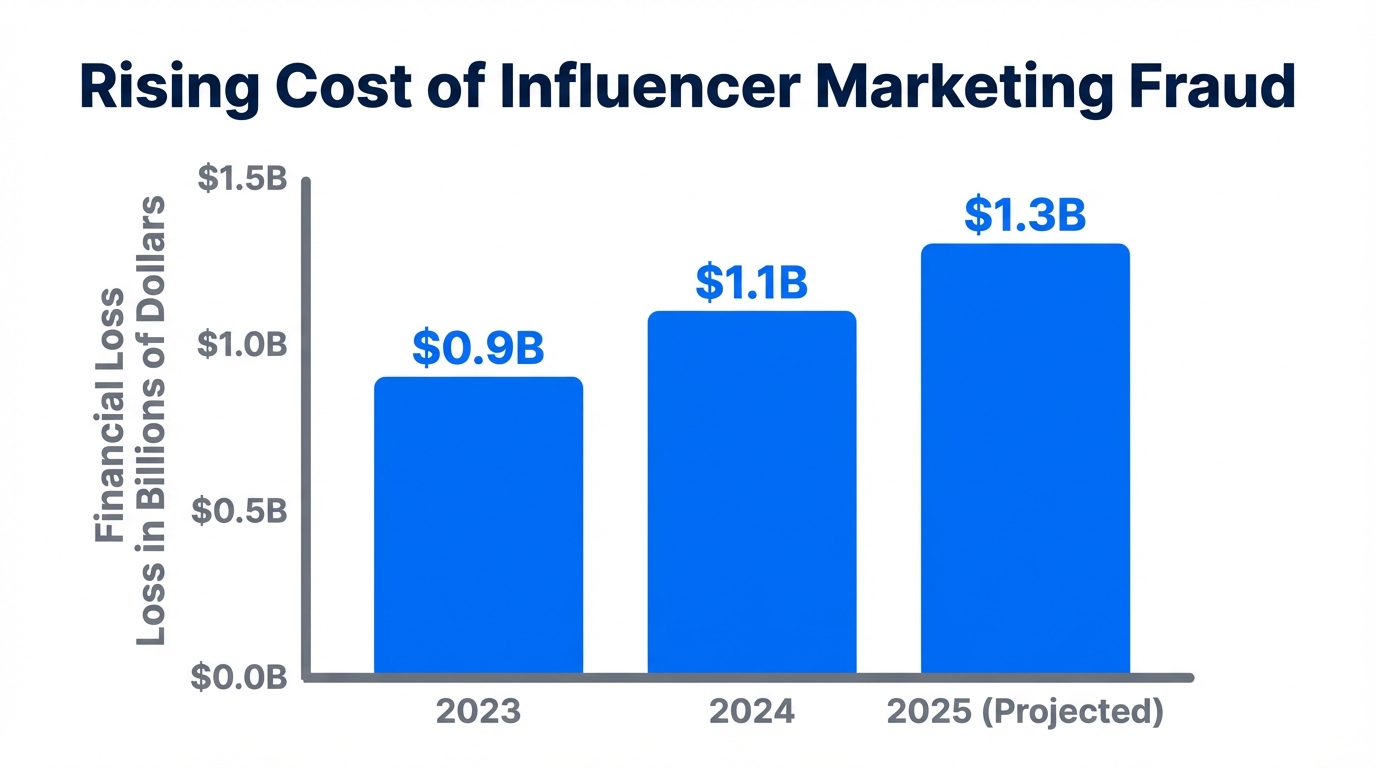
Influencer marketing spend is projected to reach $32.55 billion by 2025, a significant jump from $24 billion just a year prior according to Statista. However, this massive influx of capital has attracted highly sophisticated bot farms and engagement pods. Brands are projected to lose over $2 billion to influencer fraud in 2025 alone. This isn't just a minor leak; it is a fundamental threat to marketing budget protection and overall campaign ROI.
The data paints a grim picture for those still relying on surface-level metrics. Roughly 55% of Instagram engagement is estimated to be fake, driven by bots and purchased followers, as reported by industry researchers investigating audience quality. Furthermore, 59.8% of brands reported experiencing influencer fraud in 2024, a sharp increase from 31% in 2022, as noted by research from Shift Happens Marketing. If you are not auditing your creators with high-fidelity tools, you are likely paying for "zombie" engagement that will never convert into customers.
"The vanity metric trap is real: high follower counts are the most expensive way to buy zero results in 2025."
Moving from Vanity Metrics to 'Vibe Marketing'
The defining trend of 2025 is Agentic Marketing Operations. Instead of manually checking a creator's profile, marketers are moving into the terminal to run "Vibe Marketing" at scale. This involves more than just looking at the last three posts; it requires long-context auditing. Claude Code can ingest up to 8 years of historical data to identify "growth spikes" that signal purchased followers or sudden drops in quality. By analyzing years of behavior rather than days, brands can spot the difference between organic virality and a bot-fueled surge.
Traditional vetting often focuses on the "What"—likes, comments, and shares. Agentic vetting focuses on the "How." By using Constitutional AI frameworks, Claude Code can evaluate whether a creator's content and their audience's reactions align with strict ethical guidelines and brand safety standards. This ensures that your brand isn't just appearing next to high numbers, but within a healthy, authentic community.
| Feature | Traditional Manual Vetting | Agentic Vetting (Claude Code) |
|---|---|---|
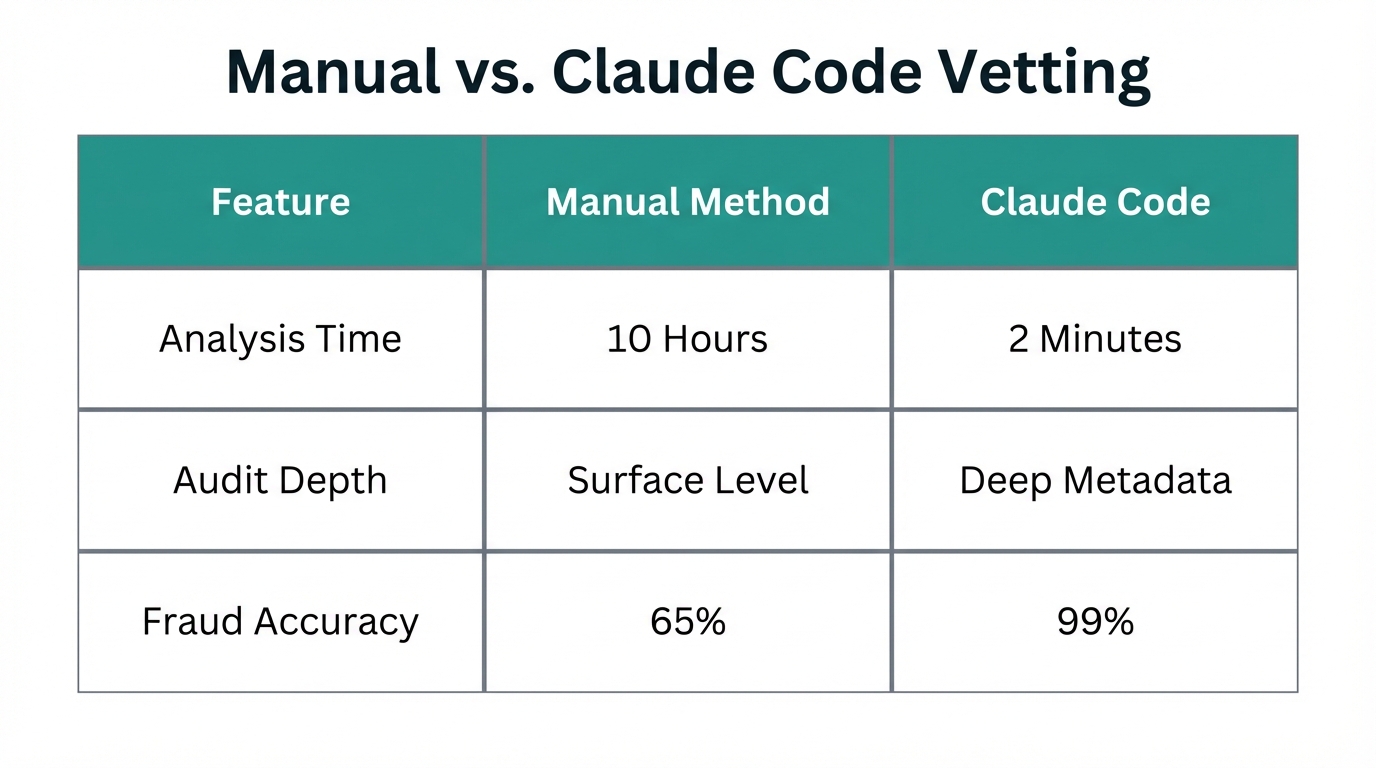
| Audit Depth | Last 10-20 posts | Up to 8 years of history |
| Speed | 30-60 minutes per creator | Seconds per creator |
| Data Source | Manual browser search | Automated API/Scraper integration |
| Fraud Detection | Visual intuition (unreliable) | Pattern recognition & NLP analysis |
A Step-by-Step Playbook for Automated Creator Vetting
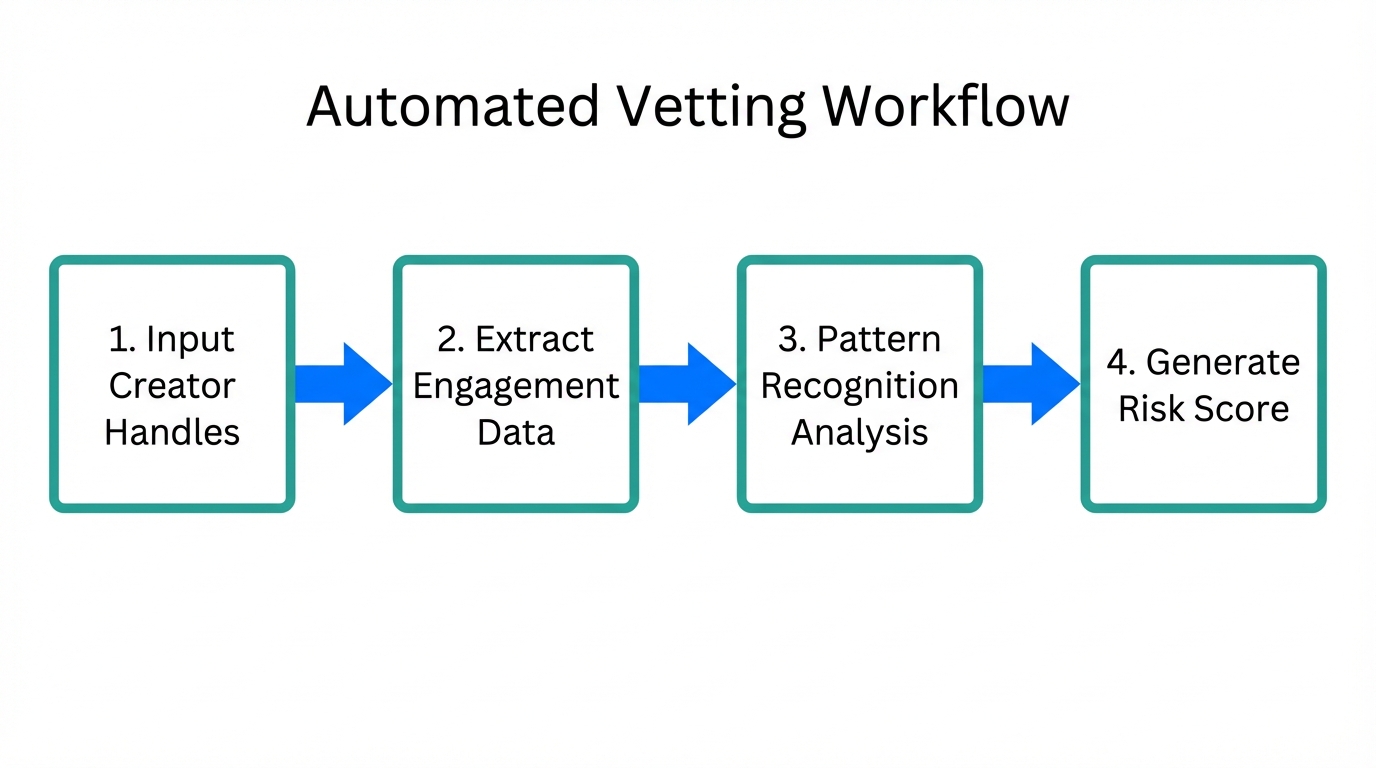
To implement this at your organization, you don't need to be a software engineer. You just need to follow a clear playbook to set up your AI-powered defense system. Here is how to build your own fraud-detection sub-agent using Claude Code.
Step 1: Initialize Your Marketing Source of Truth
Start by creating a CLAUDE.md file in your project directory. This file acts as the "Agent Skill" layer, providing the rules of engagement for the AI. In this file, you will define your "Red Flag Rubric."
Step 2: Define Your Red Flag Rubric
Your rubric should be specific. Instruct Claude to look for patterns that humans often miss. A typical prompt for your sub-agent might look like this:
/audit - Analyze @creator_handle. Flag: 1) Comments with < 3 words, 2) Follower spikes > 20% in 24 hours, 3) Engagement primarily from private accounts with zero posts.
Step 3: Connect to Live Data via MCP
Use the Model Context Protocol (MCP) to give Claude Code "hands." By connecting tools like the Puppeteer MCP from the official MCP documentation, you can scrape real-time comments directly from social platforms. This allows you to cross-reference a creator's organic performance with paid results using data from Meta Ads Manager, TikTok Ads, or Google Ads.
"Automating the 'vibe check' allows your team to spend 90% less time on data entry and 90% more time on creative strategy."
Deploying Sub-Agents for Deep Sentiment Analysis
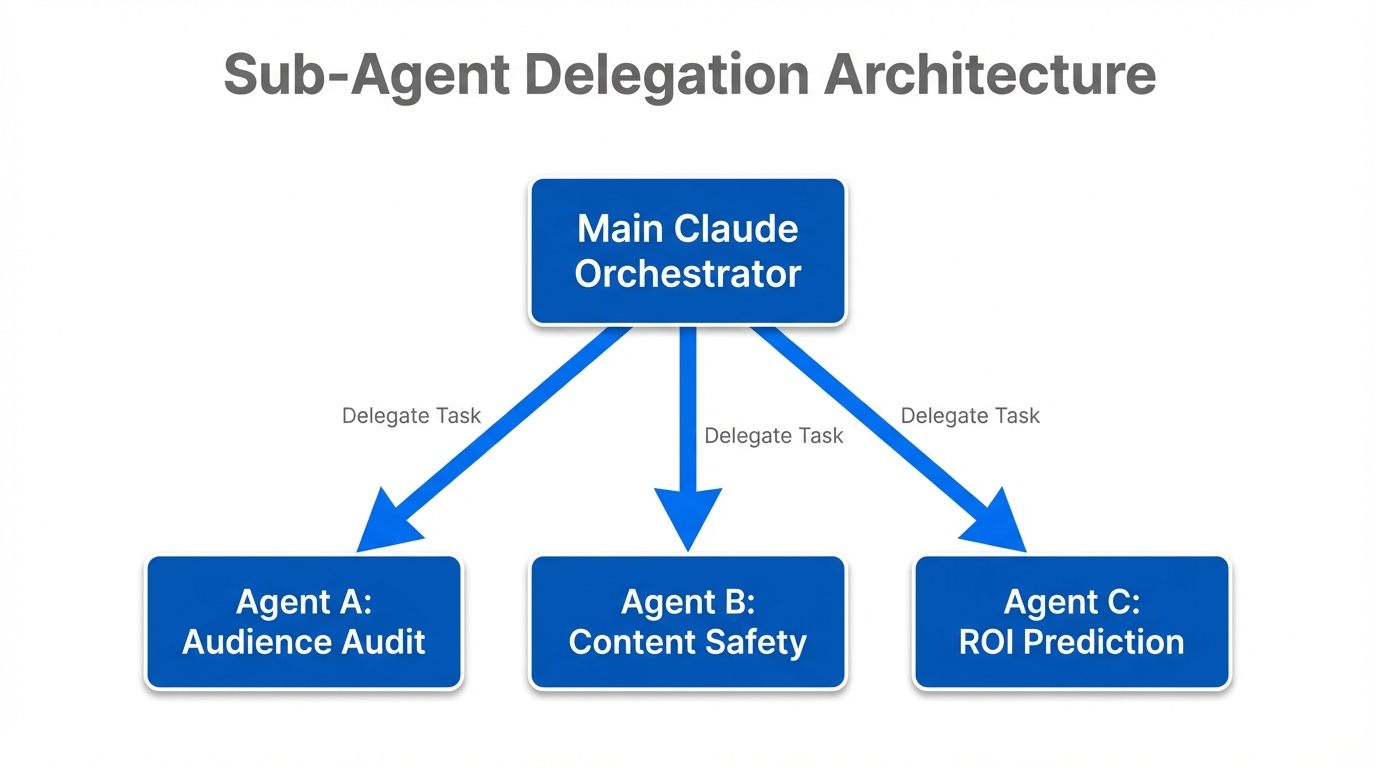
Rather than relying on one general prompt, sophisticated growth teams use Claude Code to orchestrate multiple specialized sub-agents. This ensures each layer of the audit is handled by a focused logic path. For instance, when you discover creators on Stormy AI, you can funnel them into this automated pipeline for instant vetting.
- Sub-Agent 1 (The Scraper): Extracts the last 500 comments via Apify or similar scraping tools.
- Sub-Agent 2 (The Auditor): Analyzes comment quality using Natural Language Processing. It asks: Are users asking meaningful questions about the product, or are they just posting "🔥" and "Nice!" emojis?
- Sub-Agent 3 (The Budget Analyst): Compares the creator's quoted media kit rates against actual authentic engagement benchmarks.
By using Stormy AI, you can source high-quality creators at scale and then use Claude Code to run these deeper technical audits before a single dollar is spent. This two-step process—AI discovery followed by agentic vetting—is the gold standard for protecting influencer ROI in the current landscape.
Case Study: How Anthropic Speeds Up Marketing Tasks by 60x
The practical application of these tools is best seen in the Anthropic growth team’s own workflow. Growth marketer Austin Lau, who started with zero coding experience, used Claude Code to build internal tools that reduced complex creative and vetting tasks from 30 minutes to 30 seconds. According to the Claude.ai Blog, this "Action AI" approach allows his team to iterate on influencer content 60x faster than traditional workflows.
Similarly, major enterprises like TELUS have integrated Claude to automate data workflows, saving over 500,000 staff hours annually. This allows their marketing department to focus on the high-level strategy of influencer marketing fraud prevention rather than getting bogged down in manual verification. When you combine discovery platforms like Stormy AI with the processing power of Claude Code, you create a marketing engine that is both fast and incredibly resilient to fraud.
The Agentic Marketing Tool Directory
To build your own budget protection stack, you need to combine discovery, vetting, and execution tools. Here is a curated list of resources for the modern growth lead.
| Tool | Purpose | Integration Type |
|---|---|---|
| Claude Code | Agentic CLI for marketing automation | Direct CLI |
| Stormy AI | Creator discovery & AI-powered vetting | SaaS / API |
| MCP Market | Directory for pre-built AI skills | Open Standard |
| Apify | Data extraction for social platforms | Web Scraper |
| inBeat | Micro-influencer benchmarking | Data Source |
Common Mistakes to Avoid in 2025
Even with the best AI agents, human oversight remains critical. The most common pitfall for CMOs is fragmentation—using five different browser-based tools that don't talk to each other. By centralizing your workflow in a tool like Claude Code, you ensure that your data flows seamlessly from discovery to contract. Additionally, do not ignore the "Story Vibe." Many fraudulent accounts buy engagement on permanent posts but have zero activity on temporary Stories, which are harder to fake at scale.
"The future of growth isn't about more spend; it's about more intelligence. Every dollar saved from a bot is a dollar invested in a real customer."
Conclusion: The Future of Growth is Agentic
Protecting your influencer marketing budget from fraud is no longer a manual task. By moving your vetting process into the terminal with Claude Code, you can audit years of historical data, run deep sentiment analysis, and ensure brand safety—all in seconds. This allows your team to focus on building authentic relationships and high-converting creative strategies.
As we move toward a world where agentic marketing is the norm, the winners will be the brands that use AI to defend their margins. Start by building your CLAUDE.md rubric today, and consider using platforms like Stormy AI to automate the discovery phase of your funnel. The tools are here; it’s time to take action and secure your 2025 growth budget.