Most agency owners and service providers exist on a grueling treadmill. You sell your hours, you deliver bespoke work for every new client, and you start every month at zero. It is the definition of a low-leverage existence. But what if you could take the core expertise that makes you valuable and package it into something that sells while you sleep? This is the core philosophy behind the "Build Once, Sell Twice" methodology, popularized by Jack Butcher, the founder of Visualize Value. By learning how to productize your service, you transition from a billable-hours model to a scalable business model that decouples your income from your time.
The Bespoke Trap: Why Most Agencies Fail to Scale

The traditional agency model is built on a fundamental flaw: infinite customization. When you are "bespoke for anyone," you are essentially a high-end freelancer with a fancy name. Every project requires a new discovery phase, a new strategy, and a new execution plan. As Jack Butcher points out, this leads to horrible burnout. In the agency world, you are often reacting to meetings and deadlines set by external forces. You are playing the role of everyone—account manager, designer, strategist, and biller.
To escape this, you must shift your agency growth strategy from being a generalist to providing a "specific thing for specific people." The first step in this transition is identifying where you actually add the most value. For Butcher, it wasn't the weeks of production work; it was the pitch process. He realized that sitting in a room and distilling complex, intangible ideas into a compelling narrative was the high-value skill that clients were actually paying for. If you can identify your "intangible value" and find a way to visualize or standardize it, you have the foundation for a productized service.
Identifying High-Leverage Skills and Intangible Value
Productization isn't about working less; it’s about making your work compound. High leverage skills are those that allow you to produce a result once and benefit from it repeatedly. If you are a consultant, your high-leverage skill might be a specific framework you use to diagnose business problems. If you are a designer, it might be the unique aesthetic or system you use to communicate brand values.
Jack Butcher’s success with Visualize Value came from taking abstract concepts—ideas from books, mental models, and business strategies—and adding visual context. This made the intangible value tangible. When clients said, "I have all these ideas that are difficult to explain," he provided the bridge. To find your own leverage, look at your past work. What are the repetitive elements? What part of your process feels like "magic" to the client but is actually a repeatable system for you? That system is your product.
Using Social Signaling to Validate Your Product
One of the biggest mistakes service providers make is building a product in a vacuum. They spend six months recording a course or building a tool, only to find that nobody wants it. Butcher used social signaling on platforms like Twitter and Instagram to validate his ideas in real-time. By posting visuals of concepts he found interesting, he created a positive reinforcement loop. The retweets and likes weren't just vanity metrics; they were data points indicating what resonated with the market.
He describes this as "trusting the invisible hand" of social media. If a piece of content performs well, it’s a signal to double down. For example, his first education product was prompted by a tweet from David Perell, who mentioned he wanted to learn design. The engagement on that interaction gave Butcher the permissionless validation he needed to build a curriculum. Instead of guessing what people wanted, he waited for the market to ask for it.

Leveraging Distribution: The Modern Growth Engine
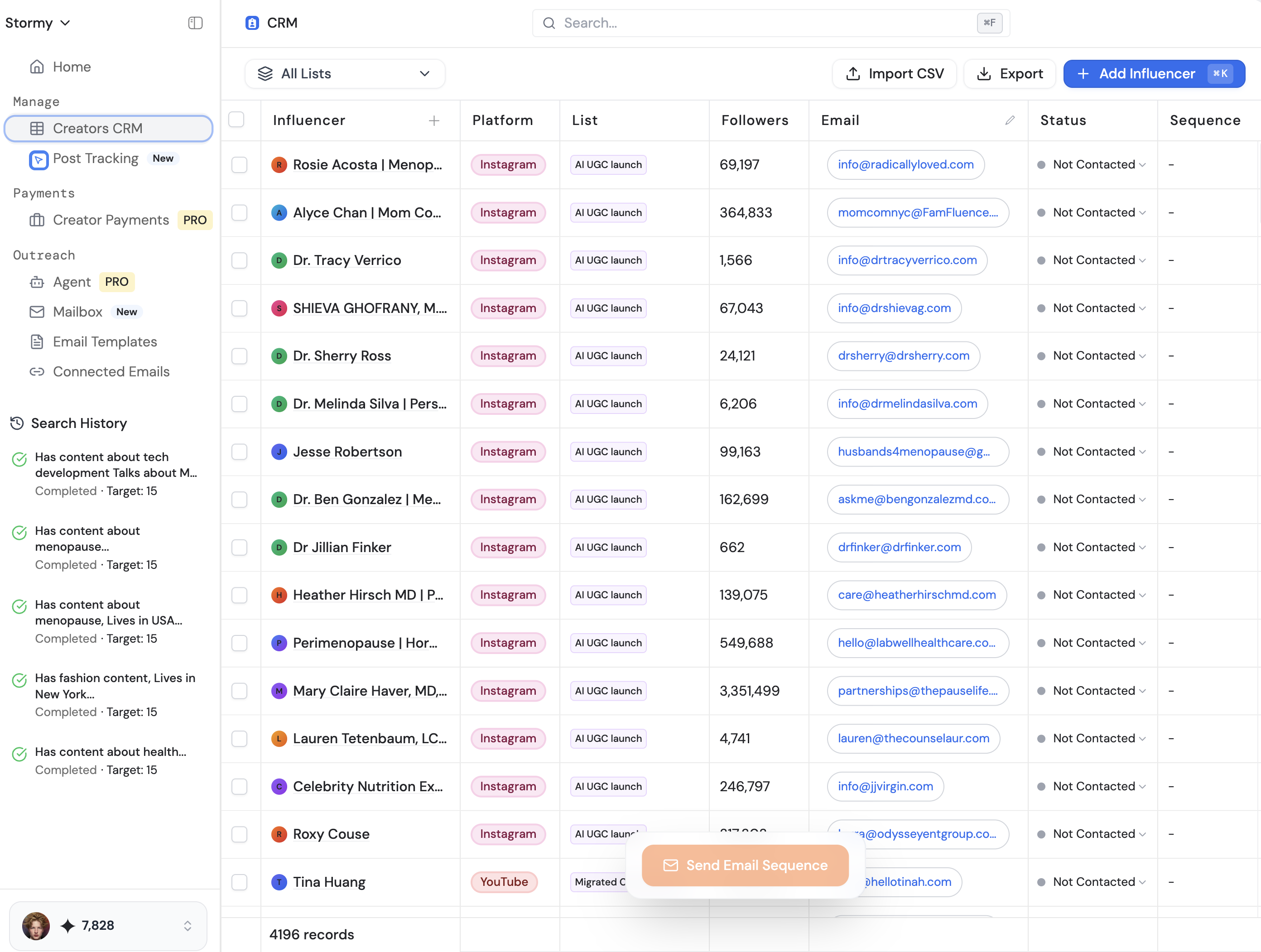
Once you have a productized service or a digital asset, the challenge shifts to distribution. In the modern growth engine, distribution is king. Many successful entrepreneurs are now using creator-led growth to scale their products. By partnering with influencers or UGC (user-generated content) creators, you can tap into pre-existing trust and affinity. This is especially powerful if you are building in a niche where high trust is required.
For brands and agency owners looking to find these partners, tools like Stormy AI can help source and manage UGC creators at scale. Whether you are looking for niche designers to promote a course or fitness creators to showcase a new app, using an AI-powered search engine allows you to find people who match your specific brand aesthetic and audience demographics. By automating the discovery and outreach process, you maintain the high-leverage focus required for a "Build Once, Sell Twice" business model.
Step-by-Step: Building Leverage Through Digital Assets
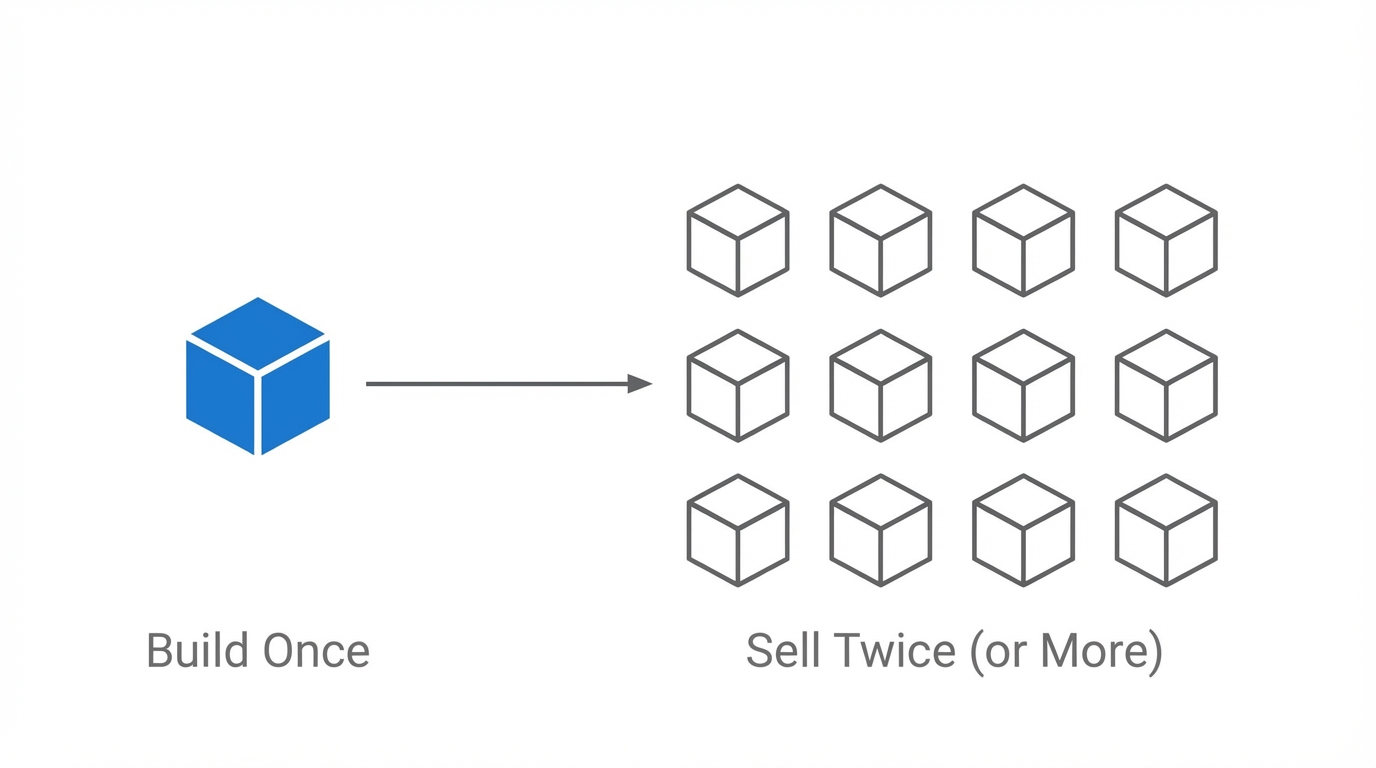
The goal of the Build Once, Sell Twice playbook is to create zero-marginal-cost products. These are assets that cost the same to serve to one customer as they do to ten thousand. Here is how to structure that transition:
Step 1: Create a Community Magnet
Before launching a high-ticket product, create a community magnet. Butcher did this with the "Daily Manifest," a simple time-management template he used personally. He initially sold it for nine dollars and included access to a WhatsApp group. This wasn't about the revenue; it was about gathering co-founders—people who would tell him what they needed next. Today, that manifest has over 20,000 downloads and serves as the entry portal into his ecosystem.
Step 2: Narrow the Scope
Don't try to teach "Graphic Design." Teach "How to Visualize Value." The narrower the niche, the easier it is to own the phrase. When you own a specific phrase or aesthetic, you build equity in that idea. People don't just buy a course; they buy into a mantra or a specific way of seeing the world. This is why language is so powerful in advertising and productization.
Step 3: Distill the Curriculum
Take your service process and turn it into a repeatable curriculum. Use tools like Retool to build internal tools that help your team or your students execute faster. If you can provide the interface for a result, rather than just the result itself, you have a product. Butcher’s curriculum focused on the "permissionless apprentice" model—teaching people how to start projects without permission to attract collaborators and clients.
Scaling with New Infrastructure: AI and Web3
As we move toward 2030, the tools for scaling productized services are evolving. Butcher is heavily focused on the Web3 promise, which allows for frictionless movement between networks and decentralized ownership. By tokenizing pieces of a network, you can reward those who contribute to your brand's growth. Whether it's through loyalty cards or digital art on platforms like Foundation, the goal is the same: distributing value to the people who help build it.
Furthermore, AI tools are changing the role of the creator. We will likely see fewer people calling themselves "graphic designers" and more people acting as prompt engineers or creative directors. If you have a productized service, AI allows you to handle the "tedious work" of creation, while you focus on the strategy and distribution. For agencies, this means you can manage 100 creator relationships using a platform like Stormy AI with the same effort it used to take to manage five.
Conclusion: From Billable Hours to Infinite Scalability
Transitioning from a service-based agency to a productized model is not an overnight process. It requires a fundamental shift in mindset. You must stop valuing your time and start valuing your assets. By following the Jack Butcher playbook—identifying intangible value, using social signaling for validation, and building zero-marginal-cost products—you can create a business that is both economically resilient and personally fulfilling.
Start by identifying one specific problem you solve for a specific group of people. Build a tool, a template, or a curriculum that solves that problem. Use high-leverage skills to create it once, and then focus your energy on distribution. Whether you are using a morning dose of Athletic Greens to stay focused or AI to automate your outreach, the goal is the same: stop selling your time and start building your legacy.