In the high-stakes landscape of 2026, the line between a boardroom and a poker table has effectively vanished. Whether you are navigating a series B round or attempting to close high-ticket sales with enterprise clients, the fundamental mechanics remain the same: it is a battle of wits, psychology, and risk management. To win, you don't just need a better product; you need to understand how to read the person across the table and control the emotional temperature of the room. Few people understand this better than Daniel Negreanu, a poker legend with over $50 million in tournament earnings and seven World Series of Poker bracelets.
Applying Negreanu’s principles of 'speech play' and observational mastery to founder sales training can drastically improve your conversion rates. In this playbook, we will break down the psychological tactics used at the highest levels of professional poker and translate them into actionable venture capital pitch deck tips and closing strategies for the modern entrepreneur.
The Psychology of the 'Out': Lowering Defensive Barriers
One of the most powerful tools in a professional poker player's arsenal is giving their opponent an 'out.' In business, especially when seeking to pitch to investors, the instinct is often to corner the prospect with logic until they have no choice but to say yes. However, this often triggers a defensive 'fight or flight' response. Negreanu references the legendary Scotty Nguyen, who famously told an opponent, "If you call, baby, it’s gonna be all over."
By suggesting that calling the bet would end the opponent’s 'pain and suffering,' Nguyen gave the amateur player a psychological escape hatch. In 2026, sales closing techniques have shifted toward this 'invitation' model. Instead of pressuring a VC, you provide the 'out' by being transparent about the risks. This paradoxically makes the investment more attractive because it signals high status and a lack of desperation. When you tell a prospect, "This round may not be the right fit for your current portfolio's risk profile," you are performing the business equivalent of speech play.
"Giving a prospect a way to say no actually lowers their defensive barriers, making them more likely to say yes."Building Trust Through Self-Deprecating Honesty
The necessity of brutal self-honesty and looking in the mirror to improve your performance.
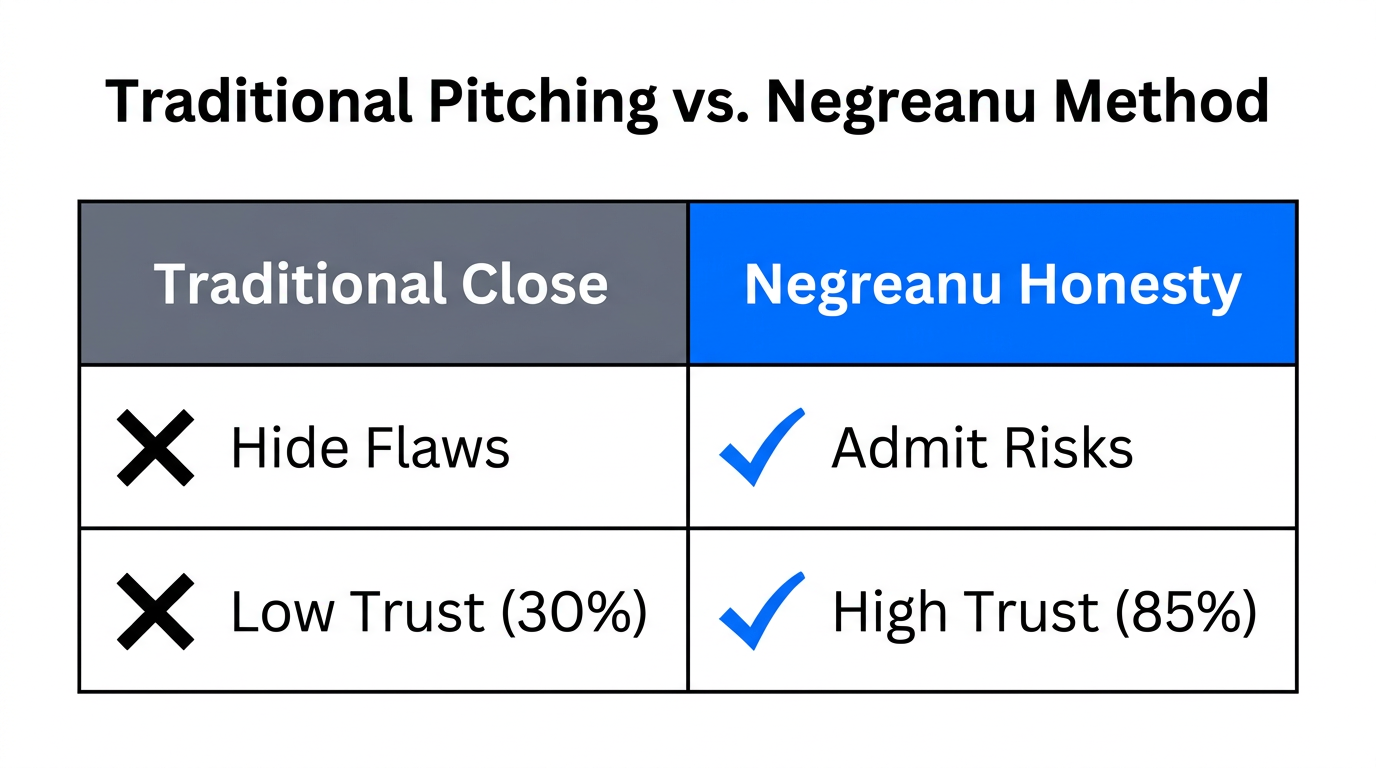
In a world of over-polished venture capital pitch deck tips, authenticity is the ultimate pattern interrupt. Negreanu notes that the best con artists—and by extension, the best negotiators—often use 'honesty about the small things' to sell the 'big' truth. If you are pitching a 2026 startup, being overly exuberant and claiming everything is perfect is a red flag. Experienced investors, much like pro poker players, are trained to spot overexuberance as a sign of bluffing.
Instead, use Negreanu’s technique of admitting a flaw. If you tell an investor, "Our first quarter was record-breaking, but honestly, our churn rate in the mid-market segment is higher than I’d like, and we’re still solving for that," you build instant rapport. By being honest about 'Point B' (the flaw), you make 'Point A' ( the record-breaking growth) far more believable. This level of transparency can be tracked in modern CRM systems like Stormy AI, allowing founders to maintain a record of honest communication that builds long-term equity.
A Mini Masterclass on Reading People in 2026
Daniel breaks down how to identify if someone is relaxed or under high pressure.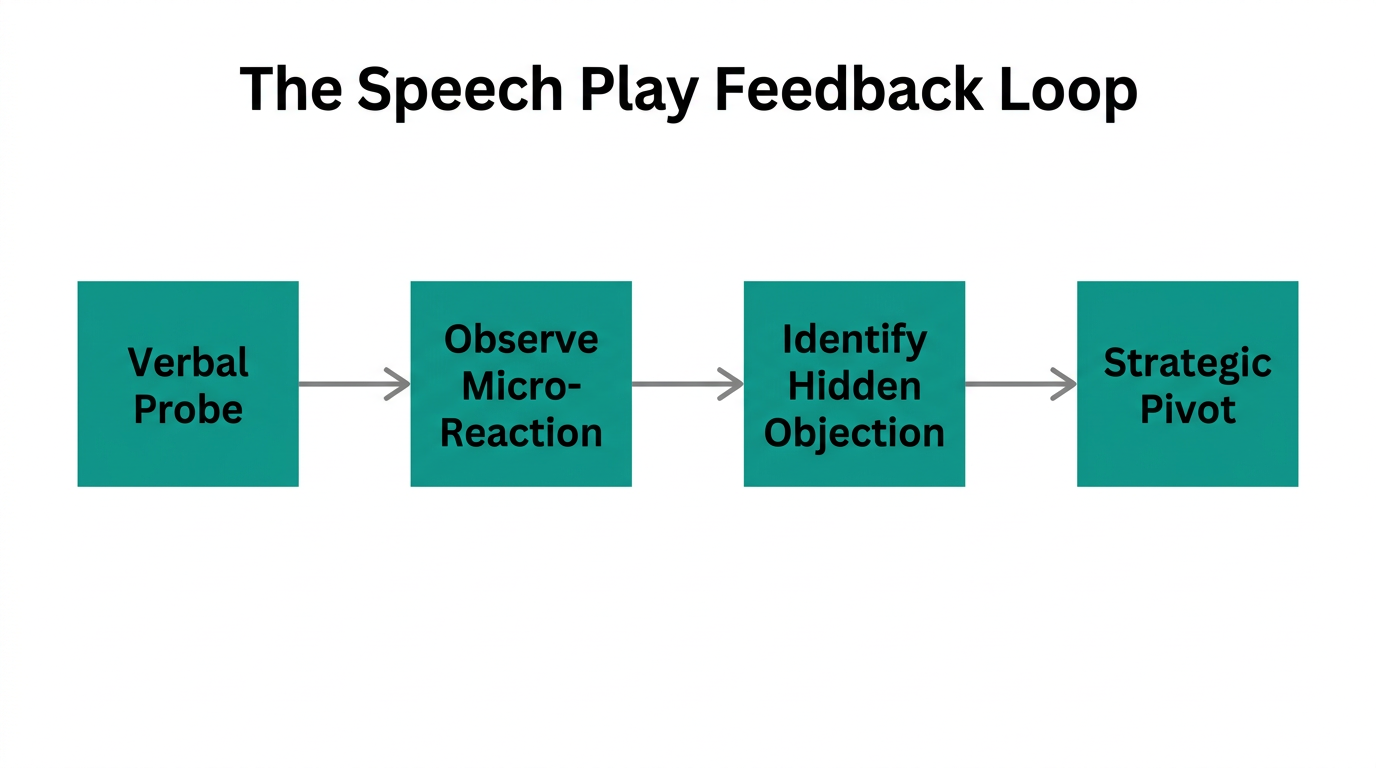
Negreanu’s ability to read people isn't magic; it’s a practiced skill of observation. He describes sitting on mall benches for hours, wearing sunglasses, and profiling strangers to guess their backgrounds, confidence levels, and insecurities. In the business world, this means paying attention to micro-gestures and shifts in demeanor. For instance, Negreanu once caught a bluff because an opponent stopped chewing his gum the moment he moved all-in.
When you are in a high-stakes pitch, look for these 'tells':
- The Eye Contact Shift: Does the investor look away or down when discussing their commitment level?
- The Body Posture: Are they leaning back (comfortable and confident) or stiff and forward-leaning (potentially defensive or skeptical)?
- The 'Watch' Moment: Just as George Bush Sr. famously lost a debate by looking at his watch, a prospect checking their Apple Watch or phone is a sign of disengagement.
| Gesture | Poker Meaning | Business Pitch Meaning |
|---|---|---|
| Sudden Stillness | Often indicates a bluff or high stress. | The prospect is uncomfortable with the pricing or terms. |
| Relaxed Lean Back | Indicates a strong hand or confidence. | The prospect is genuinely interested and "buying in" to the vision. |
| Over-Explanation | Attempting to 'sell' a weak hand through speech. | The prospect is making excuses for why they won't commit. |
To get authentic reads in 2026, Negreanu suggests catching people when they are relaxed. This is why many high-ticket deals are closed over dinner or drinks rather than on a Zoom call. Alcohol and social environments lower inhibitions, revealing the 'real' person behind the professional mask.
The Long-Game: Moving from 'Pitching' to 'Inviting'
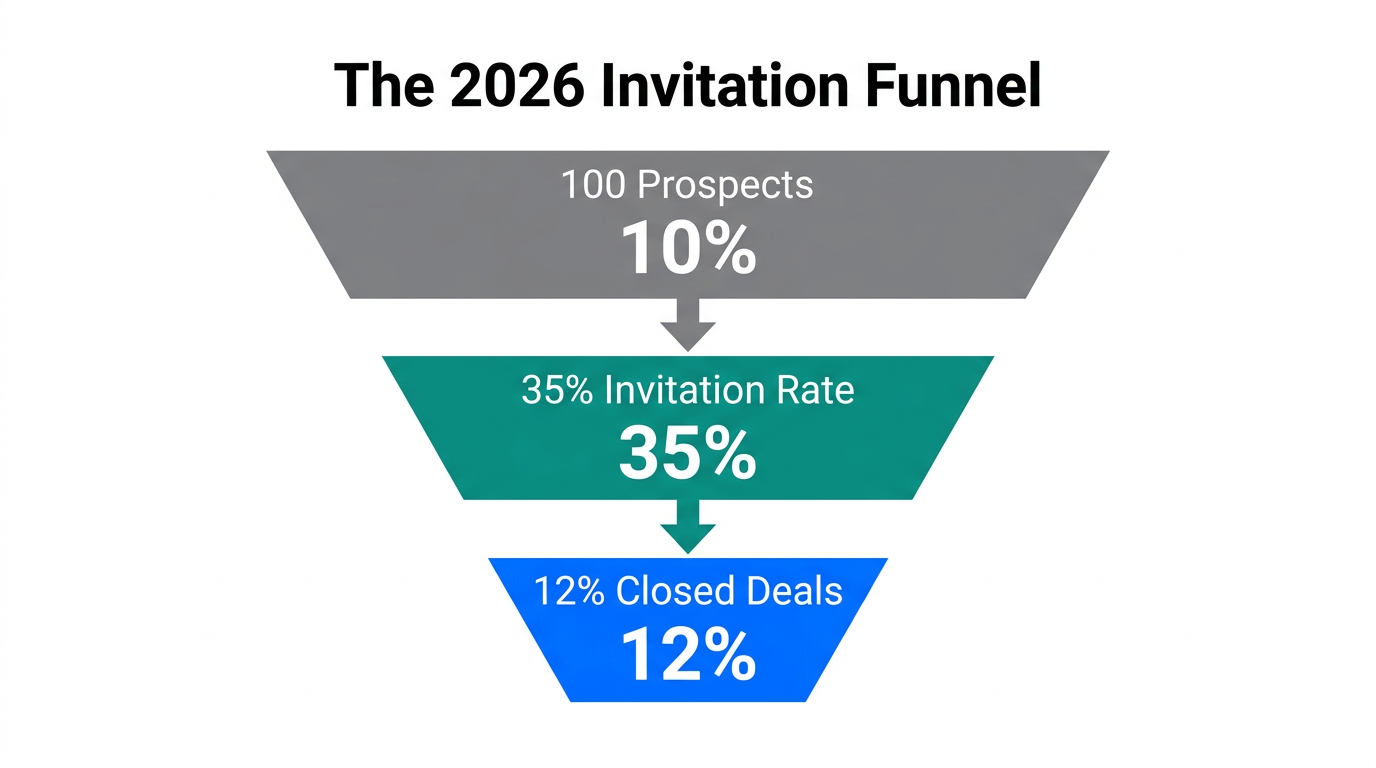
Founders often fail because they frontload the 'ask.' Negreanu’s approach to high-stakes networking is the long game. He suggests talking about your project with passion but not actually asking for anything. In 2026, the most successful founders treat their rounds as exclusive clubs. When you talk about your progress on LinkedIn or TikTok, you are building a narrative that people want to join.
Instead of saying, "We are looking for $2 million," you say, "We’ve had an incredible run this year, and while we’re well-capitalized, we’re considering opening a small strategic allocation for the right partners." This flips the script. Now, the investor is pitching you on why they should be allowed into the deal. To ensure you are only 'inviting' the highest quality partners, platforms like Stormy AI can be used to vet the audience quality and influence of potential strategic investors before you ever step into the room.
"The goal is to make them ask you if they can invest, rather than you asking them for a check."The 'Nothing from Nothing' Flow State
Performance anxiety in a boardroom is the same as 'tilt' at a poker table. Negreanu advocates for a state of "Nothing from Nothing," a flow state where the conscious, critical mind (Self 1) is shut off so the intuitive body (Self 2) can perform. This is a concept explored in The Inner Game of Tennis, which suggests that over-analyzing your 'swing' or your 'pitch' actually leads to worse results.
To achieve this in 2026, founders are turning to hypnagogic states and napping techniques. The 'Paris Sleep Study' showed that brief naps can triple your problem-solving capacity. Before a major pitch, shutting off the internal critic and trusting your preparation is vital. If you’ve done the work, your 'Self 2' knows the numbers; your only job is to stay out of your own way.
Handling the Downswing: Projecting Strength in Failure
The psychological process of losing everything and finding the discipline to rebuild from scratch.In poker, a 'downswing' is an inevitable period of loss despite making correct decisions. In business, this is the 'trough of sorrow.' Negreanu argues that how you handle the downswing is the ultimate test of a professional. If a deal falls through, the 'victim' mentality suggests that the market is bad or the investor didn't 'get it.' The 'responsible' mindset—what Negreanu calls being Response-Able—is about owning the outcome and using the breakdown as a precursor to a breakthrough.
Founders in 2026 must maintain unshakable confidence even when the bank account is low. As JK Rowling famously noted in her Harvard commencement speech, "Rock bottom became the solid foundation on which I rebuilt my life." When a pitch fails, don't chase the loss by acting desperate. Regroup, refine your 'combinatorics' (the data behind your deal), and return to the table with a clear head.
Conclusion: The 2026 Sales Mindset
Closing high-stakes business deals in 2026 requires more than a polished deck; it requires the emotional intelligence of a world-class poker player. By giving prospects an 'out,' practicing self-deprecating honesty, and mastering the 'Nothing from Nothing' flow state, you move from a salesperson to a leader. Remember Negreanu’s advice: be impeccable with your word. If you say you’ll deliver, deliver. If you say you’ll be there at 9:00 AM, don't show up at 9:04 AM. Trust is the ultimate currency, and in the high-stakes game of 2026, it is the only thing that truly closes the deal.