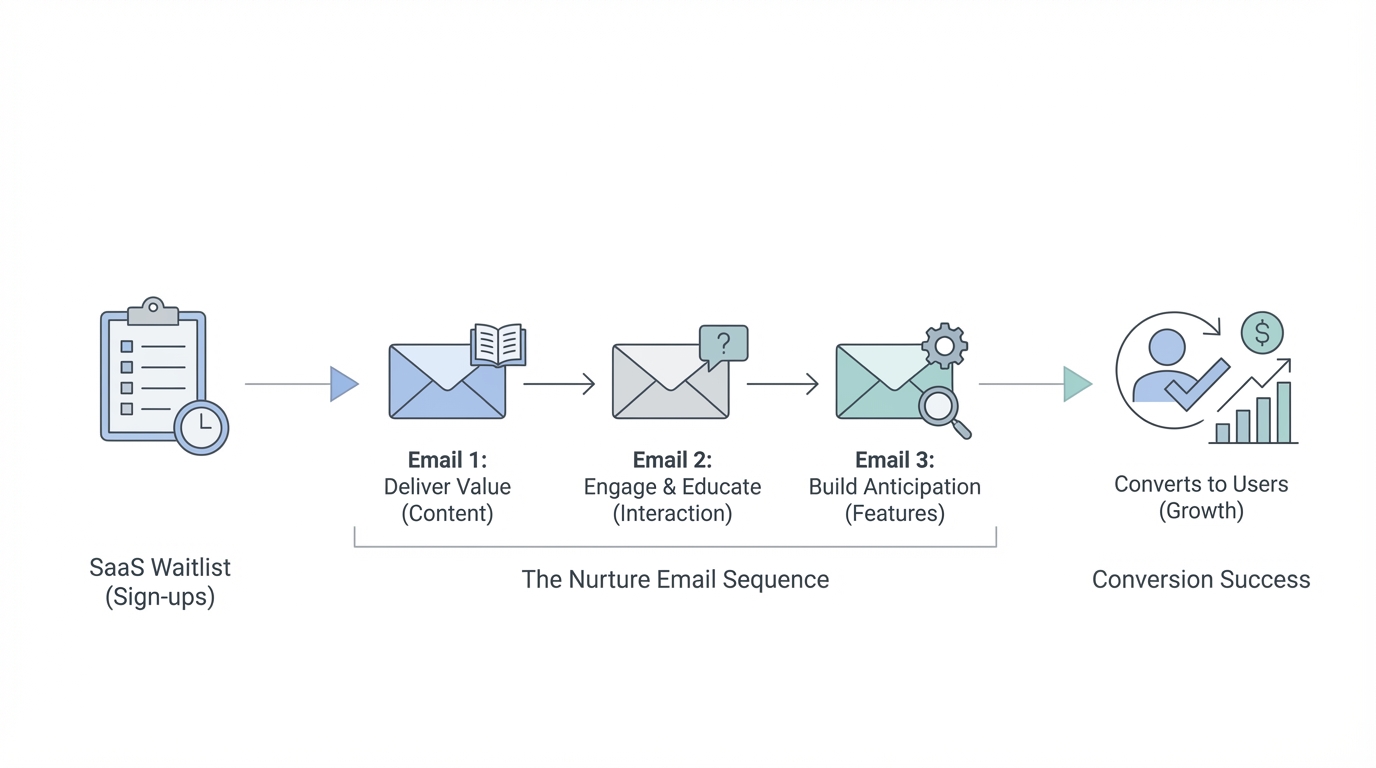
Most SaaS founders believe that the hard work ends when the code is shipped. In reality, the success of your launch is decided weeks before a single customer sees your dashboard. When Lara Costa launched Cleo, a B2B AI ghostwriting tool, she didn't just hope for sign-ups; she engineered a $30,000 MRR launch in just four days by mastering the art of the waitlist nurture sequence. The secret wasn't a viral miracle; it was a disciplined, 10-email pre-launch strategy that transformed a cold list of curious observers into a hungry crowd of paying subscribers.
The Waitlist Trap: Why Most Founders Fail Before Launch
The most common mistake in SaaS email marketing is building a waitlist and then ignoring it until the day of the launch. Founders often treat a waitlist like a storage unit—they collect emails and let them sit in the dark for months. By the time they send the "We're Live!" announcement, the lead has gone cold, forgotten why they signed up, or found a competitor's solution. To avoid this, you must begin nurturing your list at least 4 weeks before launch.
Lara Costa’s strategy involved a shift from "direct selling" to what she calls "edu-selling." Instead of bombarding subscribers with feature lists, she spent the pre-launch phase educating her audience on the specific problems they faced on LinkedIn. This builds mind share and trust. When you educate a lead on their problem so well that they feel you understand it better than they do, they naturally assume your product is the best solution.
Differentiating from the Giants: Addressing the 'AI Objection'
In 2026, every SaaS founder faces a massive hurdle: the "AI Objection." When your product is powered by large language models, the first question a prospect asks is, "How is this better than ChatGPT or Claude for free?" If you don't answer this in your waitlist nurture sequence, your conversion rate will crater. Cleo addressed this head-on in their very first pre-launch email, titled "The problem with AI content and why we're different."
They didn't hide from the competition; they highlighted the limitations of generic AI tools like ChatGPT. They argued that the problem isn't an "AI problem"—it’s a differentiation problem. Generic AI produces generic content. By positioning their tool as a "ghostwriter in your pocket" that specifically solves the LinkedIn algorithm's nuances, they moved the conversation from price to specific value. Tools like Claude are powerful, but specialized SaaS products win by being vertically integrated for a single, high-stakes workflow.
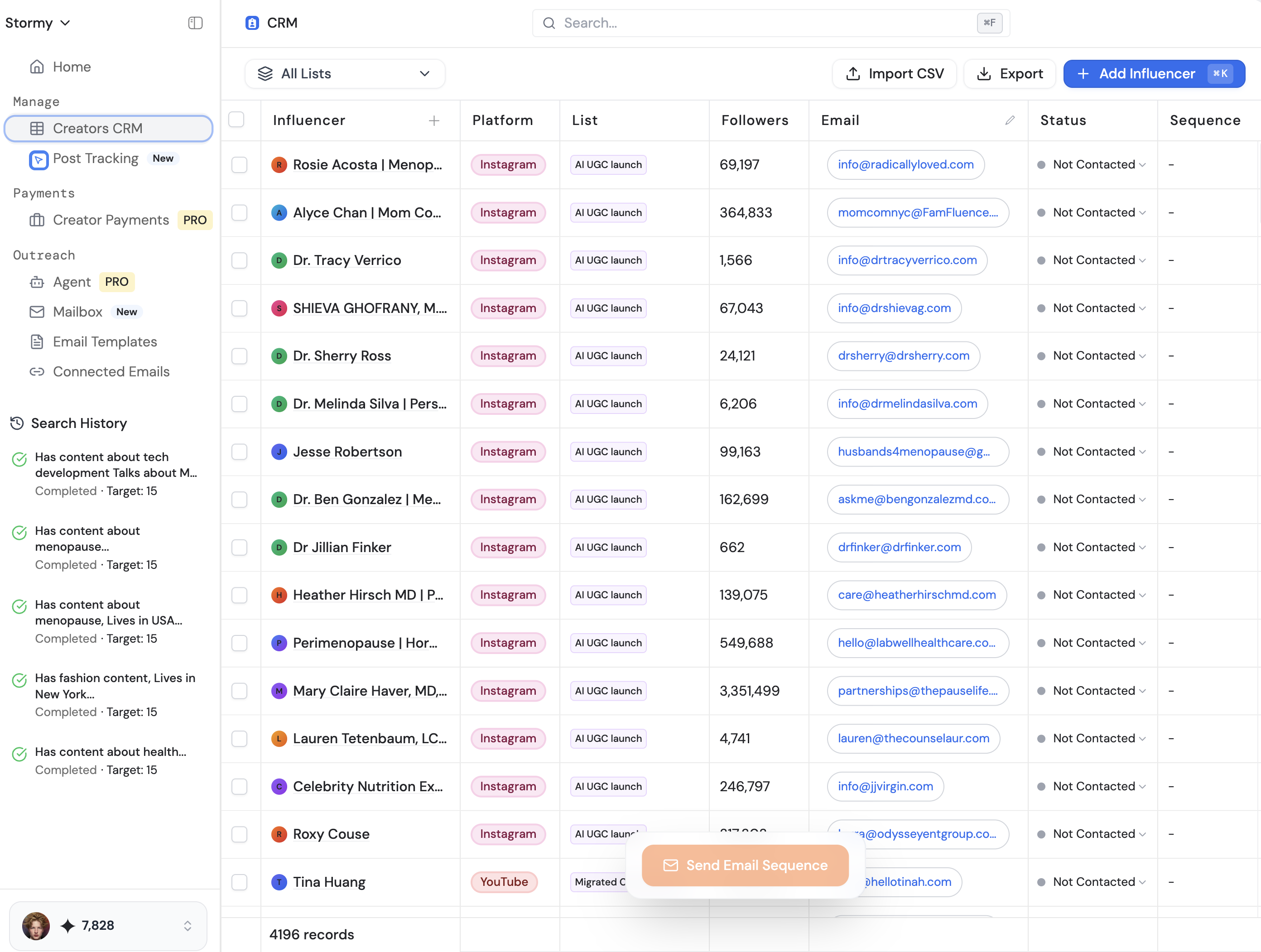
For app developers and founders, this differentiation is often what makes or breaks a marketing automation for startups strategy. Stormy AI is an AI-powered search engine that helps founders find the right influencers across TikTok, Instagram, and YouTube to communicate this unique value proposition.
The 10-Email Playbook: Education, Agitation, and Trust

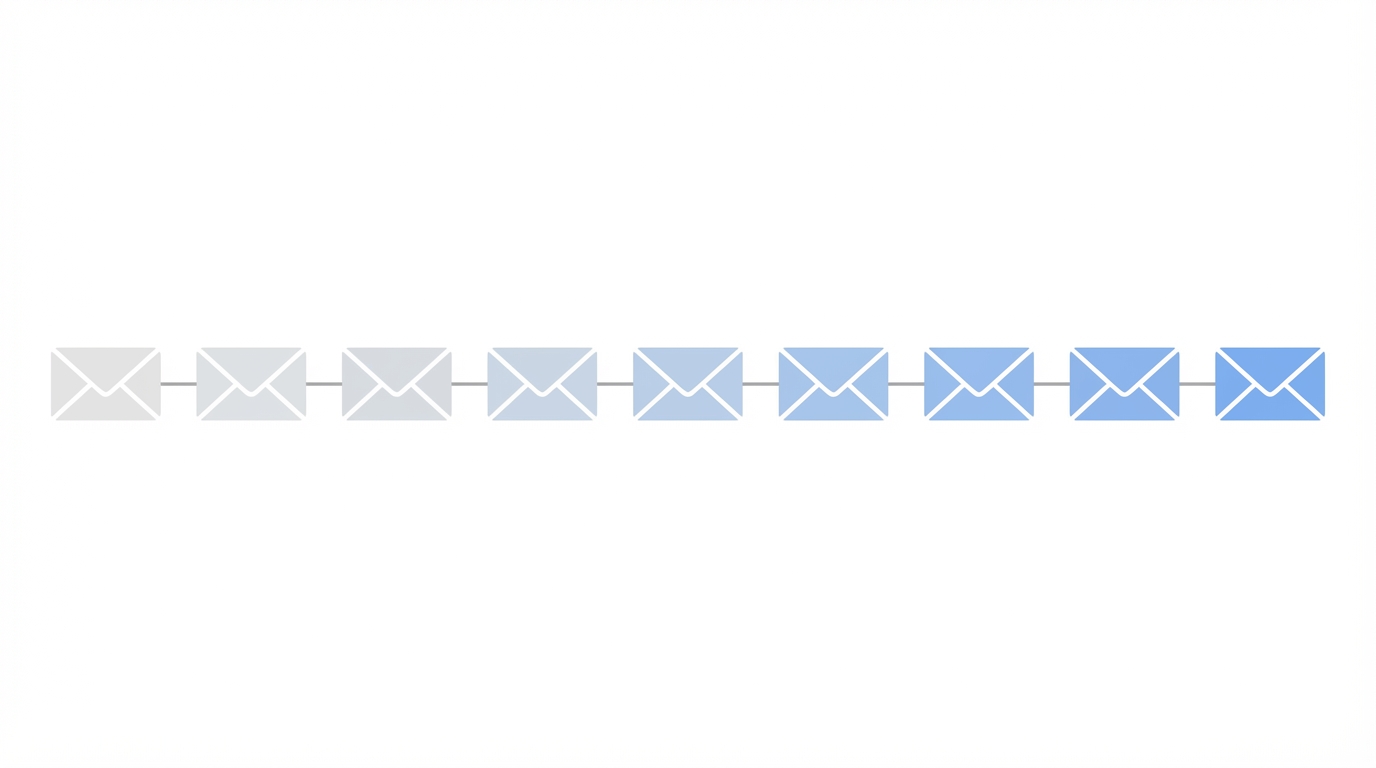
The core of the Cleo success story was a series of 10 emails sent before the product drop. This sequence is designed to move a subscriber through the stages of awareness: from knowing they have a problem to believing your product is the only logical answer. Here is the structure you should follow for your email conversion strategy:
Step 1: The Problem Definition (Email 1)
Start by calling out the elephant in the room. For Cleo, this was the proliferation of low-quality AI content. This email should have no call to action (CTA) and no mention of a launch date. Its only goal is to make the reader say, "They get it." Use tools like Loops to manage these early-stage automations efficiently.
Step 2: Problem Agitation (Emails 2-5)
In these emails, you highlight the cost of inaction. If you’re a founder who isn't posting on LinkedIn, what are you losing? You’re losing distribution, authority, and revenue. You want to twist the knife on the pain point. If you are building for mobile, focus on the high cost of user acquisition and how your app solves the retention leak. Stormy AI is excellent for identifying the types of UGC creators and getting an AI-powered quality report to vet their content styles, ensuring you only reference the highest quality influencers in your emails.
Step 3: The Educational Pivot (Emails 6-8)
Now, you teach the reader how to solve the problem manually or through a framework. For Lara, this was her "4-3-2-1" LinkedIn framework. By giving away the strategy for free, you prove your expertise. You are depositing value into the relationship before you ever ask for a withdrawal (a sale). This phase is critical for long-term SaaS sales funnel health.
Step 4: The Case Study/Social Proof (Email 9)
Show, don't just tell. Share the results of your beta testers or your own journey building the tool. Using a tech stack consisting of Next.js and Vercel, Cleo was able to iterate fast and share real-time dashboard spikes with their waitlist, proving the product worked before it was even public.
Step 5: The Pre-Drop Warning (Email 10)
The final email before the launch should build anticipation and scarcity. Let them know the "doors" are opening tomorrow, that there are limited spots (e.g., only 500), and that there will be an exclusive incentive for the first movers.
The 'Drop' Email: Writing the High-Conversion Announcement
When the launch day finally arrives, your "Drop" email should be short, punchy, and high-velocity. Because you have spent the last four weeks building trust, you don't need a long-form sales letter. The audience is already primed; they just need the link. The first line of the Cleo drop email was simply: "Cleo 2.0 is live. Try it now."
To maximize conversions, your drop email must include:
- A direct link: Place it in the first two sentences.
- The Incentive: Remind them of the 50% lifetime discount or the exclusive founding member status.
- The Scarcity: Reiterate that only a specific number of subscriptions are being accepted to ensure server stability or "white-glove" support.
- Technical Ease: Use a streamlined checkout experience. Cleo utilized Polar for their monetization and landing page, which allowed for a friction-less transition from email to paid user.
For mobile app developers, this is the moment where App Store Optimization (ASO) meets direct response. If you are driving traffic to an app install, ensure your email deep-links directly to the Apple App Store to reduce the steps to conversion.
Using Scarcity-Based Psychology to Force Buying Decisions
Why did Cleo hit $30k MRR so fast? Because they didn't make the product "always available." In the world of SaaS, unlimited supply is the enemy of urgency. By capping the initial launch at 500 spots, they forced a decision. When something is scarce, the human brain perceives it as more valuable. This is a classic psychological trigger that works across every niche, from enterprise software to finding and managing creators on Stormy AI, which provides a full CRM for tracking every negotiation and payment.
The Human Element: Webinars and White-Glove Onboarding
While the waitlist nurture sequence does the heavy lifting, the final 10% of conversions often come from human interaction. Lara and her team used LinkedIn Live webinars to demo the product in real-time. This allowed potential customers to see the faces behind the brand, ask questions, and overcome any final technical doubts. For a SaaS, showing is always better than telling.
Once users started paying, the Cleo team didn't just walk away. They used Cal.com to schedule VIP onboarding calls. This "unscalable" act is actually the best way to scale. By watching how new users interacted with the tool—built with Clerk for authentication—they could spot bugs and UX friction points immediately. You can also use Stormy AI to set up an autonomous AI agent that discovers and outreaches to creators daily to keep your growth engine running while you sleep. This feedback loop ensures that the first 500 users become "evangelists" who drive future growth through word-of-mouth and organic UGC.
Conclusion: Your Launch Playbook
Success in SaaS isn't about the loudest launch; it’s about the best-nurtured list. By shifting your focus from the product features to the customer’s educational journey, you can build a waitlist that actually converts. Remember the Cleo Playbook: build an audience on platforms like LinkedIn, offer high-value lead magnets, nurture the list with 10 problem-solving emails, and use scarcity to drive the final decision.
Whether you are launching a B2B tool or a consumer mobile app, the principles of SaaS email marketing remain the same. Build trust before you ask for money, and when you finally do ask, make sure the offer is too good to pass up. Start building your waitlist today, and don't let it sit in the dark. Your $30k launch is waiting in your outbox.