The year is 2026, and the "one-hour company stack" is no longer a dream — it is the standard for high-growth ecommerce founders. We have moved past the era of manual pixel-pushing and entered the age of Agentic Commerce, a trend Gartner predicts will dominate retail workflows by the end of this decade. Today, a single person can build, stock, and launch a branded retail experience that rivals mid-market players, all before their morning coffee gets cold. With the global dropshipping market projected to exceed $590 billion in 2026, the question isn't whether you should launch, but how fast your AI agents can execute.
In this guide, we provide a high-efficiency playbook for launching a Shopify dropshipping store in 2026. You will learn how to use an AI store builder for Shopify to bypass weeks of design work, how to identify winning products with predictive algorithms, and how an AI ecommerce employee like Stormy AI handles the messy back-office operations while you focus on scaling.
Step 1: AI Product Research for 2026
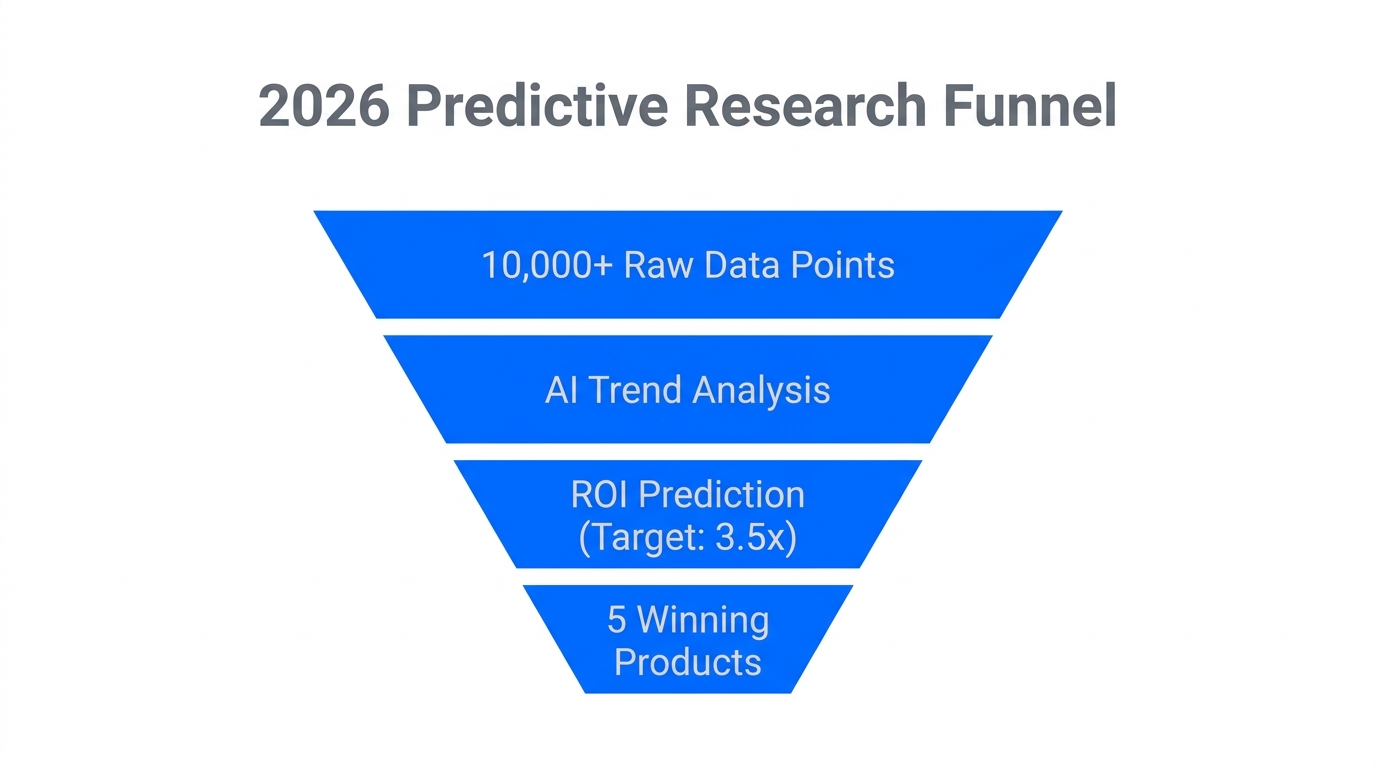
In 2026, "gut feeling" is the fastest way to burn your ad budget. Successful dropshippers now use predictive analytics to identify products with high-growth potential and low competition before they go viral. The goal is to find "micro-niches" that are currently trending on platforms like TikTok Shop and Instagram Reels.
Start by using Minea or Sell The Trend to scan real-time ad data. These tools have evolved into AI-first discovery engines that don't just show you what is selling, but predict what will sell based on consumer sentiment analysis. According to Market.us, the speed at which trends cycle has increased by 40% since 2024, making these tools mandatory for survival.
When you find a potential winner, look for the following benchmarks:
- High Engagement-to-View Ratio: Products that trigger comments asking "where can I buy this?" rather than just passive likes.
- Low Competition in SGE: Check if Google's Search Generative Experience is already saturated with similar results. You want to be the first branded option in a new category.
- Shipping Viability: Ensure the product can be sourced via Zendrop or Ship To The Moon for 5-7 day global shipping.
"The secret to 2026 dropshipping is not finding a product; it is securing agentic visibility in the Universal Commerce Protocol."
Step 2: Instant Storefront Generation
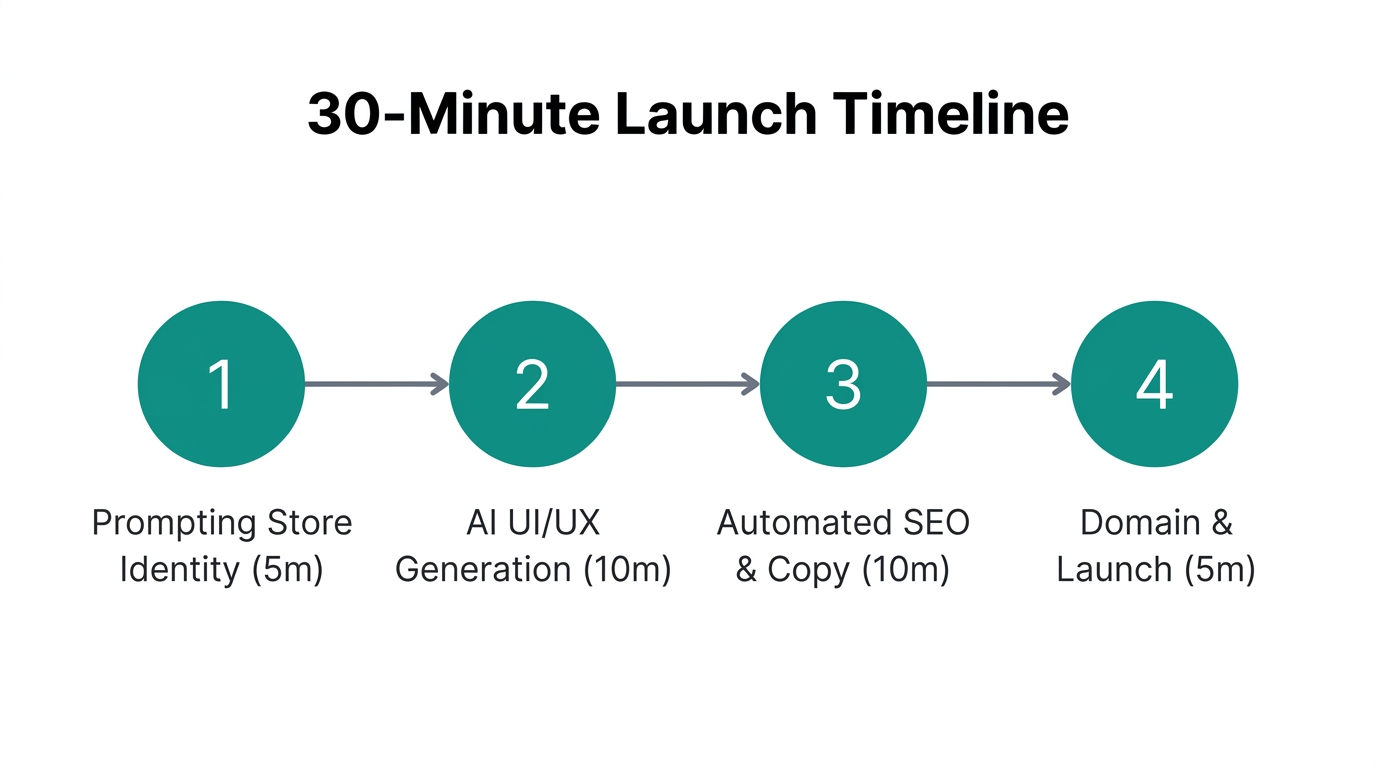
The days of choosing a theme and manually adding products are over. In 2026, we use tools like Dropmagic or Storebuild.ai to generate complete, product-loaded stores in minutes. These are not generic templates; they are AI-generated branded experiences that use real-time UI morphing to adapt to visitor behavior.
The 15-Minute Build Protocol:
- Input Your Niche: Tell the AI store builder your target audience and the product list you gathered from Minea.
- Select Brand Vibe: Instead of picking colors, describe the "feeling" (e.g., "Minimalist Scandinavian wellness brand for busy professionals").
- Generate Copy and Assets: The AI will write high-converting product descriptions and generate high-fidelity images using tools like Midjourney or Sora-integrated generators.
- Deploy to Shopify: One-click export to your Shopify dashboard.
While the store builds itself, you can ask Stormy AI to begin researching your competitor's supplier lists and lead times in the background. While the store generator handles the "front door," Stormy ensures your back-office infrastructure is ready for the first order.
| Feature | Traditional Method (Pre-AI) | AI-Integrated Method (2026) |
|---|---|---|
| Time to Launch | 2–4 Weeks | 30 Minutes |
| Copywriting | Manual/Freelancer | Agentic (LLM-optimized) |
| Product Images | Custom Photoshoots | Generative 4K AI Images |
| Inventory Sync | Manual Updates | Autonomous API Sync |
Step 3: Configuring Shopify Sidekick as Your Active Co-pilot
Once your store is live, you need to activate Shopify Sidekick. In the 2026 Winter Edition, Sidekick transitioned from a simple chatbot into an Active Co-pilot. It no longer just answers questions; it executes multi-step business operations via natural language commands.
To set up Sidekick correctly for an automated ecommerce business, use the following command structure in your Shopify Admin:
"Sidekick, create a 'New Arrivals' collection using the products I just imported from Zendrop. Set a dynamic 15% discount rule for any customer referred by a TikTok affiliate, and notify me if the conversion rate drops below 2.5%."
Shopify Sidekick is excellent for on-platform tasks, but for the "messy" work that happens outside of Shopify — like chasing down a supplier who hasn't shipped a package or auditing your Meta Ads performance — you should rely on Stormy AI. Think of Sidekick as your store manager and Stormy as your Director of Operations who manages the entire stack, from spreadsheets to email threads.
Step 4: Customizing for a Brand-First Experience
As AI becomes ubiquitous, a new problem has emerged: "AI Slop" Fatigue. Consumers in 2026 are increasingly skeptical of stores that look too perfect or sound too robotic, a phenomenon widely reported by The Guardian. According to research from Elogic, human-curated content still receives significantly higher trust scores than 100% AI-generated content.
To avoid the "AI sameness" trap, apply these customization filters:
- Edit the Voice: Go into your generated product descriptions and add a unique brand "hook" or a contrarian take. If everyone says the product is "revolutionary," explain specifically how it solves a niche problem.
- Reality Validation: Use real customer reviews (not AI-generated ones). Consumers in 2026 can spot fake reviews instantly.
- Human-in-the-Loop Creative: While you can generate video ads using Creatify.ai, always have a human (or a specialized AI ecommerce employee) review them to ensure they don't have telltale Sora watermarks or "uncanny valley" glitches.
"In a world of infinite AI content, authenticity is the only remaining moat for dropshipping brands."
Step 5: Setting Up the Hands-Off Backend
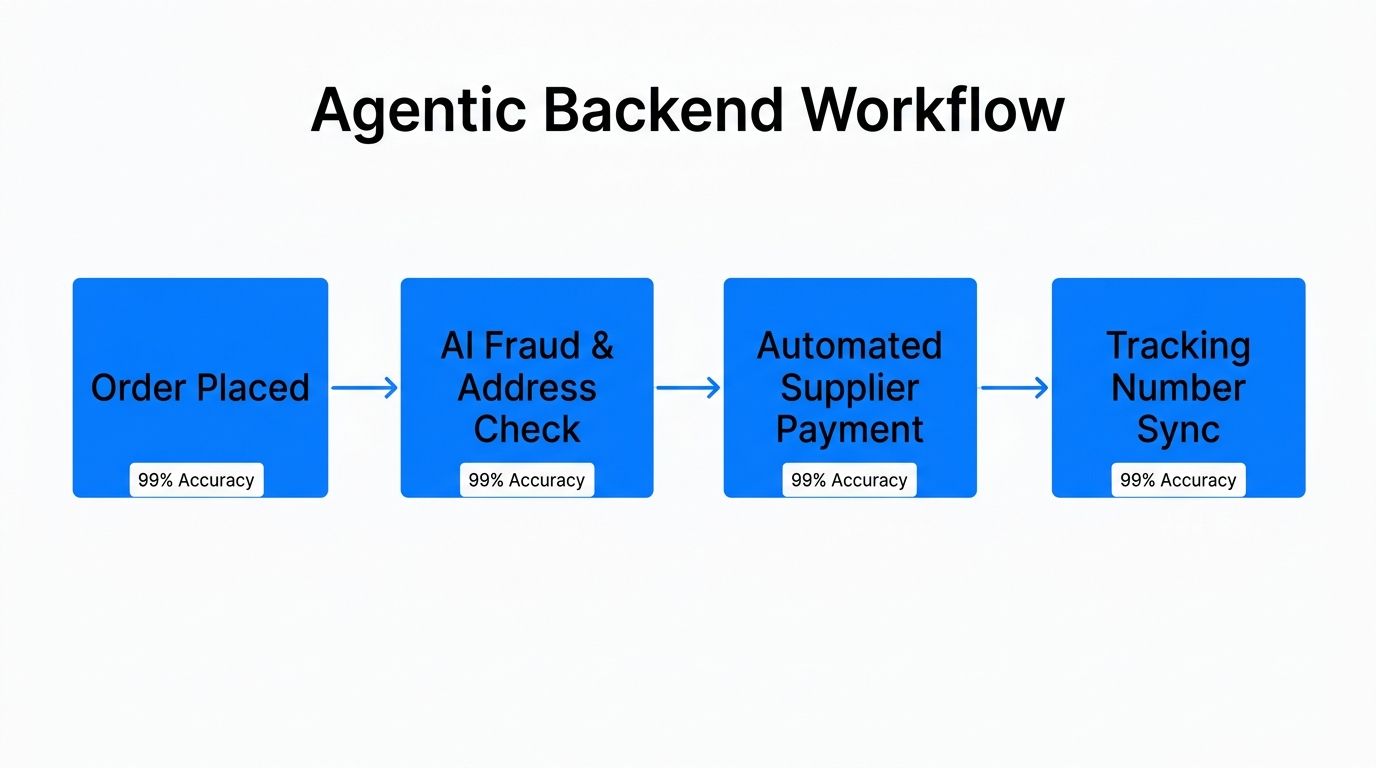
A store is only as good as its fulfillment. To run a truly automated ecommerce business, you must connect your store to an autonomous fulfillment agent. AutoDS and Zendrop are the industry leaders here, handling everything from price monitoring to order processing.
However, the real "secret sauce" for 2026 is Agentic Fulfillment. This is where Stormy AI shines. While AutoDS moves the data, Stormy watches the exceptions:
- Supplier Follow-ups: If a supplier is late on a tracking number, Stormy automatically emails them to ask for an update.
- Inventory Pulse: Stormy monitors your TikTok Shop and Shopify inventory levels, flagging stockout risks in a shared spreadsheet before they happen.
- Ad Spend Audits: Every morning, Stormy pulls spend data from Google Ads and Meta, compares it to Shopify revenue, and flags underperforming campaigns for you to pause.
By automating the backend, you move from being a "worker" in your business to being the "architect." As Triple Whale data shows, 80% of top-performing retailers are now using GenAI to optimize their operations, and those who don't are being left behind by rising customer acquisition costs.
Conclusion: The Era of the One-Person Enterprise
Launching a Shopify dropshipping store in 2026 is no longer about learning technical skills; it is about learning how to manage AI agents. By combining the one-hour company stack (Dropmagic + Shopify Sidekick) with a dedicated AI ecommerce employee like Stormy AI, you can run a seven-figure operation with zero full-time employees.
The barrier to entry is lower than ever, but the barrier to success requires a brand-first mindset. Use AI to build the machine, but use your unique vision to give that machine a soul. Stop working on your business and start letting AI run it.
Ready to automate the boring parts of your store? Let Stormy AI handle your inventory, supplier follow-ups, and ad reporting today.