The barrier to entry for building a software business has officially collapsed. In 2026, the most successful founders aren't those who spend six months perfecting a codebase, but those who leverage vibe coding to bridge the gap between design and distribution in record time. The paradigm has shifted from "how do I build this?" to "how fast can I ship this so I can start marketing?" This speed-to-market advantage is the defining trait of rapid app development in 2026.
By using tools like Claude Code, founders are now launching fully functional iOS and Android applications in under 30 days. This isn't just about writing code; it's about reducing technical overhead to zero so that energy and budget can be poured into what actually generates revenue: distribution. If you are an aspiring entrepreneur, the 2026 playbook is clear: build with AI, grow with influencers, and scale with data.
The Vibe Coding Revolution: Claude Code for Founders
 10:16
10:16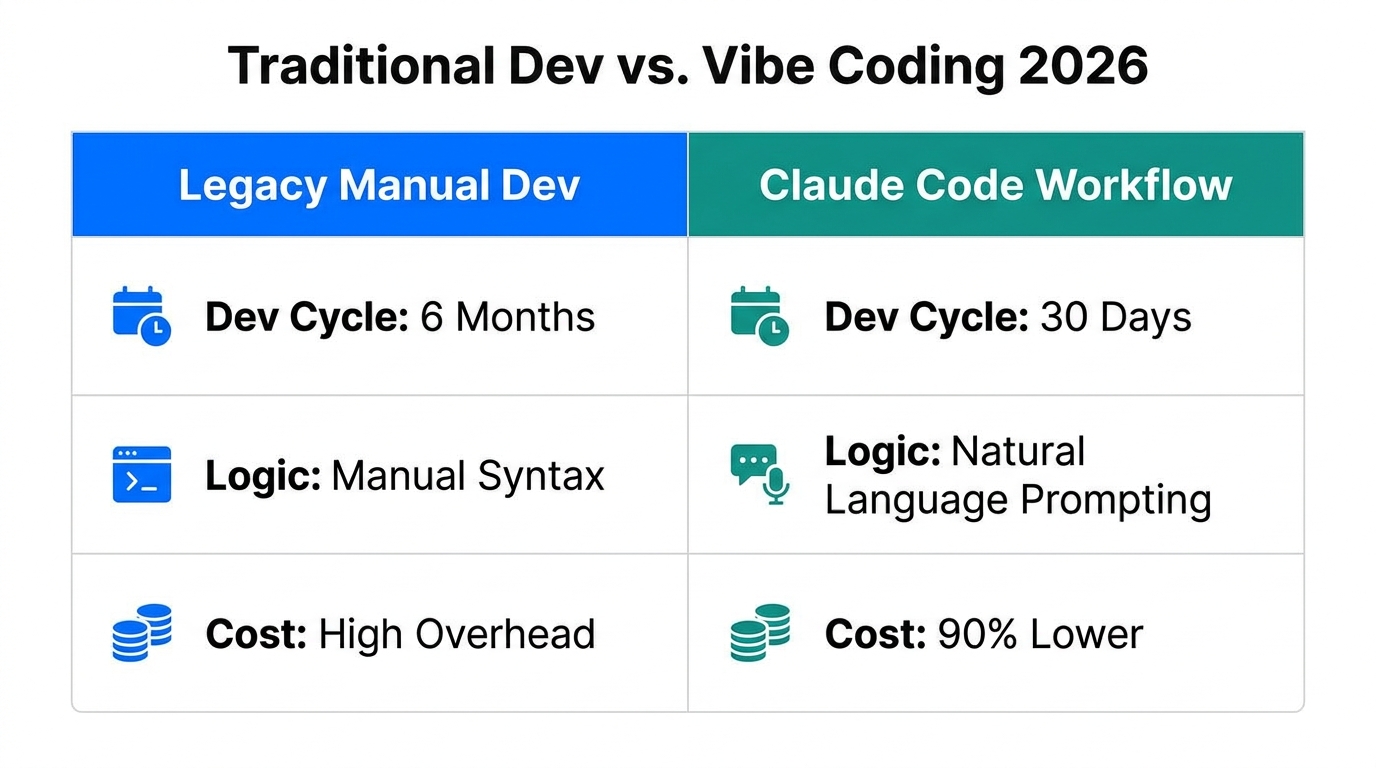
In the past, a founder with a great idea but no technical skills was forced to hire an expensive agency or spend years learning Swift. Today, Claude Code acts as a senior engineer that lives in your terminal. As highlighted in the recent Starter Story interview with Evan, the founder of the gamified app Locked, the transition from Figma designs to functional code is now a matter of weeks, not months.
By subscribing to high-tier AI development environments, founders like Evan are able to take a completed Figma file and use Claude to translate those visual elements into clean, reactive components. This AI for app entrepreneurship model allows for a lean development cycle where the primary role of the founder is project management and user experience design, rather than manual syntax debugging.
"You don't need permission to build anything anymore. You can open up a vibe coding tool, build a business, and put it out on the World Wide Web for anyone to subscribe."
Case Study: How Locked Scaled to $14,000/Month
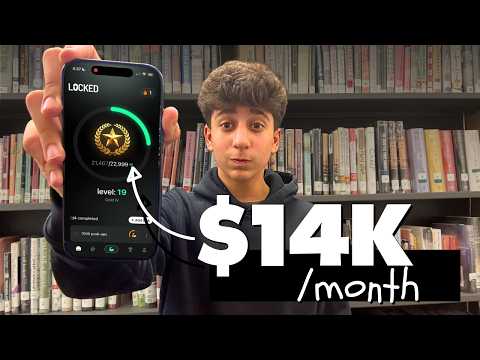
0:00Evan’s app, Locked, serves as the perfect blueprint for the modern lean startup. Locked is a gamified health and fitness app that uses XP, leaderboards, and badges to keep users motivated. What’s remarkable is that the entire process—from initial idea to live in the App Store—took only one and a half months.
The tech stack used for Locked is a masterclass in efficiency for 2026 founders:
- Design: Figma for scratch-built UI/UX.
- Development: Claude Code (via a $200/month subscription) for terminal-based engineering.
- Database: Supabase for a scalable, free-tier-friendly backend.
- Monetization: Superwall for A/B testing paywalls and transaction abandon offers.
Evan’s monetization strategy focuses on a $40/year premium tier or a $7/week option. By using Superwall, he implemented a "transaction abandon" paywall—if a user exits the initial offer, they are immediately presented with a discounted $20/year deal. This single tactic significantly boosts conversion rates for price-sensitive users.
The Distribution-First Mindset: Shifting Budget from Dev to Growth
The biggest mistake founders make is spending 90% of their budget on development and 10% on marketing. In 2026, those ratios should be reversed. Because AI like Claude Code has reduced the cost of building, you can now allocate more capital toward a lean startup distribution strategy.
Evan’s growth wasn't fueled by Meta Ads or complex SEO. Instead, he leaned entirely into influencer marketing. By partnering with creators who already have trust with their audience, the app gained an air of authenticity that traditional ads cannot replicate.
| Growth Channel | Trust Factor | Scalability | Cost Efficiency |
|---|---|---|---|
| Paid Meta/TikTok Ads | Low | High | Variable (High CAC) |
| Influencer Integration | Very High | High | Excellent (Low CPM) |
| Organic ASO | Medium | Low/Steady | Free (Time intensive) |
To execute this, you need a way to find creators who align with your niche. For example, platforms like Stormy AI allow founders to instantly search for TikTok and Instagram creators using natural language prompts, vetting them for engagement quality and audience authenticity before ever sending an email.
The 5-Step Influencer Outreach Playbook
9:14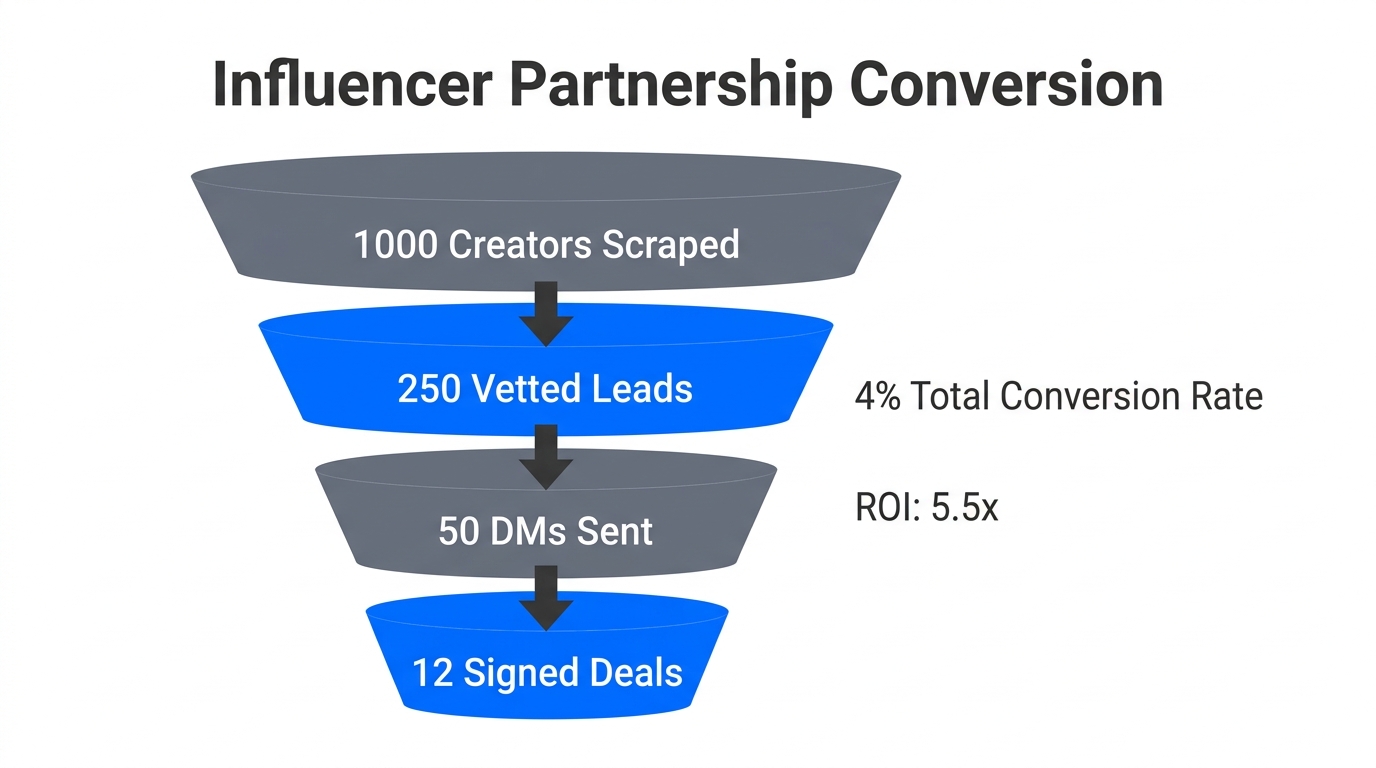
If you want to replicate the success of Locked, you need a systematic approach to booking creators. Evan’s playbook for 2026 founders is straightforward and focuses on the math of CPM (Cost Per Mille) vs. RPM (Revenue Per Mille).
Step 1: Find Niche-Relevant Creators
Search TikTok or Instagram for keywords related to your app’s problem. If you’re building a fitness app, look for "locked in" or "productivity hacks." Use specialized discovery tools to filter for creators with 10k-100k followers—this is the "sweet spot" where engagement is high but prices remain negotiable.
"The first message should always be simple: 'Paid promo?' It gets straight to the point and filters for creators looking to do business."
Step 2: The Math of Profitability
Before closing a deal, you must know your numbers. If your app generates $3.00 for every 1,000 views (an RPM of $3), you must close creators at a CPM lower than that—ideally between $1.00 and $1.50. This ensures that even if the video doesn't go mega-viral, you remain profitable.
Step 3: Structure the Deal
Don't just pay a flat fee and hope for the best. Use one of these four deal structures to protect your downside:
- Flat Rate: Use only for creators with extremely consistent view counts.
- CPM Deal: Pay $1-$2 per 1,000 views with a total price cap.
- Minimum View Clause (MVC): Pay $500 only if the creator hits a 500,000 view minimum. This is the gold standard for 2026 app founders.
- Bonus Deal: A base pay plus a performance kicker if the video hits a viral milestone (e.g., 1 million views).
Modern GTM Strategy: Moving Beyond the Code
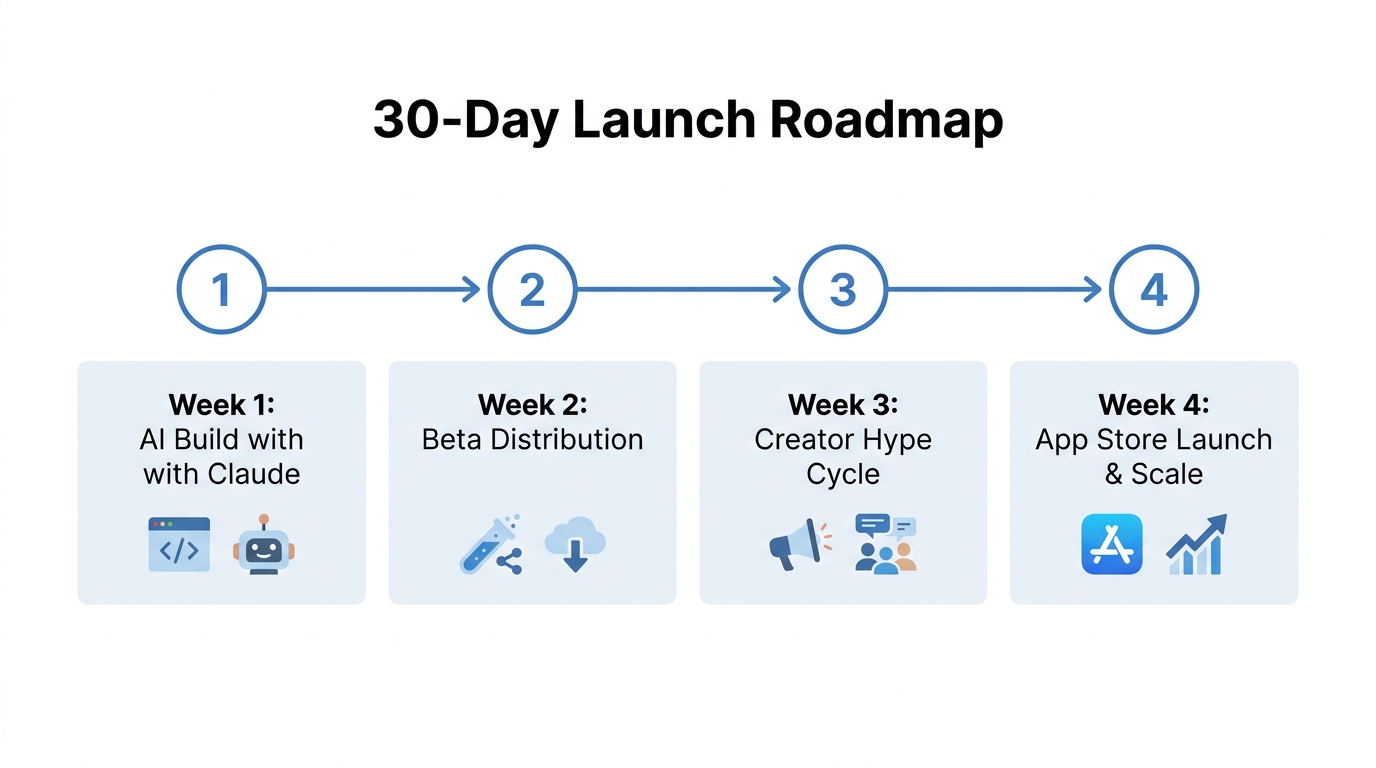
A GTM strategy for mobile apps in 2026 is less about the launch day and more about the continuous cycle of content integration. As Evan demonstrated, a single video from a creator like Jeremiah Jones can lead to 1,800 downloads and thousands of dollars in revenue in a matter of days. By integrating the app seamlessly into the creator's lifestyle—showing how it helps them stay "locked in"—the promotion feels like a recommendation rather than a commercial.
To manage these relationships, many founders are moving away from messy spreadsheets and using dedicated tools. While you might use Notion or Linear for your product roadmap, your growth roadmap requires an influencer CRM. Using a platform like Stormy AI allows you to track which creators are in negotiation, which have received contracts, and which are currently live with their content.
Conclusion: Ship Fast, Market Faster
The success of the Locked app proves that the "traditional" path of spending years in a dark room coding is dead. In 2026, the lean startup distribution strategy is to use Claude Code for founders to build a functional version of your vision in 30 days, then spend the rest of your time mastering the art of influencer partnerships.
Stop worrying about whether you are "far enough along." As the Starter Story team noted, we live in an era where you no longer need permission. You don't need a venture capital check or a 50-person engineering team. You need a vibe, a terminal, and a growth engine.